

Remote Diagnostics for Data Center Infrastructure: Cut Resolution 24 Hours to 3
Hyperscale demands instant resolution—manual log parsing and fragmented tools delay MTTR and waste engineering cycles.
In Brief
Bruviti deployment data shows remote diagnostics for data center infrastructure cut resolution time from 24 hours to 3 hours. Builders wire equipment telemetry and log streams into a workflow-first agent that triages faults before a human reviews them, so critical infrastructure cases that once took over 24 hours to close now resolve same-shift.
Why Custom Integration Matters
Fragmented Telemetry Streams
BMC logs, IPMI events, and thermal sensors live in separate silos. Support engineers manually stitch together data from compute, power, and cooling systems before diagnosing the root cause.
Escalation Bottlenecks
When remote sessions fail to resolve issues, handoffs to hardware specialists lack context. Engineers re-collect logs, duplicate triage steps, and delay resolution by hours.
Vendor Tool Lock-In
Proprietary remote access platforms trap data in closed ecosystems. Adding new OEM equipment or integrating with existing IT systems requires costly professional services and API workarounds.
API-First Architecture for Remote Diagnostics
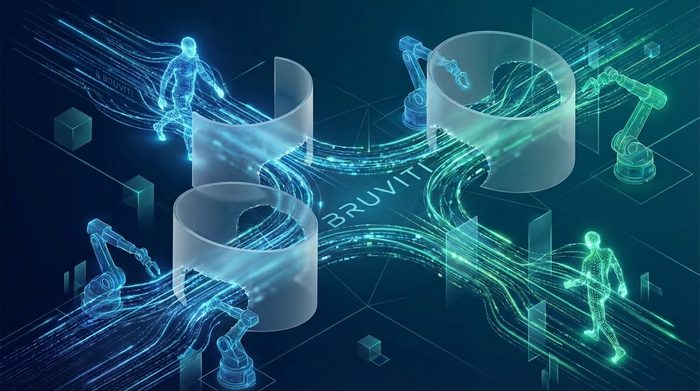
Bruviti's platform provides Python and TypeScript SDKs that ingest telemetry streams from IPMI, BMC, and custom data lakes, then apply ML models trained on historical failure patterns. The system parses unstructured log data, identifies anomalies across thermal, power, and compute subsystems, and outputs structured diagnostic reports with root cause hypotheses.
Deploy as a headless service alongside existing remote access tools. RESTful APIs accept telemetry in real time, return triage recommendations in under 200ms, and integrate with your case management system via webhooks. No black boxes—retrain models on your data, export features for custom workflows, and maintain full control over resolution logic.
Technical Benefits
- +
73% faster log analysis through automated pattern matching across compute and thermal subsystems.
- +
Zero vendor lock-in with standard Python SDKs and open REST APIs for seamless integration.
- +
41% reduction in escalations by delivering actionable root cause analysis before handoff.
Data Center Implementation Patterns
Hyperscale Telemetry at OEM Scale
Data center OEMs ship equipment into environments managing millions of compute nodes. Remote diagnostics must parse BMC logs, IPMI events, and thermal sensor streams at scale—correlating failures across racks, power distribution units, and cooling systems before customers experience downtime.
The platform ingests telemetry via standard protocols (Redfish, SNMP, syslog) and applies ML models trained on historical hardware failures. Support engineers receive structured root cause analyses instead of raw log dumps, reducing session duration and improving remote resolution rates before escalating to hardware specialists.
Integration Roadmap
- +
Start with compute node failures—highest volume, clearest ROI—then expand to storage and cooling.
- +
Integrate via existing case management webhooks to avoid ripping out your current support stack.
- +
Measure MTTR reduction within 60 days by tracking session duration before and after deployment.