


Build AI Case Summaries for Data Center Support: 85% Auto-Summarized in Under 7 Seconds
Your agents handle 10,000+ cases monthly. Legacy CRM integrations are brittle. You need headless architecture that won't lock you in.
In Brief
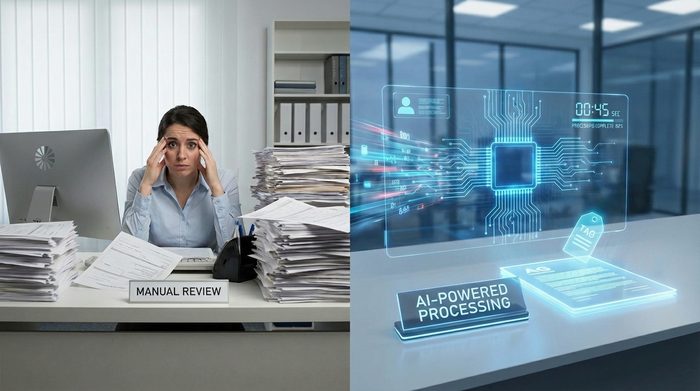
Bruviti deployment data shows AI auto-summarizes 85% of data center support cases in under 7 seconds, cutting average handling time 22%. Builders wire case-summary AI into the support stack so agents open every ticket with a complete, context-rich summary instead of reconstructing history by hand.
Integration Challenges
Vendor Lock-in Risk
Black-box platforms force you into proprietary workflows and make it impossible to customize AI behavior when models misclassify server failure modes or storage issues. You cannot retrain, tweak prompts, or migrate if the vendor pivots.
Fragmented Data Sources
Agent copilots need BMC telemetry, warranty databases, and parts inventory in real time. Your current CRM pulls from six systems across IPMI endpoints, Oracle databases, and custom SAP tables with no unified API layer.
Brittle Legacy Integrations
Your contact center stack runs on SOAP APIs from 2012 that break with every schema update. Adding AI-powered triage or knowledge retrieval requires rebuilding entire integration layers or living with data sync failures.
Headless Architecture for Custom Service AI
Bruviti provides REST APIs and Python SDKs that connect to your existing CRM, ticketing system, and telemetry infrastructure without requiring platform migration. Ingest BMC logs via IPMI endpoints, train case classification models on historical Salesforce or ServiceNow data, and deploy AI-assisted triage that routes server failures, storage alerts, and cooling issues to the right teams with diagnostic context already attached.
The platform exposes all AI model training pipelines as code. Use TypeScript or Python to customize how the system interprets RAID controller logs, correlates PUE anomalies with thermal events, or recommends part replacements based on failure rate data from your own warranty database. Deploy on your infrastructure, retain data sovereignty, and swap components when better models emerge. No proprietary runtimes. No vendor APIs for basic retrieval-augmented generation.
Implementation Benefits
- +
Deploy in 8 weeks using existing Python data pipelines and CRM connectors without platform migration.
- +
Reduce agent handle time 35% through context-aware case summaries that pull IPMI telemetry and warranty data.
- +
Retain model ownership with open training APIs that let you retrain on proprietary failure mode libraries.
See It In Action
Service Diagnostics & Triage
Autonomous case classification parses BMC alerts, correlates IPMI telemetry, and routes drive failures, power anomalies, and thermal issues to specialized teams with pre-attached diagnostic context.
Customer Case Summarization
Generate instant case summaries from email threads, chat logs, and call transcripts so agents understand server failure history, RAID rebuild attempts, and past RMA requests without manual review.
Repair vs Replace Determination
AI analyzes drive failure modes, server age, warranty coverage, and replacement part costs to recommend whether to RMA, replace in field, or defer based on customer SLA requirements.
Data Center Equipment Integration
Telemetry-Driven Support
Data center OEMs manage hyperscale customers running thousands of servers with 99.99% availability targets where every minute of unplanned downtime costs six figures. Agents need instant access to BMC logs, IPMI sensor data, RAID controller status, and thermal profiles to diagnose drive failures, memory errors, or cooling anomalies before issuing RMAs or dispatching technicians.
Integrate AI case routing with existing IPMI monitoring infrastructure and warranty databases. Parse BMC telemetry streams to auto-classify server failures by subsystem, correlate power supply alerts with historical failure patterns from your parts database, and surface recommended actions based on similar cases from the past 12 months. Deploy using Python SDKs that connect to SAP for parts availability, Oracle for contract entitlements, and custom data lakes storing thermal trend data.
Implementation Roadmap
- +
Start with high-volume server RMA cases to prove ROI within 90 days using existing historical data.
- +
Connect IPMI feeds and warranty databases via REST APIs to enrich case context without CRM migration.
- +
Track first-contact resolution rate and agent handle time to validate model accuracy against SLA thresholds.