Distributed machinery and decades-long lifecycles make remote resolution economics critical to service margin protection.
Bruviti deployment data shows AI remote support cuts repeat truck rolls 38% on industrial equipment, the single largest cost lever in field service. Each avoided dispatch removes travel, labor, and downtime cost, so executives see remote resolution turn directly into lower service spend and higher margin on the install base.
Support engineers lack visibility into PLC logic, sensor telemetry, and equipment state across distributed installations. Manual log analysis takes hours, forcing premature escalations instead of remote diagnosis.
Handoffs between remote support and specialized engineers create delays. Incomplete context transfer extends resolution cycles while customers face prolonged downtime on critical production machinery.
Equipment-specific expertise resides with a few senior engineers. Support teams repeatedly escalate identical issues because solutions aren't captured in searchable, actionable formats.
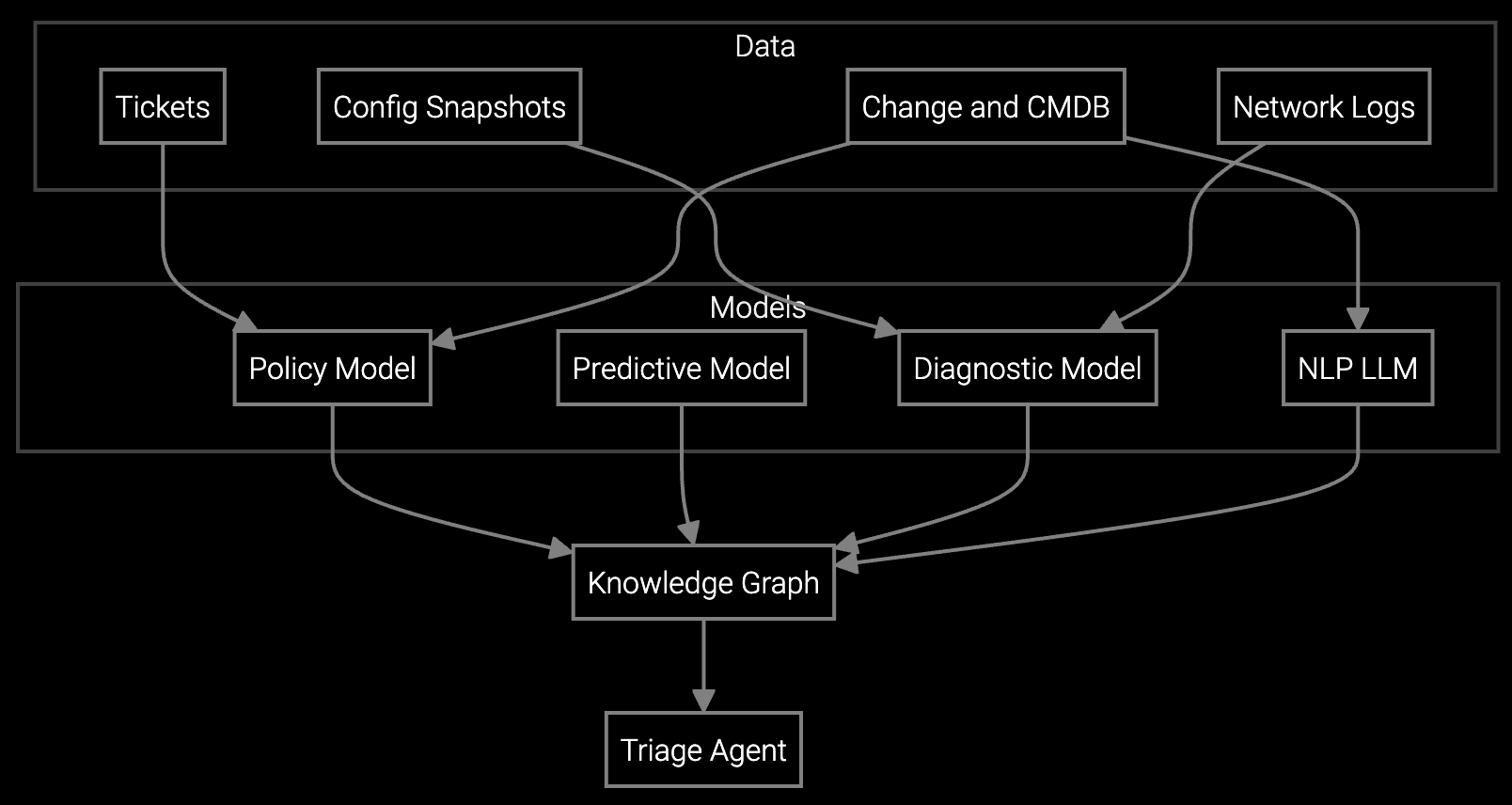
Bruviti's platform analyzes telemetry streams and historical resolution patterns to diagnose equipment failures remotely. Support engineers receive guided troubleshooting workflows with equipment-specific logic, eliminating hours of manual log parsing. The AI correlates sensor data, maintenance records, and past incidents to identify root causes before escalation becomes necessary.
The platform captures resolution knowledge automatically during remote sessions. Each successful diagnosis strengthens the AI model, accelerating future remote fixes across your installed base. OEMs reduce cost per incident while improving customer uptime through faster, more accurate remote resolution.
Industrial equipment OEMs quantify remote support ROI through three variables: current remote resolution rate, annual incident volume, and cost per escalation. A manufacturer supporting 8,000 machines with 6,400 annual incidents at a 42% remote resolution rate escalates 3,712 cases yearly.
Each escalation costs $450-$1,200 in engineering time and delayed resolution. Increasing remote resolution to 68% reduces escalations by 1,664 cases annually, saving $750K-$2M. Additional savings come from reduced MTTR, which lowers customer downtime costs and SLA penalty exposure.
Track the percentage of incidents closed by remote support without escalation to specialized engineers or other teams. Compare pre-deployment baseline (typically 35-45% for industrial equipment OEMs) against post-deployment rates. Most implementations show 15-25 percentage point improvements within 90 days.
Calculate fully loaded cost including engineering time, tools, customer downtime exposure, and administrative overhead. Industrial equipment OEMs typically see $450-$1,200 per escalated incident depending on equipment complexity and customer SLA terms. Use historical data from your service management system for accurate baseline figures.
Payback periods range from 6-12 months for industrial equipment OEMs with distributed installed bases and high incident volumes. Remote resolution improvements begin within 30-60 days as the AI learns from initial cases. Full margin impact materializes as remote resolution rates stabilize at new baseline levels.
Most OEMs redeploy support engineering capacity rather than reduce headcount. Higher remote resolution rates free senior engineers from routine escalations, allowing focus on complex root cause analysis and continuous improvement. Growing installed bases absorb capacity without proportional headcount increases.
Faster remote diagnosis reduces mean time to resolution, which lowers customer downtime costs and SLA penalty exposure. Track average session duration before and after deployment. Industrial equipment OEMs typically see 30-40% shorter sessions as AI-guided troubleshooting eliminates manual log analysis and trial-and-error diagnosis.
Software stocks lost nearly $1 trillion in value despite strong quarters. AI represents a paradigm shift, not an incremental software improvement.
Function-scoped AI improves local efficiency but workflow-native AI changes cost-to-serve. The P&L impact lives in the workflow itself.

Five key shifts from deploying nearly 100 enterprise AI workflow solutions and the GTM changes required to win in 2026.
Work with our team to quantify ROI for your specific installed base, incident volume, and escalation costs.
Schedule ROI Analysis