Every minute your support engineers spend parsing logs or waiting for escalation approval is margin you're leaving on the table.
AI-driven remote support cuts mean time to repair by 40 to 60%, per Bruviti deployment data. For appliance manufacturers, faster resolution converts directly into lower cost per case and freed technician capacity, with parts returns down 12 to 18% adding a second hard-dollar line to the ROI case.
Support engineers resolve only 55-65% of HVAC and refrigeration issues remotely because they lack automated log analysis and guided diagnostics. The rest escalate to expensive specialist review or unnecessary service visits.
Manual troubleshooting for connected appliances averages 25-35 minutes per remote session. Engineers spend most of that time searching knowledge bases, reviewing telemetry, and waiting for diagnostic tests to complete.
Support engineers toggle between five separate systems—remote access, CRM, knowledge base, warranty lookup, parts catalog—adding 8-12 minutes of context switching per issue. Each tool requires separate login and manual data entry.
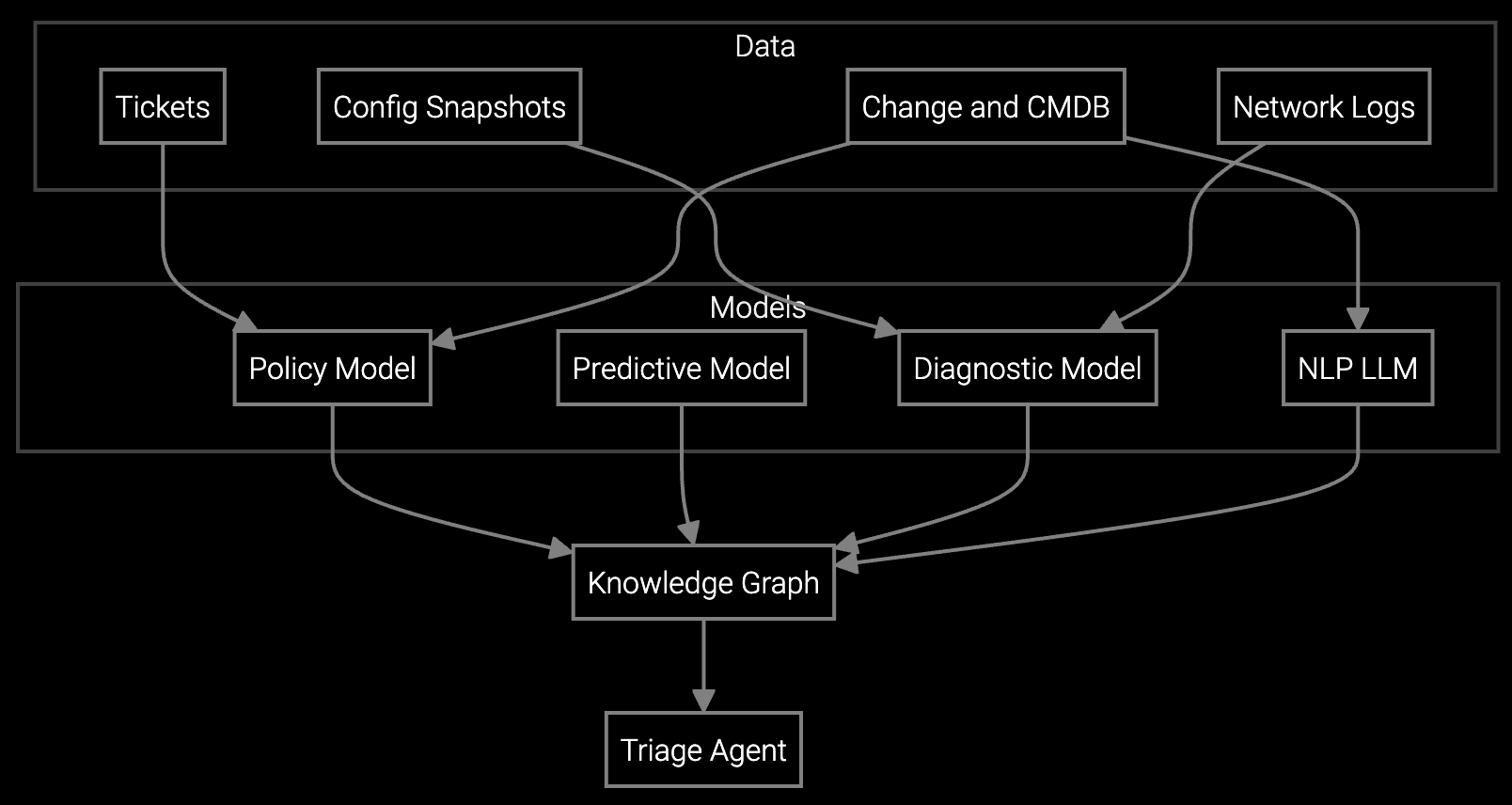
The financial case for AI-powered remote support rests on three measurable improvements: higher remote resolution rates, shorter session times, and eliminated escalation delays. Bruviti's platform ingests telemetry from connected appliances, automatically parses error logs, and delivers guided troubleshooting workflows—eliminating the manual analysis that consumes most of a support engineer's time.
The platform cross-references symptoms against warranty entitlement, parts availability, and historical resolution patterns in real time. When escalation is necessary, the AI pre-populates the case file with root cause analysis and recommended next steps. This compression of diagnostic work reduces average session duration from 28 minutes to 16-18 minutes while increasing first-session resolution rates by 20-25 percentage points.
Appliance manufacturers operate on 3-5% net margins, making every dollar of support cost reduction material to quarterly results. Remote support represents 18-24% of total service spend—second only to warranty reserves. Seasonal demand spikes during summer (air conditioning failures) and winter (heating system breakdowns) force expensive overtime and contractor labor if remote resolution rates don't improve.
The calculus is straightforward: each 5-point increase in remote resolution rate eliminates 200-300 unnecessary escalations per month. At $185 average cost per escalated incident (specialist time, follow-up coordination, delayed resolution), that's $37,000-$55,000 monthly savings. Over 12 months, improved remote resolution delivers $440,000-$660,000 in avoided escalation costs alone—before accounting for faster session times or improved customer satisfaction.
Most appliance OEMs see 6-9 month payback based on reduced escalation rates and shorter session times. Manufacturers with high seasonal demand volatility (HVAC, refrigeration) reach breakeven faster because improved remote resolution eliminates expensive contractor labor during peak periods.
Remote resolution rate is calculated as (incidents resolved in first remote session) / (total remote sessions initiated). Track this weekly by product category. A 5-7 point increase in the first 90 days indicates the AI is successfully reducing escalations. Segment by issue type—compressor failures, control board diagnostics, refrigerant leaks—to identify where gains are largest.
Connected appliances with telemetry deliver 2-3x faster ROI because automated log analysis eliminates most manual diagnostic time. Non-connected products still benefit from guided troubleshooting and knowledge base integration, but session time reductions are smaller (20-25% vs 35-40% for connected products).
Average session duration drops 35-40%, enabling each engineer to handle 12-15 additional cases daily. This productivity gain compounds during seasonal spikes when appliance OEMs traditionally pay overtime or bring in contractors. The ROI calculation should include avoided overtime costs, not just faster session times.
Yes, indirectly. Better remote diagnostics reduce no-fault-found returns by 8-12% because engineers correctly identify non-warranty issues (installation problems, user error) before authorizing replacements. This shows up as lower warranty reserve accruals over 12-18 months, not immediate remote support cost savings.
Software stocks lost nearly $1 trillion in value despite strong quarters. AI represents a paradigm shift, not an incremental software improvement.
Function-scoped AI improves local efficiency but workflow-native AI changes cost-to-serve. The P&L impact lives in the workflow itself.

Five key shifts from deploying nearly 100 enterprise AI workflow solutions and the GTM changes required to win in 2026.
See exactly where AI reduces your cost per incident and how fast you'll reach payback.
Schedule ROI Analysis