When every minute of network downtime costs thousands, remote resolution economics determine service margin.
IT downtime costs an average of $5,600 per minute, per industry benchmark. For network OEMs, remote support AI that cuts MTTR by 40% or more (Bruviti deployment data) directly shrinks that exposure. The ROI case is not soft efficiency, it is downtime-minutes eliminated, multiplied by what every minute of customer outage actually costs.
Support engineers resolve only 60-65% of incidents remotely, escalating the rest to expensive specialist resources or dispatching unnecessarily due to incomplete diagnostics from manual log analysis.
Engineers spend 45-90 minutes per session manually parsing syslog files, cross-referencing firmware versions, and navigating fragmented knowledge bases to diagnose router and switch failures.
Senior engineers hold expertise on legacy optical transport and DWDM systems that newer staff lack, creating bottlenecks when those specialists are unavailable and preventing consistent resolution quality.
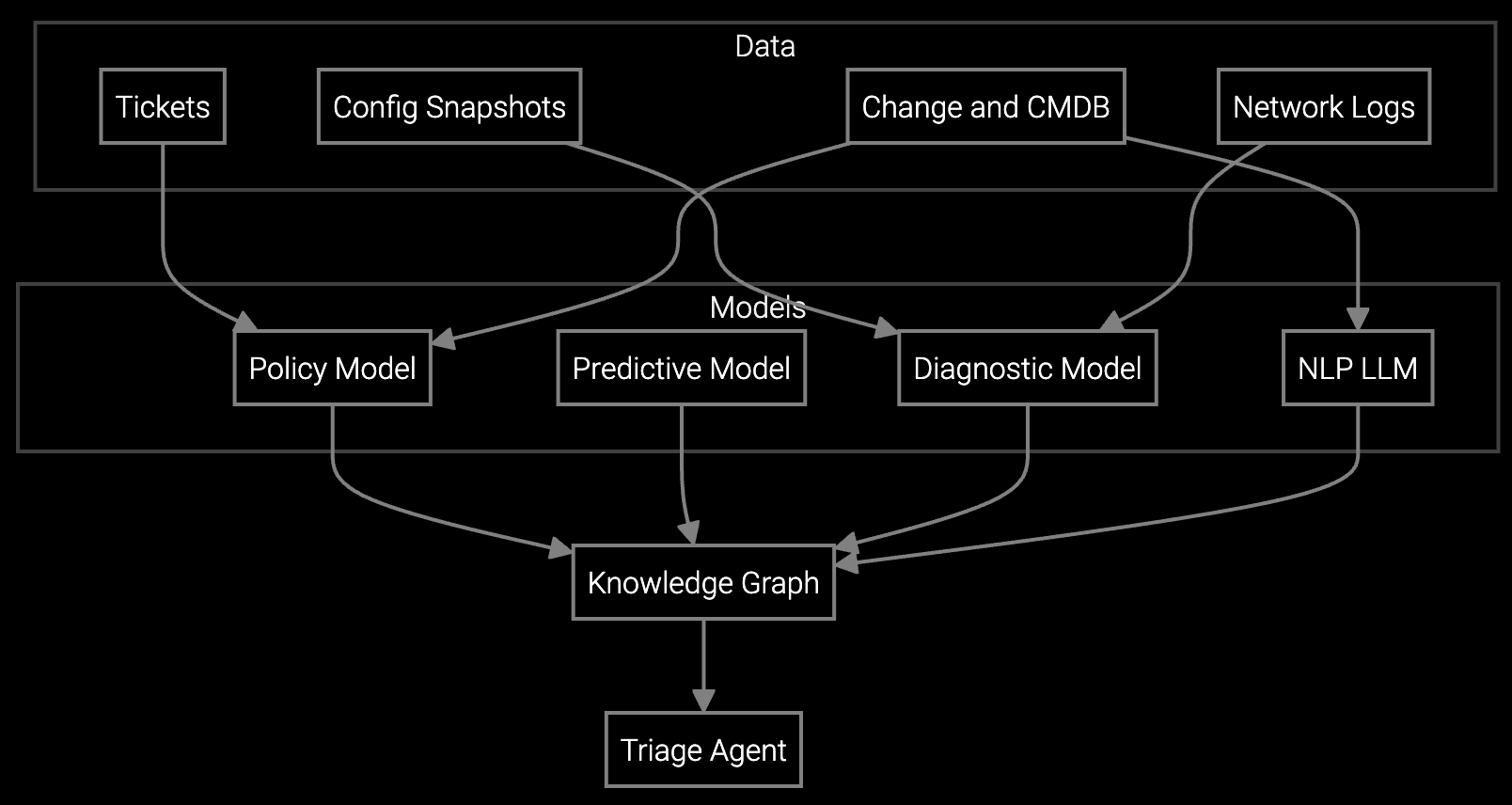
Bruviti's platform automates the labor-intensive diagnostic work that consumes 60-70% of remote session time. The AI ingests SNMP traps, syslog streams, and device telemetry in real time, correlating anomalies across firmware versions, configuration states, and known CVE patterns. Support engineers receive root cause analysis within seconds instead of spending an hour parsing logs manually.
The platform captures resolution patterns from every session, building institutional memory that remains accessible even when senior staff are unavailable. When a similar network failure occurs, the AI surfaces the exact troubleshooting sequence that resolved it previously, guiding newer engineers through complex diagnostics step-by-step. This raises the baseline remote resolution rate from 60% to 85%+, directly reducing expensive escalations and unnecessary dispatches.
Network equipment OEMs face unique cost pressure from 24/7 uptime SLAs and the complexity of multi-vendor environments. A single firewall misconfiguration or router firmware bug can cascade across thousands of devices, triggering simultaneous support incidents that overwhelm remote teams.
Traditional remote support relies on manual correlation of SNMP alerts, syslog entries, and configuration snapshots. Senior engineers who understand legacy DWDM systems or carrier-grade routing protocols become bottlenecks when these incidents spike. AI automation breaks this constraint by encoding that expertise into pattern-recognition algorithms that scale instantly, resolving 85% of incidents without human bottlenecks and protecting margin on service contracts.
Most network equipment OEMs see payback within 6-9 months. The ROI comes from three sources: reduced session duration (50% improvement doubles engineer capacity without hiring), higher remote resolution rates (85% vs 60% eliminates 40% of escalation costs), and avoided SLA penalties from faster mean time to resolution. Organizations supporting 10,000+ devices annually typically save $800K-$1.2M in Year 1.
Cost per incident includes fully loaded support engineer labor (hourly rate × session duration), platform tool costs, and the weighted cost of escalations. For network equipment, average incidents cost $120-$180 when resolved remotely, but escalated incidents cost $400-$600 when specialist resources are engaged. AI-driven platforms reduce cost per incident by 25-40% by shortening sessions and raising the remote resolution rate.
Track remote resolution rate (target 85%+), average session duration (target 50% reduction vs baseline), escalation rate (incidents requiring specialist or dispatch), and mean time to resolution (MTTR). For board reporting, translate these into financial impact: cost per incident reduction, engineer capacity gain (incidents handled per FTE), and SLA penalty avoidance (especially critical for carrier-grade equipment with five-nines uptime requirements).
AI automates the time-consuming log analysis and pattern matching that consumes 60-70% of remote session time. The platform ingests syslog streams, SNMP traps, and device telemetry, correlating anomalies across firmware versions and configuration states to deliver root cause analysis in seconds. It also captures expert troubleshooting sequences from resolved incidents, guiding newer engineers through complex diagnostics that previously required senior staff availability.
Remote resolution by a support engineer costs $120-$180 per incident on average. Escalating to specialist resources (senior network architects, firmware engineers) costs $400-$600 per incident due to higher labor rates and longer diagnostic cycles. Dispatching field service for issues that could have been resolved remotely adds $1,200-$2,000 per visit. Raising remote resolution rate from 60% to 85% eliminates thousands of these expensive escalations annually.
Software stocks lost nearly $1 trillion in value despite strong quarters. AI represents a paradigm shift, not an incremental software improvement.
Function-scoped AI improves local efficiency but workflow-native AI changes cost-to-serve. The P&L impact lives in the workflow itself.
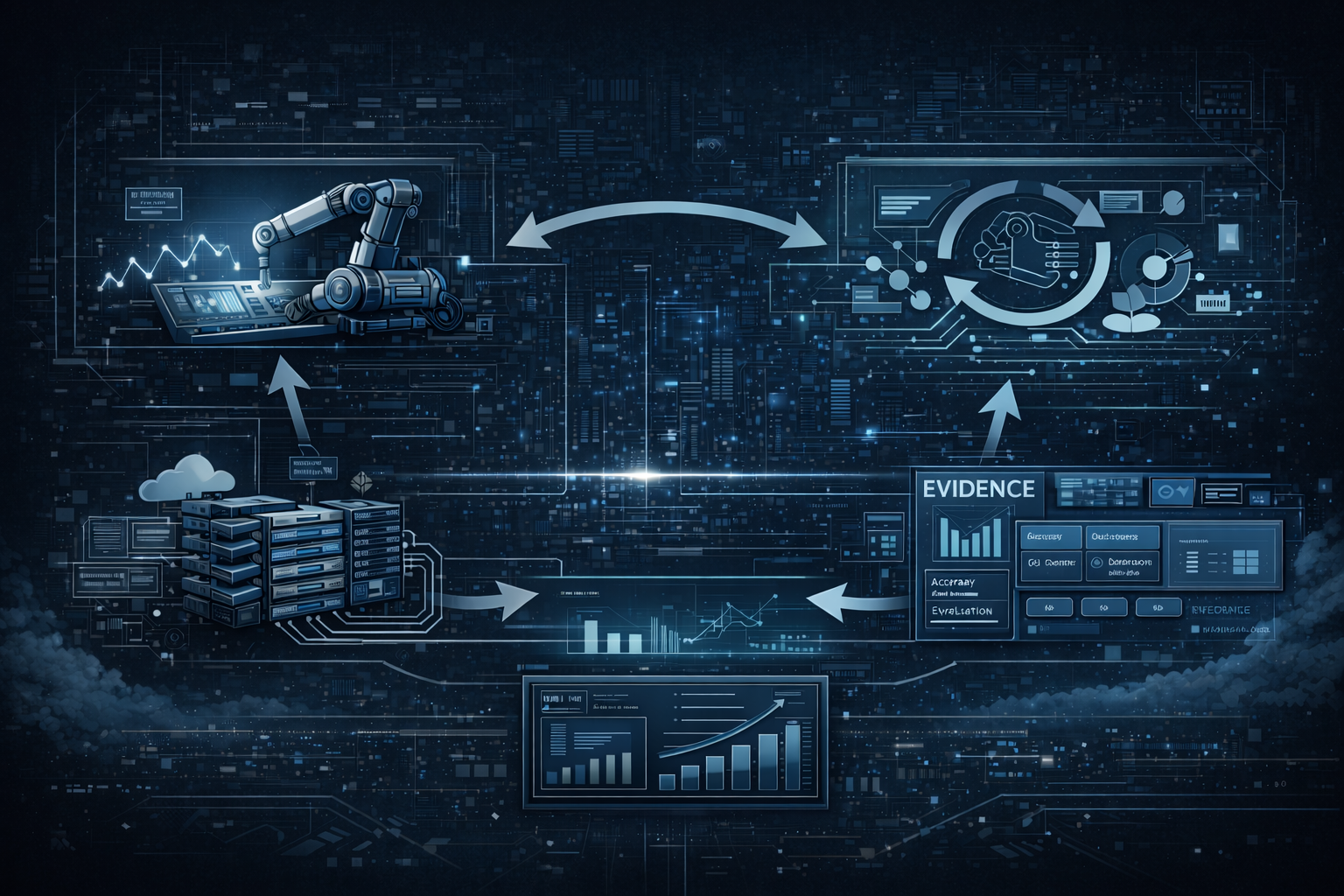
Five key shifts from deploying nearly 100 enterprise AI workflow solutions and the GTM changes required to win in 2026.
See how AI-driven diagnostics can reduce your cost per incident by 25-40% within 90 days.
Schedule ROI Analysis