
Rising case volumes and agent turnover are pushing contact center costs past margin targets.
AI customer service delivers a 35% reduction in call volume for network equipment OEMs, per Bruviti deployment data. Fewer calls means lower contact-center cost and deferred hiring as case volume grows. The ROI case rests on deflection: every call AI handles or prevents is cost removed from the support P&L.
Agents search across multiple systems—firmware release notes, SNMP trap documentation, RMA histories—adding minutes to every interaction. Each lookup delays resolution and increases labor costs.
Manual triage misroutes firmware issues to hardware teams and configuration problems to software engineers, wasting tier-2 capacity on cases that should resolve at tier-1.
Agents without context from prior interactions ask customers to repeat symptoms and serial numbers, frustrating NOC engineers and doubling handle time on multi-touch cases.
Bruviti automates the three highest-cost activities in network equipment customer service: case classification, knowledge lookup, and context retrieval. The platform ingests SNMP trap logs, syslog data, and firmware telemetry to classify issues before agents see them, routing configuration problems, hardware failures, and security vulnerabilities to the right teams on first touch.
The AI retrieves answers from firmware documentation, RMA histories, and prior resolutions in real time, surfacing the relevant troubleshooting steps and part numbers directly in the agent interface. For repeat contacts, the system reconstructs case history instantly, eliminating manual review and reducing handle time on multi-touch issues by more than half.
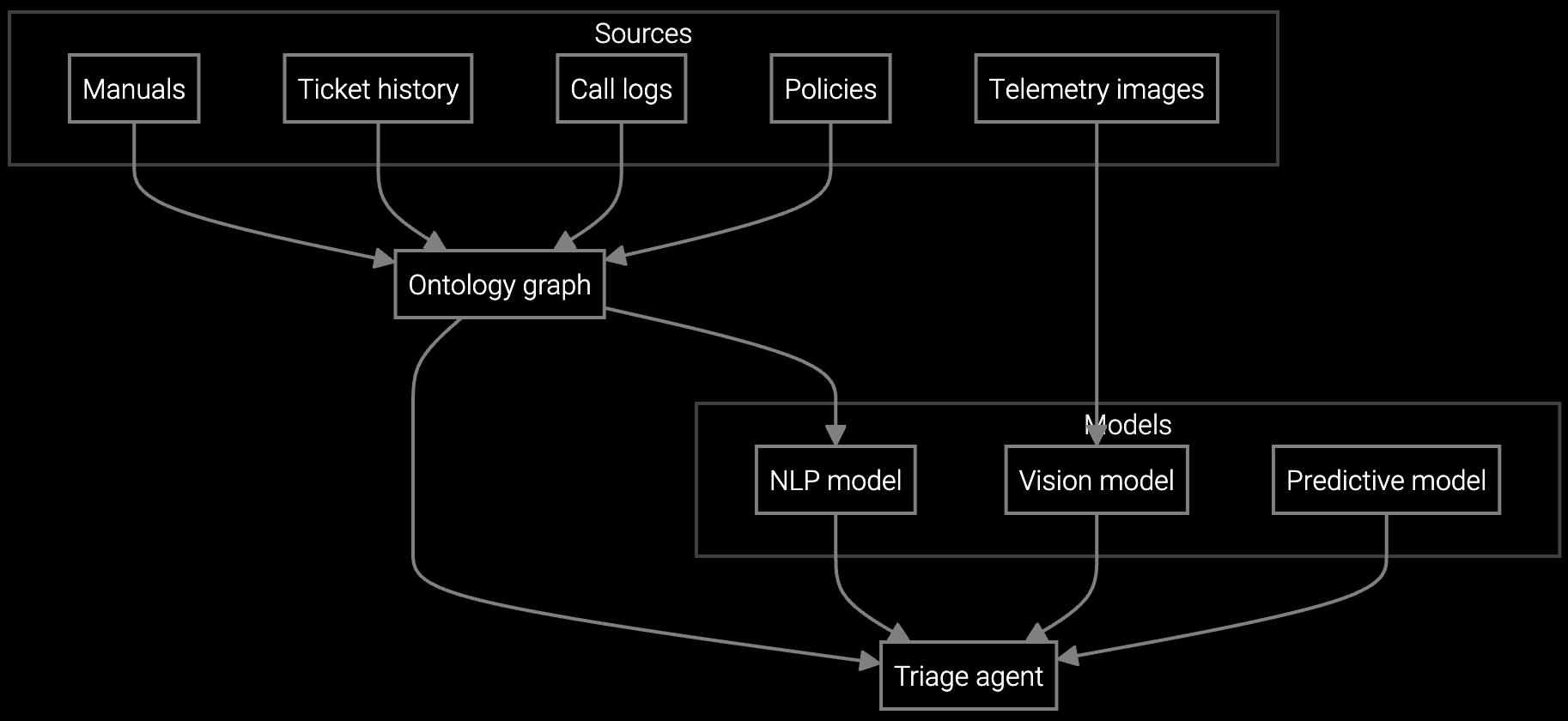
Automatically classify router firmware issues, switch configuration errors, and firewall telemetry alerts, routing each case to the correct engineering team with diagnostic context from SNMP logs.
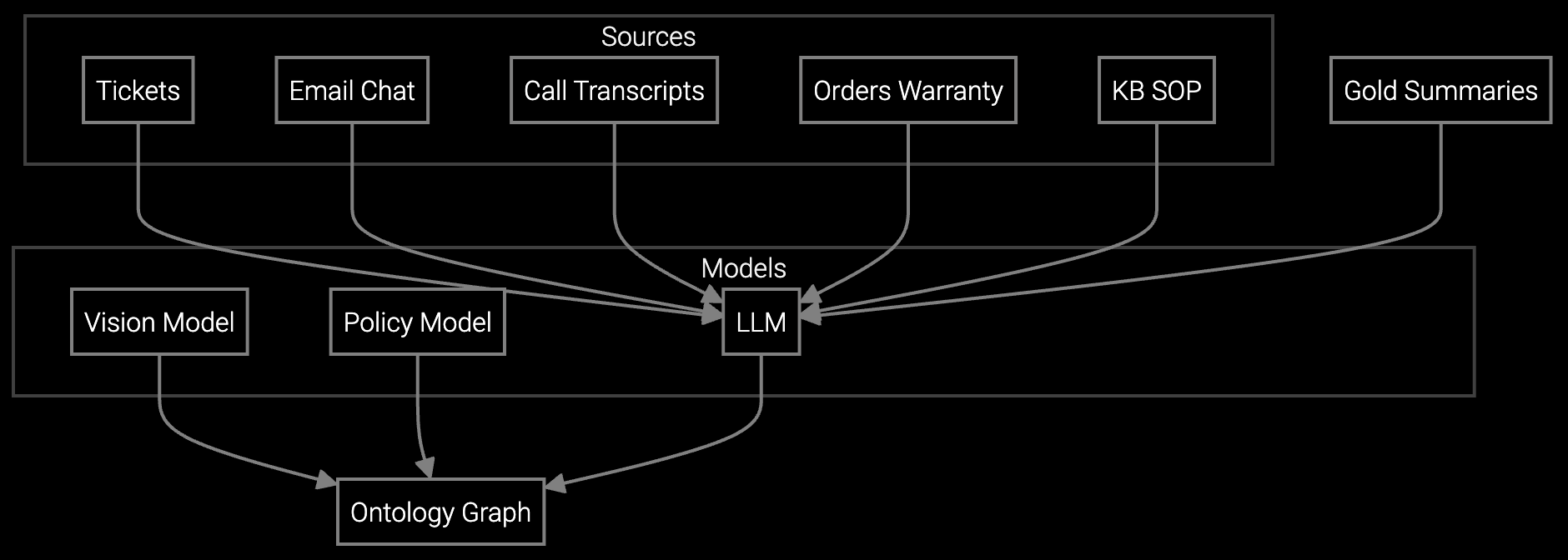
Generate instant summaries from multi-touch cases involving firmware upgrades, RMA requests, and configuration changes so agents understand network history without reading prior interactions.
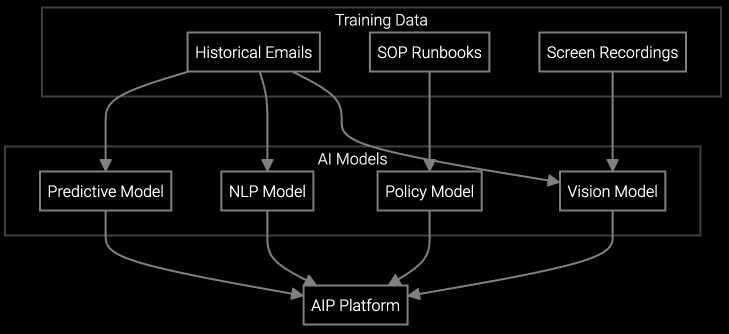
Parse inbound emails describing network outages or security vulnerabilities, extract device serial numbers and error codes, and draft responses using firmware knowledge bases and RMA policies.
Network equipment contact centers handle three distinct cost drivers: firmware-related inquiries consuming tier-2 capacity, configuration issues requiring multi-system lookups, and RMA triage where agents determine hardware failure without device access. Each category carries different labor costs but shares a common bottleneck—agents searching for answers across disconnected systems.
The highest ROI comes from automating firmware support, where agents currently spend minutes navigating release notes and CVE databases to match symptoms with patches. Misrouted firmware cases escalate to expensive software engineers, while simple configuration errors consume tier-1 capacity that should resolve routine inquiries. RMA validation without proper context sends non-defective equipment through reverse logistics, inflating warranty reserves.
Most network OEMs achieve positive ROI within 6-9 months when targeting high-volume case types like firmware inquiries and configuration errors. The savings come from reduced AHT (typically 30-40% improvement) and higher FCR rates (15-25 point lift), which directly lower cost per contact. Larger contact centers with 200+ agents often see payback in under 6 months due to economies of scale.
Average Handle Time (AHT) improves within the first 30 days as agents gain instant access to firmware documentation and RMA histories. First Contact Resolution (FCR) follows 60-90 days later once the AI learns routing patterns and reduces misclassification. Cost per contact declines proportionally, with most network OEMs reporting 35-45% total reductions by month six.
Start with baseline cost per contact (total contact center cost divided by case volume). Measure AHT reduction and FCR improvement monthly. Each minute of AHT reduction translates to X fewer agent-hours per 1000 cases. Each point of FCR improvement eliminates Y repeat contacts. Multiply these by loaded labor cost to quantify savings. Network OEMs typically see $15-22 savings per case on firmware inquiries.
Knowledge retrieval automation delivers 25-40% AHT reduction by eliminating manual searches across firmware release notes, SNMP documentation, and RMA databases. For a 100-agent contact center with $4.2M annual cost and 150,000 cases, this translates to $1.5-1.8M annual savings. The savings compound as agents handle more cases per day without additional headcount.
AI-assisted RMA triage reduces no-fault-found returns by validating failure symptoms against telemetry before authorizing replacements. Network OEMs typically see 18-25% reductions in RMA volume from better triage, which lowers warranty reserves and reverse logistics costs. The contact center captures this benefit through improved case classification—firmware and configuration issues resolve without hardware replacement.

Understanding and optimizing the issue resolution curve.

Part 1: The transformation of IT support with AI.
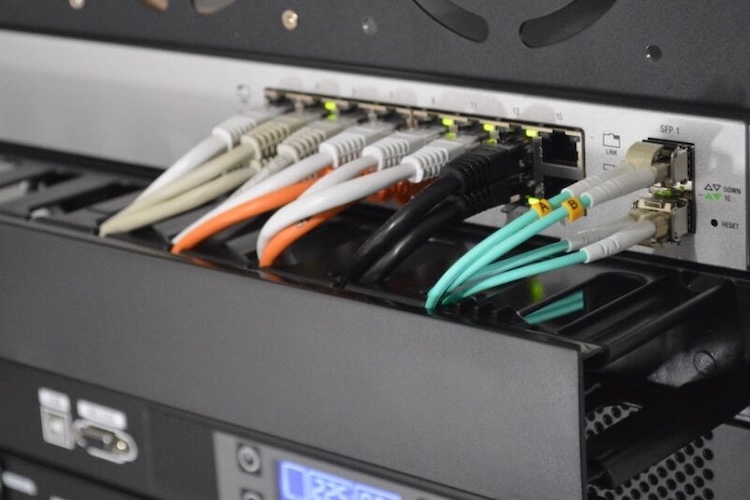
Part 2: Implementing AI in IT support.
See the ROI model with your contact center metrics and case volume.
Schedule ROI Analysis