When fab equipment downtime costs exceed $1M per hour, remote resolution speed directly impacts your bottom line.
Bruviti deployment data shows AI remote support reduces unplanned downtime by 10 to 20%. In semiconductor fabs where a stalled tool costs millions per hour, that downtime reduction is the core return: earlier anomaly detection and remote resolution keep capacity online instead of waiting on dispatched specialists.
Support engineers lack the diagnostic tools and visibility to resolve complex tool issues remotely. Each escalation adds cost and extends downtime.
Manual log analysis and knowledge base searches consume hours per incident. Engineers waste time hunting for solutions instead of resolving issues.
High-value engineers spend cycles on repetitive diagnostics that could be automated. Capacity constraints drive premium labor costs.
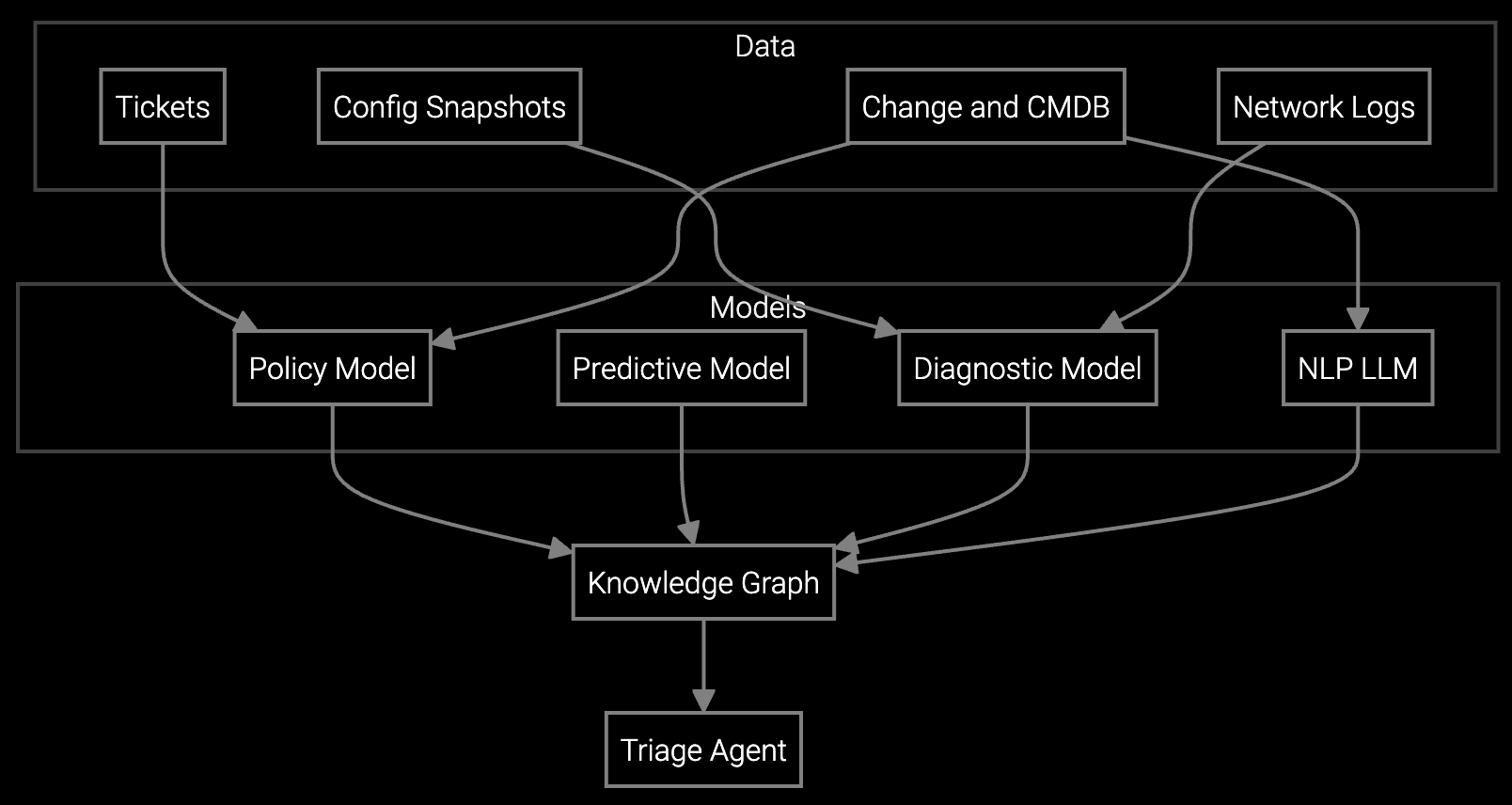
Bruviti's platform increases remote resolution rates by automating the diagnostic process. The AI ingests telemetry from lithography systems, etch tools, and metrology equipment, identifies fault patterns, and delivers root cause analysis in minutes instead of hours. Support engineers access guided troubleshooting workflows that compress session duration while maintaining resolution quality.
The platform captures resolution patterns from every remote session and converts them into reusable diagnostic logic. This institutional knowledge compounds over time—each resolved incident makes the next one faster. Support teams handle higher case volumes without adding headcount, and complex issues that previously required escalation now resolve in the first session.
Semiconductor OEMs support hundreds of tools across 24/7 fab operations. Each tool generates gigabytes of process telemetry daily. When an etch chamber or lithography system flags an error, remote support engineers must diagnose the issue within minutes to prevent production delays.
The ROI calculation starts with remote resolution rate. A 10-point improvement in remote resolution—from 60% to 70%—eliminates hundreds of escalations annually. At $5K-15K per escalation (loaded labor, travel, expedited parts), the savings compound quickly. Add faster session resolution, and you recapture 20-30% of support engineer capacity without hiring.
Most semiconductor OEMs see 8-14 month payback periods. ROI accelerates after initial deployment as the AI captures more resolution patterns and remote resolution rates improve. The key driver is escalation cost avoidance—each 5-point improvement in remote resolution rate eliminates 100-200 escalations annually for a mid-sized tool portfolio.
Track the percentage of support incidents resolved without escalation to engineering or specialist teams. Baseline your current rate, then measure monthly post-deployment. A 15-20 point improvement is common within the first six months. Session duration is a secondary metric—look for 30-40% reductions in average time to resolution.
The platform ingests tool telemetry, alarm logs, and process parameter data from fab equipment. Integration with existing remote access tools and ticketing systems accelerates deployment. The AI learns from historical incident data, so ROI improves as you feed it more resolution history.
Productivity gains defer hiring rather than eliminate positions. A 50% improvement in cases per engineer means you can delay adding 3-5 support engineers for 18-24 months as tool volumes grow. Most OEMs reallocate capacity to higher-value work like process optimization and yield improvement.
Margin impact comes from three sources: escalation cost avoidance (40-55% reduction), deferred labor costs (18-24 month hiring delay), and improved customer satisfaction (fewer extended downtime incidents). For a 200-tool portfolio, annual savings range from $800K to $1.8M depending on current remote resolution baseline and escalation costs.
Software stocks lost nearly $1 trillion in value despite strong quarters. AI represents a paradigm shift, not an incremental software improvement.
Function-scoped AI improves local efficiency but workflow-native AI changes cost-to-serve. The P&L impact lives in the workflow itself.

Five key shifts from deploying nearly 100 enterprise AI workflow solutions and the GTM changes required to win in 2026.
See the margin impact of higher remote resolution rates for your tool portfolio.
Schedule ROI Analysis