When 24/7 uptime is non-negotiable, every minute spent diagnosing router failures or parsing syslog files costs your customers revenue.
AI-assisted remote support cuts mean time to resolution by 40% or more, per Bruviti deployment data, with first-contact resolution reaching 50% or higher at L1/L2. For operators, the per-case math is concrete: fewer engineer-hours per incident, fewer escalations, and faster closure. The savings compound across every ticket the front line now resolves alone.
Support engineers spend hours parsing SNMP traps, syslog entries, and error codes across distributed network devices. Each remote session starts from scratch, searching for patterns that repeat across similar incidents.
Solutions to firmware vulnerabilities, configuration drift, and failure patterns exist in senior engineers' heads but never make it into searchable documentation. New hires lack context, repeat troubleshooting steps, and miss faster resolution paths.
Remote sessions fail not because the issue requires physical access, but because engineers lack visibility into device state, historical telemetry, or guided next steps. Each escalation adds delay, frustrates customers, and increases support costs.
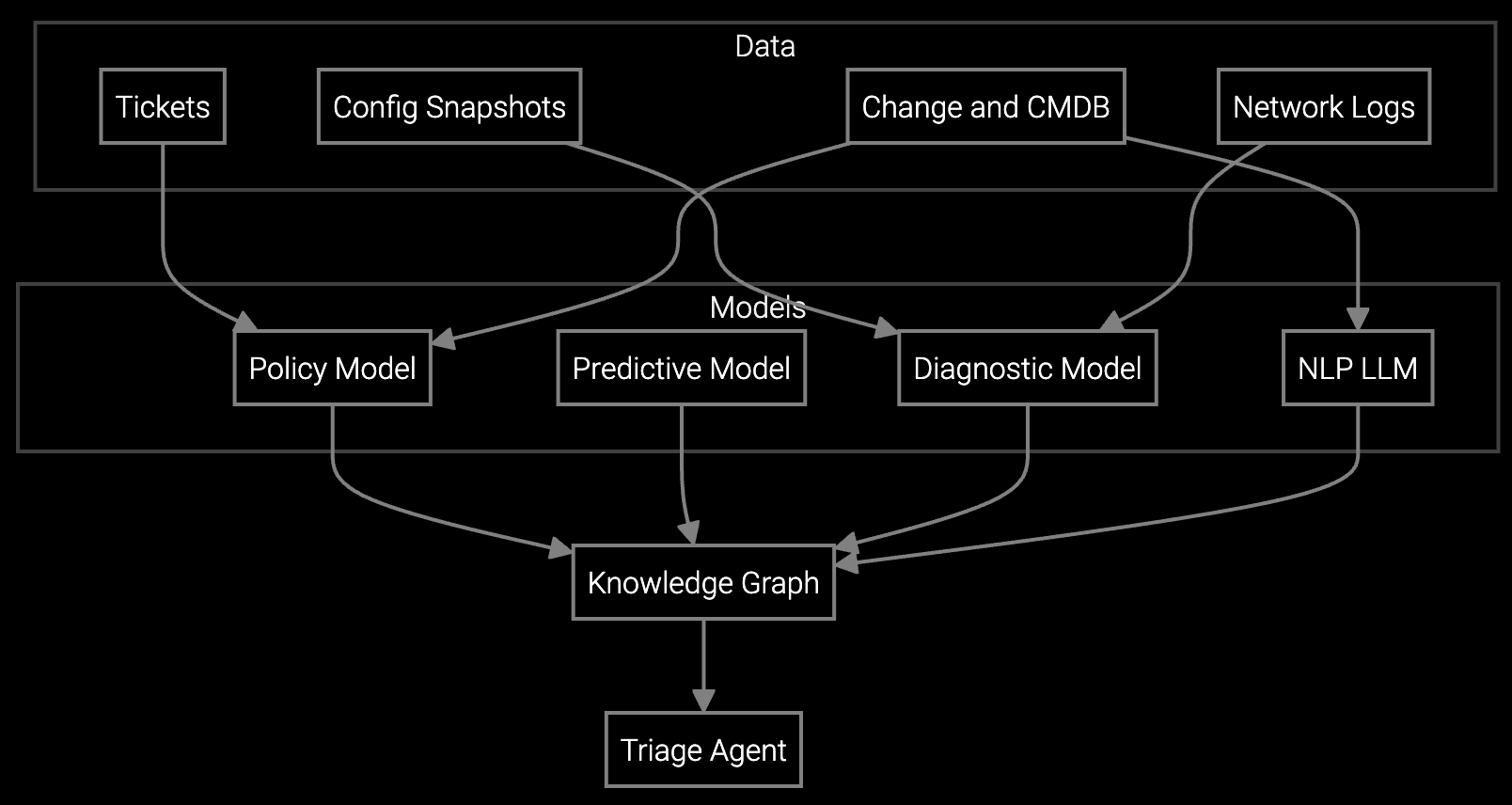
Bruviti's platform analyzes telemetry streams, firmware logs, and SNMP data in real time to surface root causes before engineers manually parse files. When a support engineer opens a remote session, the system has already correlated error patterns across similar devices, identified the likely failure mode, and presented a guided troubleshooting workflow.
Every resolved session feeds back into the platform's knowledge base. The next engineer facing a similar router configuration issue or firewall vulnerability sees the exact steps that worked last time, reducing session duration and increasing first-session resolution. For network equipment OEMs, this translates directly into lower support costs per incident and higher remote resolution rates without adding headcount.
Network equipment OEMs face unique support economics: enterprise customers demand 99.999% uptime SLAs, yet remote sessions often span multiple time zones and involve distributed device populations. Each escalation delays resolution by hours or days, risking SLA penalties and customer churn.
AI-assisted remote support changes the economics by surfacing root causes faster. When a support engineer diagnoses a router failure, the platform automatically correlates firmware versions, configuration changes, and historical error patterns across the fleet. This reduces session time from hours to minutes and increases the percentage of issues resolved remotely without physical access.
Remote resolution rate is calculated as the percentage of support incidents closed without escalation or physical access. Baseline metrics before deployment, then track monthly improvements. Most network OEMs see 10-15 percentage point gains within 90 days as AI-guided workflows reduce escalations for firmware issues and configuration drift.
For a network OEM with 500 remote sessions per month averaging 2.5 hours each, a 40% reduction saves 500 engineer-hours monthly. At a fully loaded cost of $75/hour, that's $37,500 per month or $450,000 annually in direct labor savings, excluding escalation and customer satisfaction impacts.
Most network equipment OEMs observe measurable session time reductions within 30-45 days as the platform ingests telemetry and builds knowledge graphs. Remote resolution rate improvements typically emerge after 60-90 days once session-based knowledge capture reaches critical mass. Full ROI materializes within 6-9 months.
Each escalation that could have been resolved remotely carries multiple costs: extended MTTR, customer dissatisfaction, and delayed resolution. Network OEMs tracking escalation reduction typically quantify savings by multiplying avoided escalations by the average cost per escalation event, which ranges from $500-$1,500 depending on device complexity and geography.
Every remote session that resolves a firmware vulnerability or configuration issue creates a reusable troubleshooting path. The next engineer facing a similar router problem sees the exact steps that worked previously, reducing diagnostic time from hours to minutes. This compounding effect accelerates first-session resolution rates and lowers average support costs per incident over time.
Software stocks lost nearly $1 trillion in value despite strong quarters. AI represents a paradigm shift, not an incremental software improvement.
Function-scoped AI improves local efficiency but workflow-native AI changes cost-to-serve. The P&L impact lives in the workflow itself.
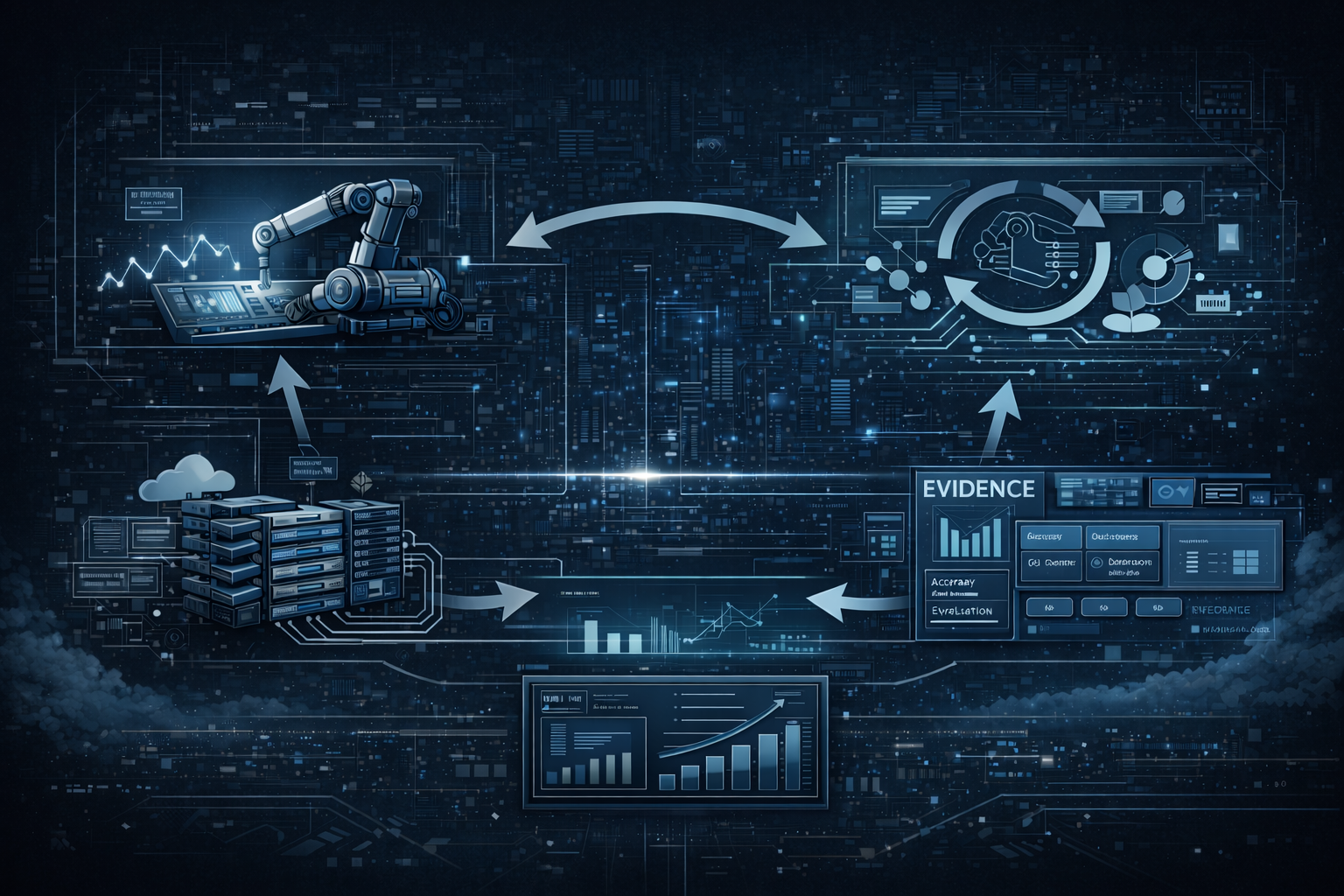
Five key shifts from deploying nearly 100 enterprise AI workflow solutions and the GTM changes required to win in 2026.
Run a pilot on your highest-volume device SKUs and measure session time and resolution rate improvements in 30 days.
Schedule ROI Analysis