
Every minute agents spend searching for router configs or firmware patches costs you money and customer trust.
AI case automation returns 300+ agent hours per week to network support teams, per Bruviti deployment data. That reclaimed capacity absorbs volume growth without new hires and lets agents spend time on complex escalations. Measure ROI in hours saved, then convert to fully loaded agent cost for the financial case.
Agents toggle between NOC tools, firmware databases, and knowledge bases to answer one router question. Every search adds time and frustration to case resolution.
Manual triage misroutes firmware issues to hardware teams and configuration problems to RMA queues. Misclassification forces rework and destroys first contact resolution rates.
Customer history lives in CRM, device telemetry in SNMP dashboards, and past cases in ticketing systems. Agents waste time reconstructing context that should be instant.
Bruviti delivers instant answers from across your systems directly into the agent desktop. When a customer calls about a switch outage, the platform automatically pulls device telemetry, correlates error logs, checks firmware versions, and surfaces relevant past cases—all before the agent finishes reading the case description.
Automated case classification routes firmware CVEs to security teams, configuration errors to Level 1, and hardware failures to RMA processing. Agents stop wasting time on triage and start closing cases. The result: fewer transfers, shorter handle times, and consistent answers regardless of which agent picks up the case.
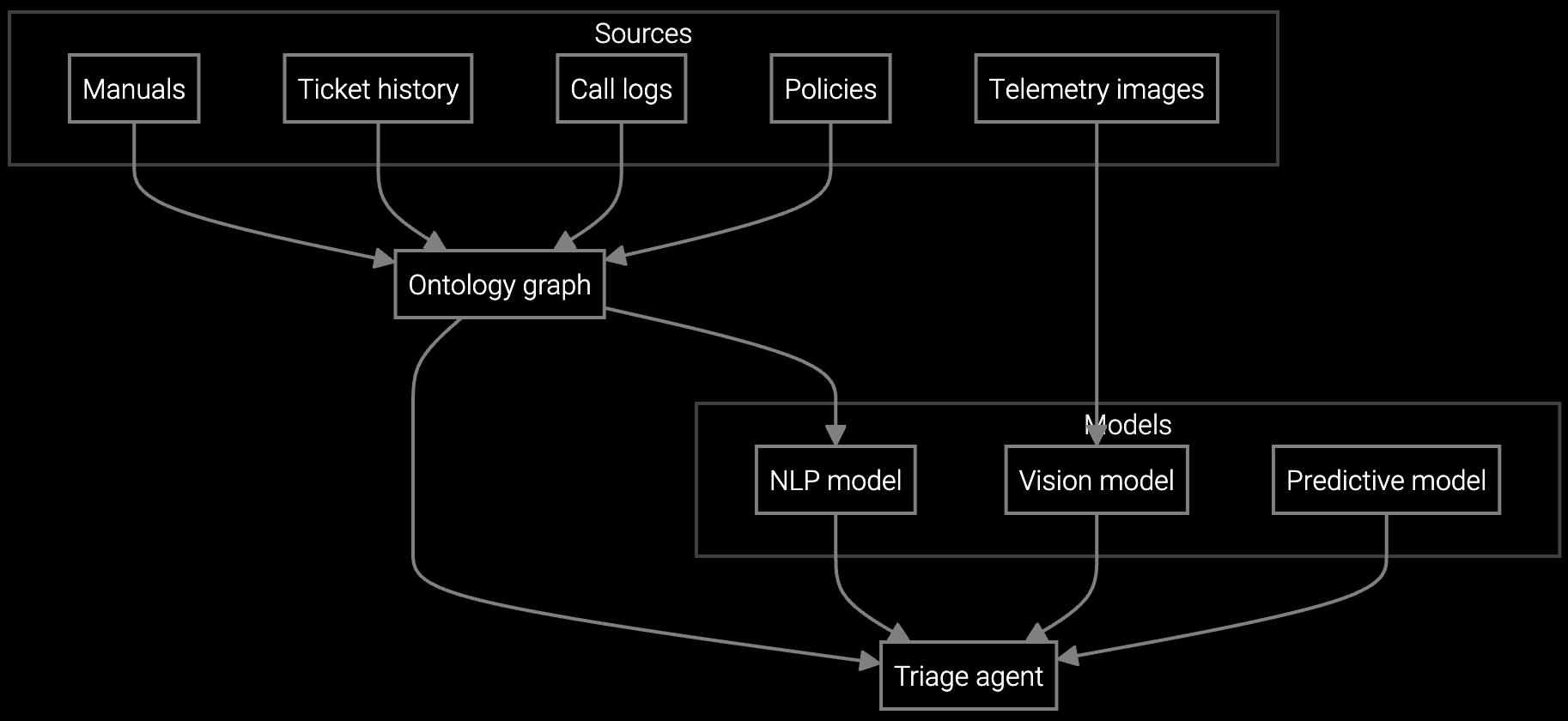
Autonomous case classification analyzes router symptoms, correlates SNMP traps, and routes issues to firmware, hardware, or configuration teams with diagnostic context.
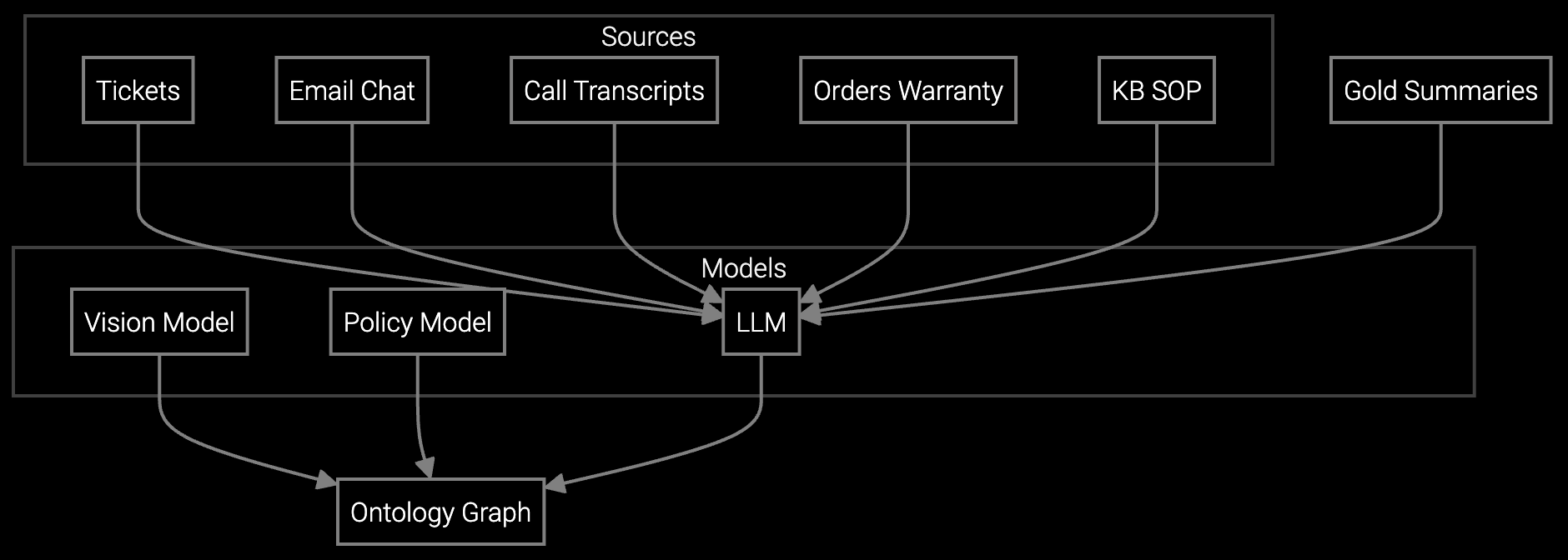
Instantly generates case summaries from NOC emails, chat logs, and call transcripts so agents understand network issue history without reading every interaction.
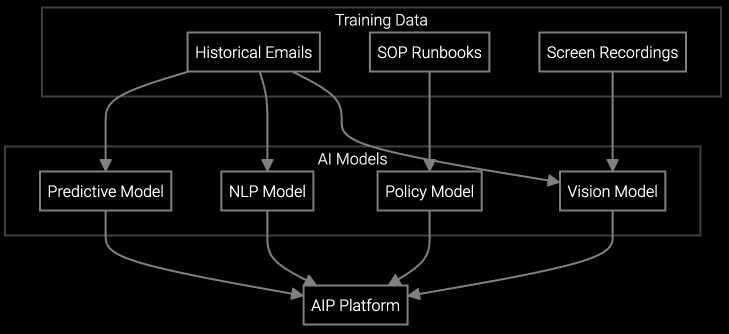
AI automatically reads, classifies, and routes network equipment support emails, drafting responses using firmware databases and historical resolution patterns.
Network equipment support centers handle thousands of daily cases spanning firmware CVEs, PoE power issues, SNMP configuration errors, and RMA requests. Manual case classification and knowledge searches consume 40-50% of agent time. AI eliminates that overhead by automatically routing firmware vulnerability reports to patch management teams, correlating device telemetry with known bug IDs, and surfacing configuration templates for common switch setup errors.
Calculate your savings: multiply current case volume by average handle time reduction (typically 8-12 minutes per case) and cost per agent hour. For contact centers handling 500 cases daily, that's 67-100 hours saved per day. At $45 per agent hour, you save $3,000-4,500 daily or $1.1-1.6M annually before counting improvements to first contact resolution or CSAT.
Most network equipment OEMs measure 20-30% AHT reduction within 60 days of deployment. The platform learns from your historical cases during initial training, so improvements start immediately once agents begin using AI-suggested responses and automated case classification.
Focus on average handle time, first contact resolution rate, and cost per contact. These directly tie to agent productivity and contact center P&L. Secondary metrics like CSAT and case escalation rate confirm quality isn't sacrificed for speed.
Yes. The platform indexes knowledge across routers, switches, firewalls, and wireless controllers simultaneously. Agents get product-specific answers regardless of which equipment line the case involves, eliminating the need to remember which documentation repository covers which SKU family.
Each percentage point improvement in FCR reduces overall case volume by preventing repeat contacts. If you resolve 80% of cases on first contact and improve to 85%, you eliminate 5% of total case volume. Multiply that volume reduction by your cost per contact to quantify savings.
Absolutely. The platform flags cases requiring escalation based on complexity, customer SLA tier, or issue type. Agents maintain full control over routing decisions—AI simply eliminates the manual triage work and provides escalation recommendations backed by historical patterns.

Understanding and optimizing the issue resolution curve.

Part 1: The transformation of IT support with AI.
Part 2: Implementing AI in IT support.
Calculate your ROI based on current case volume, handle time, and cost per contact.
Schedule ROI Analysis