
When agents handle thousands of server, storage, and cooling cases monthly, every minute saved compounds into measurable margin.
Bruviti deployment data shows AI triage cuts average handle time 12.5% and reduces call volume 35%. Operators measure ROI in handle-time minutes saved per case: shorter handle time plus deflected calls lets the same team clear more data center support tickets without overtime.
Agents hunting through PDU firmware bulletins, RAID configuration guides, and thermal management specs waste 3-5 minutes per case. Across thousands of cases, this search time becomes the largest cost driver in contact center operations.
Without automated triage, agents manually categorize server failures, storage issues, and cooling alerts. Misclassification leads to reassignment and rework, inflating handle time and frustrating customers waiting for resolution.
When agents lack instant access to BMC telemetry context and historical failure patterns, they escalate cases that could be resolved immediately. Every escalation doubles cost per contact and extends customer downtime.
Bruviti's platform embeds instant answers directly into your existing ticketing system. When a case arrives about a drive failure or thermal alert, the AI retrieves the exact troubleshooting steps, correlates BMC telemetry, and auto-populates resolution notes. Your agents stop searching and start resolving.
Automated case classification routes server issues to compute specialists and cooling failures to thermal experts without manual triage. Combined with one-click part ordering and pre-filled RMA forms, this eliminates swivel-chair work and collapses handle time by 35-40% while pushing FCR above 80%.
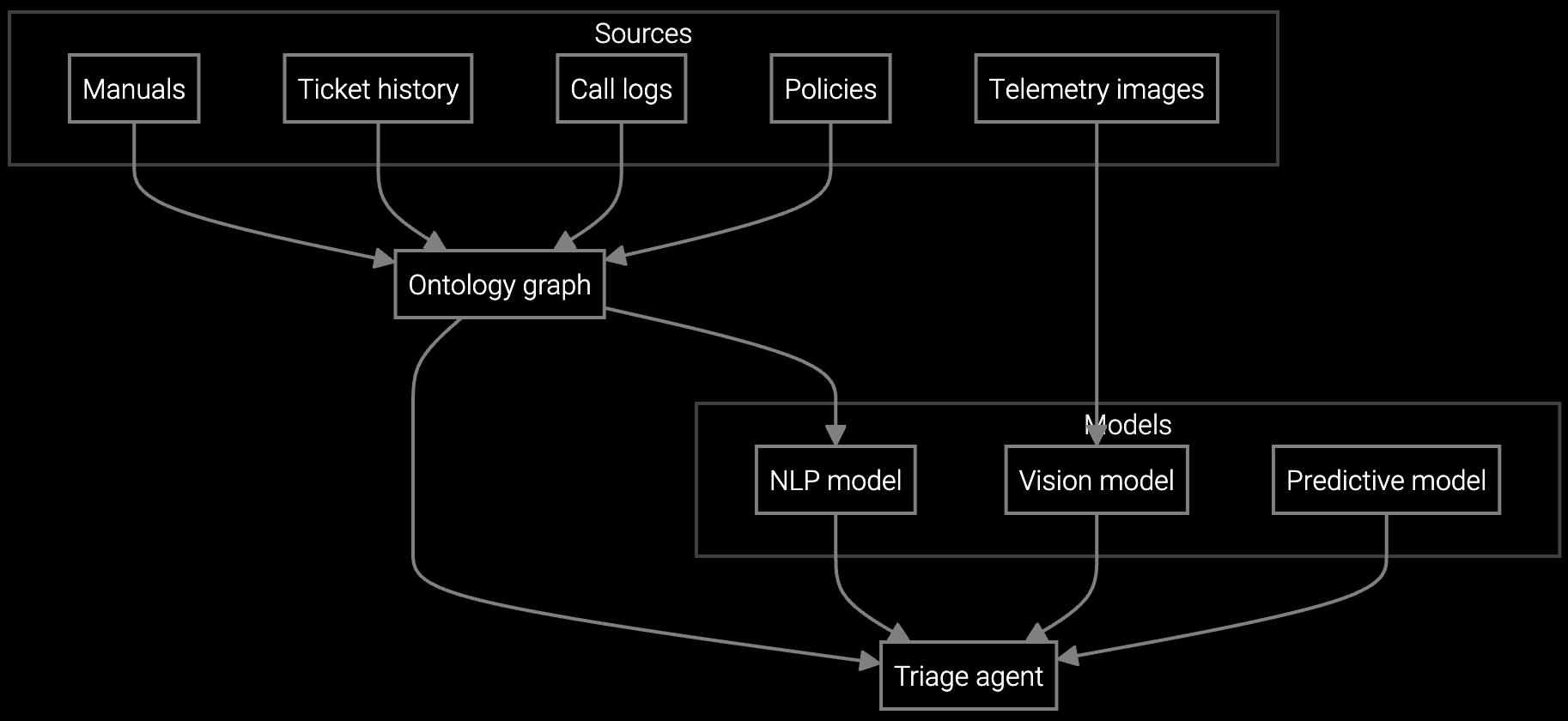
Autonomous classification analyzes server error codes, correlates IPMI telemetry, and routes hardware failures to the correct support tier instantly.
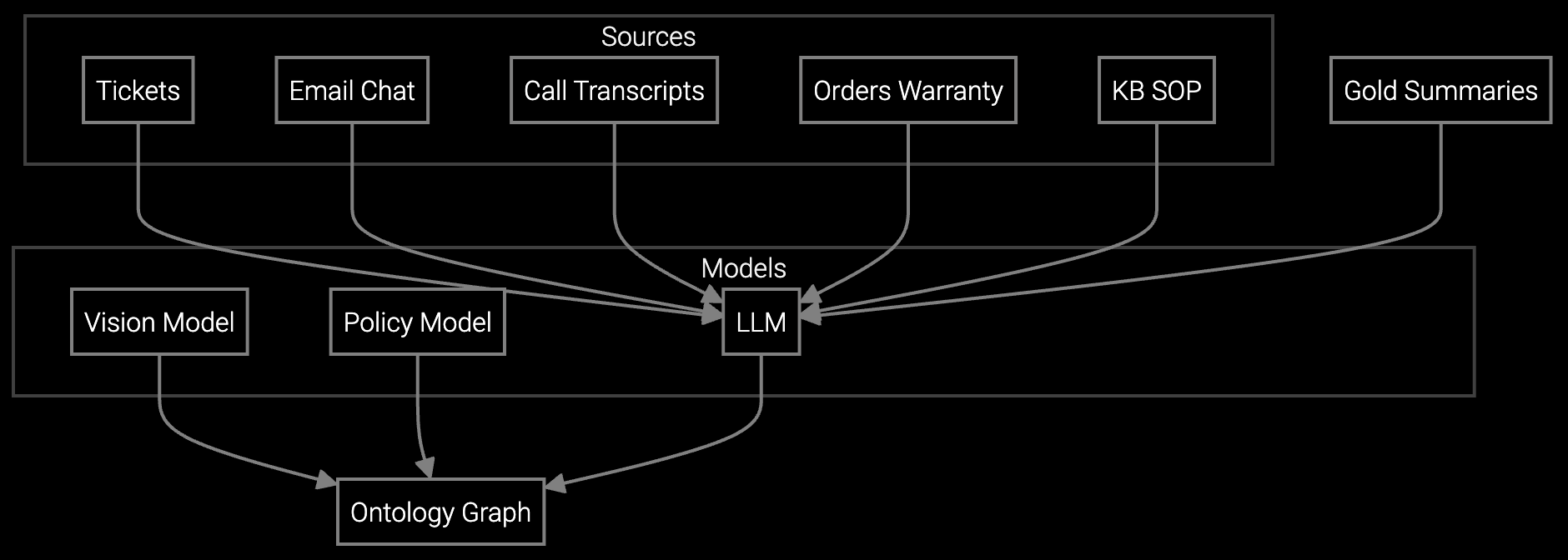
Instantly generates case summaries from email threads and chat logs about drive replacements or cooling incidents, so agents understand history without reading everything.
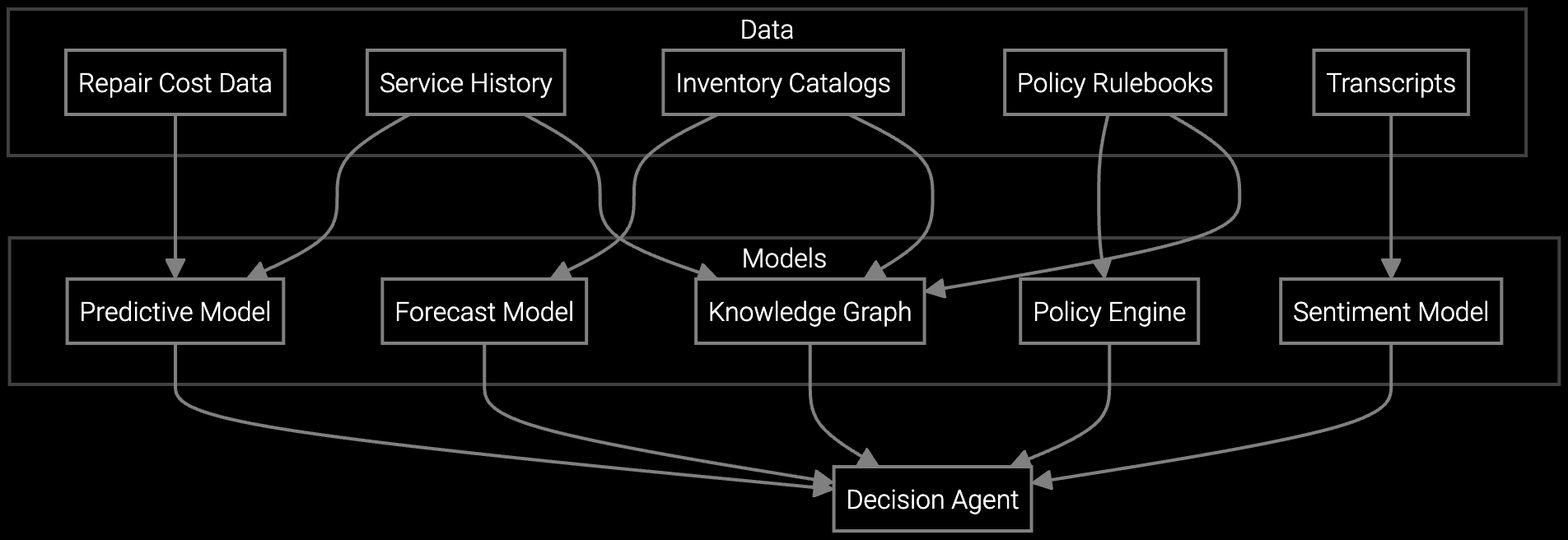
AI analyzes UPS failure modes, PDU part costs, and equipment age to recommend the most cost-effective resolution for data center power infrastructure.
Data center OEMs handle 30,000-50,000 support cases monthly across server, storage, and infrastructure product lines. At $22-28 average cost per contact, a 35% AHT reduction saves $230,000-385,000 monthly. Improved FCR eliminates 6,000-9,000 repeat contacts annually, cutting another $132,000-252,000 in handling costs.
The platform pays for itself within 90-120 days through reduced agent headcount needs during peak periods and lower escalation costs. Unlike generic chatbots, it integrates with IPMI data feeds and existing CRM systems, requiring no workflow redesign.
Most data center OEMs see 15-20% AHT reduction within the first 30 days as agents learn to trust instant knowledge retrieval. The full 35-40% reduction materializes by day 60-90 once automated case classification and one-click part ordering become habitual. Early gains come from eliminating manual searches through firmware bulletins and configuration guides.
Track AHT, FCR, cost per contact, and cases resolved per agent daily. Data center OEMs typically report these to executives monthly: 35-40% AHT drop, 25-30% FCR improvement, $8-12 cost per contact reduction, and 40-50% increase in cases per agent. Pair these with customer CSAT scores to show both efficiency and quality gains.
No. The AI embeds directly into your current ticketing system as a sidebar. Agents continue using the same CRM interface they know, but now instant answers, auto-populated notes, and one-click part lookups appear automatically. There's no separate login or tool-switching required.
Hiring one additional agent costs $55,000-75,000 annually with 60-90 day ramp time. AI delivers equivalent throughput gain in 30 days at one-third the cost, with no turnover risk. Most OEMs use AI to handle volume growth without expanding headcount, redeploying agents to complex escalations instead of repetitive searches.
ROI improves during peak periods because AI scales instantly without overtime costs or temp hiring. Data center OEMs handling 40-60% volume spikes during Q4 hardware refreshes maintain SLAs with existing staff instead of paying premium rates for seasonal agents. The cost savings compound when case volume is highest.

Understanding and optimizing the issue resolution curve.

Part 1: The transformation of IT support with AI.
Part 2: Implementing AI in IT support.
Schedule a 30-minute session to model your specific case volume, AHT, and cost per contact against Bruviti's proven performance benchmarks.
Calculate Your Savings