
Incomplete asset data drives unnecessary service calls and lost contract renewals—costing appliance OEMs millions annually.
Bruviti deployment data shows installed-base intelligence reduces service resolution time by 50% and trims MTTR from 7 days to 2 days. Operators recover hours per case because the full asset and fault history is already attached, so cost per service event drops without adding headcount.
Missing serial numbers and configuration details force service teams to spend extra time identifying equipment. Calls take longer, customers wait, and margin erodes on every interaction.
Without visibility into warranty expiration dates and service history, OEMs miss upsell opportunities. Extended warranties and service contracts go unsold, leaving revenue on the table.
Lack of proactive monitoring means failures happen without warning. Emergency repairs cost more than planned maintenance, and customers experience unexpected downtime.
Accurate asset tracking reduces service costs in three ways: fewer unnecessary service calls, higher contract renewal rates, and proactive maintenance that prevents expensive failures. When service teams have complete equipment history at their fingertips, they resolve issues faster and identify upsell opportunities.
The platform automatically tracks serial numbers, firmware versions, and configuration changes across your installed base. IoT telemetry feeds real-time performance data into digital twins, flagging anomalies before they become failures. This visibility transforms installed base management from a cost center into a revenue driver.

Monitor IoT telemetry from connected refrigerators and HVAC systems to detect temperature anomalies and compressor faults before appliances fail in customer homes.
Estimate when dishwasher pumps or washer motors will fail based on cycle counts and usage patterns, scheduling maintenance during low-demand periods.

Schedule commercial kitchen equipment maintenance based on actual equipment condition rather than fixed intervals, reducing downtime for restaurant customers.
Appliance manufacturers face thin margins and high service volumes. Connected appliances generate telemetry streams that could enable proactive service, but most OEMs lack the infrastructure to convert sensor data into actionable insights. Warranty costs run 2-4% of revenue, making every prevented service call material to profitability.
Service contract revenue depends on timely renewal outreach, yet many OEMs don't track warranty expiration dates by serial number. When connected refrigerators fail, customers expect immediate resolution—but incomplete asset records slow diagnosis. The economic opportunity is clear: better asset visibility directly reduces service costs and increases contract attachment rates.
Most OEMs see measurable service cost reductions within 90 days. Contract renewal rate improvements appear in the first renewal cycle after implementation, typically 120-180 days. The fastest payback comes from reducing unnecessary service calls through better equipment identification.
Average handle time drops when service teams access complete equipment history instantly. Emergency repair costs fall as predictive alerts enable planned maintenance. No-fault-found returns decrease when accurate configuration data improves pre-authorization diagnosis. Contract renewal rates improve through automated expiration alerts.
Automated tracking of warranty expiration dates enables timely renewal outreach. Service history visibility lets OEMs target high-value customers with personalized offers. Usage pattern analysis identifies appliances likely to need extended coverage, improving conversion rates on service contract offers.
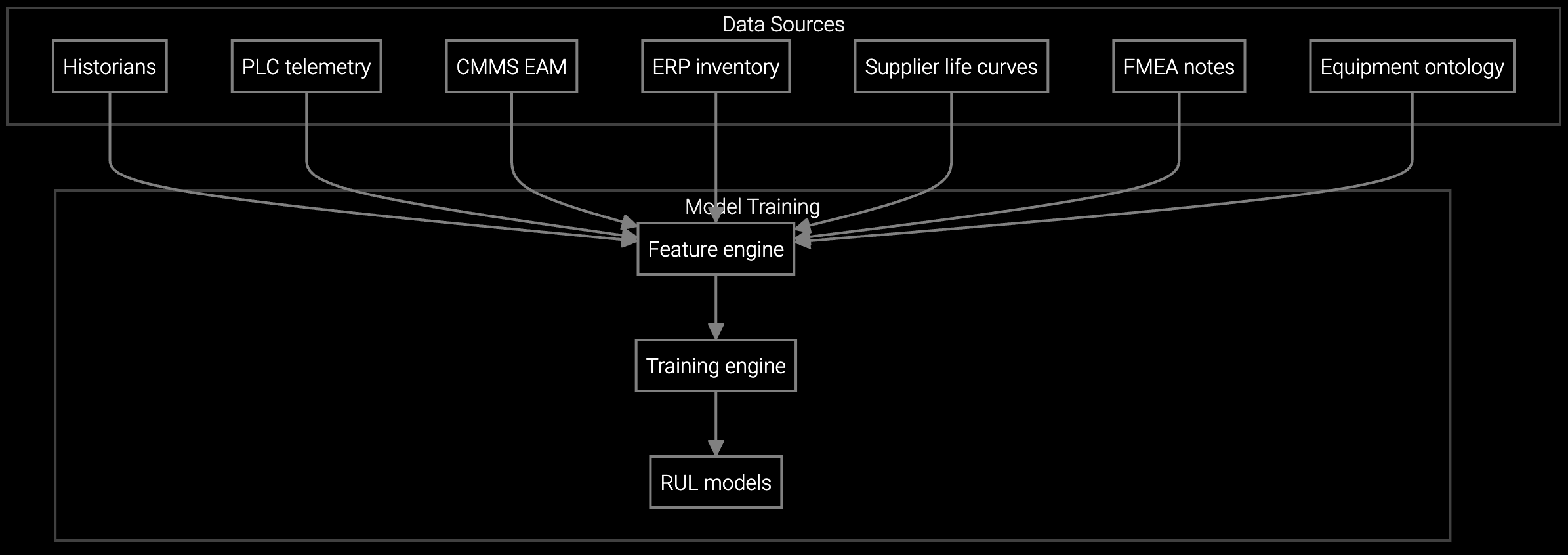
The platform ingests data from product registration systems, IoT telemetry feeds, and service management platforms. APIs connect to existing asset databases to synchronize serial numbers and configuration details. Real-time telemetry from connected appliances flows through standard MQTT or REST interfaces.
Compare emergency service call costs against planned maintenance expenses over the same period. Track mean time between failures before and after predictive maintenance implementation. Measure customer satisfaction scores and Net Promoter Score changes as unexpected downtime decreases.

Software stocks lost nearly $1 trillion in value despite strong quarters. AI represents a paradigm shift, not an incremental software improvement.

Function-scoped AI improves local efficiency but workflow-native AI changes cost-to-serve. The P&L impact lives in the workflow itself.

Five key shifts from deploying nearly 100 enterprise AI workflow solutions and the GTM changes required to win in 2026.
Calculate cost savings from better installed base visibility in your environment.
Schedule ROI Analysis