
Seasonal spikes and razor-thin margins mean every wasted minute on a service call directly impacts profitability.
Bruviti lowers average appliance-service handling time 22% and improves first contact resolution 11%, per Bruviti deployment data, by auto-summarizing cases for agents. Operators convert shorter, one-touch cases into measurable per-case cost savings across the contact center, with the savings compounding as call mix shifts toward complex work.
Agents spend 3-7 minutes per call searching across multiple systems for error codes, parts diagrams, and troubleshooting steps. Every search delays resolution and increases cost per contact.
Without instant access to symptom-based diagnostics and parts compatibility, agents escalate or schedule callbacks. Repeat contacts double handling costs and frustrate customers waiting for working appliances.
Different agents provide different advice for the same symptom, leading to unnecessary parts orders, truck rolls, or customer self-repair attempts that void warranties. Variance erodes margin.
Bruviti's platform delivers instant, context-aware answers directly in the agent's existing interface. When a customer describes a refrigerator not cooling or a washer making noise, the system correlates symptoms with model-specific diagnostics, parts availability, and warranty entitlement in real time. Agents no longer toggle between knowledge bases, parts catalogs, and CRM screens.
The platform automates case notes, pre-fills part numbers, and surfaces recommended next steps based on similar resolved cases. This reduces average handle time from 8-10 minutes to 4-6 minutes while improving resolution accuracy. Faster, more consistent service lowers cost per contact and eliminates repeat calls that inflate contact center budgets.
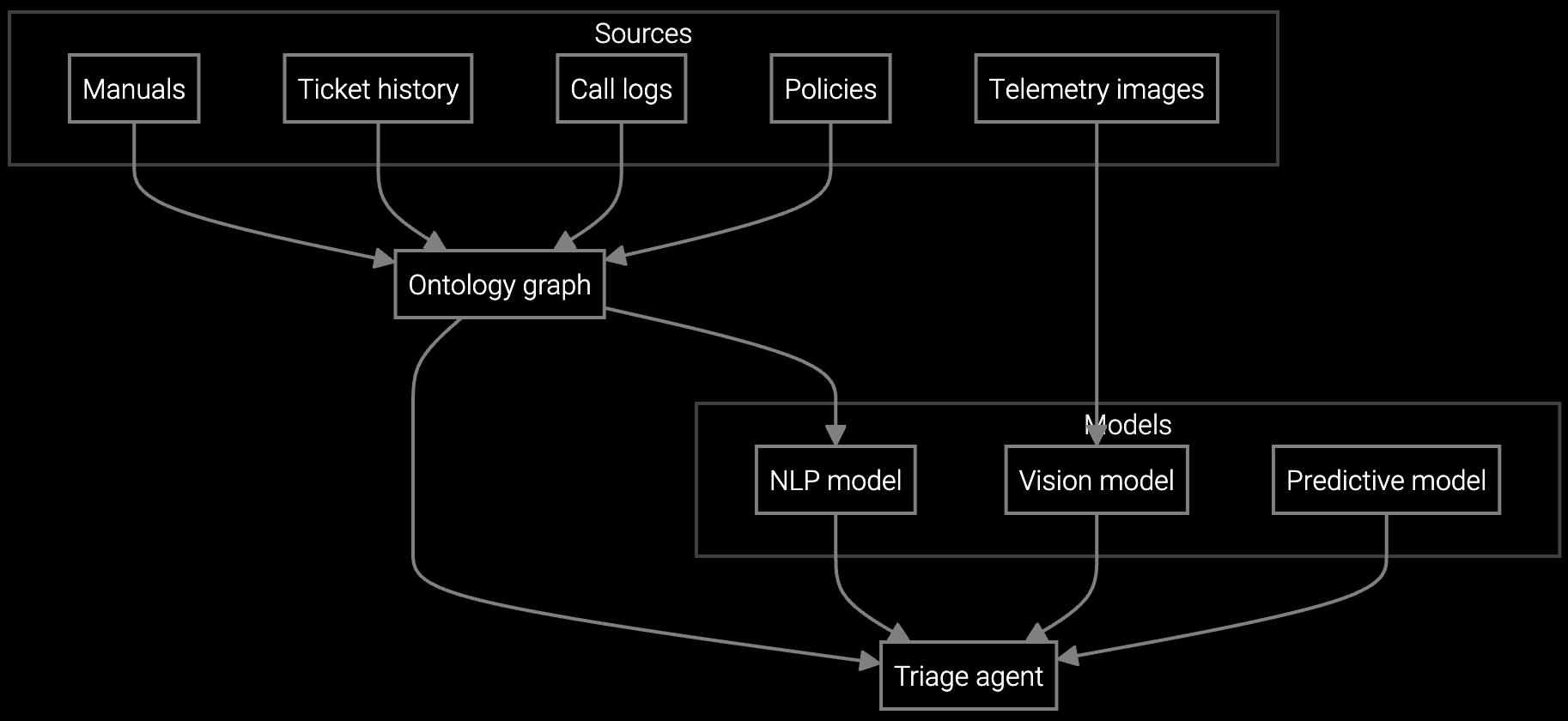
Autonomous case classification analyzes appliance symptoms, correlates error codes with model history, and routes issues to the right support tier with full diagnostic context.
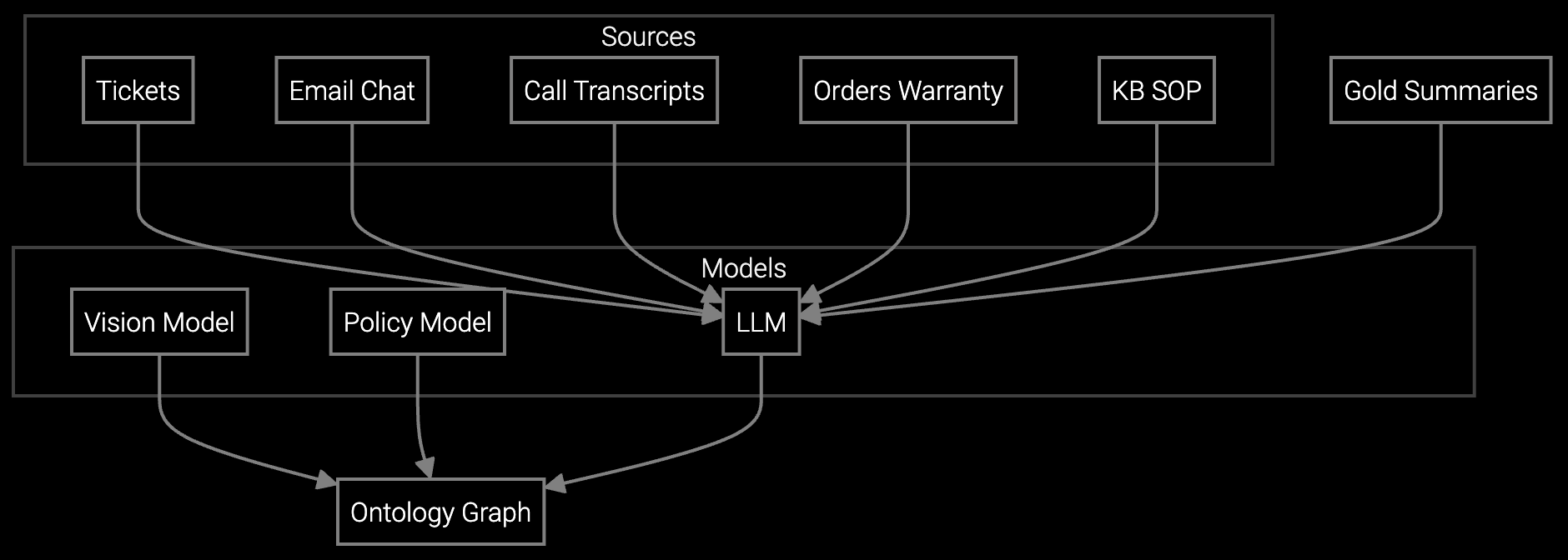
Instantly generates case summaries from prior contacts, chat logs, and service histories so agents understand appliance purchase date, past repairs, and warranty status without reading everything.
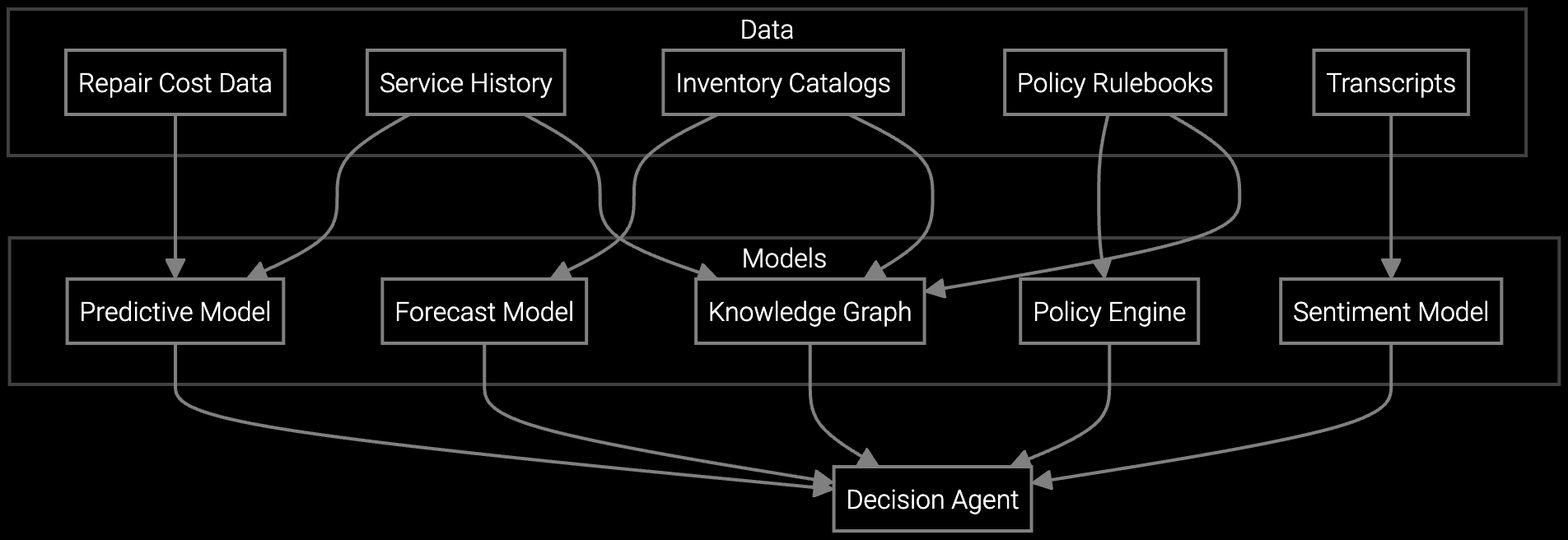
AI analyzes failure modes, part costs, equipment age, and warranty coverage to recommend the most cost-effective resolution path for each appliance service request.
Appliance manufacturers face high-volume, low-margin economics where service costs directly erode profitability. Seasonal HVAC surges and refrigeration emergencies create demand spikes that stress contact center capacity. Without AI assistance, agents struggle to maintain quality under pressure, leading to longer handle times, repeat contacts, and unnecessary truck rolls.
AI-assisted operations compress average handle time by surfacing symptom-based diagnostics instantly. When a customer reports a dishwasher error code or dryer not heating, agents receive model-specific troubleshooting steps, parts compatibility checks, and warranty validation in one screen. This eliminates the swivel-chair toggling between systems that wastes 3-5 minutes per call, enabling each agent to resolve 20-30% more cases per shift.
Most appliance service operations see measurable reductions in average handle time within 30-45 days of deployment. First-call resolution improvements typically appear within 60-90 days as the system learns from resolved cases. Full cost savings accrue over 6-12 months as repeat contact rates decline and agent productivity stabilizes at higher throughput levels.
Approximately 60% of cost savings comes from handle time reduction, with the remaining 40% from improved first-call resolution eliminating repeat contacts. Faster diagnostics and instant parts verification cut 3-5 minutes per call, while consistent troubleshooting advice reduces callbacks by 15-25%, compounding the cost benefit.
Cost per contact equals total contact center labor costs divided by total cases resolved. AI-assisted operations reduce this by increasing cases per agent hour and eliminating repeat contacts. If an agent resolves 6 cases per hour at $35/hour fully loaded, baseline cost is $5.83 per contact. Improving to 8 cases per hour drops cost to $4.38, a $1.45 savings per contact that scales across thousands of daily interactions.
No. AI platforms integrate with existing CRM, knowledge base, and parts catalog systems through APIs, delivering answers in a sidebar or embedded interface. Agents continue using familiar tools while gaining instant access to diagnostics, parts compatibility, and resolution guidance without switching screens or searching multiple databases.
Track average handle time, first-call resolution rate, cost per contact, and customer satisfaction scores before and after deployment. Additional margin impact metrics include warranty cost as percentage of revenue, repeat contact rate, and cases resolved per agent per day. Most appliance manufacturers also track truck roll avoidance savings when better diagnostics prevent unnecessary field service dispatches.

Transforming appliance support with AI-powered resolution.

Understanding and optimizing the issue resolution curve.
Software stocks lost nearly $1 trillion in value despite strong quarters. AI represents a paradigm shift, not an incremental software improvement.
See exactly how AI-assisted operations reduce your cost per contact and improve resolution rates.
Schedule ROI Assessment