
Every repeat visit drains margin, frustrates customers, and wastes technician time you can't get back.
Each repeat appliance service call costs about $250 per truck roll, per Bruviti deployment data, and one OEM eliminated roughly 30,000 of them for about $7.5 million saved. AI parts prediction reduces repeat truck rolls 30%, so the recovered cost lands straight back in the service budget.
Technicians return to the same household two or three times because the first visit missed the root cause or lacked the right part. Each return trip costs labor, fuel, and customer goodwill.
Wrong parts ordered or carried to the site sit unused in inventory or get scrapped. Thin appliance margins can't absorb this waste at scale.
Time spent driving back to the same address, searching for parts at the warehouse, or calling dispatch for guidance eats productive repair hours.
Bruviti's platform analyzes symptom patterns, failure history, and equipment telemetry from connected appliances to predict the exact parts and procedures needed before dispatch. Technicians arrive with the right components and a clear diagnostic path, eliminating guesswork.
The system learns from every completed job, capturing what worked and feeding that knowledge back to the next technician facing a similar refrigerator failure or HVAC fault. First-time fix rates climb because the platform turns tribal knowledge into repeatable guidance.
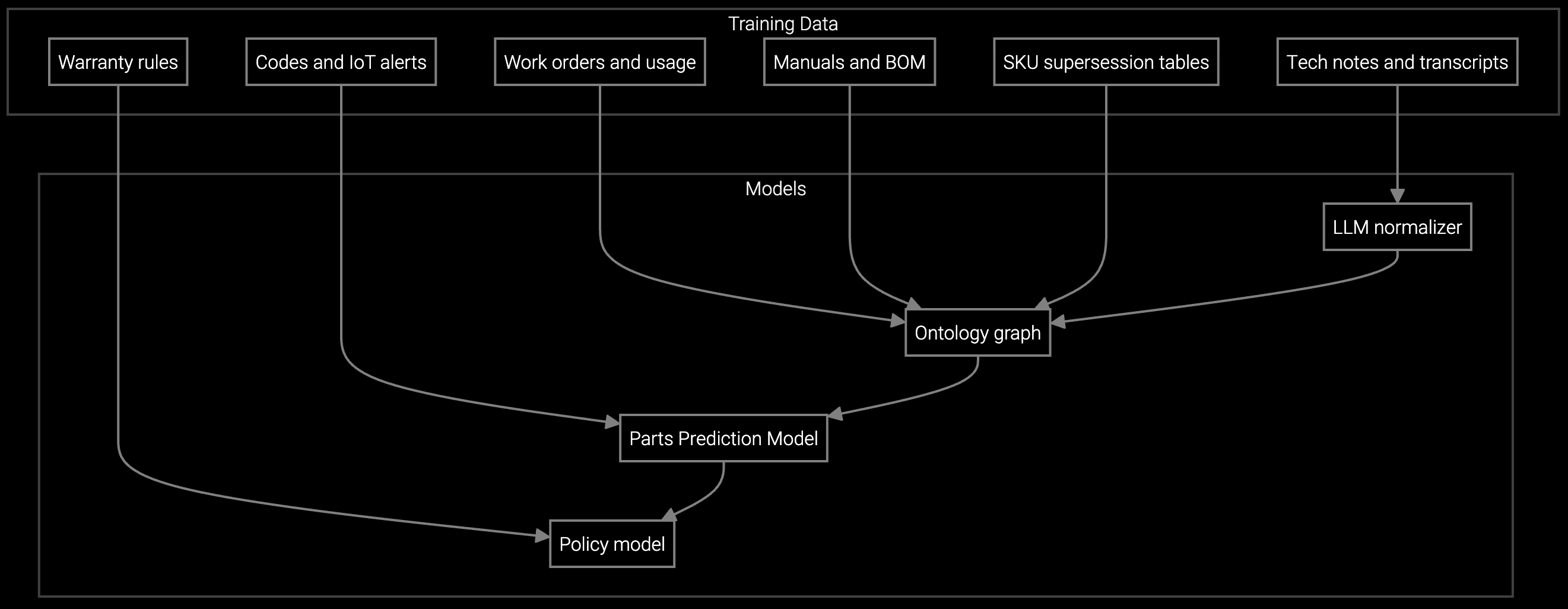
Predict which refrigerator compressor, dishwasher pump, or HVAC relay a technician will need before they leave the depot, eliminating return trips for missing parts.
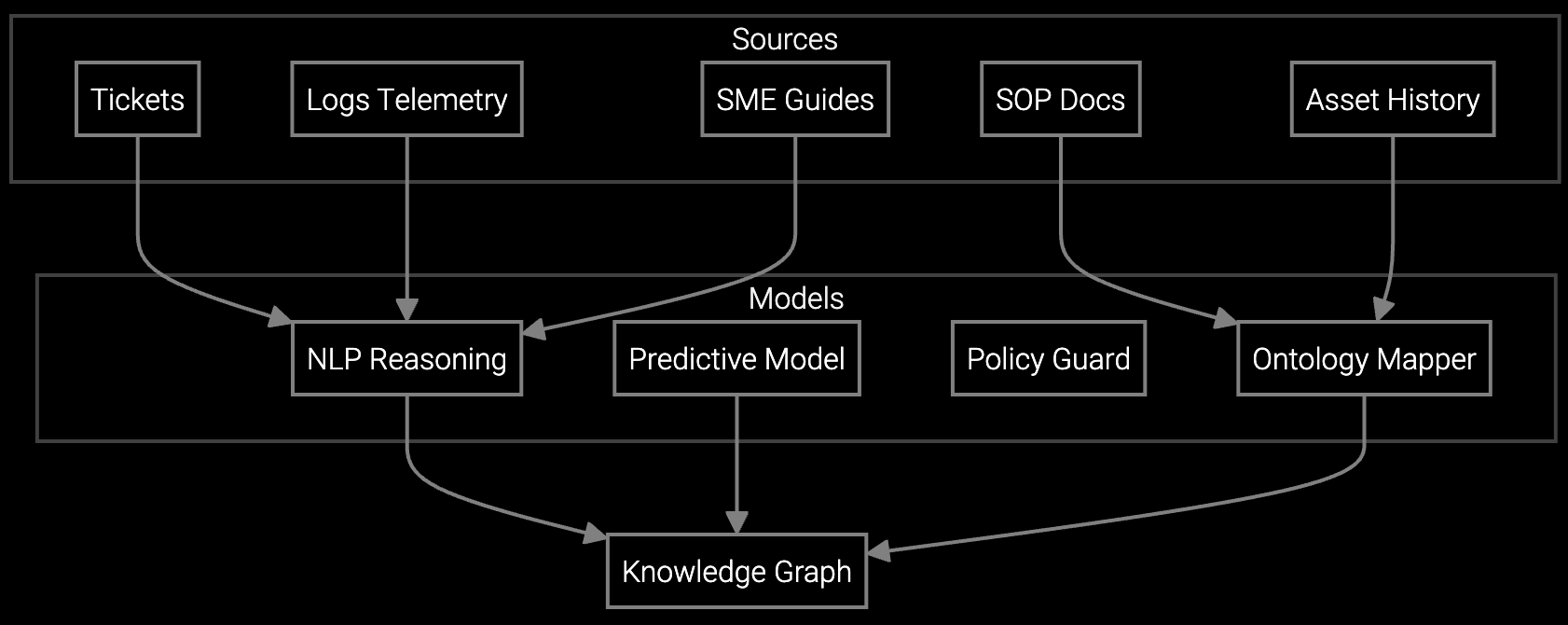
Correlate symptom codes from connected washers and dryers with historical failure patterns to pinpoint root cause faster than manual troubleshooting.
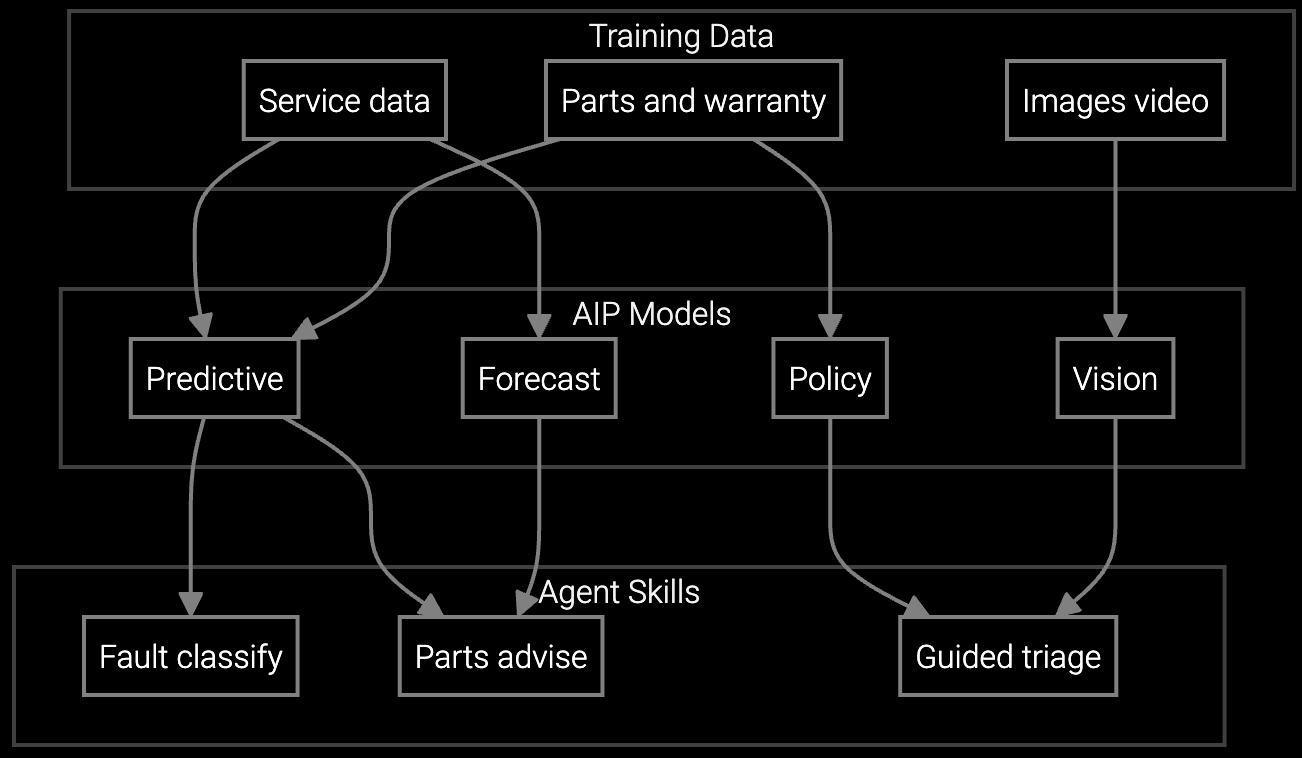
Mobile copilot provides real-time repair procedures, wiring diagrams, and parts compatibility checks on-site during appliance service calls.
Appliance OEMs operate on 2-4% warranty cost targets with razor-thin service margins. A single repeat visit to fix a malfunctioning refrigerator or HVAC unit can erase the entire profit from that appliance sale. Connected devices generate telemetry that reveals failure patterns, but most service teams lack tools to turn that data into actionable diagnostics before dispatch.
Seasonal demand spikes for air conditioners and refrigeration during summer heat waves amplify the cost of inefficiency. When technicians make repeat trips during peak season, it creates a capacity bottleneck that delays other high-priority service calls and triggers SLA penalties.
Include technician labor, drive time, fuel, parts waste from incorrect orders, and the lost opportunity cost of not completing another job. For appliance OEMs, this typically ranges from $150-$300 per repeat visit depending on geography and technician utilization rates.
Appliance OEMs using AI-assisted diagnostics typically see first-time fix rates improve from 65-70% to 85-90% within six months. The biggest gains come from better parts prediction and root cause guidance for complex failures in connected appliances and HVAC systems.
The system analyzes symptom codes, failure history, and appliance telemetry to predict the exact parts needed before dispatch. Technicians carry the right components to the site, eliminating wrong-part orders and reducing unused inventory that gets scrapped or returned to the depot.
Yes. Bruviti integrates with major FSM platforms through APIs to enrich work orders with parts predictions, diagnostic guidance, and knowledge capture without requiring technicians to switch between multiple apps. The platform sits alongside your existing dispatch and scheduling tools.
Track first-time fix rate, repeat visit rate, cost per service call, parts waste percentage, and technician utilization. Compare these metrics before and after deployment to quantify savings. Most appliance OEMs see measurable ROI within 90 days by reducing repeat truck rolls and improving technician productivity.
How AI bridges the knowledge gap as experienced technicians retire.
Generative AI solutions for preserving institutional knowledge.
AI-powered parts prediction for higher FTFR.
See how AI-assisted diagnostics improve first-time fix rates and reduce service costs.
Schedule Demo