
Scattered registration data and missing serial numbers leave you blind to what's deployed where.
Bruviti deployment data shows connected installed-base monitoring flags failures 7 to 14 days early at 90% or higher precision with 10% or fewer false positives. Operators register each appliance once, link its sensor feed, and get advance failure warnings instead of reacting to breakdown calls after the fact.
Customer registration records spread across warranty systems, service portals, and retail partners create incomplete visibility. You can't track appliances you don't know exist.
Older appliances lack IoT connectivity, leaving service teams manually entering configuration data. Critical details remain locked in paper documentation or scattered spreadsheets.
Firmware updates, parts replacements, and field modifications happen without updating central records. What's in your database doesn't match what's actually deployed.
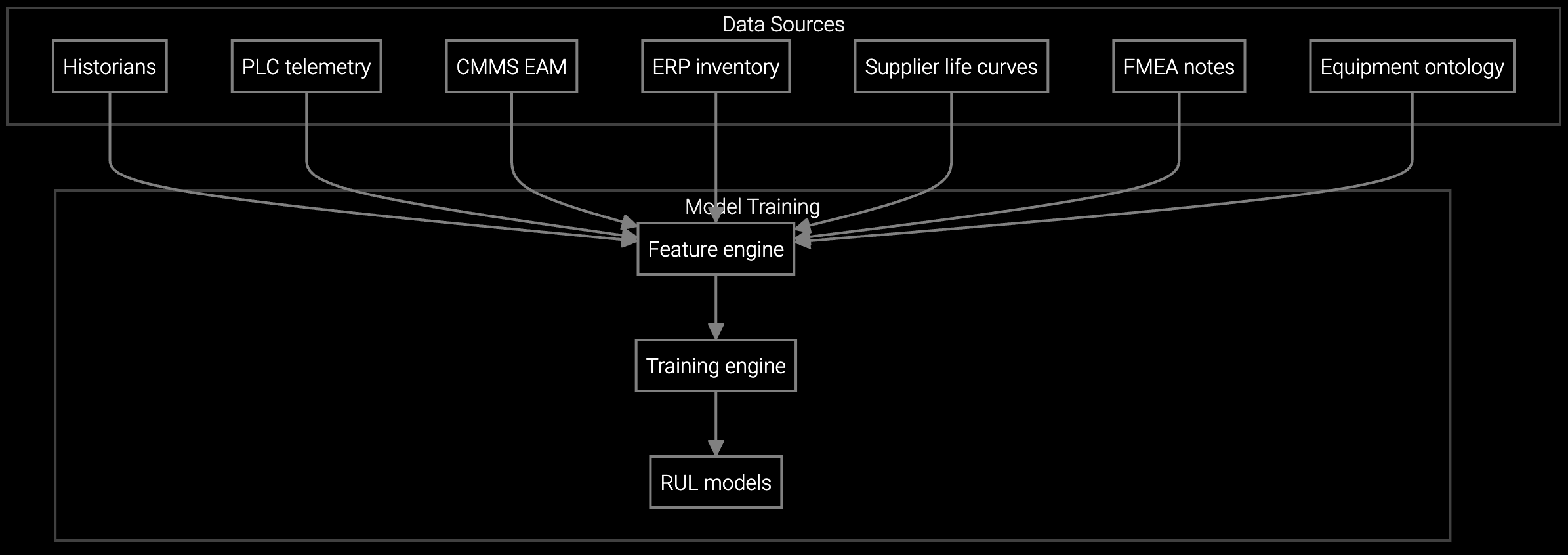
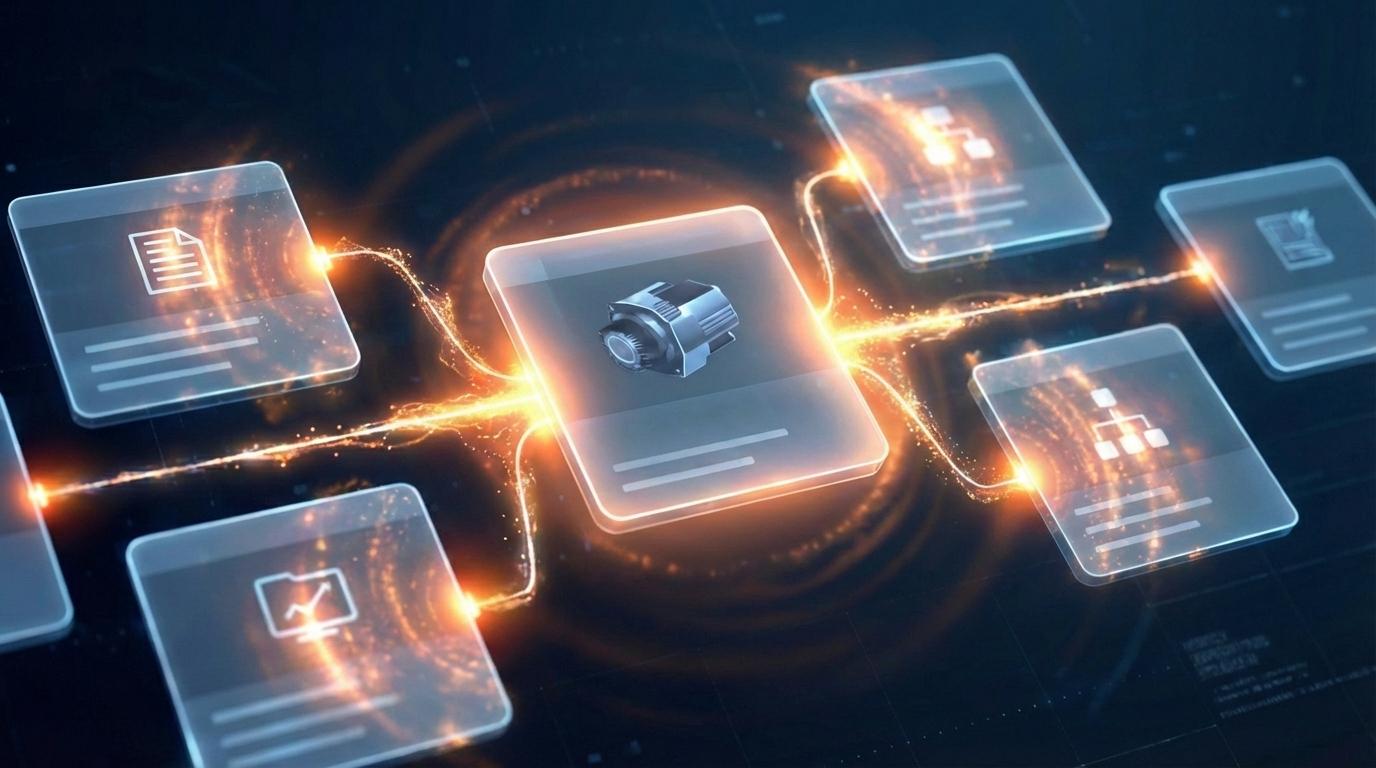
Bruviti's platform connects to your existing product registration, warranty, and service management systems through REST APIs, pulling asset data into a unified registry. For connected appliances, IoT telemetry streams automatically update configuration status, firmware versions, and usage patterns. For legacy equipment, mobile capture tools let service teams scan serial plates and upload configuration photos that AI converts to structured records.
The system runs configuration drift detection by comparing registered specs against real-time telemetry, flagging discrepancies automatically. Lifecycle rules trigger alerts when firmware falls behind support windows or when EOL dates approach. Integration with your CRM enables contract attachment tracking, linking each asset to its warranty or service agreement status.

Monitor HVAC compressor vibration patterns and refrigerator temperature cycles to detect early failure signals.
Estimate when washer bearings or dishwasher pumps will fail based on usage intensity and cycle counts.

Schedule water heater element replacements and filter changes based on actual condition instead of fixed intervals.
Appliance manufacturers face unique asset tracking challenges: decades-long product lifecycles, low registration rates for non-connected models, and seasonal demand spikes for HVAC and refrigeration. Smart appliances generate telemetry on temperature cycles, compressor run times, and error codes, but this data often stays siloed in separate IoT platforms disconnected from warranty and service systems.
Bruviti unifies connected device telemetry with registration data, parts ordering history, and service call records into a single asset view. For older non-connected appliances, mobile tools capture serial plates during in-home service visits, backfilling asset records automatically. Firmware version tracking ensures compliance with safety recalls and enables proactive notification when security patches become available.
The platform connects via REST APIs to warranty management systems, service ticketing platforms, CRM databases, and IoT telemetry feeds. Standard connectors exist for major enterprise systems, with custom integration support for legacy databases. Data sync runs continuously with configurable polling intervals.
Mobile capture tools let service teams photograph serial plates and equipment labels during in-home visits. AI extracts model numbers, serial numbers, and installation dates automatically. Manual entry forms provide backup for edge cases where OCR confidence is low.
Yes. Define EOL support windows for each firmware version, and the platform automatically flags assets running outdated software. Alert rules trigger notifications when security patches become available or when warranty coverage depends on minimum firmware levels.
Configuration drift detection compares registered specifications against real-time telemetry data. Discrepancies appear in a review queue with recommended corrections. You approve updates in bulk or set auto-correction rules for trusted data sources like firmware version reports.
Initial deployment spans 4-6 weeks: API integration and data mapping in week one, pilot rollout for one product line in week two, data quality validation in week three, then phased expansion across remaining brands. Full asset backfill typically completes within 90 days as service calls naturally capture legacy equipment.
Software stocks lost nearly $1 trillion in value despite strong quarters. AI represents a paradigm shift, not an incremental software improvement.
Function-scoped AI improves local efficiency but workflow-native AI changes cost-to-serve. The P&L impact lives in the workflow itself.

Five key shifts from deploying nearly 100 enterprise AI workflow solutions and the GTM changes required to win in 2026.
See how Bruviti connects your existing systems for complete installed base visibility.
Schedule Implementation Review