
Peak season service demand doesn't wait for implementation projects—you need AI that runs alongside current tools, not replaces them.
Bruviti's email automation auto-resolves at least 40% of routine appliance support emails with under 2 minute median handling and 24/7 coverage, per Bruviti deployment data. Operators layer it onto the current help desk with no rip-and-replace, so agents keep their workflow while the AI clears repetitive inquiries in the background from day one.
Full CRM replacements require months of migration and retraining. Agents lose efficiency just when refrigeration failures spike in summer and heating calls surge in winter.
Learning new interfaces during high-volume periods increases handle time. Agents toggle between old notes and new tools while customers wait on hold.
Historical case data, product manuals, and warranty records live in separate systems. Agents still swivel between screens to piece together appliance history and symptom patterns.
Bruviti integrates via API with existing ticketing systems, surfacing AI suggestions in a sidebar agents already trust. Start with email auto-triage that runs in shadow mode—agents see AI classifications next to their manual choices and validate accuracy before any automation goes live. The platform learns from agent corrections in real time.
Phase two adds instant knowledge retrieval for appliance error codes and troubleshooting steps. Agents still control the conversation, but now get pre-filled responses based on symptom patterns and warranty status. No login switching, no duplicate data entry. Deploy one feature at a time during low-volume weeks, measure impact, then scale.
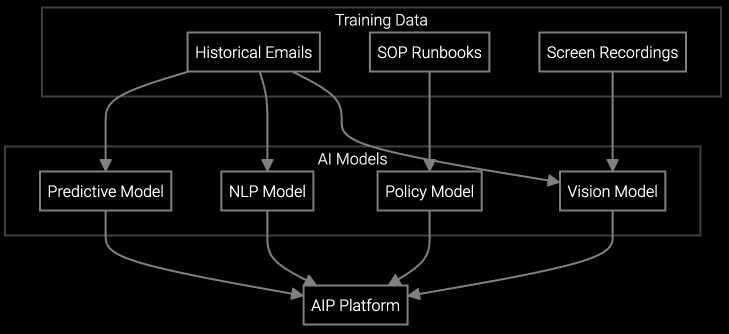
Auto-classify refrigerator, dishwasher, and HVAC support emails by symptom category and warranty status, routing to specialists without manual triage.
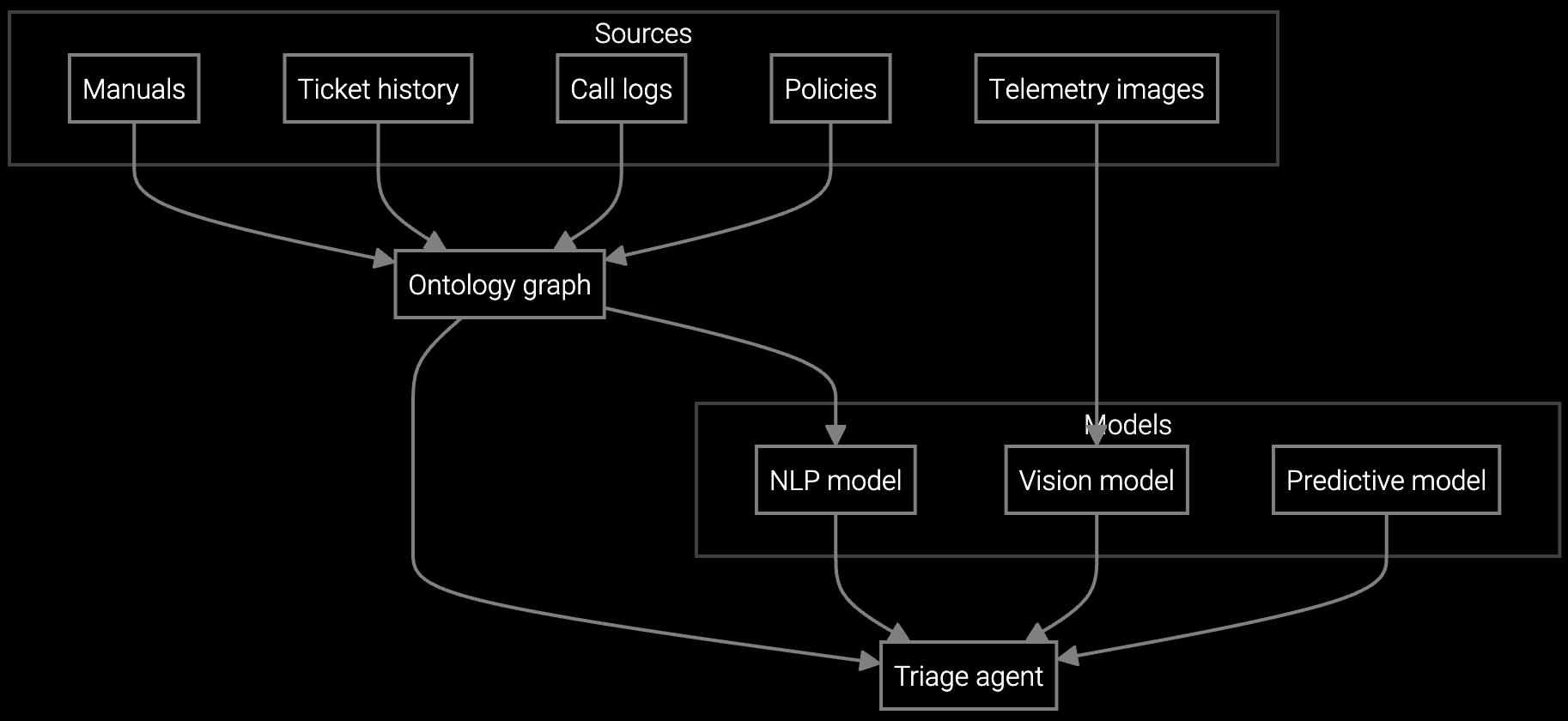
Analyze appliance error codes and customer-reported symptoms to route cases directly to parts, warranty, or field service teams with diagnostic context.
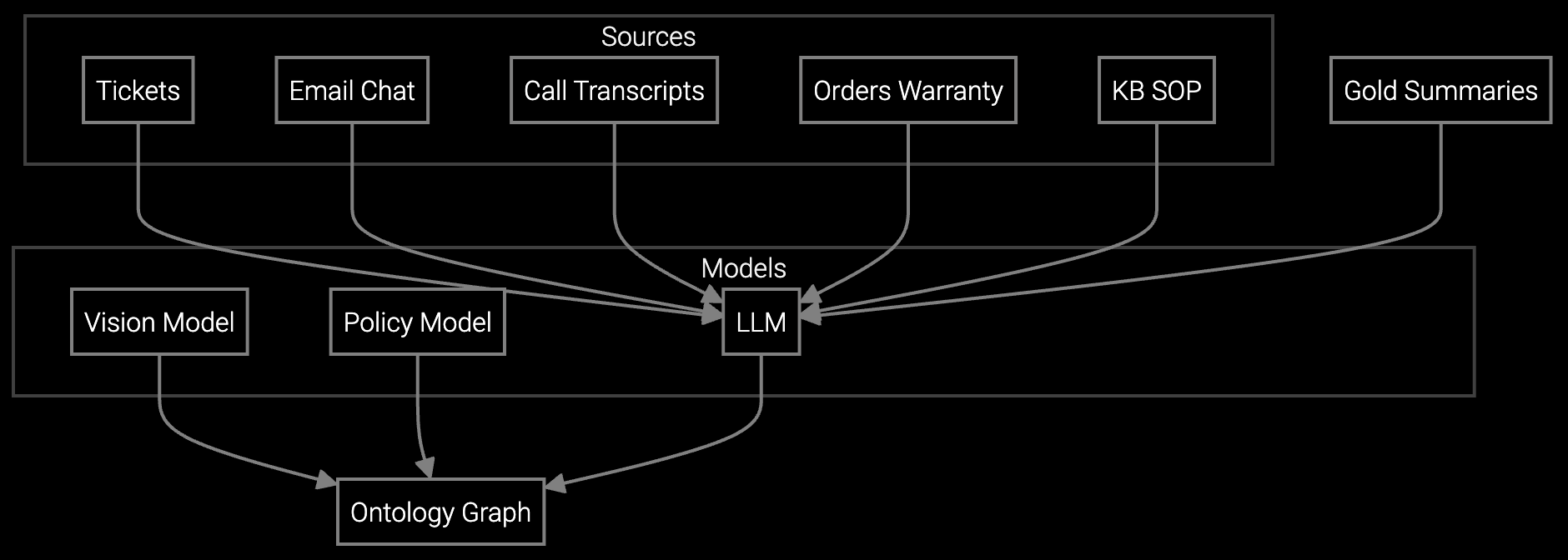
Generate instant case summaries from previous chat logs and email threads so agents understand appliance issue history without reading everything.
Appliance OEMs face seasonal demand spikes that make full-system replacements impossible. Deploy AI in phases aligned to product lines: start with high-volume refrigerator cases to prove 15-20% handle time reduction, then expand to dishwashers and HVAC. Each phase integrates with your existing warranty lookup and parts ordering systems via API.
Shadow mode lets agents compare AI-suggested error code interpretations against their manual diagnosis. After two weeks of validation, enable auto-population of troubleshooting steps for common symptoms like ice maker failures or compressor noise. Agents review and send—no workflow change, just faster answers.
No. The AI appears as a sidebar in your existing ticketing system, showing suggested classifications and pre-filled responses. Agents click to accept or edit—no separate login or navigation to learn.
Most appliance service teams measure 15-20% handle time reduction within 30 days on the first deployed use case. Email auto-classification shows impact fastest since it eliminates manual triage steps agents repeat hundreds of times daily.
API integration reads your existing CRM data without migration. Historical appliance cases, warranty records, and product manuals train the AI model while remaining in their current systems. No data moves, no downtime.
Yes, because the AI starts in shadow mode. Agents see AI suggestions alongside their normal workflow but keep full control. You validate accuracy during lower-volume weeks, then enable automation when confident. No forced cutover date.
Shadow mode tracks agreement between AI suggestions and agent final decisions. When agreement exceeds 85% for two consecutive weeks on a specific symptom category, most teams enable auto-classification for that category while keeping manual review for edge cases.

Transforming appliance support with AI-powered resolution.

Understanding and optimizing the issue resolution curve.
Software stocks lost nearly $1 trillion in value despite strong quarters. AI represents a paradigm shift, not an incremental software improvement.
See how phased implementation keeps agents productive during peak season while delivering measurable handle time reduction.
Schedule Implementation Demo