
Manual warranty validation across 10-30 year equipment lifecycles creates processing backlogs that delay customer credits and hide fraud patterns.
AI warranty automation saves 200-300 analyst hours per month and cuts reporting errors by 30%, per Bruviti deployment data. Operators route industrial equipment returns through auto-coding that handles 75-85% of claims in under 1 minute each, replacing the 8-12 minute manual process and surfacing only exceptions for review.
Operators manually search across multiple systems to verify warranty status for decades-old industrial equipment. Each lookup requires checking registration systems, service history databases, and contract terms before processing can begin.
Operators categorize returns and assign disposition codes by reading through defect descriptions and cross-referencing failure mode libraries. This repetitive work creates processing backlogs during peak return periods.
After validating a claim, operators spend additional time filling out RMA forms, copying data between systems, and sending notifications. This administrative overhead delays customer credits and ties up processing capacity.
The platform automatically executes the entire warranty validation workflow when a return is initiated. AI verifies entitlement by checking equipment serial numbers against warranty registration, service contract terms, and installation dates. The system categorizes the return based on failure description, assigns the correct disposition code, and generates a complete RMA package with all required documentation.
Operators review a fully prepared resolution case rather than executing each processing step manually. The interface presents the entitlement decision, categorization rationale, and generated RMA in a single screen. Operators validate the AI's work and approve the transaction with one click, transforming the role from data entry to decision oversight.
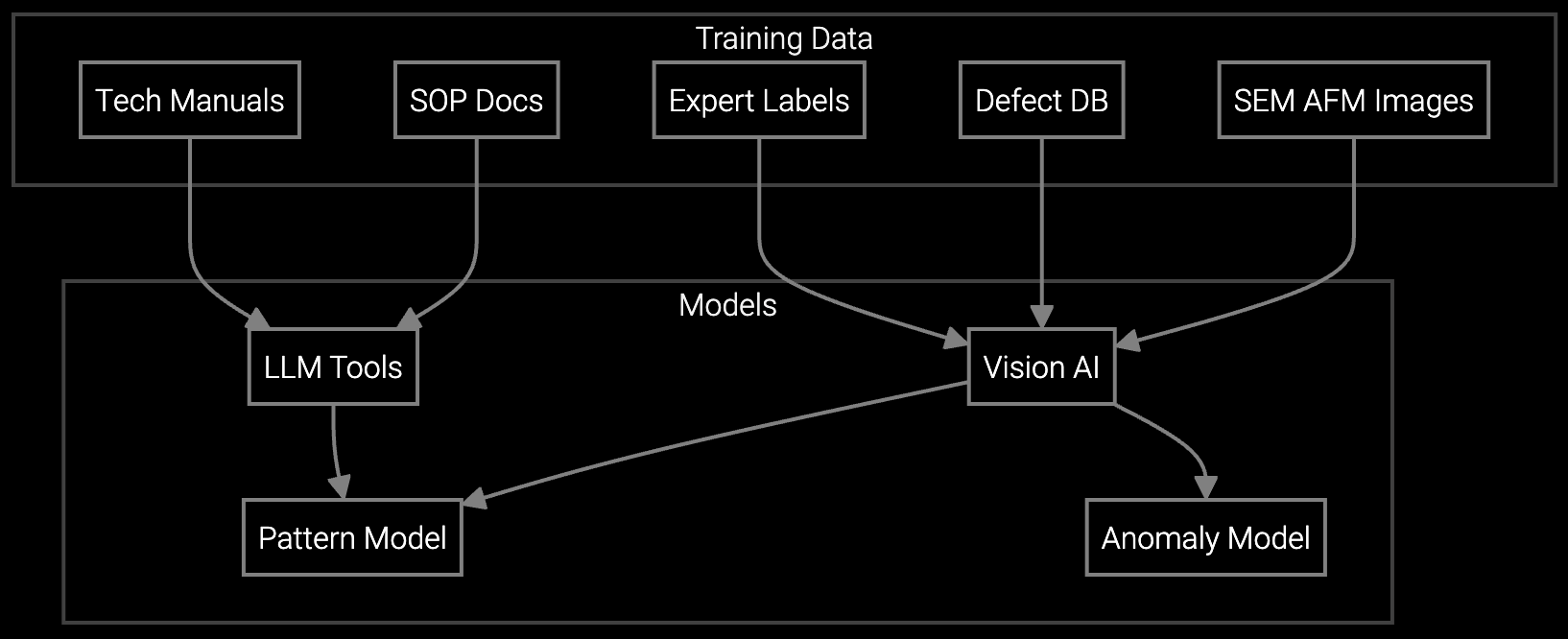
AI analyzes microscopic images from returned industrial components to identify manufacturing defects versus wear patterns, validating warranty claims for CNC machines and precision equipment.
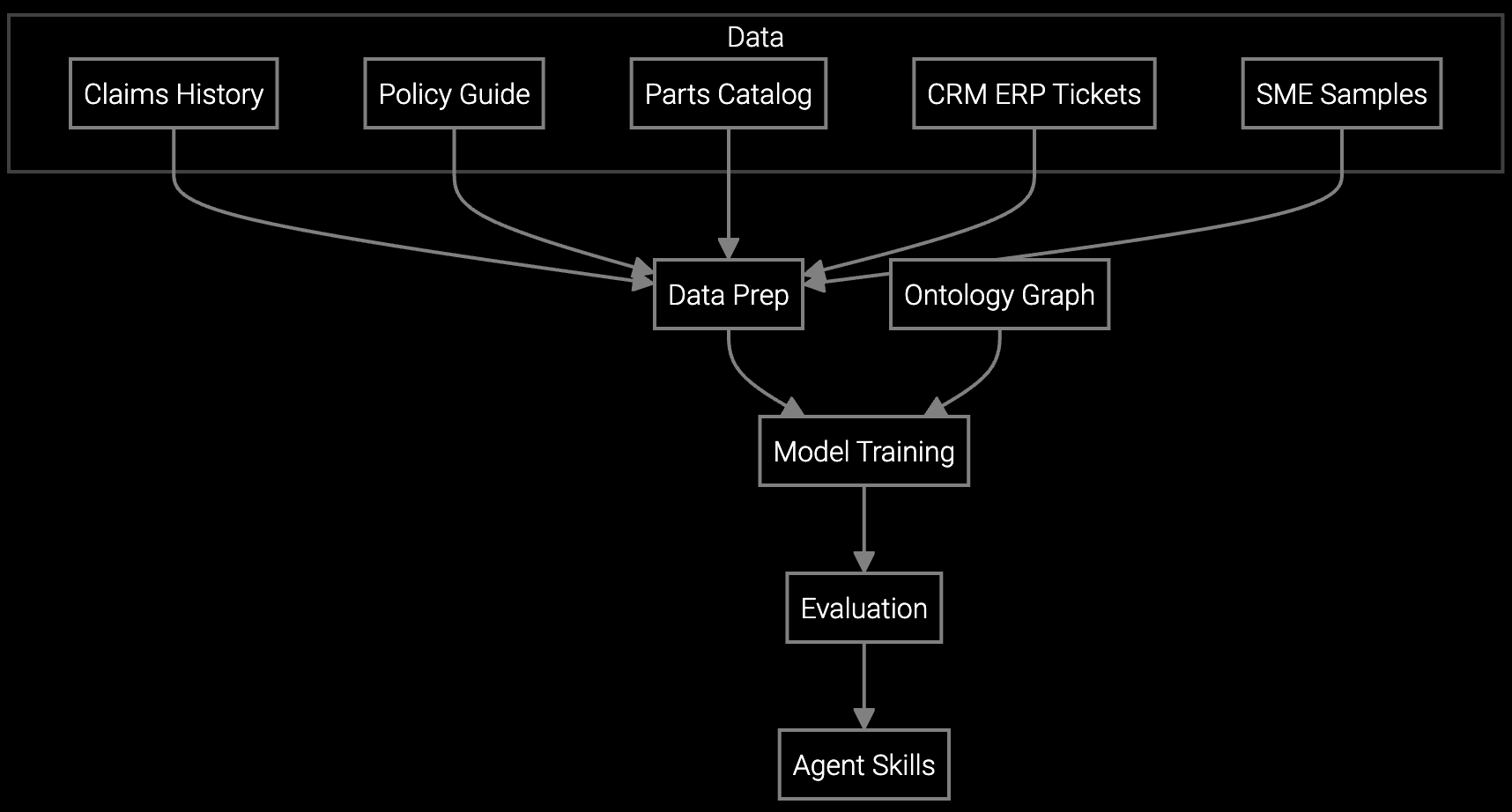
Automatically classifies and codes warranty claims for industrial equipment returns, extracting failure modes from customer descriptions and assigning disposition codes based on refurbishment likelihood.
Industrial equipment manufacturers face unique warranty processing challenges from decades-long equipment lifecycles. A CNC machine installed in 2005 may generate warranty claims in 2025, requiring operators to verify entitlement against legacy registration systems and interpret service contracts written for discontinued product lines. Manual processing breaks down when operators must cross-reference 20-year-old installation records, multiple ownership transfers, and retrofitted component warranties.
The platform ingests warranty registration data, service contract terms, and equipment installation dates spanning the entire product lifecycle. AI maintains entitlement context across equipment age ranges, ownership transfers, and component upgrade histories. When a return arrives, the system instantly validates coverage across all historical contexts, eliminating the manual archaeology that delays industrial equipment claim processing.
The platform uses probabilistic entitlement matching when direct registration records are unavailable. AI cross-references equipment serial number patterns, installation date ranges, and contract terms to determine likely warranty coverage. The system flags ambiguous cases for operator review rather than auto-rejecting claims, reducing customer disputes for older industrial equipment.
Operators review every AI-prepared case before final approval, maintaining human oversight of all warranty decisions. When an operator corrects the AI's categorization or entitlement determination, the system learns from the correction to improve future accuracy. This feedback loop continuously refines processing quality while keeping operators in control.
Processing time drops from 90-120 minutes per claim to 10-15 minutes. The platform eliminates entitlement verification lookups, return categorization work, and RMA form filling. Operators spend their time validating AI-prepared decisions rather than executing repetitive processing steps, enabling same-day credit processing for most industrial equipment returns.
AI flags suspicious return patterns during automated validation, including duplicate serial numbers, inconsistent failure descriptions, and repeat claims from the same installation sites. The system highlights these anomalies in the operator review interface, making fraud detection a natural part of the approval workflow rather than a separate investigation process.
Bruviti connects to return logistics platforms through standard APIs, automatically creating shipping labels, return authorizations, and refurbishment work orders. Once an operator approves an AI-prepared case, the platform triggers all downstream logistics steps without additional data entry. This integration eliminates the manual handoffs that delay return processing.
Software stocks lost nearly $1 trillion in value despite strong quarters. AI represents a paradigm shift, not an incremental software improvement.
Function-scoped AI improves local efficiency but workflow-native AI changes cost-to-serve. The P&L impact lives in the workflow itself.

Five key shifts from deploying nearly 100 enterprise AI workflow solutions and the GTM changes required to win in 2026.
Watch how Bruviti automates industrial equipment warranty workflows from claim intake to RMA generation.
Schedule Demo