
Field modifications and undocumented changes create asset data gaps that cascade into failed predictive maintenance and misaligned service contracts.
Bruviti deployment data shows 20% fewer repeat failures once configuration drift is resolved against connected asset data. When the registry reflects each unit's true as-maintained state, diagnostics stop firing on stale configs, so the same fault does not recur across the installed base after a fix is applied.
Missing serial numbers, outdated firmware versions, and untracked component swaps mean your asset registry doesn't reflect what's actually deployed. Predictive models trained on wrong configurations produce false alerts.
Service teams swap components, update firmware, or adjust PLC parameters without updating central systems. Configuration drift accumulates silently until a critical failure reveals the mismatch.
Engineers manually cross-reference SCADA logs against asset databases to identify discrepancies. This reactive process consumes hours per incident and delays root cause analysis.
Bruviti's platform connects to PLC systems, SCADA databases, and IoT sensor networks to ingest real-time telemetry streams. The system compares observed equipment behavior against asset registry data to detect anomalies that signal configuration drift. When a pump reports different operational parameters than its registered baseline, the AI flags the discrepancy and traces the divergence to specific field modifications.
The platform provides APIs for continuous configuration monitoring and drift detection. Integration with SAP Asset Management or custom CMDBs ensures that detected changes flow back to your source of truth. Python SDKs allow engineers to customize drift detection rules based on equipment criticality and build automated reconciliation workflows that update asset records without manual intervention.

Analyzes IoT telemetry from industrial equipment to identify anomalies and predict failures before they cascade into downtime.

Virtual equipment models continuously track performance against configured baselines to detect drift and enable proactive maintenance.
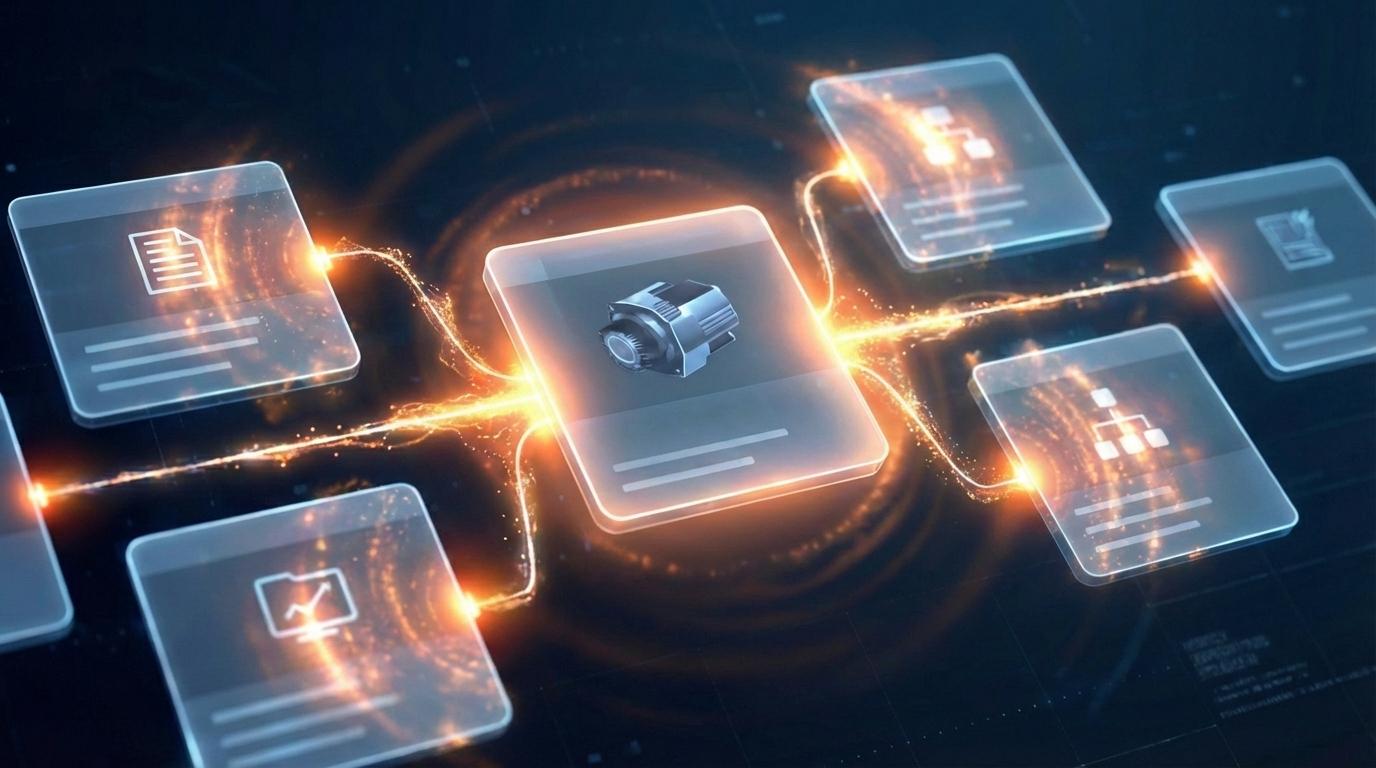
Estimates component lifespan based on actual usage patterns and configuration state, enabling planned maintenance windows for heavy machinery.
Industrial machinery often operates for 20-30 years, accumulating dozens of undocumented modifications. A CNC machine retrofitted with new controllers may report telemetry that doesn't match its original asset record. Pumps running in remote facilities undergo component swaps that never reach central systems. Tribal knowledge about these field changes lives in technician notebooks rather than structured databases.
Configuration drift is particularly acute in geographically distributed deployments where service teams operate semi-autonomously. A compressor upgraded with aftermarket sensors generates new data streams that predictive models don't recognize. Without automated drift detection, engineers discover these mismatches only during failure investigations—when accurate asset history is most critical.
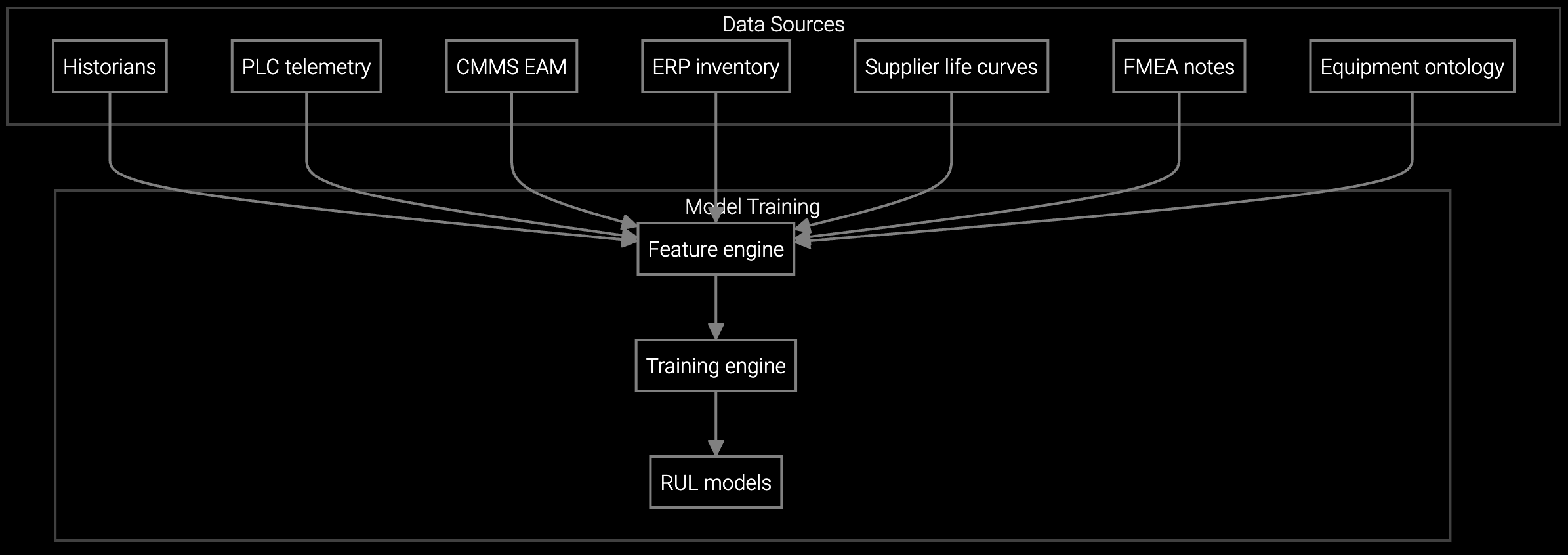
The platform ingests telemetry from PLCs, SCADA systems, IoT sensors, and equipment controllers, then compares observed behavior against asset registry baselines. REST APIs and Python SDKs enable integration with SAP, Oracle, and custom CMDBs. Minimum viable deployment requires real-time operational data and a structured asset inventory with serial numbers and baseline configurations.
Machine learning models analyze telemetry patterns to classify changes as authorized upgrades, unauthorized modifications, or sensor anomalies. Engineers can define custom rules via Python SDK to whitelist expected configuration changes or flag specific parameter deviations. The system learns from historical change tickets to improve classification accuracy over time.
Yes. The platform supports on-premises deployment with Docker containers running in your data center. Telemetry processing occurs locally, and only metadata about detected drift events flows to central systems. This architecture addresses data sovereignty requirements while maintaining centralized visibility across distributed equipment populations.
The platform generates drift alerts that include the affected asset, detected parameter changes, and recommended reconciliation actions. APIs enable automated workflows that create change tickets, update asset registries, or notify service teams. Engineers can configure alerting thresholds to surface only critical discrepancies that impact predictive maintenance accuracy.
Initial baseline establishment typically requires 30-60 days of telemetry collection to characterize normal operational patterns. For equipment with sparse documentation, the system infers configuration state from observed behavior rather than relying solely on asset records. The Python SDK allows engineers to accelerate baseline creation by importing existing configuration snapshots or maintenance logs.
Software stocks lost nearly $1 trillion in value despite strong quarters. AI represents a paradigm shift, not an incremental software improvement.
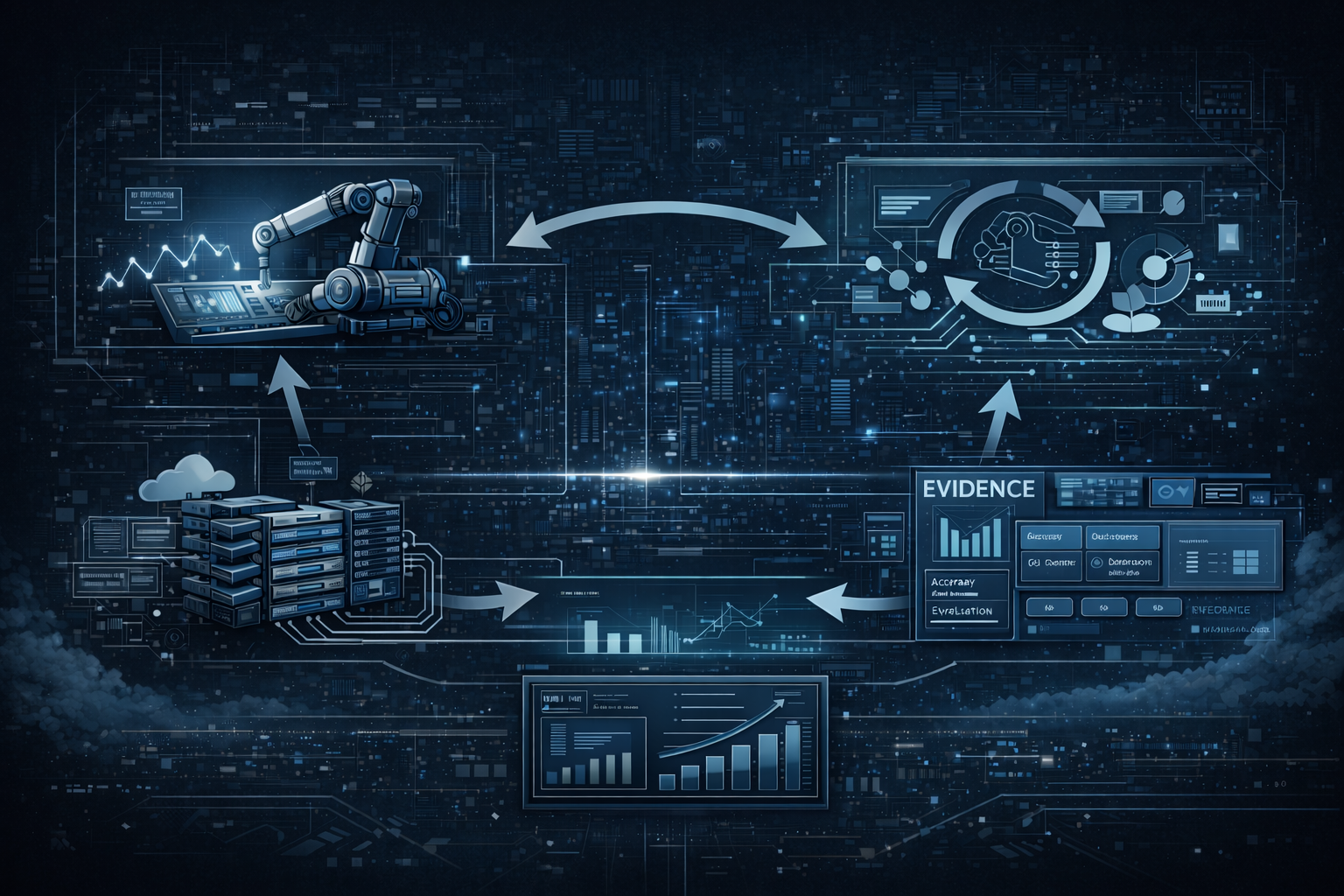
Function-scoped AI improves local efficiency but workflow-native AI changes cost-to-serve. The P&L impact lives in the workflow itself.
Five key shifts from deploying nearly 100 enterprise AI workflow solutions and the GTM changes required to win in 2026.
See how automated drift detection maintains accurate asset baselines across your industrial equipment fleet.
Schedule Technical Demo