
Unauthorized changes and undocumented firmware updates erode network stability faster than NOC teams can detect them.
AI that reconciles installed base config data delivers 20% fewer repeat failures, per Bruviti deployment data. By continuously matching deployed firmware and settings against known-good baselines, engineering teams catch configuration drift before it triggers the same outage twice across thousands of network devices.
Serial numbers, firmware versions, and hardware revisions are missing from asset registries. Network engineers waste hours manually correlating SNMP data with incomplete records before they can even diagnose drift.
Emergency firmware patches and after-hours config tweaks bypass change management systems. When incidents occur, teams have no audit trail to determine what changed, when, or who approved it.
Configuration validation scripts run weekly or monthly, not continuously. By the time drift is detected, cascading failures have already impacted SLAs and customer networks are experiencing degraded performance.
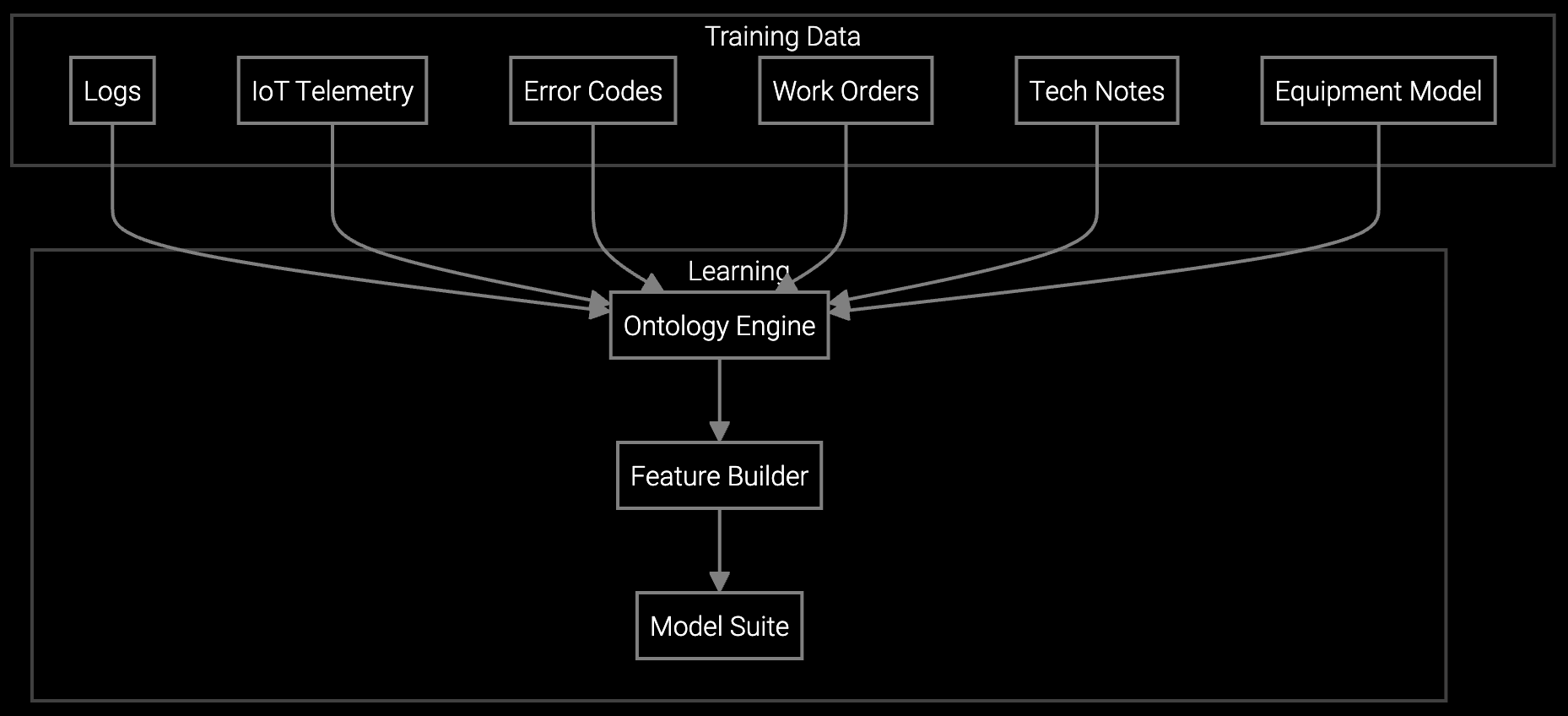
Bruviti provides headless configuration analysis that ingests running configs via REST API, compares them to version-controlled baselines stored in your Git repos, and surfaces deviations through webhooks or SDKs. You control the data pipeline—pull configs from devices using your existing SNMP collectors or network automation tools, push them to Bruviti's analysis endpoint, and receive structured diff reports.
The platform doesn't require proprietary agents on network devices. Parse syslog streams, SNMP traps, and CLI outputs using Python libraries, then feed normalized configs to the API. Bruviti's AI models identify semantic drift—like ACL rule reordering or VLAN changes—not just text-level diffs, and trace modifications back to their triggering events using timestamp correlation across your telemetry sources.

Analyzes SNMP traps and syslog streams from routers and switches to identify anomalies before they trigger customer-impacting outages.

Continuously monitors configuration state across network device fleets, alerting when unauthorized changes deviate from approved baselines.
Identifies recurring config-related failure trends across deployed network equipment, enabling proactive firmware and hardware design improvements.
Network OEMs deploy routers, switches, and firewalls into multi-vendor NOC environments where customer IT teams frequently apply emergency patches during maintenance windows. Firmware versions diverge across device populations as customers defer updates to avoid downtime risk. Your installed base registry reflects purchase orders and RMA records, not actual running configurations.
Configuration drift compounds when customers operate hybrid on-prem and cloud network architectures. A single enterprise might run your carrier-grade routers in data centers while using competitors' switches at branch offices. Tracking which firmware versions are actually deployed—and whether security patches have been applied—requires correlating SNMP data you don't control with asset records that lag reality by months.
Configuration drift stems from emergency firmware patches applied outside change windows, manual CLI changes by network engineers troubleshooting incidents, automated scripts with outdated templates, and unauthorized modifications by customer IT staff. Each introduces deviations that compound over time when not documented in asset registries.
Use existing SNMP collectors, syslog servers, or network automation tools to pull running configs and telemetry. Normalize this data with Python scripts, then push it to Bruviti's REST API for analysis. The platform compares received configs against your Git-stored baselines and returns structured diffs via webhooks, requiring zero on-device software.
Yes. Bruviti exposes model fine-tuning APIs that let you retrain drift classifiers on your config patterns, change control policies, and approved baseline templates. Define semantic rules—like which VLAN changes are critical versus cosmetic—using Python or TypeScript SDKs that integrate with your existing CI/CD pipelines.
The API processes configuration validation in under 200 milliseconds per device, enabling real-time drift detection across thousands of routers and switches. Batch uploads support parallel processing, and webhook delivery of diff reports integrates with Ansible or custom remediation workflows without polling delays.
You retain full ownership of all configuration data, baselines, and telemetry ingested via the API. Bruviti processes configs in-memory for analysis and returns results without persisting raw configs in proprietary storage. Export analyzed drift reports as JSON for long-term archival in your own data lakes or compliance systems.
Software stocks lost nearly $1 trillion in value despite strong quarters. AI represents a paradigm shift, not an incremental software improvement.
Function-scoped AI improves local efficiency but workflow-native AI changes cost-to-serve. The P&L impact lives in the workflow itself.

Five key shifts from deploying nearly 100 enterprise AI workflow solutions and the GTM changes required to win in 2026.
Explore our Python SDK and REST API documentation to start tracking configuration state without proprietary agents.
Access Developer Docs