With $1M+ hourly downtime costs, every minute of unresolved fab equipment issues threatens your customers' production schedules and your margin.
Bruviti deployment data shows a bought remote support platform cuts unplanned downtime 10 to 20% and reaches productive use in about six weeks. For semiconductor OEMs, the strategic question is time-to-value: building in-house delays the downtime savings that an integrated platform delivers within weeks.
Internal development of AI-driven remote diagnostics requires 18-24 months of data science hiring, model training, and validation cycles. Meanwhile, competitors deploy faster solutions and capture customer mindshare.
Remote access platforms built on closed architectures trap support engineers in fragmented workflows. Switching costs escalate as tool count grows, yet migration risk paralyzes decision-making.
Without clear benchmarks on remote resolution improvement or escalation reduction, leadership teams struggle to justify AI platform costs against uncertain margin protection gains.
The build-versus-buy decision hinges on three factors: time-to-value, integration flexibility, and competitive differentiation. Pure build approaches offer maximum control but demand scarce AI talent and delay benefits by years. Pure buy solutions accelerate deployment but risk vendor lock-in as tool dependencies deepen.
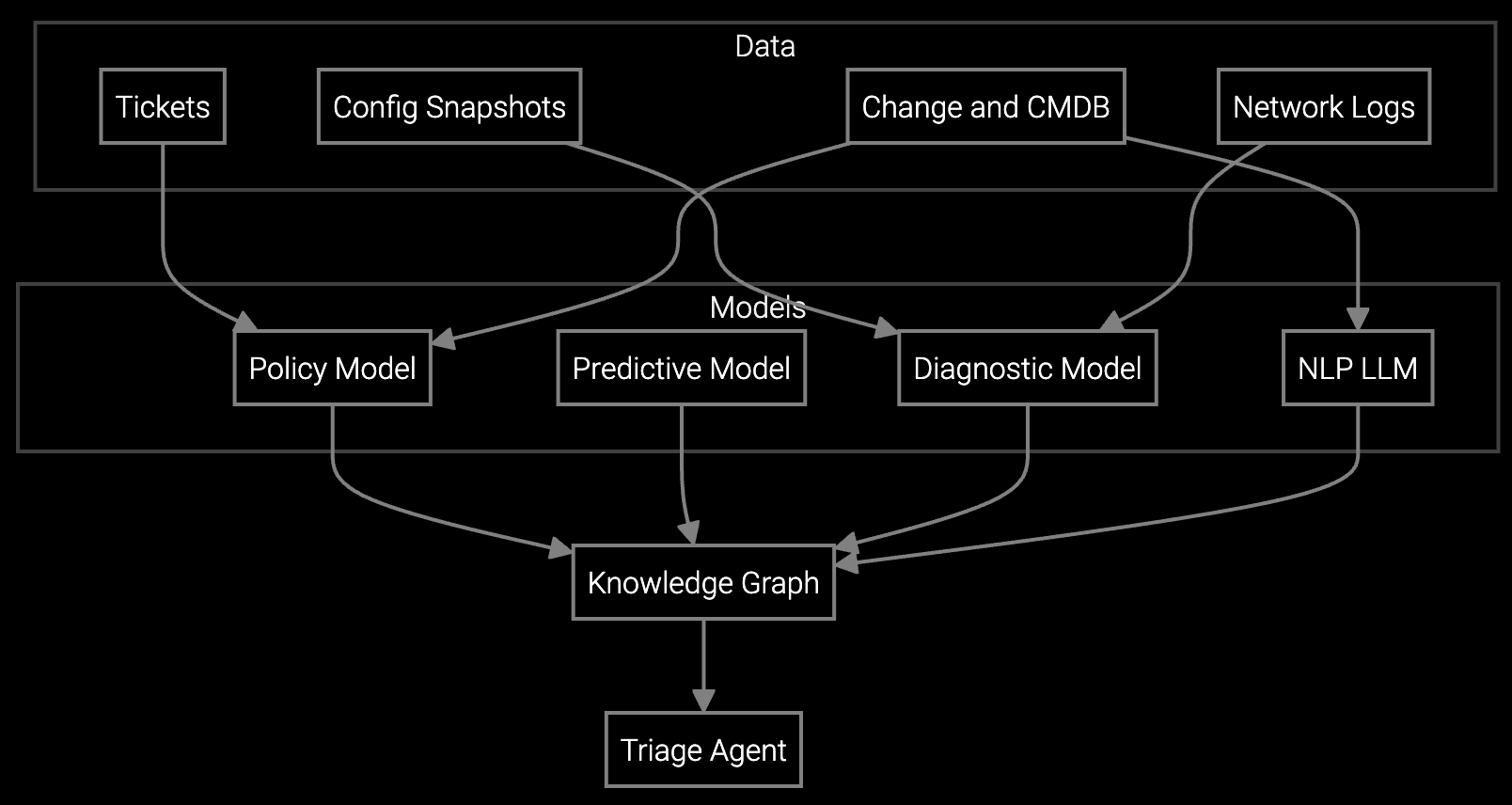
Bruviti's platform resolves this strategic tension through API-first architecture. Pre-trained models for log analysis and guided troubleshooting deliver immediate remote resolution gains, while open integration layers connect to existing remote access tools without replacement. Support engineers gain AI-executed root cause analysis within weeks, not quarters, while your technical teams retain full customization control.
Semiconductor equipment OEMs face unique remote support complexity: lithography tool downtime costs $1M+ per hour, etch chamber telemetry generates terabytes daily, and fab network restrictions limit remote access. These constraints demand AI platforms purpose-built for high-value asset diagnostics.
Start with high-impact equipment categories where remote resolution rates lag—typically etch and deposition tools with frequent consumable-related failures. AI analysis of recipe drift patterns and chamber condition telemetry enables support engineers to diagnose issues before fab customers escalate. This builds internal confidence and quantifiable ROI evidence for executive review.
Most semiconductor OEMs observe 20-30% remote resolution rate improvements within 8-12 weeks of deployment on pilot equipment categories. Full margin impact becomes clear at 6 months when escalation trends and support cost-per-incident data reflect sustained gains across broader tool portfolios.
API-first platforms preserve flexibility by integrating with existing remote access tools rather than replacing them. Look for solutions with open data export, model retraining APIs, and documented integration patterns. This allows gradual adoption without forklift upgrades or tool consolidation mandates.
Hybrid approaches deliver optimal outcomes: pre-trained models for common failure modes accelerate early wins, while custom model layers address equipment-specific telemetry patterns over time. Pure build strategies delay value realization by 18-24 months and require scarce AI talent retention.
Track three financial indicators: remote resolution rate improvement, escalation reduction percentage, and support cost per incident. For semiconductor equipment with $1M+ hourly downtime costs, even 10-minute faster resolution times generate measurable customer retention and margin protection gains.
Position remote support AI as foundational infrastructure that feeds installed base visibility, predictive maintenance workflows, and customer success analytics. API-first platforms become data connectors across service functions rather than siloed point solutions, multiplying strategic value over 3-5 year horizons.
Software stocks lost nearly $1 trillion in value despite strong quarters. AI represents a paradigm shift, not an incremental software improvement.
Function-scoped AI improves local efficiency but workflow-native AI changes cost-to-serve. The P&L impact lives in the workflow itself.

Five key shifts from deploying nearly 100 enterprise AI workflow solutions and the GTM changes required to win in 2026.
Discuss strategic deployment options with Bruviti's team and model ROI for your equipment portfolio.
Schedule Strategic Consultation