
Network OEMs face warranty reserves consuming 2-4% of revenue while NFF rates drain refurbishment capacity. Where do the savings come from?
Bruviti deployment data shows AI warranty coding saves 200-300 analyst hours per month and cuts reporting errors 30% for network equipment OEMs. Builders quantify return on the integration by the hours reclaimed from 8-12-minute manual coding plus fewer downstream corrections, a recurring monthly saving that compounds as claim volume scales.
No Fault Found returns consume refurbishment resources without recovering value. Each NFF unit incurs reverse logistics, inspection labor, and restocking costs while occupying warehouse space and tying up working capital.
Entitlement lookups across fragmented warranty databases create processing bottlenecks. Claims teams manually cross-reference serial numbers, purchase dates, and contract terms, delaying approvals and frustrating customers.
Reactive warranty accruals based on historical averages fail to account for firmware issues, component batch defects, or geographic failure clusters. CFOs face quarterly surprises that erode margin guidance and shareholder confidence.
Bruviti's platform provides REST APIs and Python SDKs that integrate warranty intelligence into existing RMA workflows. The architecture connects to ERP systems, warranty databases, and telemetry streams without requiring data migration or replacing incumbent platforms. Developers maintain full control over business logic while leveraging pre-trained models for claims validation, entitlement verification, and defect pattern recognition.
The ROI calculation starts with three cost pools: NFF reduction saves reverse logistics and refurbishment labor; automated entitlement verification eliminates manual lookup costs; predictive analytics reduce warranty reserve volatility. Network OEMs typically measure payback in claims processed per FTE, NFF rate reduction percentage points, and warranty reserve accuracy improvement. The platform's headless design allows teams to deploy models incrementally, proving value on high-volume claim types before expanding scope.
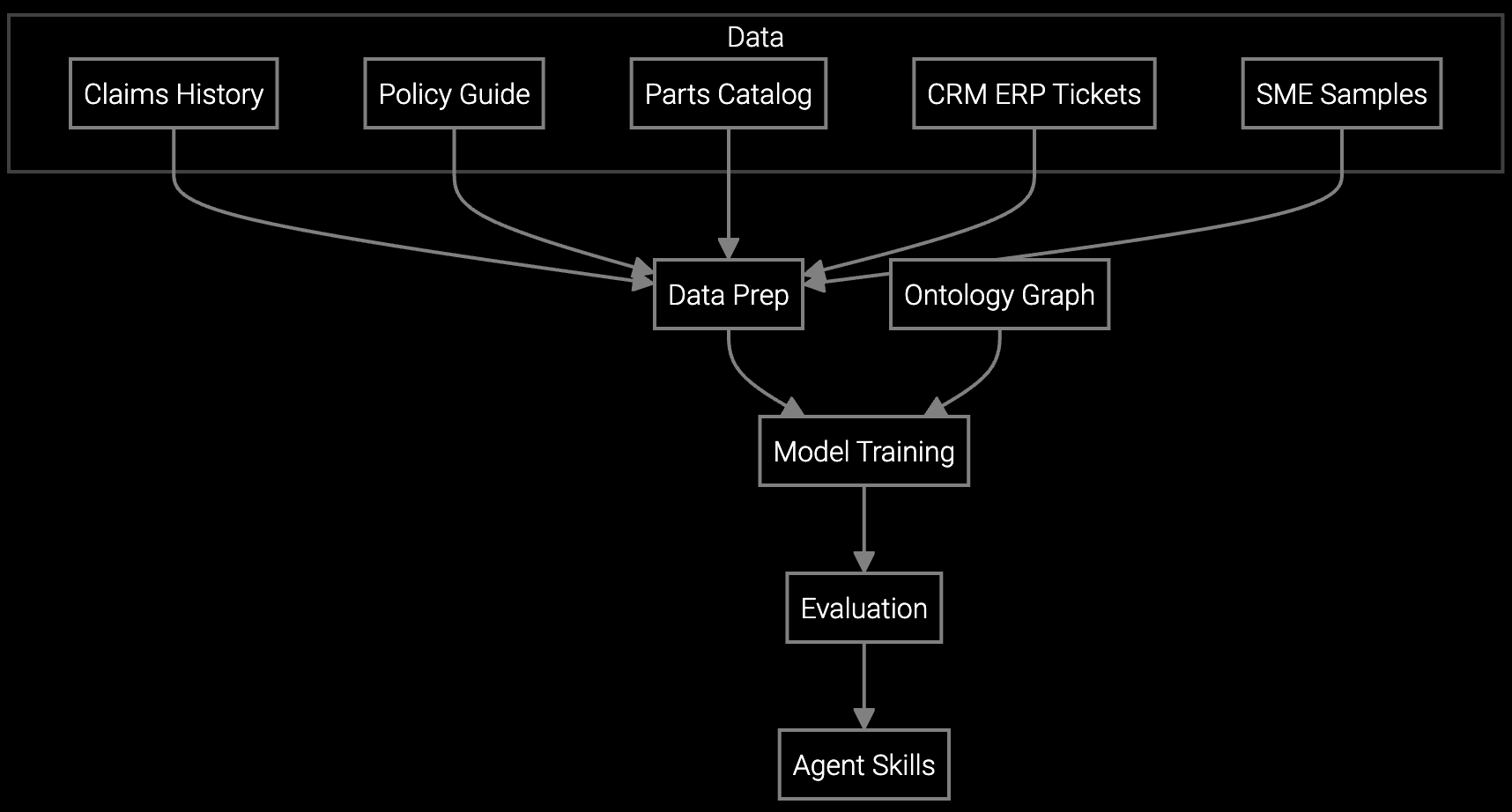
Automatically classify and code warranty claims for routers, switches, and optical transport gear. Reduce manual coding time by 72% while improving accuracy for accrual forecasting and supplier recovery.
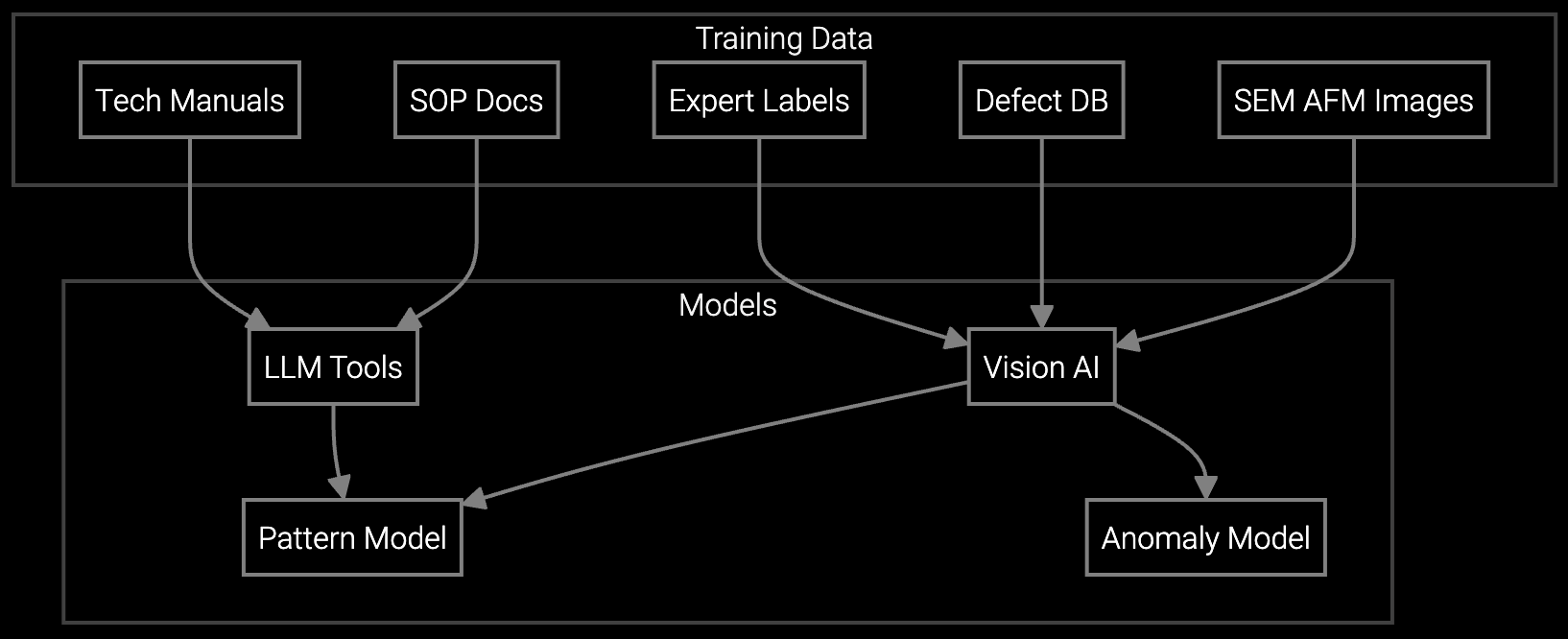
Validate warranty claims for semiconductor components in network ASICs using microscopic image analysis. Identify thermal stress, electromigration, and corrosion patterns to separate legitimate failures from customer-induced damage.
Network OEMs track warranty costs across three dimensions: claims processing labor (FTE hours times burdened labor rate), reverse logistics and refurbishment (shipping, inspection, testing, restocking), and warranty reserve volatility (CFO buffer for unpredictable accruals). A 10,000-unit annual RMA volume typically involves $1.2M in processing costs, $2.8M in logistics and refurbishment, and $4.5M in warranty reserves at 2.1% of revenue for a $215M product line.
ROI emerges from attacking each pool systematically. Automated entitlement verification eliminates 3.4 FTE hours per claim on average, saving $580K annually at $68/hour burdened rate. NFF reduction from 32% to 17% prevents 1,500 unnecessary returns, saving $510K in reverse logistics and inspection labor. Predictive defect detection improves warranty reserve accuracy by identifying firmware-induced failure clusters 5 weeks earlier, reducing CFO buffer requirements by 18% and freeing $810K in working capital. Combined savings reach $1.9M against typical implementation costs of $240K (API integration, model training, workflow automation), delivering 7.9x first-year ROI before considering customer satisfaction improvements from faster claim resolution.
The warranty verification API returns entitlement status in under 180ms at p95, with 99.97% uptime SLA. The endpoint accepts serial number, purchase date, and contract ID via REST or Python SDK, returning coverage status, expiration date, and applicable service tier. The architecture uses distributed caching to maintain sub-200ms response times even during peak RMA season spikes.
The platform tracks NFF rate reduction as a percentage point improvement (e.g., 32% to 17% = 15 points), then multiplies by your annual RMA volume and your reported cost per NFF unit. Most network OEMs report $320-$380 per NFF unit including inbound/outbound shipping, receiving labor, inspection, testing, and restocking. You control the cost assumptions; the platform measures the NFF rate improvement through claims outcome tracking.
Yes. The Python SDK supports on-premises model training using your own claims history, warranty database, and return patterns. You train models locally, deploy them in your VPC or data center, and call them via internal APIs. Bruviti provides the training framework, pre-built feature extractors, and model architectures, but your data never leaves your infrastructure. This architecture prevents vendor lock-in and maintains data sovereignty.
The Python SDK includes pre-built connectors for SAP ECC and S/4HANA warranty management tables. A typical integration involves mapping SAP warranty contract fields to Bruviti API schema (4-6 hours), configuring OAuth authentication (2 hours), and implementing webhook listeners for claim status updates (3-5 hours). Most network OEMs complete pilot integration in 2 weeks with one backend developer. The SDK handles connection pooling, retry logic, and error handling automatically.
Warranty reserve accuracy measures how closely predicted warranty costs match actual expenses within a fiscal quarter. A 23% accuracy improvement means CFOs can reduce buffer provisions by that percentage while maintaining the same confidence level. For a network OEM with $4.5M quarterly warranty reserves, this frees $1.04M in working capital annually. The platform tracks prediction error monthly, allowing finance teams to adjust reserve policies with auditable confidence intervals.
Software stocks lost nearly $1 trillion in value despite strong quarters. AI represents a paradigm shift, not an incremental software improvement.

Function-scoped AI improves local efficiency but workflow-native AI changes cost-to-serve. The P&L impact lives in the workflow itself.

Five key shifts from deploying nearly 100 enterprise AI workflow solutions and the GTM changes required to win in 2026.
Get a custom ROI model based on your RMA volume, NFF rate, and warranty reserve structure.
Request ROI Analysis