
Manual asset tracking across thousands of routers and switches costs hours daily while configuration drift creates hidden network vulnerabilities.
Automated installed base workflows drop time to root cause by 65%, per Bruviti deployment data. By feeding technicians a continuously reconciled asset, config, and telemetry record, the workflow eliminates manual lookups so service teams diagnose and route network equipment faults far faster across the deployed fleet.
Network equipment deployed across remote sites lacks complete serial numbers, firmware versions, and configuration baselines. Service teams manually reconcile asset records across multiple systems before addressing issues.
Actual router and switch configurations diverge from documented standards as networks evolve. Tracking changes manually across thousands of devices creates security vulnerabilities and compliance gaps.
Service contract expiration dates scatter across spreadsheets and legacy systems. Equipment reaches end-of-support without proactive outreach, leaving customers unprotected and revenue uncaptured.
The platform continuously ingests SNMP traps, syslog messages, and configuration files from deployed routers, switches, and network appliances. Machine learning models automatically parse this telemetry to maintain accurate asset records without manual data entry. When firmware versions drift from approved baselines or EOL dates approach, the system generates prioritized work queues.
Lifecycle management workflows operate as automated background processes. The platform compares actual device configurations against OEM-defined standards, flagging non-compliant devices with specific remediation steps. Contract renewal alerts trigger 90 days before expiration, presenting service teams with complete equipment history, usage patterns, and upsell recommendations in a single view.

Analyzes SNMP traps and syslog streams from network devices to identify anomalies before they impact customer uptime.

Schedules proactive maintenance windows for routers and switches based on error rate trends rather than fixed intervals.
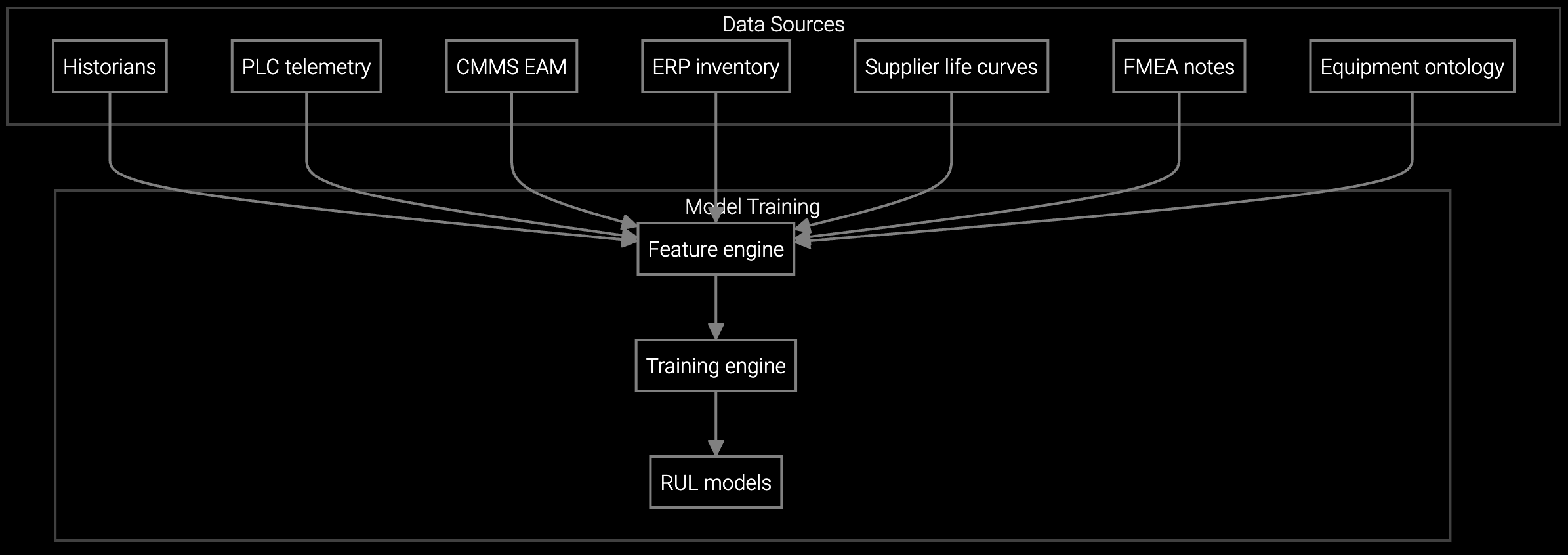
Estimates when power supplies and fans will fail in network equipment based on thermal patterns and usage history.
Network OEMs deploy routers, switches, and security appliances across thousands of customer sites with minimal on-site staffing. The platform maintains complete equipment records by automatically ingesting SNMP data, firmware version reports, and configuration backups from devices as they check in.
When a customer reports a network issue, service coordinators instantly access the device's complete history: installation date, firmware versions, configuration changes, and historical error patterns. This eliminates the "swivel-chair" workflow of checking multiple legacy systems before opening a support case.
The system maintains a confidence score for each asset record based on data freshness and completeness. Devices without recent telemetry appear in prioritized outreach queues, prompting service teams to verify status manually. For legacy equipment, you can import historical service records to establish baseline asset data.
The platform consumes SNMP traps, syslog feeds, and configuration backup files through standard network protocols. Most implementations connect via existing network management systems rather than requiring device-level changes. API integrations sync asset records with ERP and CRM systems on scheduled intervals.
The platform recognizes device types from multiple OEMs and applies vendor-specific parsing logic to telemetry streams. Configuration compliance rules adapt to each manufacturer's standards. This unified view prevents service coordinators from switching between vendor-specific tools when managing hybrid networks.
The system processes configuration backups within minutes of ingestion. Drift alerts appear in work queues based on severity levels you define. Critical security configuration changes trigger immediate notifications, while non-urgent compliance issues batch into weekly review queues.
The workflow engine surfaces conflicts in the renewal queue with recommended resolution paths. Service coordinators can adjust renewal timing, schedule proactive maintenance before expiration, or flag accounts for expedited contract processing. All decisions update the asset record to maintain accurate lifecycle tracking.

Software stocks lost nearly $1 trillion in value despite strong quarters. AI represents a paradigm shift, not an incremental software improvement.
Function-scoped AI improves local efficiency but workflow-native AI changes cost-to-serve. The P&L impact lives in the workflow itself.

Five key shifts from deploying nearly 100 enterprise AI workflow solutions and the GTM changes required to win in 2026.
Schedule a demo to see how automated asset tracking eliminates manual reconciliation.
Schedule Demo