
Manual dispatch, parts coordination, and job documentation consume hours daily while network failures demand instant response.
Automated workflows drop pre-dispatch prep to under 2 minutes and reduce parts returns 25%, per Bruviti deployment data. Network equipment service teams replace manual lookup and routing with an automated chain that triages the fault, predicts the parts, and readies the dispatch, freeing technician and coordinator time per job.
Dispatchers spend hours cross-referencing work orders, technician locations, and parts availability. Each router failure triggers a cascade of phone calls and system checks before a technician can be assigned.
Technicians arrive on-site without critical components because work orders lack accurate parts predictions. Missing a single power supply means rescheduling the entire visit.
Technicians spend 30+ minutes per job manually entering parts consumed, labor hours, and resolution notes across multiple systems. Administrative work extends the workday and delays billable tasks.
Bruviti automates the entire field service workflow by analyzing device telemetry, maintenance history, and parts inventory in real time. When a network switch throws error codes indicating power supply degradation, the platform auto-generates a work order with predicted failure mode, dispatches the nearest qualified technician based on current location and schedule, reserves required parts from inventory, and pre-loads the technician's mobile app with device configuration and repair procedures.
After job completion, technicians approve AI-generated closeout documentation rather than manually entering data. The platform auto-fills parts consumed by matching serial numbers scanned on-site, calculates labor hours from GPS timestamps, and categorizes the failure type using diagnostic logs. This transforms the technician role from administrative coordinator to field expert validating AI-executed tasks.
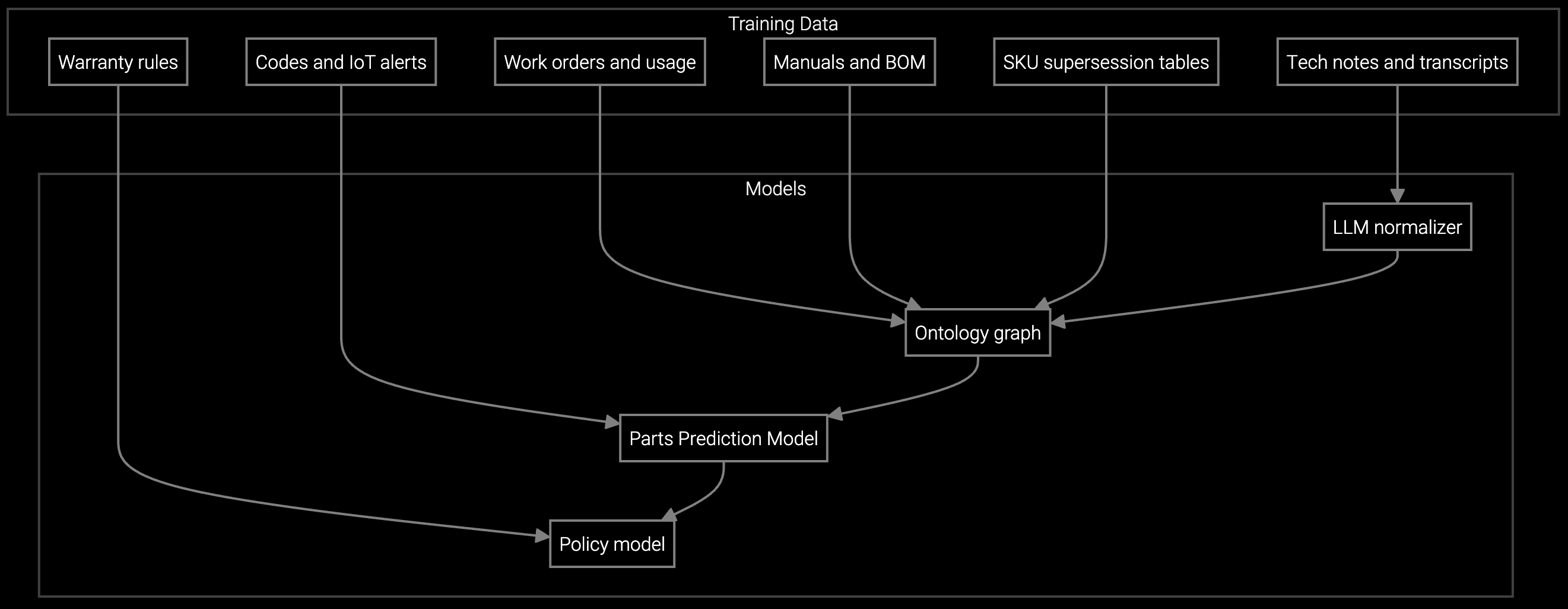
Predicts which network device components technicians need before dispatch by analyzing error logs and failure patterns, ensuring power supplies, line cards, and fans are staged before the truck rolls.
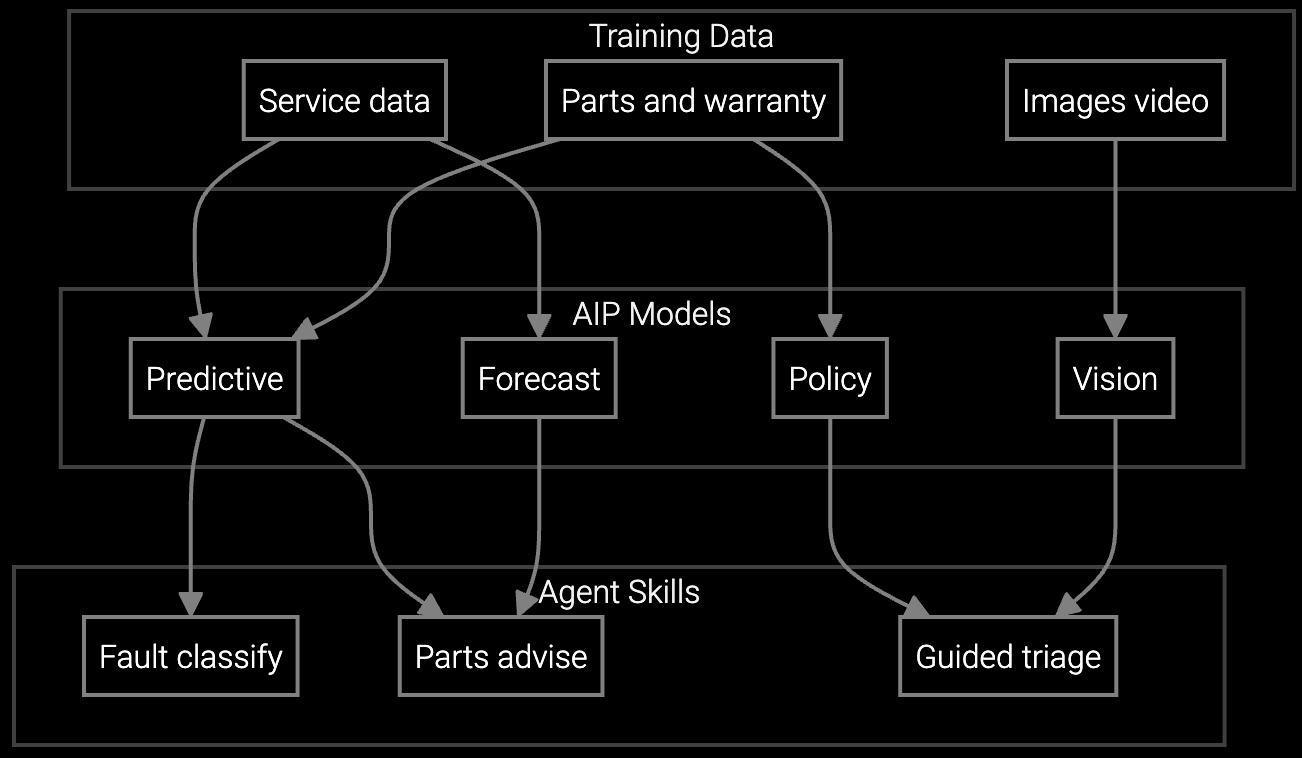
Mobile copilot delivers real-time guidance on router configurations, firmware compatibility checks, and step-by-step repair procedures directly on-site at NOCs and data centers.
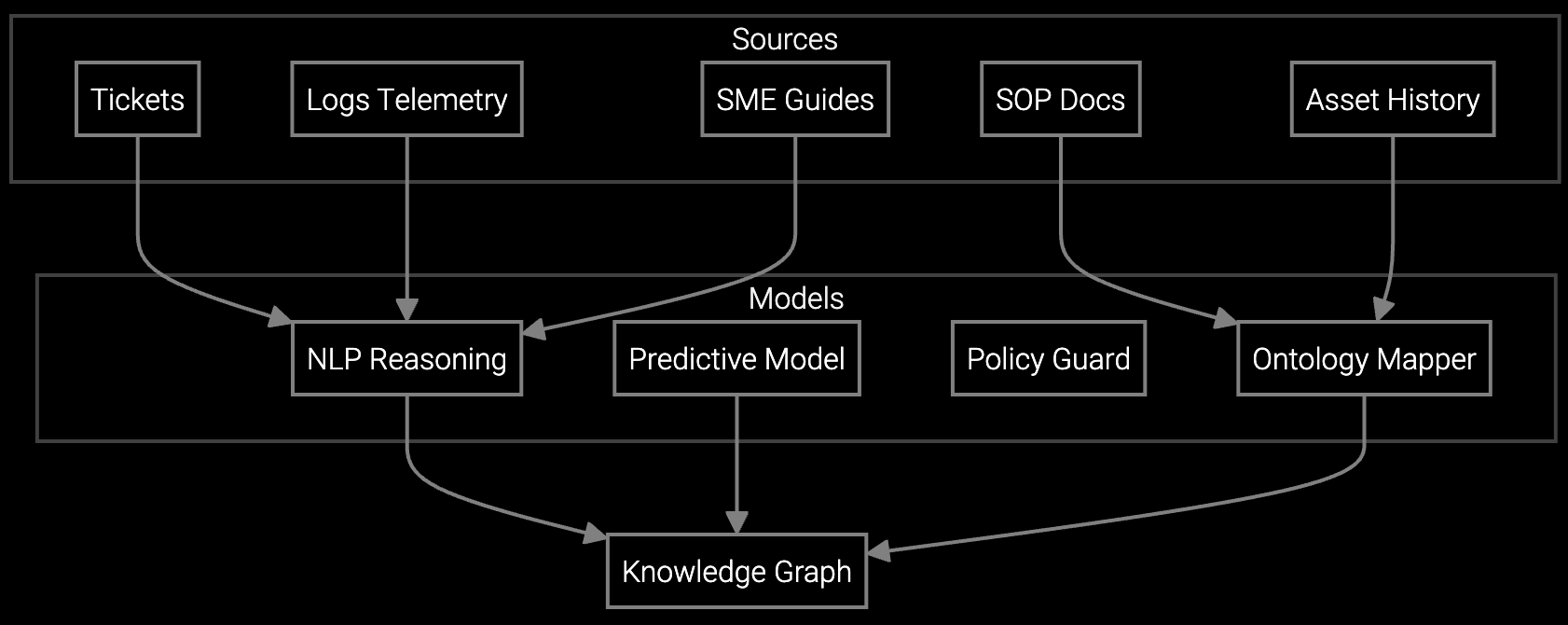
Correlates SNMP traps and syslog data with historical switch failures to identify root cause faster, reducing diagnostic time for complex multi-vendor network issues.
Network equipment OEMs face SLAs demanding 99.999% uptime where every minute of downtime costs enterprise customers thousands in lost productivity. Manual dispatch workflows cannot meet 4-hour MTTR targets when technicians waste 47 minutes coordinating logistics before even leaving the depot.
Automated workflows triggered by SNMP traps and syslog anomalies enable instant dispatch decisions. The platform parses error codes indicating power supply degradation or line card failures, cross-references parts inventory at nearby depots, and assigns the closest certified technician with required components already staged. This cuts response time by 39 minutes per incident.
Dispatch scheduling, parts reservation, and diagnostic data compilation execute automatically without human intervention. Technicians review and approve the final work order, validate the suggested parts list based on on-site inspection, and confirm job completion documentation. The platform shifts technicians from executing administrative tasks to validating AI-executed workflows.
The platform ingests telemetry from routers, switches, and firewalls across manufacturers via standard protocols like SNMP, syslog, and REST APIs. It maintains separate failure pattern libraries for each vendor's equipment line, ensuring parts predictions and diagnostic guidance remain accurate regardless of the device manufacturer installed at the customer site.
Dispatchers retain override authority to reassign work orders before technician acceptance. The platform learns from manual reassignments by updating its skill matching and proximity algorithms. Over time, override rates typically drop below 5% as the system refines technician skill profiles and travel time predictions.
Yes. Technicians review the AI-generated closeout report and edit any fields where on-site conditions differed from predictions. Common edits include adding parts consumed beyond the initial list or adjusting labor hours for unexpected complications. The platform captures these corrections to improve future predictions for similar failure scenarios.
When OEMs release new router or switch models, the platform requires 30-60 days of field data to build reliable failure pattern libraries. During this learning period, technicians provide more manual input for parts selection and diagnostics. Once sufficient data accumulates, automation accuracy for new models matches that of established product lines.

How AI bridges the knowledge gap as experienced technicians retire.
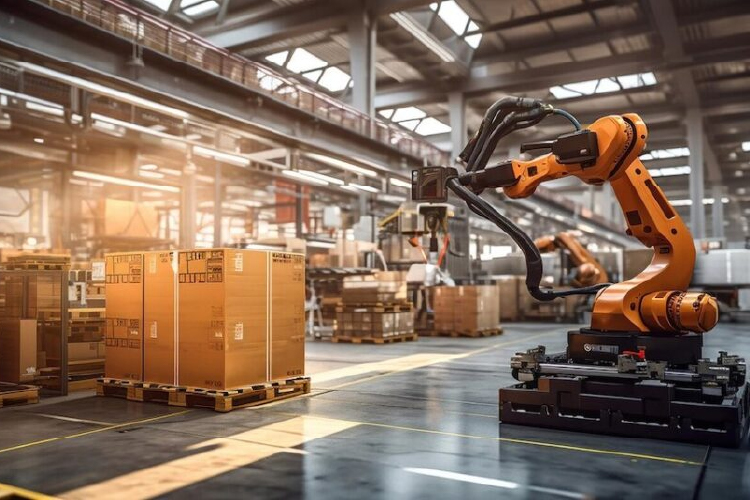
Generative AI solutions for preserving institutional knowledge.

AI-powered parts prediction for higher FTFR.
See how network equipment OEMs cut dispatch time by 83% and reclaim 2+ hours per technician daily.
Schedule Demo