
Rising case volumes and 24/7 uptime demands force agents to choose between speed and accuracy every day.
AI customer service workflows hit median handling time under 2 minutes with 24/7 coverage on network support, per Bruviti deployment data. Automating intake, summarization, and routing keeps cases moving around the clock without shift gaps. Operators get faster turnaround and continuous coverage from one workflow layer.
Agents spend the first 3-5 minutes of every call determining whether the issue is firmware, configuration, hardware failure, or security vulnerability. This manual triage delays resolution and creates routing errors.
Answers live across firmware release notes, SNMP trap libraries, CVE databases, and tribal knowledge from network engineers. Agents toggle between 8+ systems to find the right resolution path.
Different agents give different answers to the same firmware rollback question or RMA eligibility scenario. Customers escalate when they receive conflicting guidance across multiple contacts.
The platform transforms how agents handle network equipment cases by automating the repetitive steps that consume most handle time. When a case arrives via email, chat, or phone transcript, AI classifies the issue type, retrieves relevant firmware documentation and syslog patterns, and drafts a response based on your organization's resolution history.
Agents see a single screen with case context, recommended solution, and one-click actions for common tasks like initiating RMA, ordering replacement parts, or scheduling firmware updates. The system learns from every resolved case, continuously improving classification accuracy and response quality without requiring agents to change how they work.
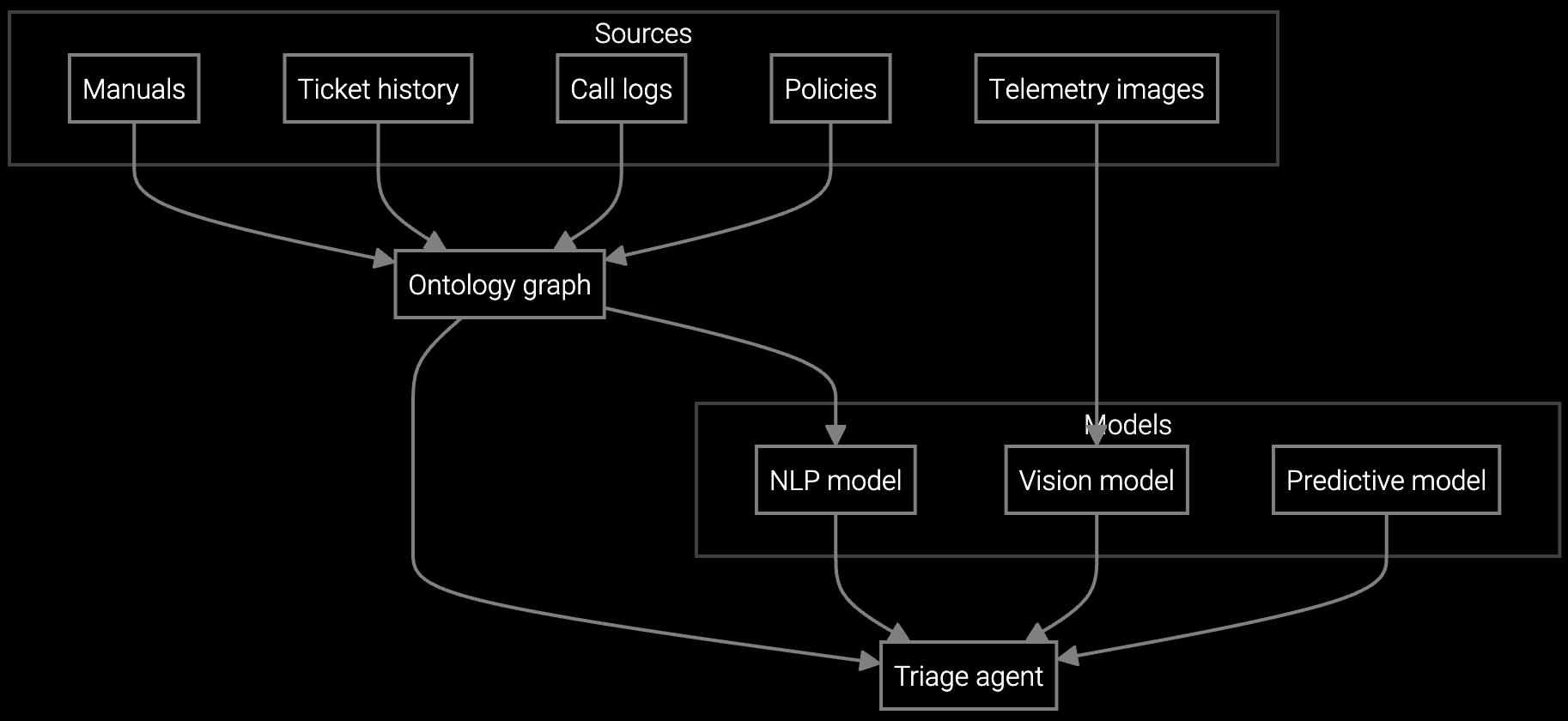
Autonomous classification analyzes router error logs, correlates SNMP trap patterns with firmware versions, and routes cases to hardware, software, or NOC teams with complete diagnostic context.
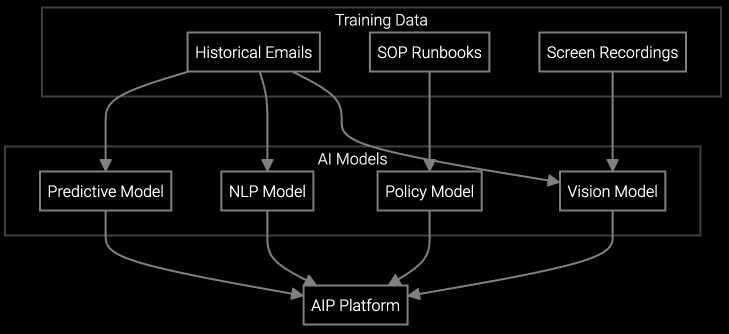
AI reads inbound customer emails about switch configuration issues, retrieves CLI commands from your firmware documentation, and drafts responses that match your NOC engineers' resolution patterns.
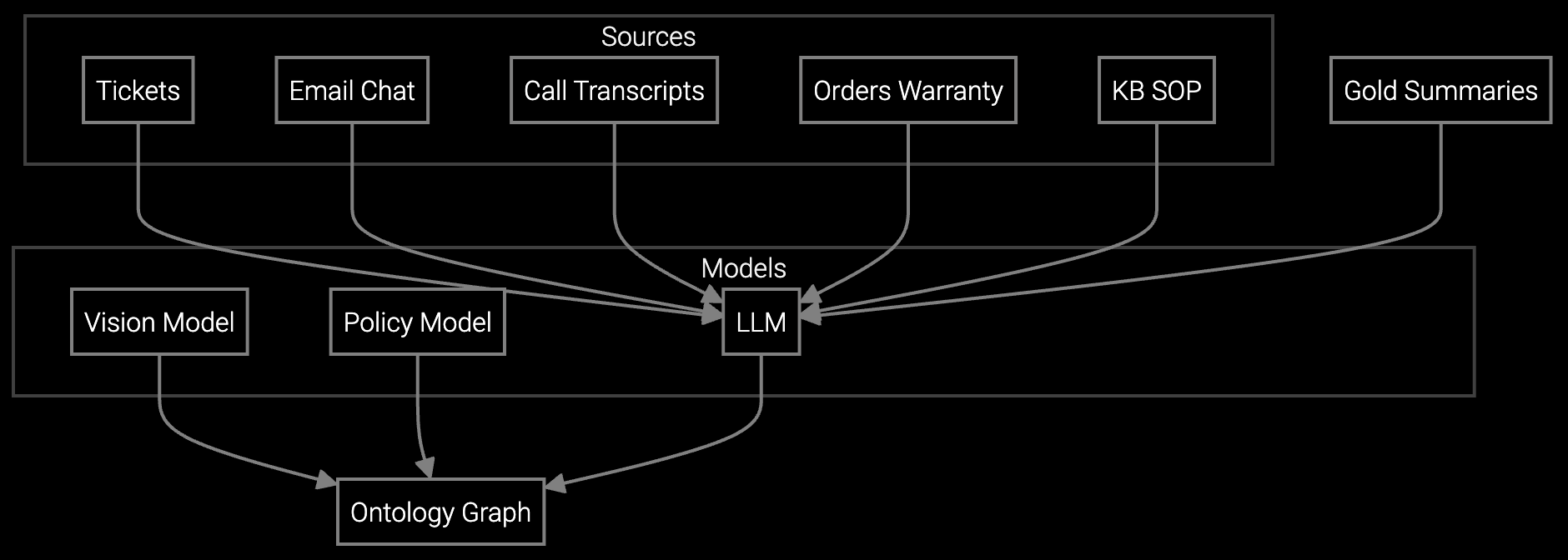
Instantly generates case history summaries from multi-day email threads about firewall firmware updates, so agents understand the full context without reading 20+ messages before responding.
Network equipment OEMs operate contact centers that field 50,000+ monthly cases spanning firmware vulnerabilities, configuration errors, hardware RMAs, and NOC escalations. Each case requires agents to correlate customer-reported symptoms with syslog patterns, firmware version matrices, and CVE databases before recommending a resolution path.
The knowledge required to support routers, switches, firewalls, and wireless controllers across multiple product generations lives in fragmented systems. Agents waste half their handle time searching for answers while customers wait on hold during network outages that directly impact business operations.
The system auto-classifies complex cases requiring NOC or engineering expertise and routes them immediately with full diagnostic context. It focuses automation on the 60% of cases that follow predictable resolution patterns, freeing engineers to handle the truly complex 40% that require deep troubleshooting.
Yes. Agents always review and approve responses before sending. The platform presents a drafted solution as a starting point, and agents edit, reject, or supplement it based on customer context. Every agent action trains the system to improve future recommendations.
Most network equipment OEMs see measurable AHT reduction within 4-6 weeks of deployment. The system learns from your existing case resolution data during initial training, so agents benefit from improved classification and knowledge retrieval starting with their first cases.
No. The platform integrates with your current CRM and ticketing systems via API. Agents continue working in their familiar interface while AI operates in the background to auto-classify cases, retrieve knowledge, and draft responses. No workflow disruption required.
The platform continuously ingests updated firmware release notes, CVE bulletins, and SNMP MIB libraries. When new documentation arrives, the system retrains relevant models to reflect current resolution paths. Agents automatically receive updated recommendations without manual knowledge base maintenance.

Understanding and optimizing the issue resolution curve.

Part 1: The transformation of IT support with AI.
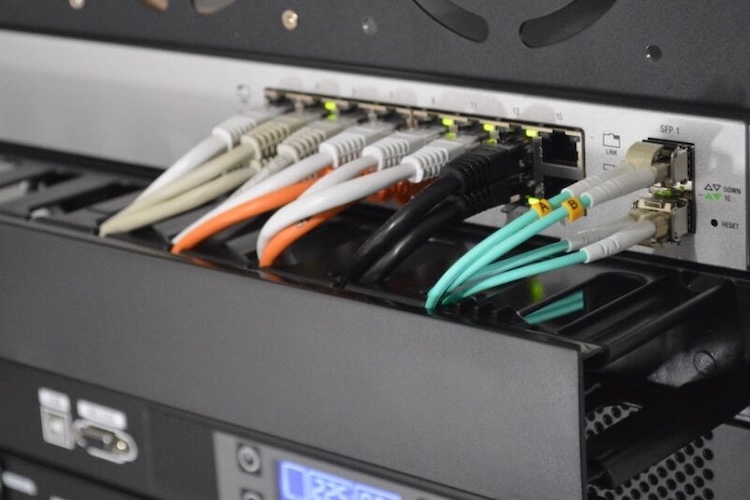
Part 2: Implementing AI in IT support.
Schedule a demo to see how network equipment OEMs reduce handle time by 40% without changing agent systems.
Schedule Demo