
Tracking thousands of servers across BMC consoles, spreadsheets, and ticketing systems burns hours daily—time that could prevent the next outage.
Bruviti's EV Charging Network impact story holds equipment uptime at 95% through automated installed-base workflows. For data center operators, automating asset tracking and health checks means fewer manual inspections and steadier availability, with the same approach keeping fielded equipment running at 95% in production.
Service teams toggle between IPMI consoles, inventory spreadsheets, and contract databases to verify configuration details. Each lookup interrupts troubleshooting flow and delays resolution.
Manual tracking cannot keep pace with firmware updates, hardware swaps, and configuration changes across hyperscale deployments. Outdated records lead to incorrect service decisions.
Contract expiration dates live in disconnected systems. Service teams discover lapsed coverage only when customers call with issues, damaging trust and reducing renewal rates.
Bruviti consolidates BMC telemetry, inventory records, and contract data into a unified view. When a service team member opens a server inquiry, the platform surfaces current firmware version, warranty status, maintenance history, and recent anomaly alerts—no context switching required.
The platform continuously monitors configuration state across the installed base, automatically flagging drift between recorded and actual configurations. Automated workflows trigger renewal notifications 90 days before contract expiration, presenting service teams with current asset utilization data to support upsell conversations. This transforms asset management from reactive data entry into proactive lifecycle orchestration.

Analyzes BMC and IPMI telemetry streams from thousands of servers to identify thermal anomalies, power fluctuations, and component degradation before failures impact availability.
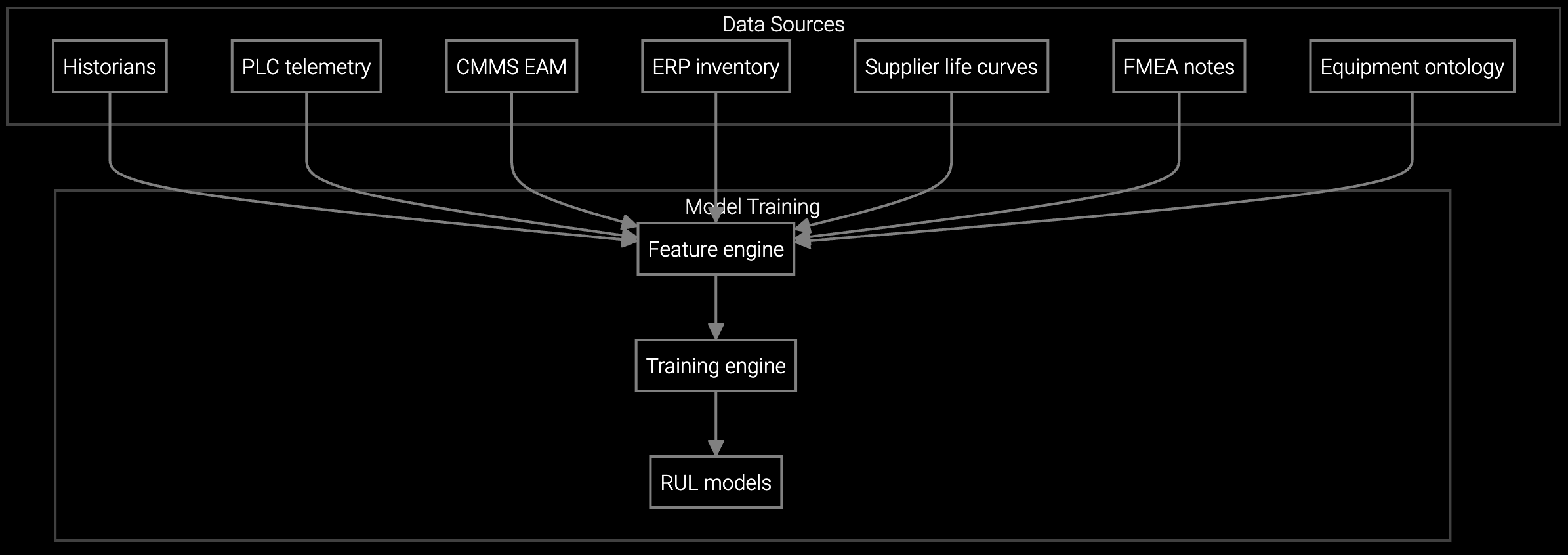
Estimates when drives, memory modules, and power supplies will fail based on usage patterns and environmental conditions, enabling maintenance during scheduled windows instead of emergency outages.

Schedules component replacements based on actual equipment condition rather than fixed intervals, reducing unnecessary maintenance while preventing unexpected downtime.
Data center operators manage infrastructure spanning hundreds of thousands of compute nodes, storage arrays, and cooling systems. Manual asset tracking breaks down at this scale—configuration changes occur faster than spreadsheets can capture, and firmware versions diverge across hardware generations.
The platform ingests telemetry directly from BMC interfaces, automatically maintaining configuration records for each server, PDU, and UPS. When a cooling system shows thermal drift or a storage array reports elevated error rates, service teams see complete asset history, current warranty status, and recommended maintenance actions in one view. This eliminates the workflow friction that delays issue resolution in hyperscale environments.
The platform continuously polls BMC interfaces and compares detected configurations against recorded state. When it detects drift—such as a firmware update or component swap—it automatically updates records and flags the change for review. This ensures asset data remains accurate regardless of how changes occur.
It ingests data from IPMI and BMC interfaces, server management controllers, PDU monitoring systems, environmental sensors, and UPS status feeds. These streams provide real-time visibility into power consumption, thermal conditions, component health, and availability metrics across the installed base.
Yes. When investigating an issue, teams see complete maintenance history, recent configuration changes, related anomaly alerts, and warranty status in the same interface. This eliminates interruptions to search separate systems and accelerates root cause identification.
It monitors contract expiration dates and automatically triggers notifications 90 days before renewal deadlines. The platform also surfaces asset utilization data, performance trends, and upgrade recommendations to support renewal conversations with current lifecycle context.
It immediately flags the discrepancy, updates asset records, and alerts the appropriate team based on severity rules. For example, detecting an unauthorized firmware downgrade on production storage triggers an escalation workflow, while routine component replacements simply update inventory records.
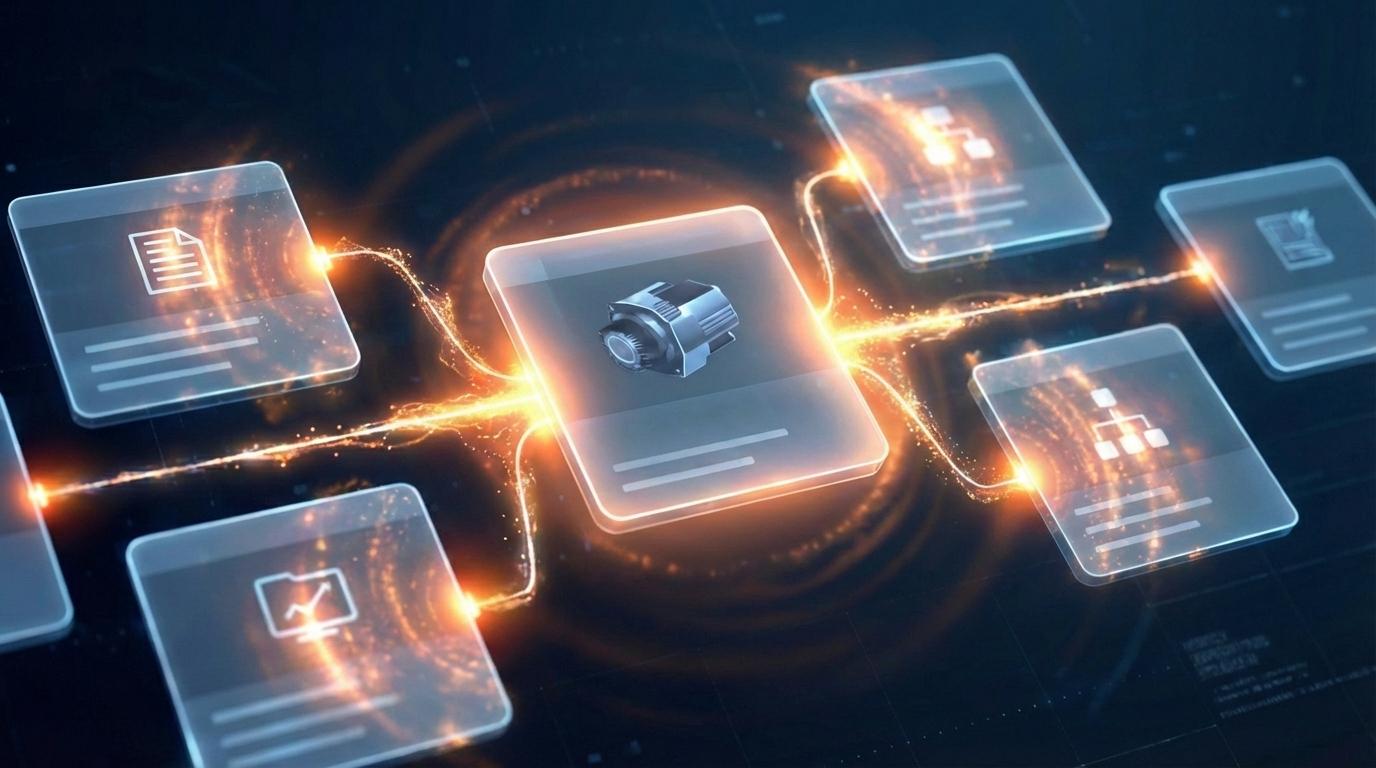
Software stocks lost nearly $1 trillion in value despite strong quarters. AI represents a paradigm shift, not an incremental software improvement.
Function-scoped AI improves local efficiency but workflow-native AI changes cost-to-serve. The P&L impact lives in the workflow itself.

Five key shifts from deploying nearly 100 enterprise AI workflow solutions and the GTM changes required to win in 2026.
Get a walkthrough of how Bruviti consolidates your BMC telemetry, inventory, and contracts into a single workflow.
Schedule Demo