
Warranty costs now exceed profit margins for many data center OEMs—AI automation directly attacks the largest cost drivers.
Bruviti deployment data shows AI cutting warranty claim processing time by 90%, taking each claim from 8 to 12 minutes to under 1 minute. For data center equipment manufacturers, that labor reduction is the core ROI driver, compounding across thousands of claims into measurable warranty operating cost savings.
Data center OEMs process tens of thousands of server, storage, and PDU returns annually. Nearly half arrive at refurbishment centers showing no defect, yet still incur full RMA processing costs including reverse logistics, testing labor, and restocking.
CFOs struggle to forecast warranty accruals accurately when failure patterns shift across server generations, cooling system designs, and power supply configurations. Underestimating reserves triggers earnings restatements; overestimating ties up cash unnecessarily.
Manual entitlement verification for BMC logs, RAID controller diagnostics, and thermal sensor data slows RMA authorization. Delays frustrate hyperscale customers who measure downtime in thousands of dollars per minute, risking SLA penalties and customer churn.
Bruviti's platform attacks warranty costs at three leverage points. First, AI analyzes BMC telemetry, IPMI sensor data, and customer-reported symptoms to predict which returns will arrive NFF—flagging these cases before issuing RMAs prevents unnecessary reverse logistics and refurbishment labor. Second, the system automates entitlement verification by cross-referencing warranty databases, service contracts, and historical failure patterns, collapsing five-day manual reviews into real-time approvals. Third, fraud detection algorithms identify statistically anomalous claim patterns across customer accounts, product lines, and failure modes.
The financial impact compounds over time. Lower NFF rates reduce refurbishment center headcount requirements and parts inventory carrying costs. Faster claim processing cuts SLA penalty exposure and improves Net Promoter Scores among hyperscale customers. More accurate warranty reserves free working capital for R&D investment. OEMs typically achieve breakeven within two quarters as AI-driven process improvements scale across all warranty operations.
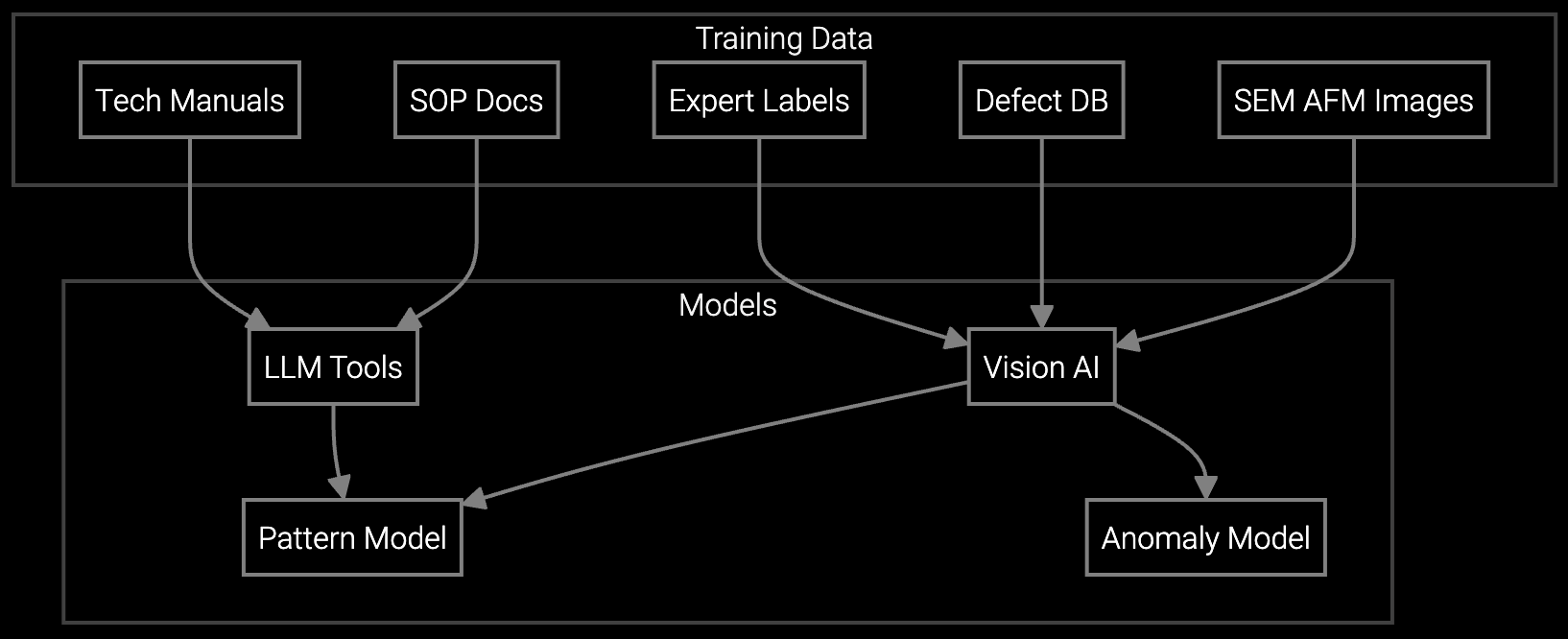
AI analyzes microscopic images of failed server components, storage controller chips, and power supply circuits to identify defects, classify failure modes, and validate warranty claims with engineering-grade precision.
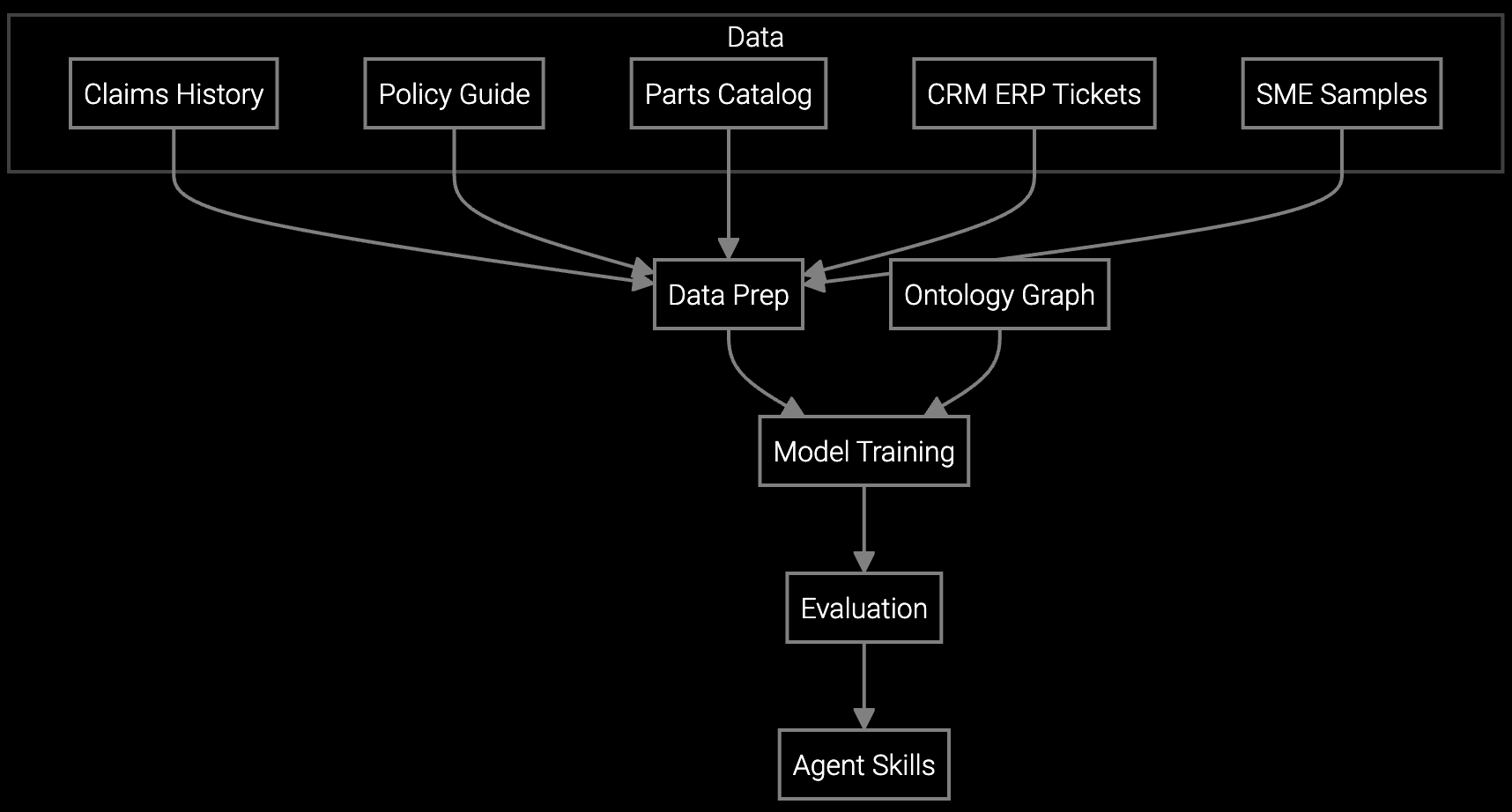
Automatically classifies and codes warranty claims for servers, cooling systems, and PDUs across thousands of SKUs, reducing manual processing from hours to seconds while improving accuracy and consistency.
Data center equipment OEMs face warranty volumes in the hundreds of thousands annually as hyperscale customers deploy servers, storage arrays, and cooling infrastructure at unprecedented scale. A single rack-level failure can cascade across dozens of components—power supplies, BMCs, RAID controllers, thermal sensors—making root cause determination critical for accurate warranty liability assignment.
AI analyzes multi-layered telemetry streams (IPMI sensor data, BMC logs, RAID controller diagnostics) to isolate genuine hardware failures from configuration errors, environmental conditions, or customer-induced damage. This precision directly impacts warranty reserve calculations: correctly classifying even 5% more claims as non-covered saves millions in annual accruals. The platform ingests data center-specific failure signatures—hot aisle thermal spikes, power supply harmonics, drive vibration patterns—to build predictive models tuned to this industry's unique physics.
Data center OEMs typically achieve ROI within 6-9 months. Early gains come from NFF reduction (fewer unnecessary refurbishments) and faster claim processing (reduced SLA penalties). Warranty reserve accuracy improvements compound over 18-24 months as predictive models refine failure forecasts across product generations and customer environments.
The platform analyzes BMC telemetry, IPMI sensor logs, and customer symptom descriptions to predict which returns will arrive NFF before issuing RMA authorization. By flagging cases where diagnostics suggest configuration errors, environmental conditions, or transient faults rather than hardware defects, OEMs avoid unnecessary reverse logistics and refurbishment testing costs.
Focus on four KPIs: NFF rate (target 15-20% reduction within first year), warranty cost as percentage of revenue (aim for 40+ basis point improvement), claims processing time (target sub-24-hour turnaround), and warranty reserve forecast accuracy (measure variance between accruals and actual costs quarterly). These metrics directly impact gross margin and cash flow.
AI builds failure prediction models using historical warranty data, product telemetry, and environmental factors (thermal stress, power quality, workload patterns) to forecast future warranty costs by SKU and customer segment. This replaces spreadsheet-based estimation with statistically rigorous projections, reducing reserve volatility and freeing working capital previously over-allocated as safety margins.
Yes, the platform connects via APIs to common warranty systems (Oracle, SAP, ServiceMax) and ERP databases to access entitlement records, parts inventory, and claims history. Real-time integration enables automated claim validation without replacing existing workflows. BMC/IPMI telemetry ingestion works with standard data center monitoring tools and hardware management interfaces.
Software stocks lost nearly $1 trillion in value despite strong quarters. AI represents a paradigm shift, not an incremental software improvement.

Function-scoped AI improves local efficiency but workflow-native AI changes cost-to-serve. The P&L impact lives in the workflow itself.

Five key shifts from deploying nearly 100 enterprise AI workflow solutions and the GTM changes required to win in 2026.
See the exact ROI model for your data center equipment warranty operations—based on your NFF rate, claim volumes, and current processing costs.
Schedule ROI Analysis