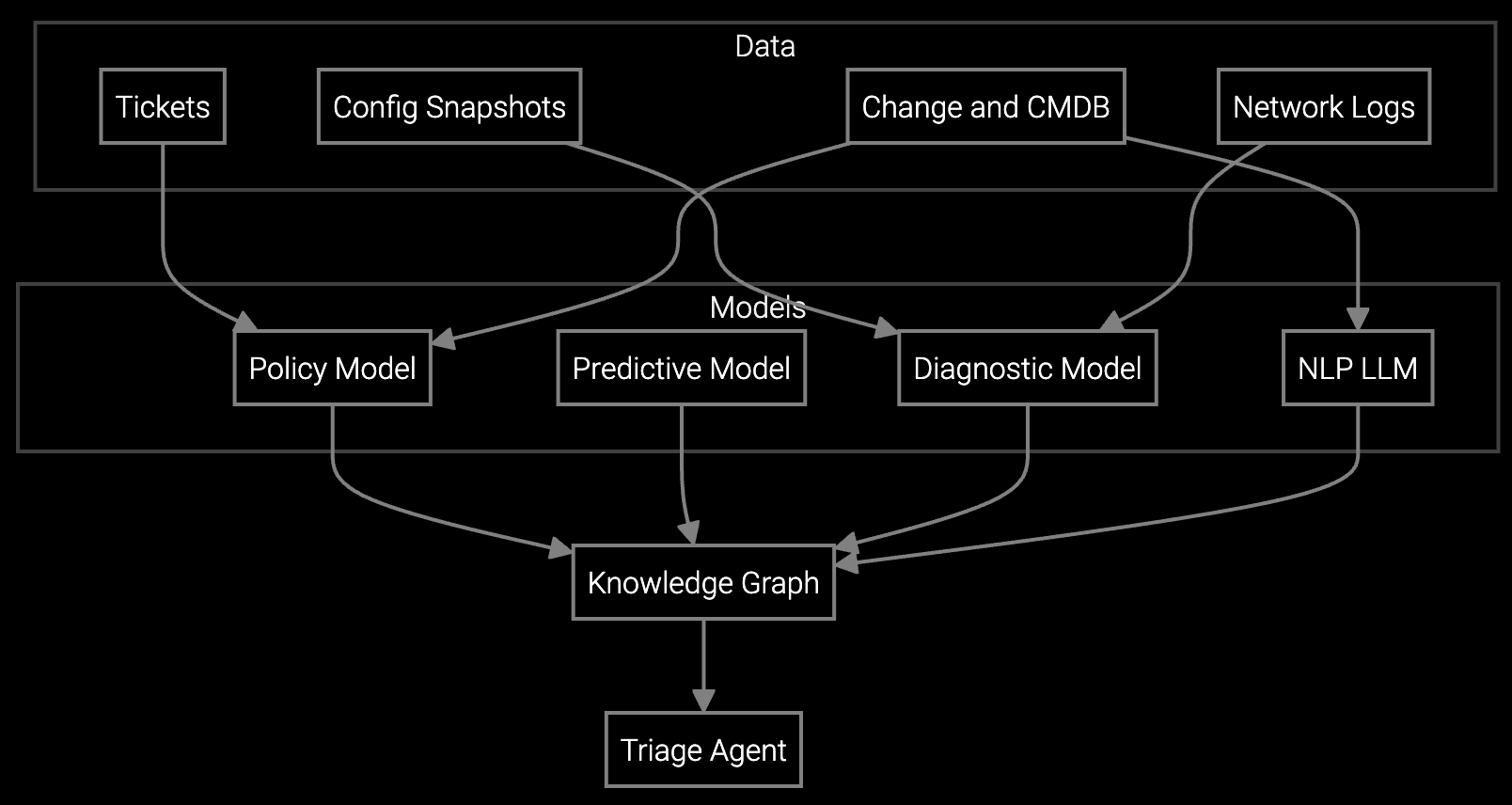
Manual log parsing and multi-tool switching slow resolution when server availability targets demand instant action.
Bruviti impact data shows a connected remote support workflow sustains 95% equipment uptime across a distributed network. Operators streamline by routing every fault through one triage-to-fix flow, so issues are caught and cleared remotely before they cause downtime. Fewer manual handoffs means more assets stay online with the same team.
Support engineers spend hours parsing IPMI event logs, BMC alerts, and RAID controller outputs across fragmented tools. Critical patterns get missed when thousands of servers generate alerts simultaneously.
Switching between remote access platforms, ticketing systems, parts catalogs, and knowledge bases creates swivel-chair fatigue. Context gets lost in handoffs when escalation becomes necessary.
Limited remote visibility forces engineers to escalate issues that could resolve remotely. Each escalation adds delay and cost when 99.99% uptime SLAs leave no margin for extended troubleshooting.
Bruviti connects to BMC interfaces, IPMI feeds, and telemetry streams to automatically analyze hardware health across compute, storage, and cooling infrastructure. When a server triggers an alert, the platform correlates thermal readings, power metrics, and error logs to identify root cause without manual log parsing.
Support engineers receive a complete diagnostic summary with recommended resolution steps, relevant parts numbers, and historical context from similar incidents. Sessions shift from investigation to validation—reviewing AI findings and approving actions rather than searching for answers across disconnected systems.
Data center OEMs manage thousands to millions of servers where 4% annual hardware failure rates generate constant support volume. When a hyperscale customer reports thermal anomalies affecting an entire rack, traditional troubleshooting requires manually correlating IPMI logs, cooling system telemetry, and PDU metrics across dozens of devices.
Automated workflows ingest BMC data streams in real time, detecting patterns like progressive DIMM errors or hot-spot formation before customers notice degraded performance. Support engineers receive alerts with pre-analyzed diagnostics showing exactly which cooling unit failed or which power supply is underperforming—shifting focus from investigation to validation and repair coordination.
The platform normalizes IPMI data, BMC event logs, and proprietary management interfaces across vendors like Dell, HPE, and Supermicro. Pre-trained models recognize common failure signatures—DIMM errors, thermal events, power anomalies—regardless of the underlying hardware format, eliminating manual translation between vendor-specific tools.
The system flags ambiguous cases and escalates with full context—collected telemetry, attempted analysis steps, and similar historical incidents. Support engineers receive a structured handoff rather than starting from scratch, reducing escalation resolution time even when automation doesn't provide a definitive answer.
Yes. The platform connects via APIs to existing remote management infrastructure rather than replacing it. Support engineers continue using familiar tools while receiving AI-generated diagnostic summaries in their workflow, avoiding the disruption of learning entirely new remote access systems.
Most data center OEMs observe measurable changes within 60 days. The platform learns from your incident history during initial deployment, then begins surfacing patterns that reduce diagnostic time. Remote resolution improvements accelerate as the system captures more resolved cases specific to your equipment configurations.
It shifts the threshold for what requires on-site response. More issues resolve remotely when support engineers have complete diagnostic context, but physical hardware replacement still requires data center presence. The change is fewer unnecessary dispatches for problems that remote analysis could have resolved.
Software stocks lost nearly $1 trillion in value despite strong quarters. AI represents a paradigm shift, not an incremental software improvement.
Function-scoped AI improves local efficiency but workflow-native AI changes cost-to-serve. The P&L impact lives in the workflow itself.
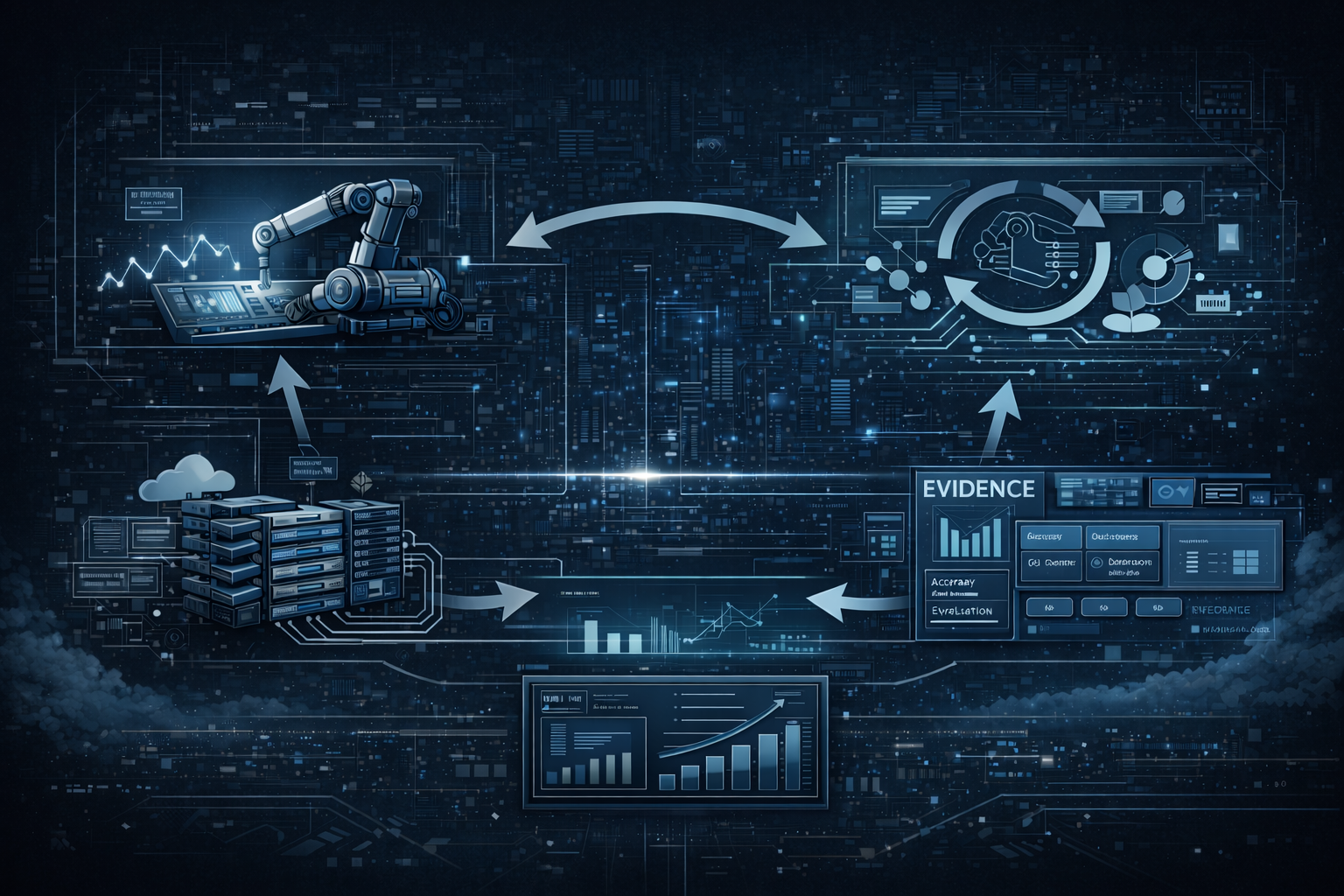
Five key shifts from deploying nearly 100 enterprise AI workflow solutions and the GTM changes required to win in 2026.
Discover how data center OEMs are cutting remote diagnostic time by connecting BMC telemetry to automated root cause analysis.
Schedule Demo