
Warranty reserves erode margins when NFF returns and fraudulent claims go undetected—quantifying prevention value matters now.
AI warranty claim automation saves 200-300 analyst hours per month and cuts reporting errors 30%, while auto-coding 75-85% of claims, per Bruviti deployment data. The build pays back on labor alone: hours reclaimed from manual coding redeploy to exception review, and cleaner codes reduce downstream reconciliation work across the returns operation.
Appliances returned under warranty often arrive with no defect identified during refurbishment. Each NFF unit incurs reverse logistics, inspection labor, and restocking costs without revealing actionable quality data.
Warranty systems lack pattern detection for invalid claims. Retailers and consumers exploit this gap with out-of-warranty units, misuse scenarios, and duplicate submissions that erode reserve accuracy.
Manual entitlement verification and claim validation delay RMA issuance. Extended processing time frustrates customers and increases labor costs per claim, especially during seasonal HVAC and refrigeration spikes.
The ROI case for warranty AI centers on three measurable cost reductions. First, NFF rate improvement: pre-authorization diagnostic AI validates claims before issuing RMAs, filtering out user error and misuse scenarios. For appliance OEMs processing 50,000 annual warranty returns at $85 per unit in reverse logistics and refurbishment costs, a 20% NFF reduction saves $850,000 annually.
Second, fraud detection: pattern recognition models flag duplicate claims, out-of-warranty submissions, and anomalous failure modes. Bruviti's API integrates with existing warranty systems to score claims in real time, allowing builders to configure custom validation rules in Python without replacing legacy infrastructure. Third, processing efficiency: automated entitlement verification and claim coding reduce manual review time by 60%, freeing warranty analysts for exception handling and quality investigations. These three mechanisms compound—faster processing enables higher claim volumes with the same headcount, while fraud detection improves reserve forecast accuracy.
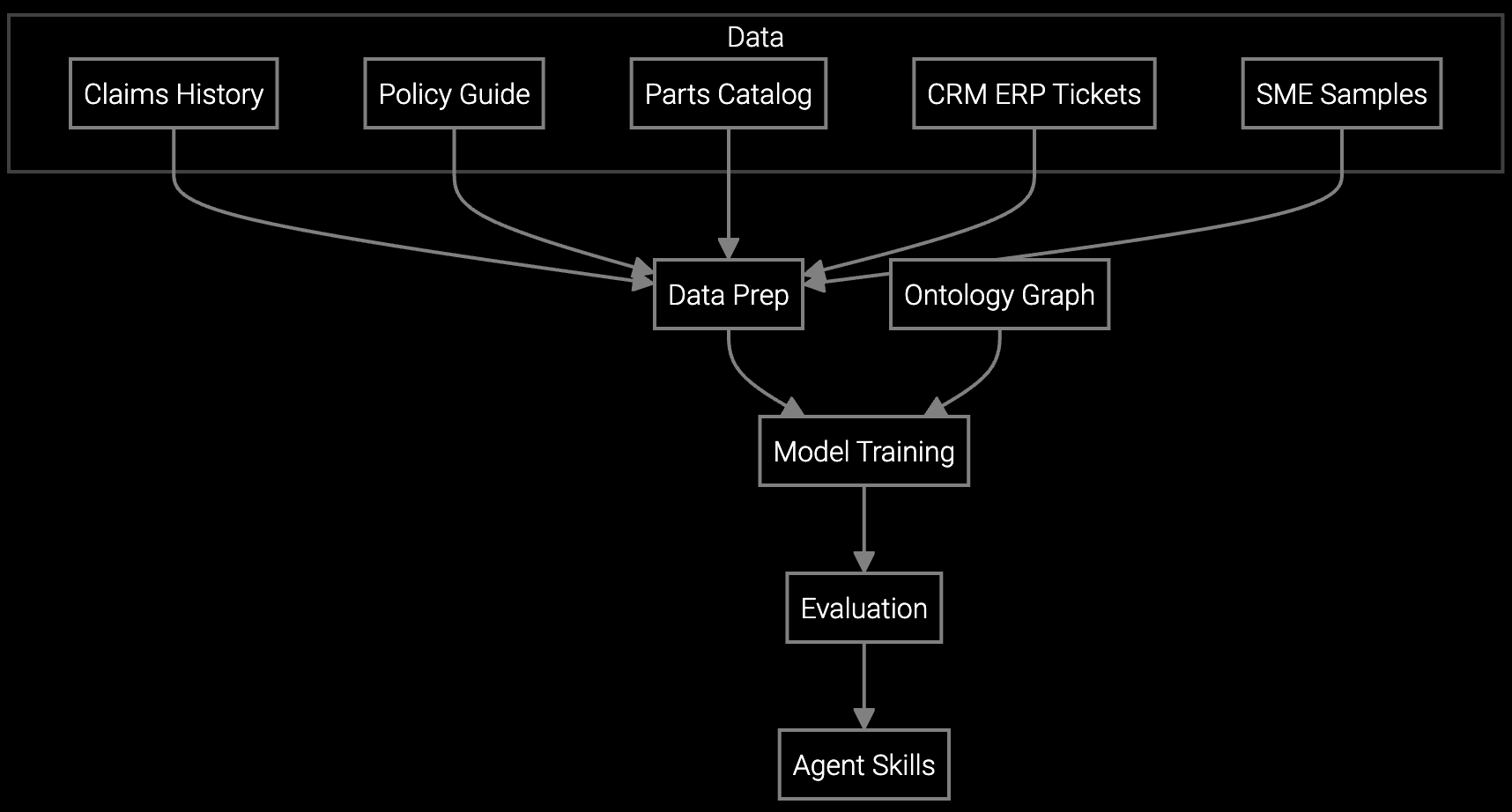
Automatically classify and code warranty claims for refrigerators, dishwashers, and HVAC systems, reducing manual processing time and improving failure mode categorization accuracy.
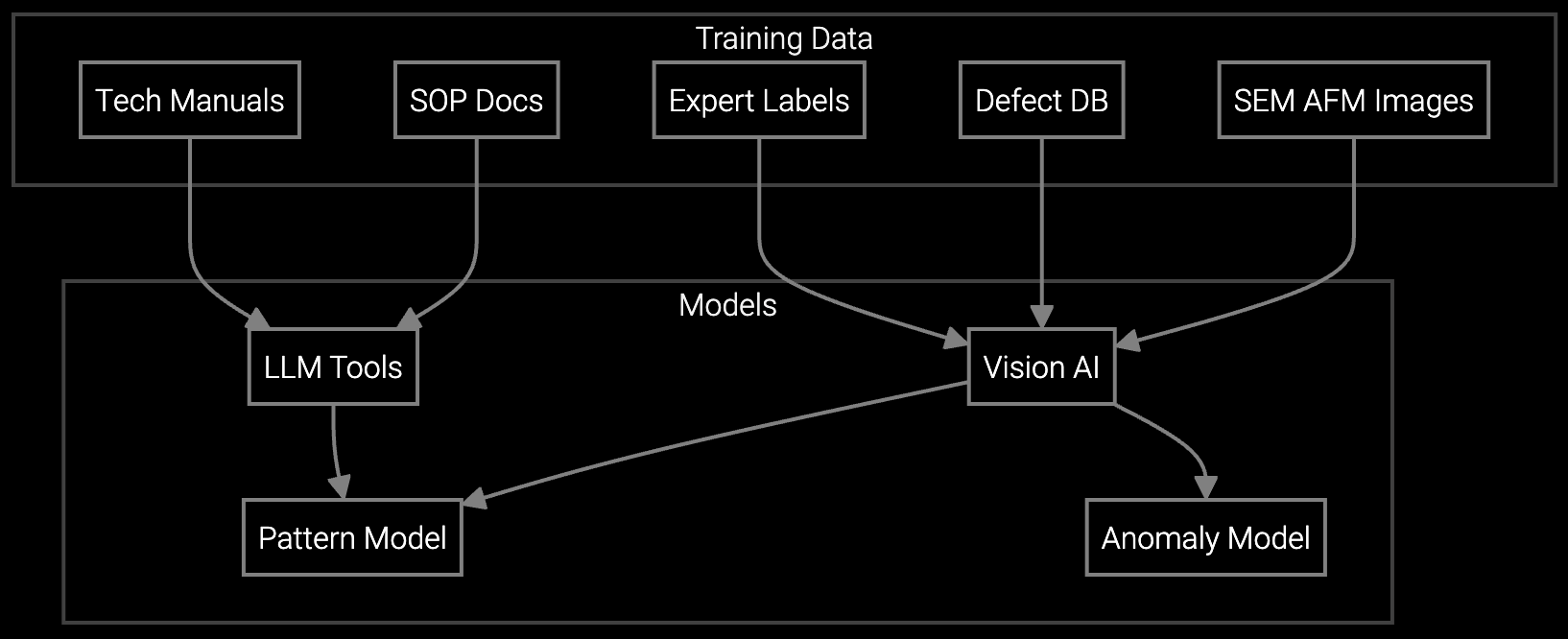
AI analyzes microscopic images from returned appliance components to validate warranty claims, identify manufacturing defects, and classify failure modes for quality investigations.
Appliance manufacturers face unique warranty economics: high unit volumes with thin margins (2-4% warranty cost as percentage of revenue), decades-long product lifecycles requiring parts support, and seasonal demand spikes that strain claim processing capacity. HVAC failures during summer heat waves and refrigerator issues during holiday cooking periods create approval bottlenecks that delay customer resolution and increase labor costs.
Connected appliances introduce new complexity—IoT-enabled refrigerators, washers, and thermostats generate telemetry data that can validate or refute warranty claims, but legacy systems lack integration points to consume this data. Builders integrating warranty AI into existing SAP or Oracle warranty management systems need APIs that score claims using both traditional entitlement data and real-time device telemetry, without forcing a platform replacement.
Track three primary metrics: NFF rate (percentage of returns with no defect found), claim processing time (hours from submission to RMA issuance), and fraud detection rate (percentage of claims flagged and validated as invalid). Secondary metrics include warranty reserve accuracy variance and cost per claim processed. Establish baselines before deployment and measure weekly for the first 90 days to capture early ROI signals.
Bruviti provides RESTful APIs that accept claim data in JSON format and return validation scores and recommended actions. Builders typically create a lightweight integration layer in Python or TypeScript that pulls claim records from the existing warranty system, calls the Bruviti API for scoring, and writes results back to a custom field. This avoids modifying core ERP logic and preserves existing workflows while adding AI validation as a decision support layer.
NFF prediction models improve with three data types: historical warranty claims with validated outcomes (defect found vs. NFF), product telemetry from connected appliances showing usage patterns and error codes, and customer-reported symptom descriptions. The strongest signal comes from combining telemetry data with claim history—if a refrigerator's temperature sensors show normal operation but the customer reports cooling failure, the NFF probability increases significantly.
Yes. Bruviti's Python SDK allows builders to define custom validation rules that flag specific patterns—such as unusually high claim rates from certain retail locations, duplicate serial numbers across submissions, or claims submitted just before warranty expiration. These rules run alongside the base fraud detection model and can be version-controlled in your own repository, avoiding vendor lock-in for critical business logic.
Initial API integration and pilot deployment typically requires 4-6 weeks: one week for API key setup and data schema mapping, two weeks for integration development and testing, and one week for pilot launch with a single product line. Full production rollout across all product categories adds another 2-4 weeks for validation rule tuning and workflow training. Most appliance OEMs see measurable NFF reduction within 60-90 days of pilot launch.
Software stocks lost nearly $1 trillion in value despite strong quarters. AI represents a paradigm shift, not an incremental software improvement.
Function-scoped AI improves local efficiency but workflow-native AI changes cost-to-serve. The P&L impact lives in the workflow itself.
Five key shifts from deploying nearly 100 enterprise AI workflow solutions and the GTM changes required to win in 2026.
Get a custom TCO analysis based on your warranty volume, NFF rate, and existing system architecture.
Request ROI Analysis