
Incomplete asset data costs appliance manufacturers 15-20% in preventable warranty claims and missed contract renewals annually.
Bruviti deployment data shows installed-base intelligence eliminates 40% of unnecessary interventions and predicts asset condition in under 10 seconds. Each avoided truck roll and premature part swap drops straight to margin, so the asset-tracking build pays back through fewer wasted service actions across the fleet.
When asset records don't match actual field configurations, predictive maintenance models train on wrong data. This creates false positives that waste service capacity and false negatives that miss real failures.
Legacy appliances lack registration data, forcing manual lookup processes that delay claims processing. This increases operational costs and degrades customer experience during service events.
Asset data scattered across SAP, Oracle, and regional systems makes it impossible to identify upgrade candidates at EOL. Sales teams miss renewal windows because they can't see which assets are approaching end-of-support.
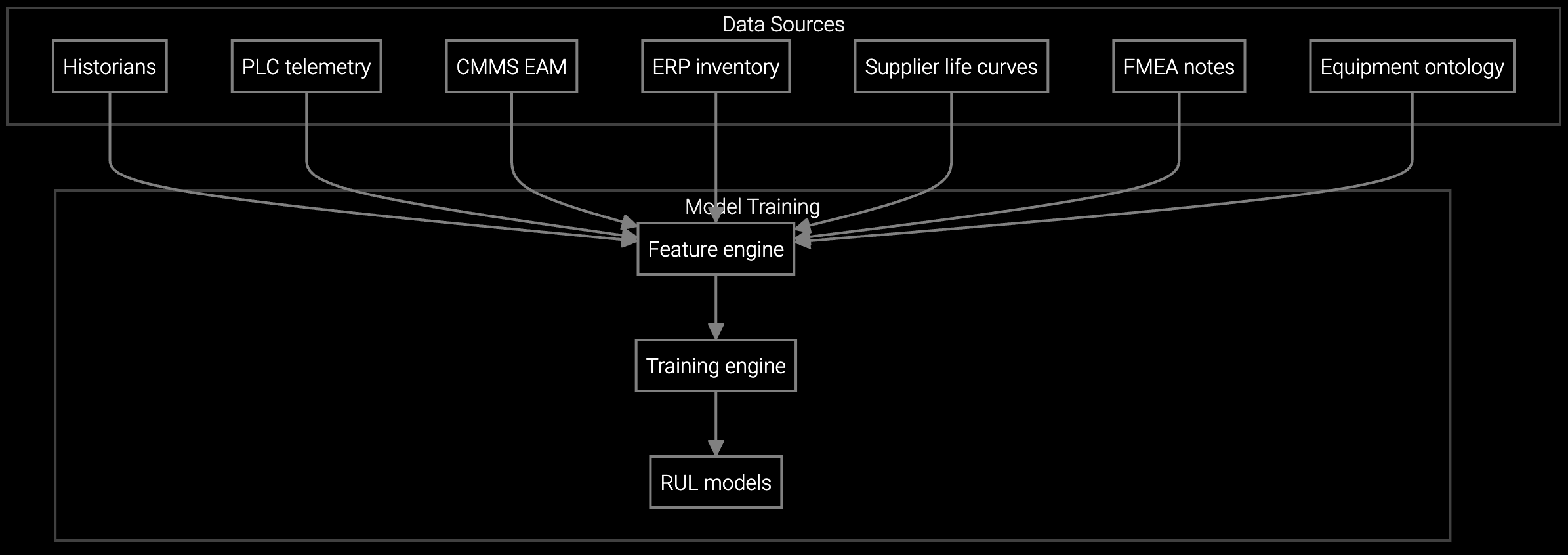
Bruviti's asset registry APIs consolidate product registrations, configuration histories, and lifecycle states into a single queryable data layer. Python SDKs let developers sync asset data from existing ERP systems without replicating entire databases. The platform detects configuration changes through IoT telemetry streams and flags discrepancies between recorded and actual states.
This architecture enables custom lifecycle rules—trigger alerts when firmware versions fall behind, identify EOL equipment before support expires, and attach contract entitlements to specific serial numbers. Developers own the integration logic while the platform handles model training, change detection, and anomaly scoring.

Virtual models of refrigerators, HVAC systems, and dishwashers track real-time performance against expected baselines, enabling proactive maintenance before customer-reported failures.
Usage pattern analysis estimates when compressors and motors will fail, allowing OEMs to schedule maintenance during customer-preferred windows rather than emergency breakdowns.

Condition-based scheduling replaces fixed-interval service contracts, reducing unnecessary visits for healthy equipment while catching degradation before it impacts performance.
Appliance OEMs face a unique challenge: managing asset data for equipment spanning 15-20 year lifespans across millions of installations. Connected refrigerators and HVAC systems generate telemetry streams, but legacy dishwashers and water heaters rely on manual registration. The asset registry must unify both connected and non-connected equipment into a single lifecycle view.
IoT telemetry from connected appliances automatically updates configuration states—firmware versions, usage patterns, and performance metrics. For non-connected equipment, APIs sync registration data from warranty cards, service records, and retail POS systems. This hybrid approach ensures complete asset coverage regardless of connectivity, enabling predictive maintenance models that work across the entire installed base.
Track configuration drift rate (percentage of assets where recorded state differs from actual telemetry) before and after implementation. Baseline typically shows 18-25% drift; improved systems reduce this to 3-5% within six months. Also measure serial number coverage—what percentage of warranty claims can be instantly validated without manual lookup.
Python SDKs reduce integration effort to 2-4 developer-weeks for standard SAP or Oracle connectors. The platform handles data normalization and change detection, so developers only write the sync logic. No database replication required—the system queries existing systems via APIs and caches results locally.
Yes. Lifecycle rules run in your code using the platform's Python SDK. Define what constitutes EOL for each product line, when to trigger upgrade alerts, and how to score upsell priority. Rules execute in your infrastructure—the platform provides asset state APIs but doesn't control your business logic.
Initial impact surfaces within 60-90 days as entitlement verification accuracy improves. Proactive failure prevention (from better predictive models) takes 6-9 months to show in warranty reserves because you need a full seasonal cycle of HVAC and refrigeration data. Most OEMs see 8-12% cost reduction in year one, reaching 15-18% by year two.
Asset data stays in your region under your control. The platform can run in your VPC or on-premises, querying your existing systems without data replication. For cloud deployments, choose data residency (US, EU, APAC). You control which fields sync to the platform and can purge records on demand for GDPR compliance.
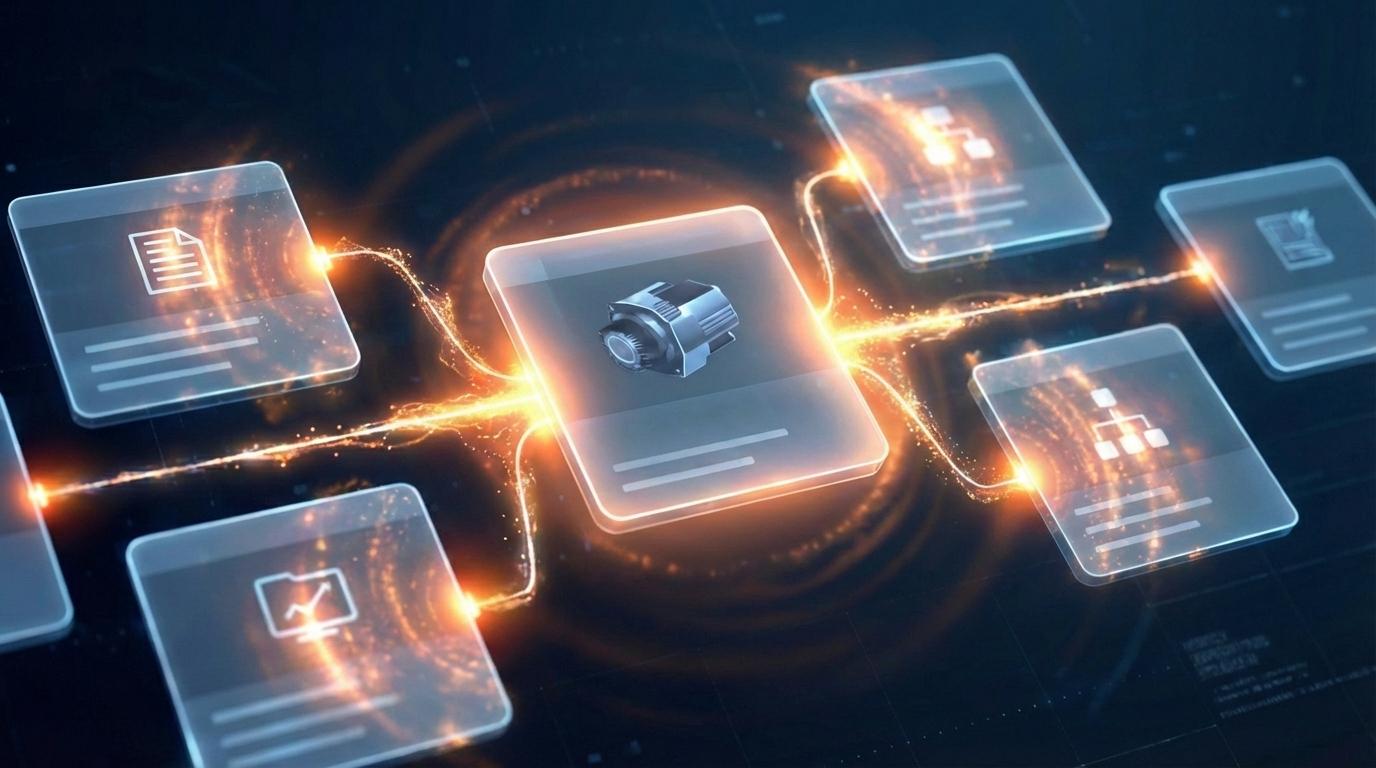
Software stocks lost nearly $1 trillion in value despite strong quarters. AI represents a paradigm shift, not an incremental software improvement.
Function-scoped AI improves local efficiency but workflow-native AI changes cost-to-serve. The P&L impact lives in the workflow itself.

Five key shifts from deploying nearly 100 enterprise AI workflow solutions and the GTM changes required to win in 2026.
See how improved asset accuracy impacts warranty exposure and contract renewals for your installed base.
Request Technical Demo