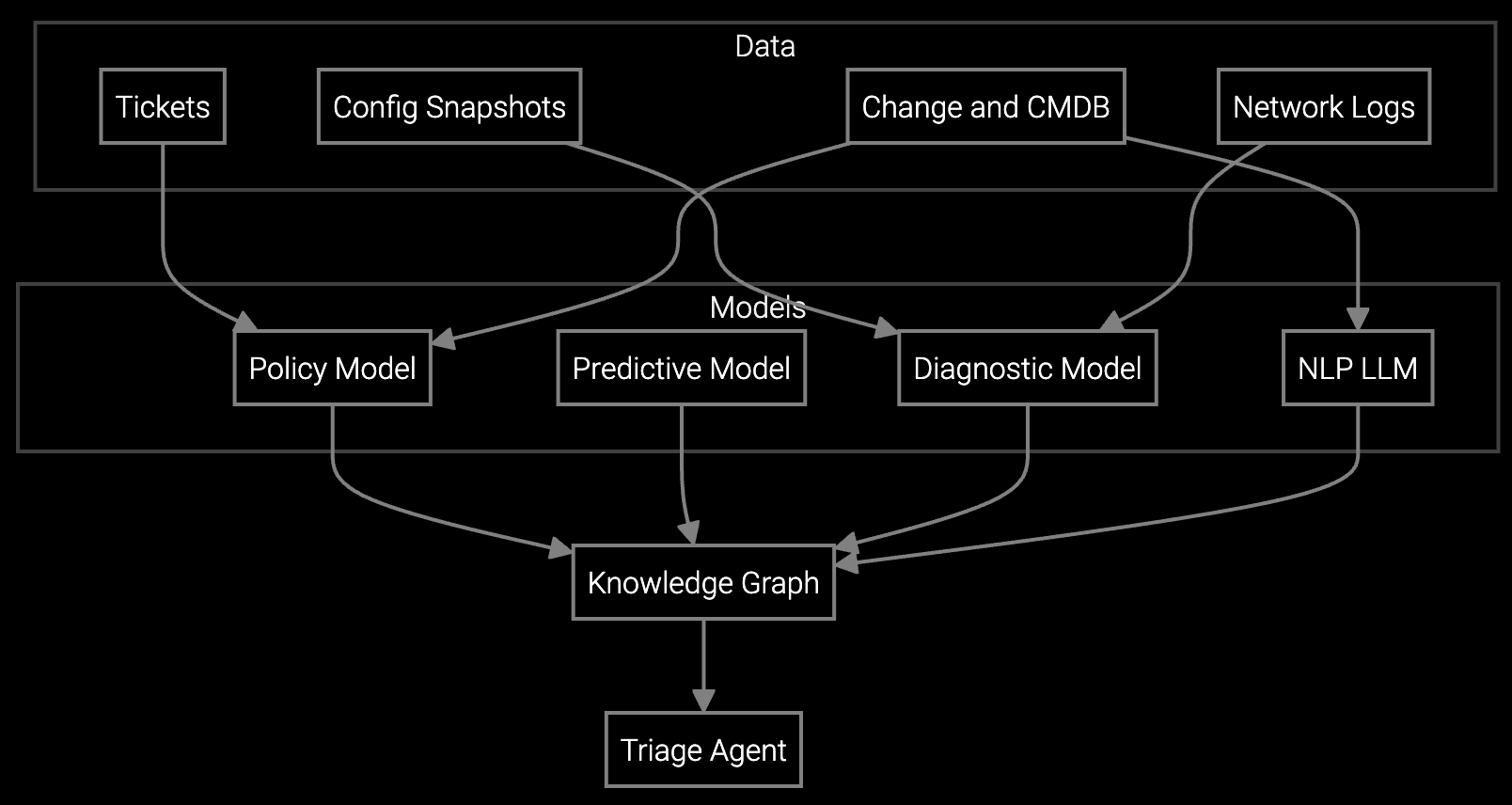
Legacy equipment lifecycles demand 20+ year platform commitments, yet custom-built remote diagnostics systems become technical debt within three years.
Bruviti deployment data shows specialized small models reach over 90% accuracy on industrial equipment diagnostics. The build-vs-buy call hinges on this: a from-scratch model rarely clears that bar, while a platform trained on field service decisions does, so builders weigh accuracy ceilings, not just initial development cost.
Building in-house remote diagnostics AI requires training models on decades of telemetry data from PLCs, SCADA systems, and vibration sensors. Most industrial OEMs lack the ML infrastructure and expertise to maintain these systems.
Off-the-shelf remote support platforms often require proprietary agents, VPN configurations, and closed APIs that conflict with existing industrial IoT stacks. Support engineers inherit fragmented tool sets across equipment generations.
Closed platforms trap equipment telemetry and troubleshooting workflows inside proprietary systems. When contracts expire or vendors pivot, OEMs lose access to their own captured knowledge and face costly migrations.
Bruviti's platform architecture resolves the build-versus-buy dilemma through headless design: pre-trained foundation models for equipment telemetry analysis paired with Python and TypeScript SDKs that let engineering teams customize remote session workflows, log parsing rules, and guided troubleshooting logic without touching model training infrastructure.
Integration happens at the API layer. Support engineers connect existing SCADA historians, PLC data streams, and remote access tools through REST endpoints and webhooks. The platform ingests sensor data, correlates failure patterns, and surfaces root cause hypotheses—all while your team retains full control over data residency, session orchestration, and escalation routing. No proprietary agents. No forced VPNs. No lock-in.
Industrial OEMs operate in 10-30 year equipment lifecycles where remote support platforms must outlast the machinery itself. Legacy CNC machines, turbines, and compressors generate telemetry through heterogeneous protocols—Modbus, OPC UA, proprietary PLC formats—making greenfield platform builds impractical without extensive protocol translation infrastructure.
The hybrid approach starts with a pilot integration: connect one high-value equipment line's telemetry stream through the API, train support engineers on guided troubleshooting workflows, and measure remote resolution rate improvements over 90 days. Successful pilots expand to adjacent product families while engineering teams customize session orchestration and escalation logic through SDKs without waiting for vendor release cycles.
API-first architectures expose all functionality through documented REST endpoints and provide model export capabilities, allowing engineering teams to migrate workflows, telemetry integrations, and trained models to alternative infrastructure without data extraction fees or proprietary format conversion. Closed systems trap troubleshooting knowledge and session data in vendor-controlled databases.
Modern platforms support standard industrial protocols—OPC UA, Modbus, MQTT—through connector libraries that streaming telemetry without custom middleware. Legacy systems using proprietary PLC formats may require edge gateway devices for protocol translation, typically deployed in 1-2 weeks per equipment line.
Foundation models trained on cross-industry equipment telemetry provide 80% accuracy out-of-the-box and fine-tune on your specific equipment data in weeks rather than the 18-24 months required to build models from scratch. Custom models make sense only when equipment behavior is highly proprietary and training data exceeds millions of labeled failure events.
Pre-built remote session orchestration, log parsing engines, and guided troubleshooting frameworks deploy in 90 days, while Python/TypeScript SDKs let engineering teams customize escalation routing, add equipment-specific diagnostic rules, and modify session workflows without waiting for vendor release cycles or touching core model infrastructure.
API-first platforms support on-premises deployment, private cloud hosting, and hybrid architectures where sensitive telemetry remains within OEM infrastructure while model inference happens in isolated compute environments. Engineering teams control data retention policies, encryption keys, and cross-border data flows through configuration rather than vendor negotiation.
Software stocks lost nearly $1 trillion in value despite strong quarters. AI represents a paradigm shift, not an incremental software improvement.
Function-scoped AI improves local efficiency but workflow-native AI changes cost-to-serve. The P&L impact lives in the workflow itself.
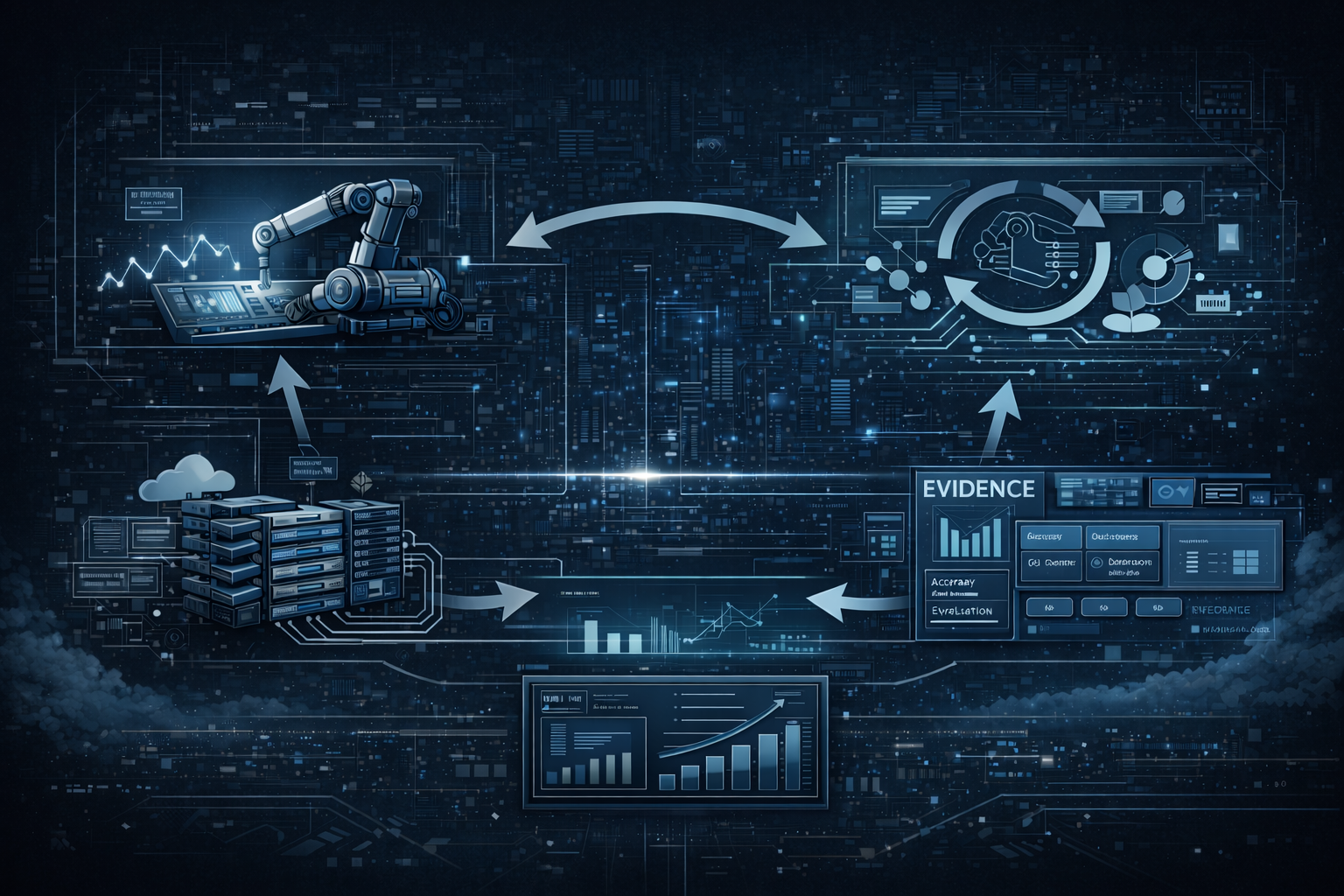
Five key shifts from deploying nearly 100 enterprise AI workflow solutions and the GTM changes required to win in 2026.
Technical deep-dive sessions with engineering teams to review integration patterns, data residency options, and SDK capabilities.
Schedule Technical Review