
Legacy SAP and Oracle systems trap inventory data in rigid schemas while carrying costs compound daily.
Bruviti deployment data shows one global industrial manufacturer cut $2M in annual savings from AI parts and service intelligence, with a 25% first-time fix rate improvement. For builders pricing an integration, that is the return envelope: forecast accuracy and parts prediction that pay back through avoided expedites and repeat visits.
REST endpoints for SAP or Oracle connectors require authentication, rate limiting, and error handling logic. Most teams underestimate retry logic and data validation layers.
Historical demand data requires cleaning, feature engineering, and validation splits. Custom models need retraining schedules and drift monitoring infrastructure.
Schema changes in ERP systems break integrations. Model performance degrades as equipment mix evolves. Most teams budget zero hours for maintenance until production breaks.
Pre-built connectors for SAP, Oracle, and custom data lakes eliminate 60-80% of initial integration effort. Python SDKs provide typed interfaces to demand forecasting models, allowing your team to customize prediction logic without rebuilding the entire pipeline. The platform handles data ingestion, feature engineering, and model retraining schedules automatically.
Versioned REST APIs mean schema changes in upstream systems trigger notifications rather than silent failures. Model performance dashboards surface drift metrics before forecast accuracy degrades. The result: predictable monthly maintenance hours instead of emergency firefighting when inventory turns spike or stockouts cascade.
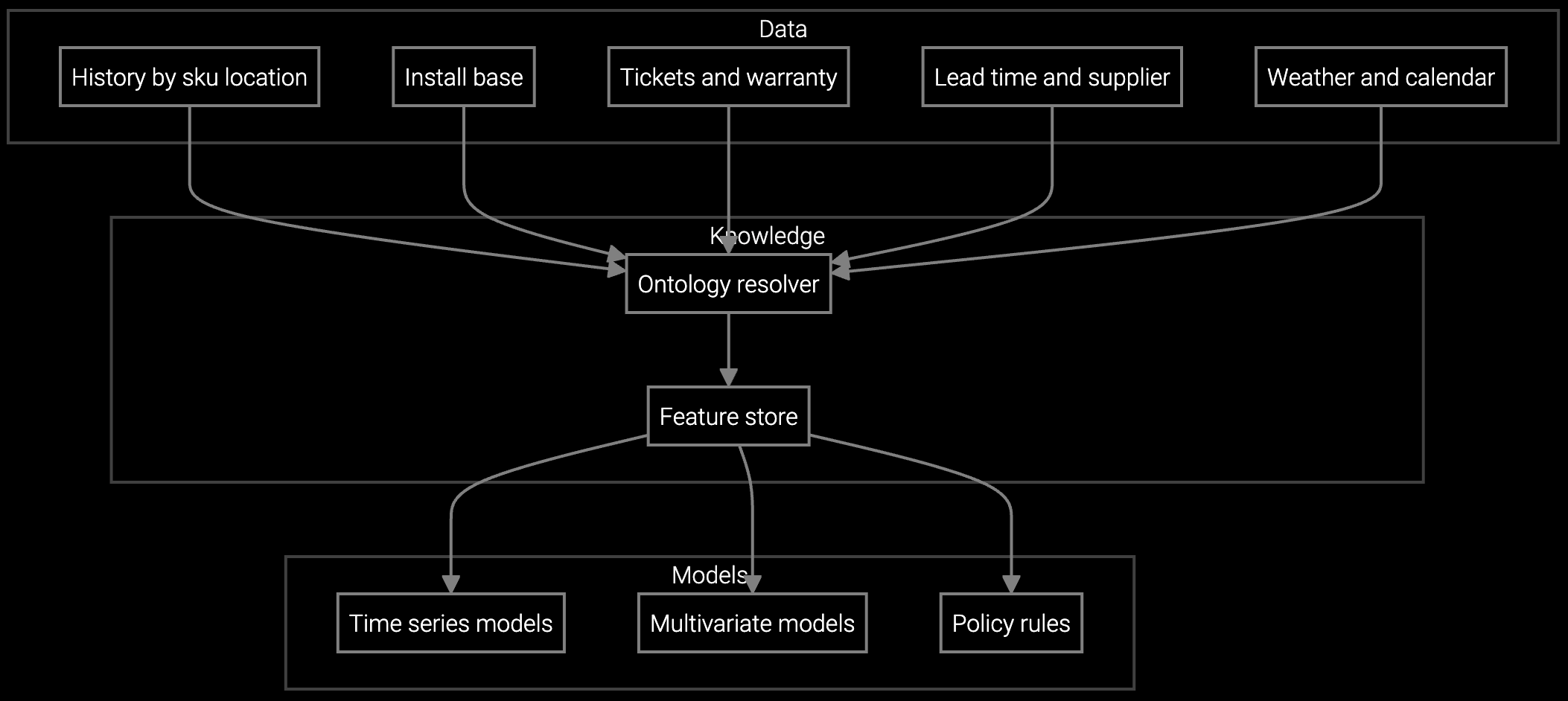
Predicts CNC spindle and hydraulic component demand by analyzing run hours, maintenance cycles, and seasonal production patterns for industrial machinery fleets.
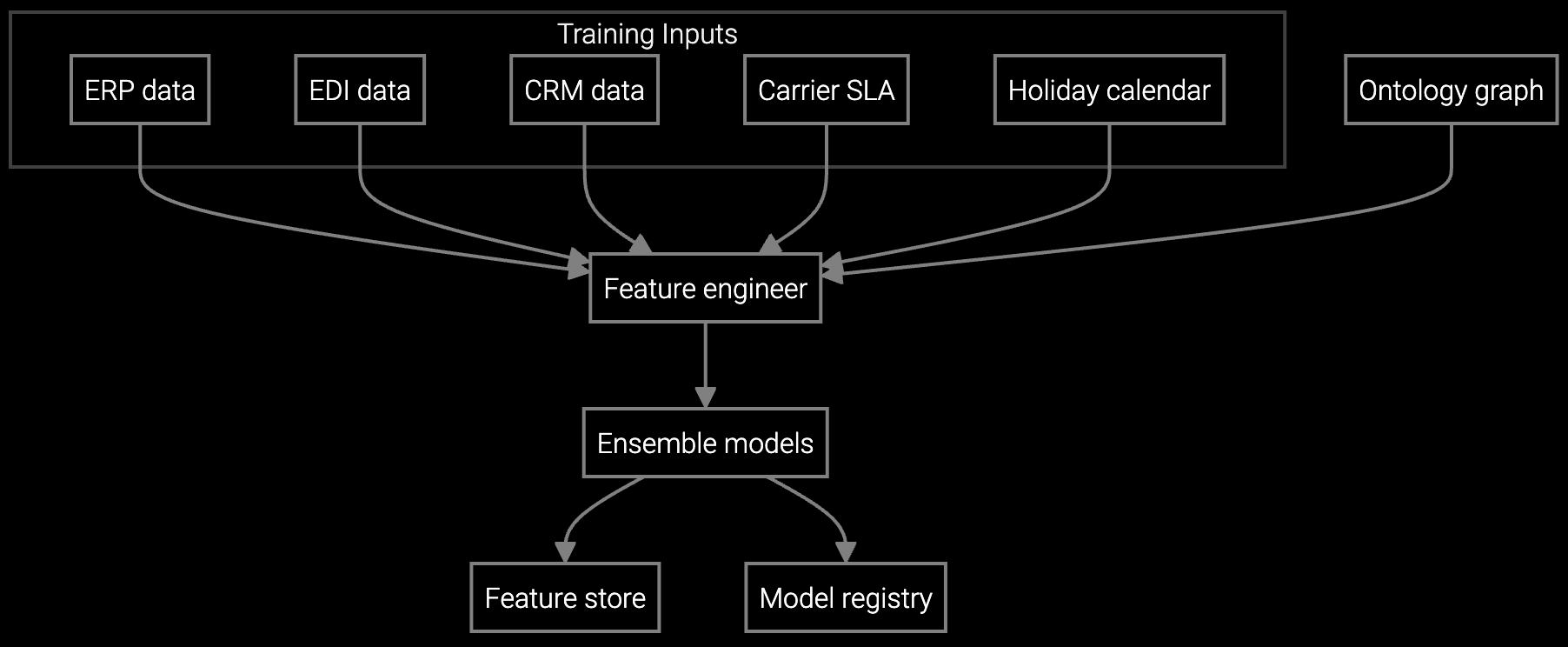
Optimizes regional warehouse stock levels for pumps and compressor parts by forecasting demand windows, reducing both stockouts and excess inventory.
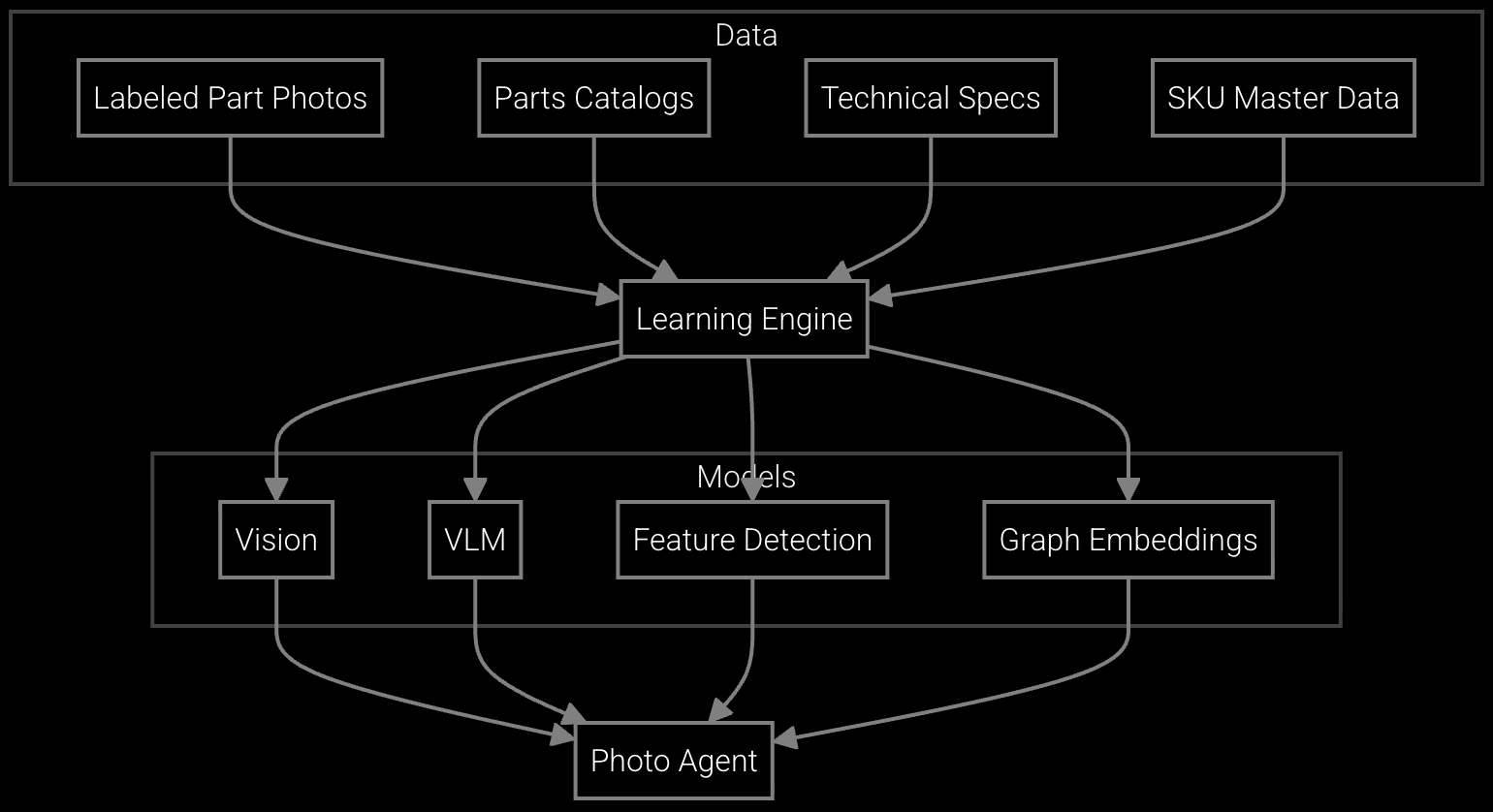
Identifies bearing assemblies and valve components from field photos, instantly returning part numbers and substitute options to speed service quotes.
Industrial OEMs run 10-30 year equipment lifecycles, meaning SAP R/3 and Oracle E-Business Suite instances predate modern REST APIs. Custom BAPI wrappers and SOAP interfaces add authentication complexity and rate limiting challenges. Parts data lives across multiple systems: ERP for transactions, PLM for engineering BOMs, and homegrown databases for substitute parts logic accumulated over decades.
The Python SDK approach succeeds here because it abstracts authentication and retry logic while exposing typed interfaces for demand signals your models actually need: installed base age distribution, historical failure rates by component family, and seasonal usage patterns. Your data engineers write forecast logic without reinventing ERP connector infrastructure.
Python (3.8+) and TypeScript SDKs are maintained with full type hints and async support. REST APIs follow OpenAPI 3.0 spec, allowing code generation for other languages. Authentication uses OAuth 2.0 with client credentials flow for service-to-service integration.
Yes. The platform provides base models trained on cross-industry patterns, but Python SDK exposes model training APIs accepting your historical demand, installed base, and service records. Models remain in your data boundary—we never train on customer data.
Pre-built connectors reduce initial integration to 120-180 developer hours versus 300-400 hours for custom builds. Exact timeline depends on authentication complexity (single sign-on requirements) and whether parts data spans multiple SAP modules. Most teams complete integration in 3-5 weeks.
Versioned APIs and schema validation catch upstream changes before they cascade. The platform sends alerts when expected fields disappear or types change. Connector updates deploy via SDK version bumps, not emergency hotfixes. Your code stays stable across ERP patches.
Built-in dashboards track Mean Absolute Percentage Error (MAPE) by part family and location. Compare forecast accuracy to historical safety stock policies to quantify carrying cost reduction. Most teams also track fill rate improvements and emergency shipment frequency as leading ROI indicators.

SPM systems optimize supply response but miss demand signals outside their inputs. An AI operating layer makes the full picture visible and actionable.
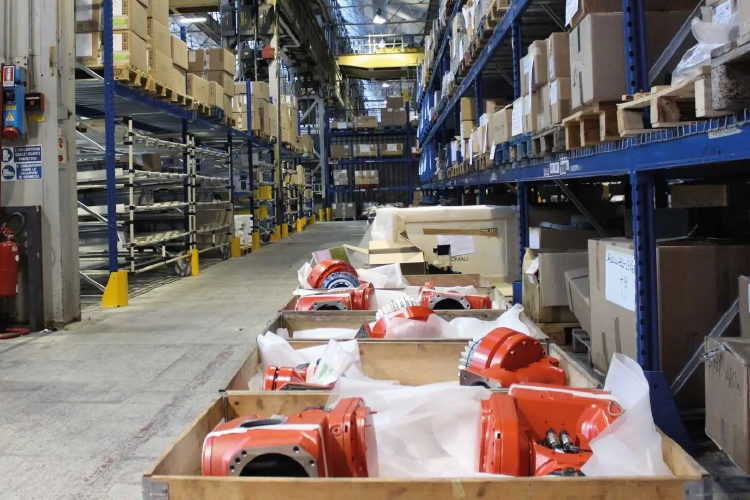
Advanced techniques for accurate parts forecasting.

AI-driven spare parts optimization for field service.
Review Python examples, authentication flows, and model training APIs to estimate your integration timeline.
Request API Access