
Fab equipment failures cost $1M+ per hour—fast, accurate warranty processing protects margins and keeps your customers' lines running.
AI-assisted warranty claims processing handles semiconductor equipment claims in under 1 minute each with 95% consistency, down from 8-12 minutes of manual handling, per Bruviti deployment data. Operators deploy it on existing intake without disrupting the returns desk, clearing routine claims instantly and escalating only the exceptions.
Connecting AI platforms to legacy warranty systems, parts databases, and tool telemetry sources requires coordination across IT, service operations, and manufacturing teams with competing priorities.
Warranty claim histories are scattered across SAP, Salesforce, and custom databases. Cleaning and normalizing this data for model training takes weeks of manual effort before seeing any automation benefit.
Operators fear new systems will slow them down during rollout. Without seamless integration into existing RMA workflows, deployment stalls as teams resist changing proven processes during critical claim windows.
Bruviti's platform deploys without disrupting existing warranty workflows. Start by connecting read-only access to your RMA system and historical claim data—the platform trains its classification models on your existing entitlement rules, NFF patterns, and fraud indicators without requiring data migration or schema changes.
Once trained, the platform surfaces instant entitlement verification and fraud risk scores directly within your current claim processing interface. Operators see AI recommendations side-by-side with existing data, validating decisions with one click instead of switching between systems. This copilot approach minimizes training time and accelerates adoption while maintaining full audit trails for compliance.
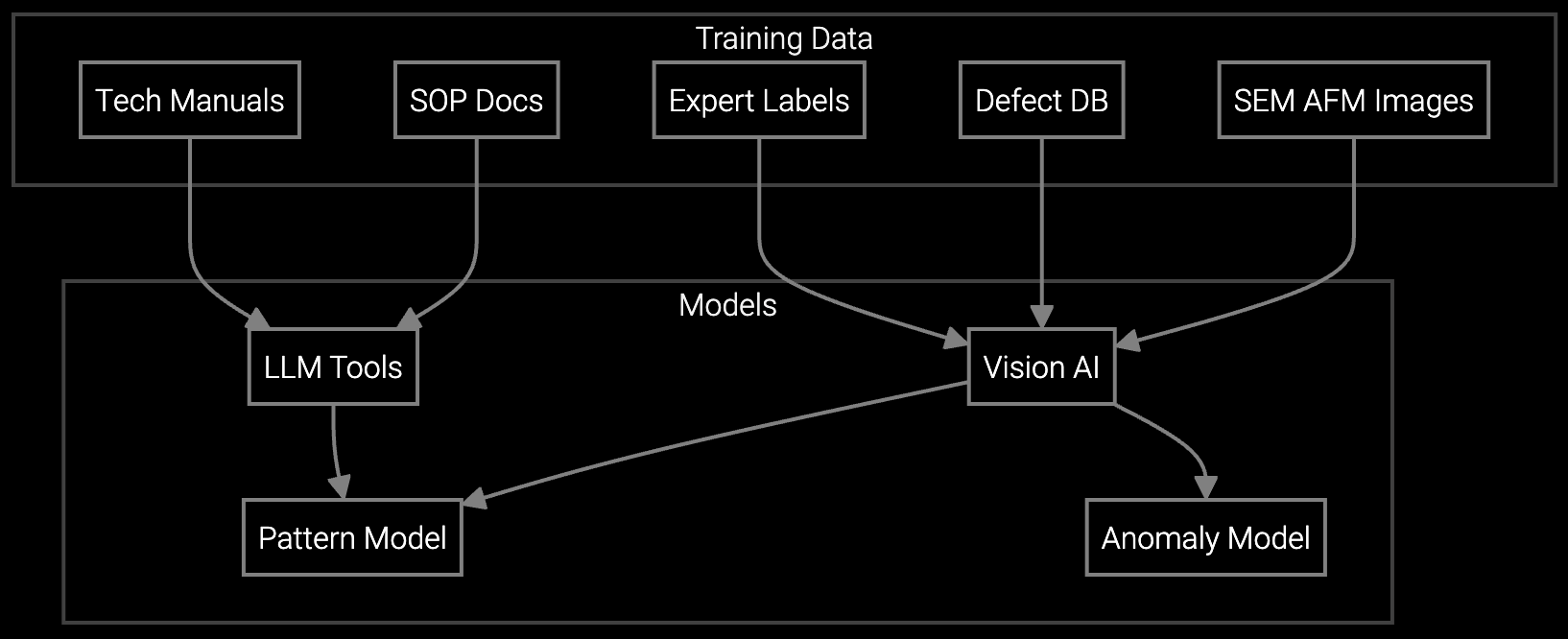
Automatically analyze microscopic images from returned wafer processing equipment to validate defect claims and identify root cause failure modes for faster warranty resolution.
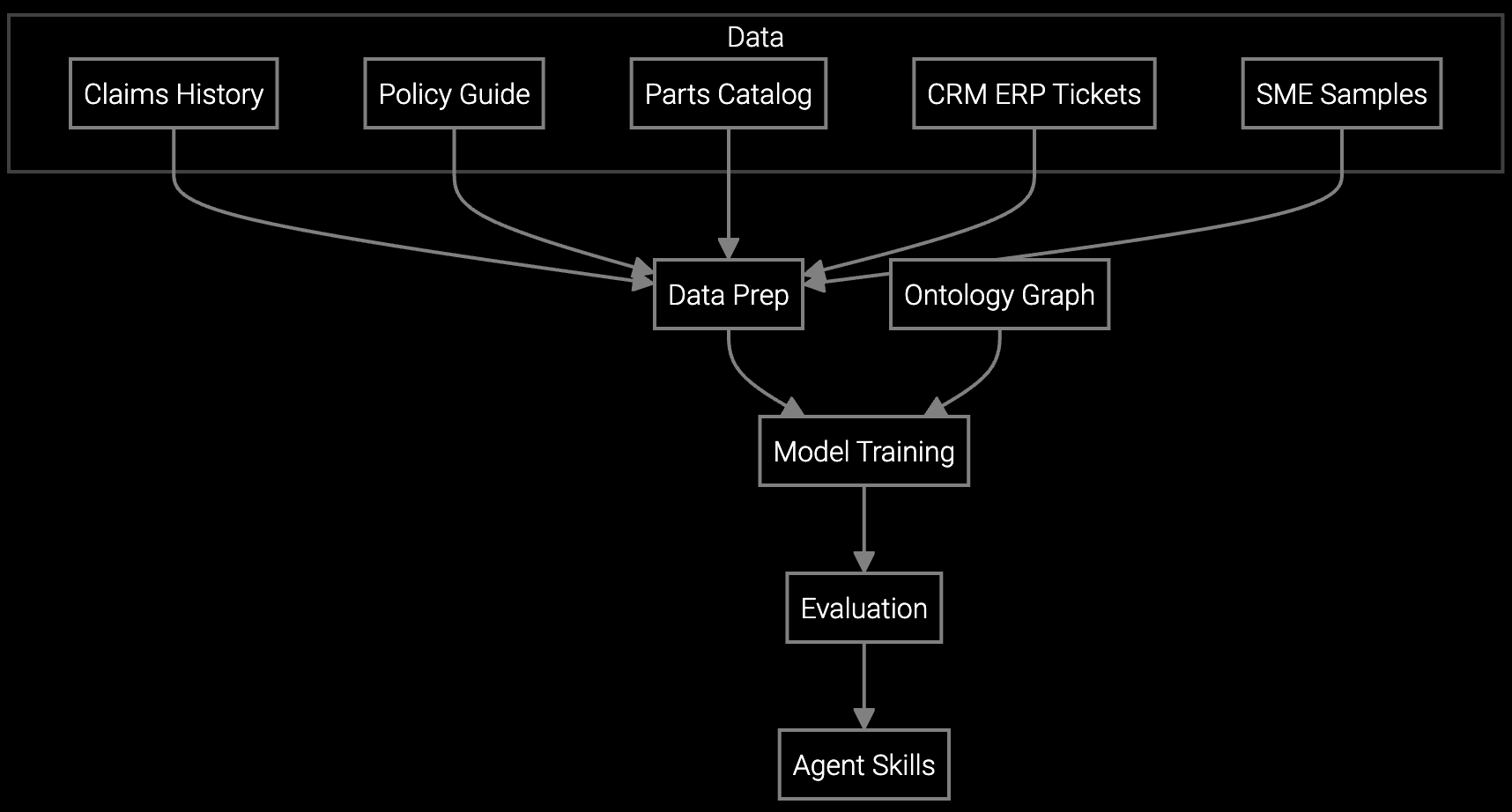
Classify incoming semiconductor equipment warranty claims by failure type and severity, routing high-priority fab downtime cases to specialized processors while automating standard chamber replacement approvals.
Semiconductor tool manufacturers process thousands of warranty claims annually for lithography systems, etch chambers, and deposition tools—each with distinct failure signatures and entitlement rules. The platform learns from your historical claim patterns across tool families, training models that recognize recipe-related versus mechanical failures and flag inconsistencies between reported symptoms and telemetry data from FOUP handlers and process controllers.
For operators managing daily claim queues, deployment starts with entitlement verification automation. The platform instantly confirms warranty coverage by cross-referencing serial numbers against installation dates, PM schedules, and consumable replacement history. This eliminates manual lookups across multiple systems while surfacing fraud risk scores when claim patterns deviate from expected tool behavior—protecting warranty reserves without slowing legitimate RMA approvals.
You need at least 12 months of historical claim data including claim descriptions, failure codes, entitlement decisions, and resolution outcomes. Telemetry data from returned tools significantly improves model accuracy for NFF detection. The platform can start with SAP or Salesforce exports and does not require pre-cleaned data.
Typical deployment takes 4-6 weeks. Week 1 covers API integration to your RMA system. Weeks 2-3 focus on model training with your claim history. Weeks 4-5 involve pilot testing with a small operator group. Week 6 is full rollout with live fraud detection and entitlement verification active.
Yes, Bruviti connects via REST API and presents recommendations within your current interface using embedded iframes or browser extensions. Operators see AI-generated fraud scores and entitlement confirmations alongside existing claim data without switching screens or learning new navigation patterns.
Operators always have final approval authority. The platform provides risk scores and supporting evidence but never auto-denies claims. When operators override AI recommendations, the system learns from these corrections to improve future accuracy through continuous model retraining.
Track three metrics weekly: claims processing time, NFF rate, and warranty reserve accuracy. Most semiconductor OEMs see processing time drop 40% within 8 weeks, NFF rates decline 30-35% within 12 weeks, and warranty reserve predictions improve 18-22% accuracy within one quarter as fraud detection models mature.
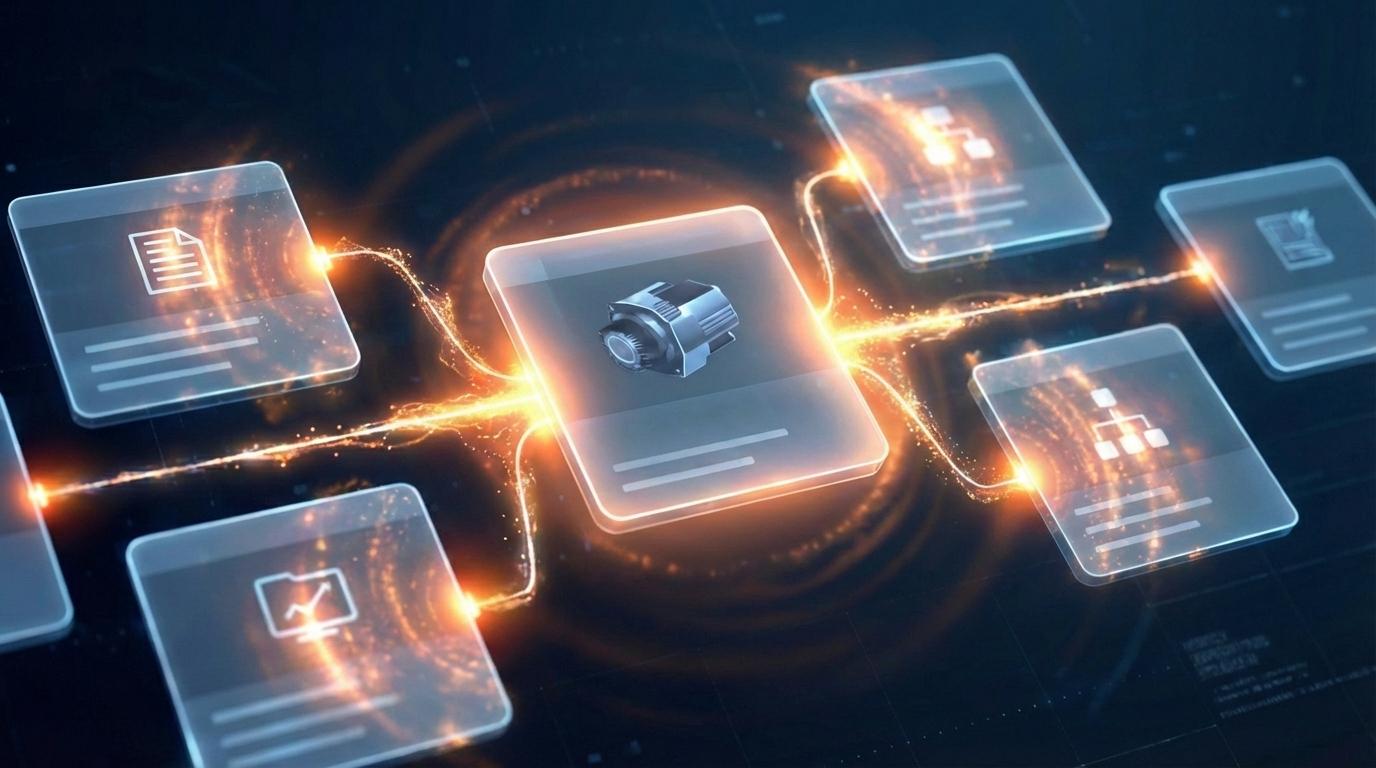
Software stocks lost nearly $1 trillion in value despite strong quarters. AI represents a paradigm shift, not an incremental software improvement.
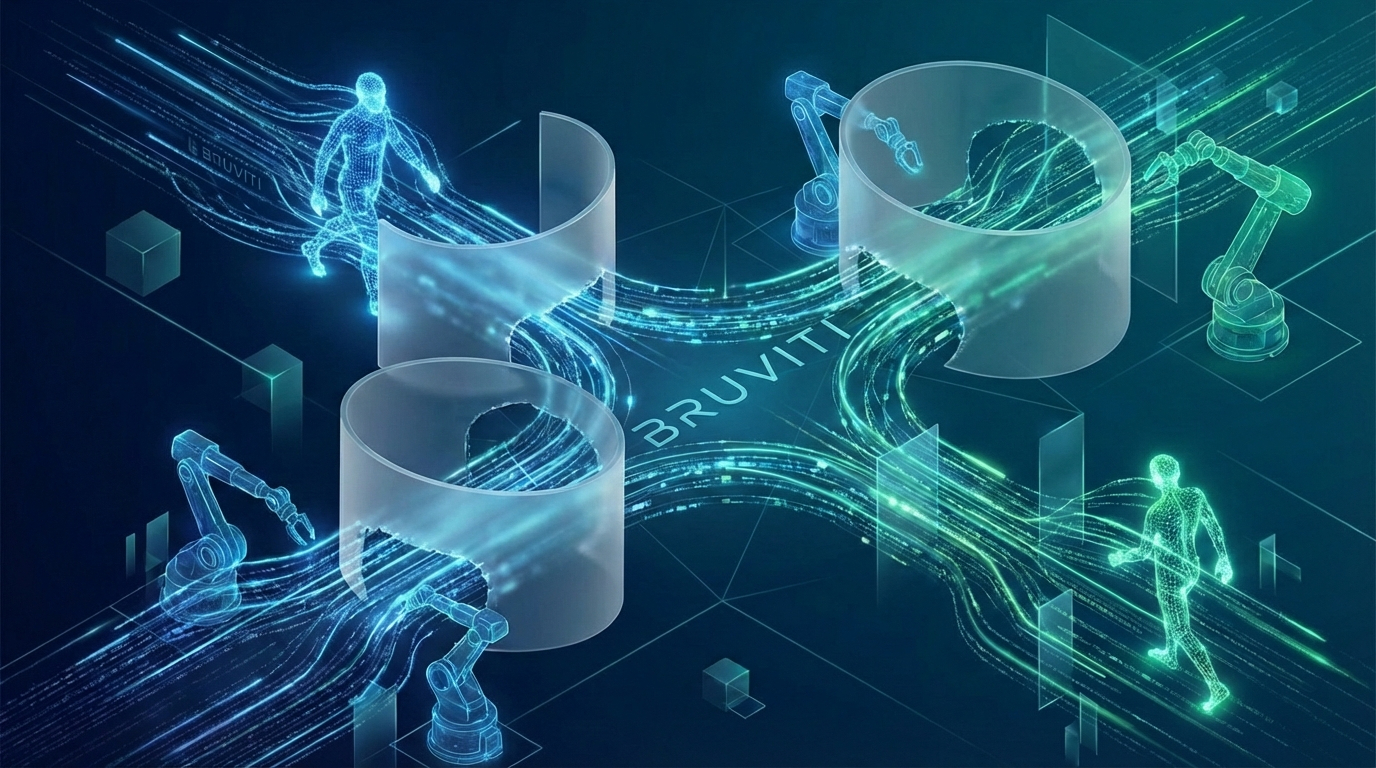
Function-scoped AI improves local efficiency but workflow-native AI changes cost-to-serve. The P&L impact lives in the workflow itself.

Five key shifts from deploying nearly 100 enterprise AI workflow solutions and the GTM changes required to win in 2026.
See how Bruviti deploys in your existing workflow without disrupting daily operations.
Schedule Demo