When tool downtime costs $1M per hour, support engineers need instant access to chamber logs and telemetry—not scheduled site visits.
Bruviti deployment data shows AI remote diagnostics resolves issues 20 to 30% faster and guides auto-triage on 60% of faults. For fab equipment teams, setup means connecting tool telemetry and knowledge bases so the system surfaces likely causes and next steps before an engineer ever touches the case.
Fab network security blocks standard remote access protocols. Support engineers can't reach tool controllers without IT escalations that add 4-8 hours per incident.
Each tool vendor uses proprietary log formats. Engineers manually parse chamber event logs, wafer throughput data, and recipe parameters—wasting 2-3 hours per session.
Resolution steps stay in email threads and personal notes. New engineers lack access to prior chamber drift patterns or recipe tuning solutions for similar failures.
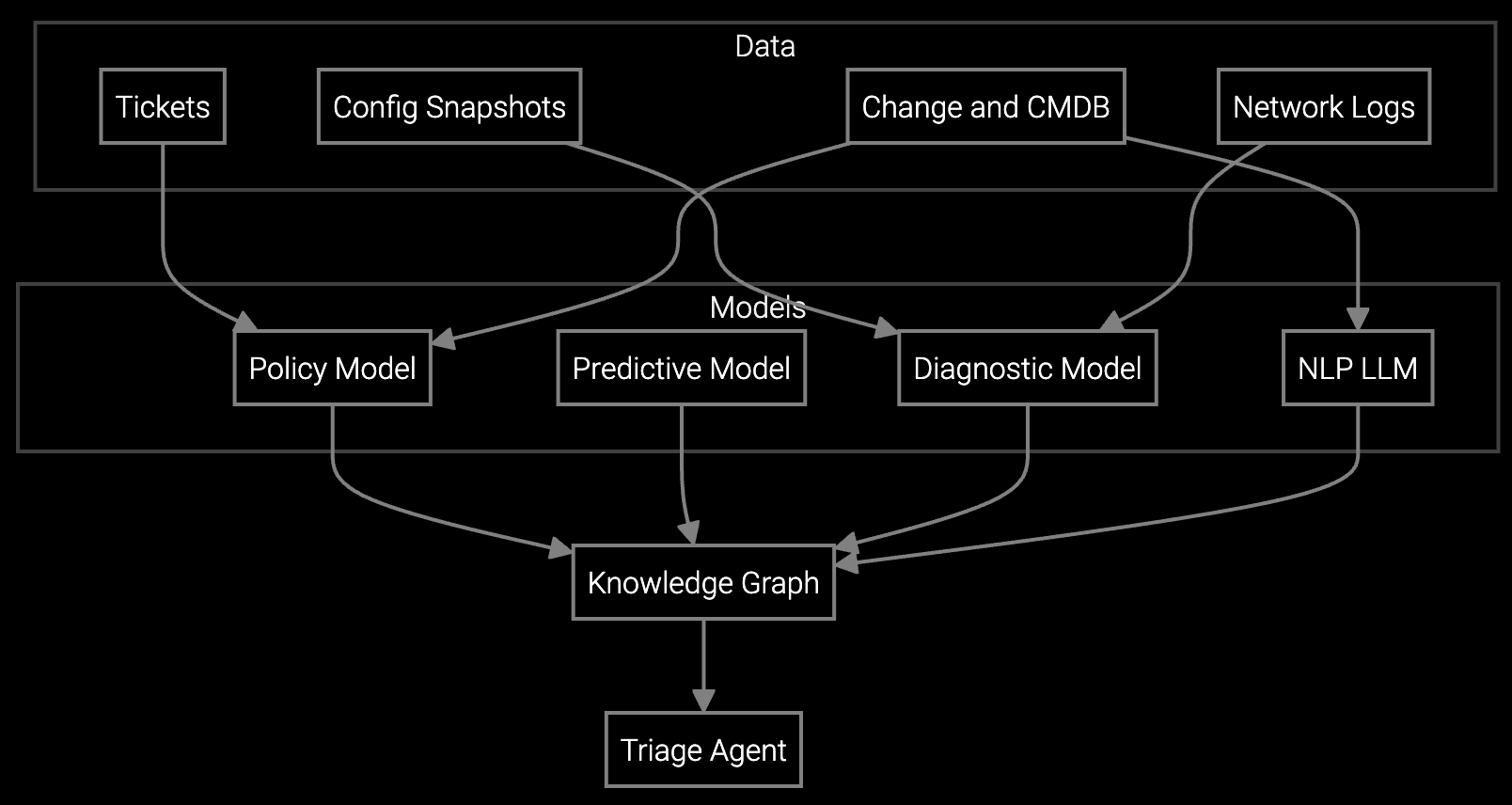
Deploy a log ingestion API that connects directly to fab equipment controllers behind the firewall. Configure telemetry streaming from lithography, etch, and deposition tools to a centralized platform that normalizes chamber event logs, recipe parameters, and OEE metrics in real time.
Build guided troubleshooting workflows that parse incoming logs automatically, flag anomalies against historical baselines, and present support engineers with ranked root cause hypotheses. Sessions include one-click access to similar past incidents, relevant technical documentation, and step-by-step resolution scripts—eliminating manual log searches and reducing session duration by 65%.
Semiconductor fabs operate 24/7 with zero-tolerance downtime targets. Remote diagnostic systems must integrate with existing SECS/GEM interfaces, MES platforms, and fab-wide automation controllers without disrupting production recipes or chamber qualification cycles.
Log ingestion pipelines normalize data from mixed-vendor toolsets—EUV lithography from one OEM, plasma etch from another, and metrology from a third. The platform parses chamber pressure logs, gas flow telemetry, and wafer throughput metrics into a unified schema that support engineers query with natural language rather than vendor-specific command syntax.
The platform supports HTTPS tunneling through existing firewall rules, eliminating the need for VPN configuration or new port openings. It integrates with standard remote access tools like TeamViewer and LogMeIn while adding AI-driven log parsing on top of screen sharing sessions.
API integration and telemetry pipeline configuration typically complete in 4-6 weeks. The first phase connects 20-30 high-priority tools to validate log parsing accuracy and workflow effectiveness before scaling to the full fab.
Yes. The platform provides SDKs for custom log parsers, workflow builders, and integration hooks. You define tool-specific diagnostic steps, acceptable parameter ranges, and escalation triggers using configuration files rather than hard-coded logic.
Support engineers review all AI-generated hypotheses before taking action. The platform ranks root causes by confidence score and flags low-certainty cases for escalation. Engineers override AI recommendations with one click, and the system learns from these corrections to improve future accuracy.
All telemetry data stays within your private cloud or on-premises deployment. The platform never transmits proprietary recipe parameters, chamber tuning settings, or yield data to external networks. Role-based access controls ensure only authorized engineers view sensitive tool configurations.
Software stocks lost nearly $1 trillion in value despite strong quarters. AI represents a paradigm shift, not an incremental software improvement.
Function-scoped AI improves local efficiency but workflow-native AI changes cost-to-serve. The P&L impact lives in the workflow itself.

Five key shifts from deploying nearly 100 enterprise AI workflow solutions and the GTM changes required to win in 2026.
See how Bruviti's platform integrates with your fab equipment and automates log analysis in 30 minutes.
Schedule Technical Demo