
Chamber consumables and FOUP handling components drive $50M+ inventory positions—miss the forecast and you're burning $1M per downtime hour.
Predictive parts inventory for semiconductor fab operations generates $2M+ in annual savings by cutting 4-week forecast error from 17-18% to under 3% on $50M+ quarterly spend, per Bruviti deployment data. Builders see ROI from reduced expedites, lower buffer stock, and fewer write-offs against the same parts spend.
Fabs hold 6-9 months of chamber kits and consumables because manual forecasting can't predict process drift or recipe changes. Capital sits idle while storage costs compound.
When a plasma chamber or metrology tool needs unplanned parts, same-day air freight from suppliers costs 10-15x standard shipping. Each expedite erodes margin.
Process node transitions and tool upgrades obsolete parts faster than depreciation schedules. Write-offs hit the balance sheet when new recipes replace old consumables.
Bruviti's API-driven forecasting engine ingests telemetry from etch, deposition, and lithography tools to predict chamber component life and consumable depletion rates. The platform correlates process parameters—RF power, gas flow, pressure cycles—with parts degradation curves learned from historical sensor data across your installed base. Instead of time-based replenishment, you order based on actual consumption velocity adjusted for recipe mix and tool utilization forecasts.
The Python SDK allows your data engineers to extend the base models with fab-specific features like lot scheduling data from your MES or yield correlations from your SPC systems. You train custom substitute matching models using your approved vendor list and historical compatibility records, so when a primary part is backordered, the system auto-suggests alternatives that maintain process spec. Integration with SAP or Oracle means forecasted demand flows directly into procurement workflows without manual re-keying.
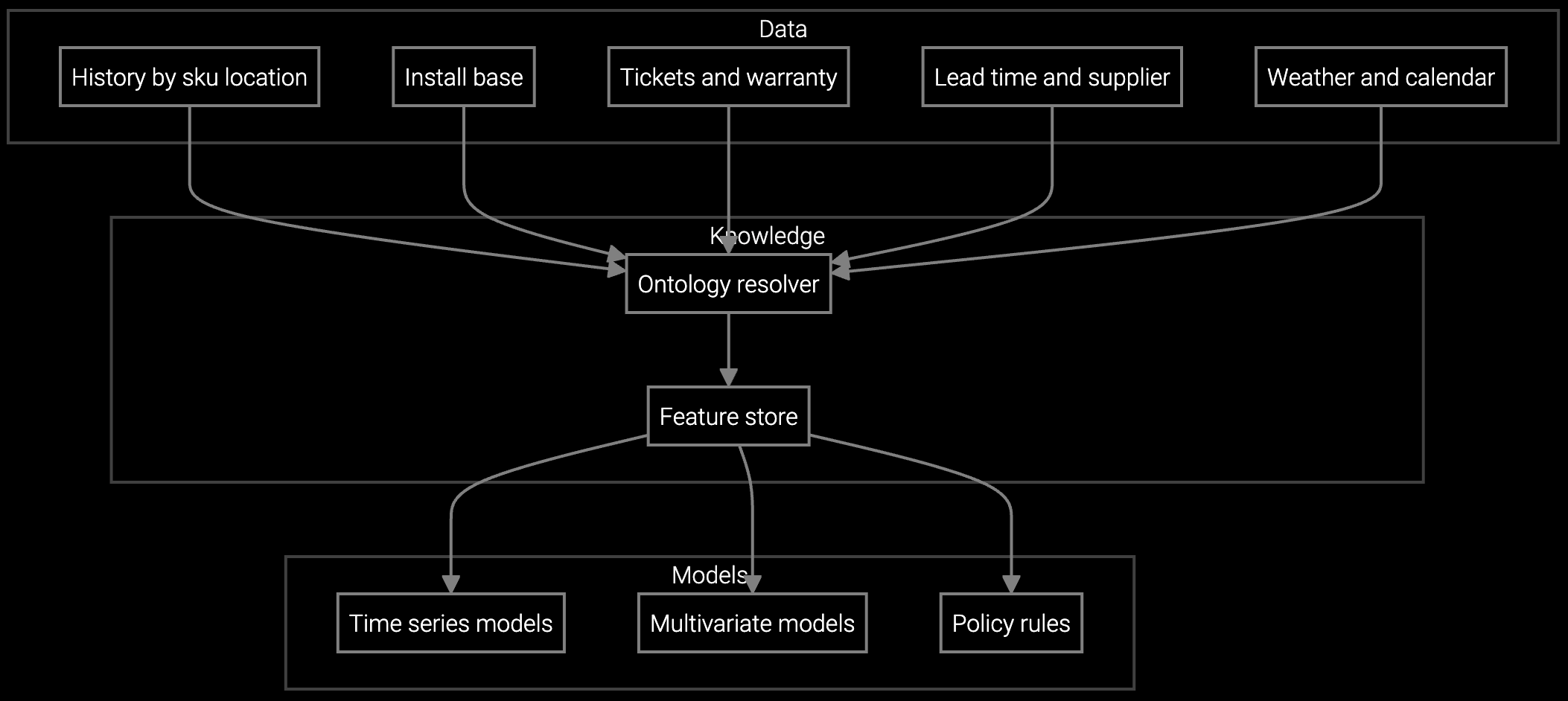
Projects chamber kit and consumable needs based on process recipe schedules, tool utilization patterns, and historical component life in semiconductor production environments.
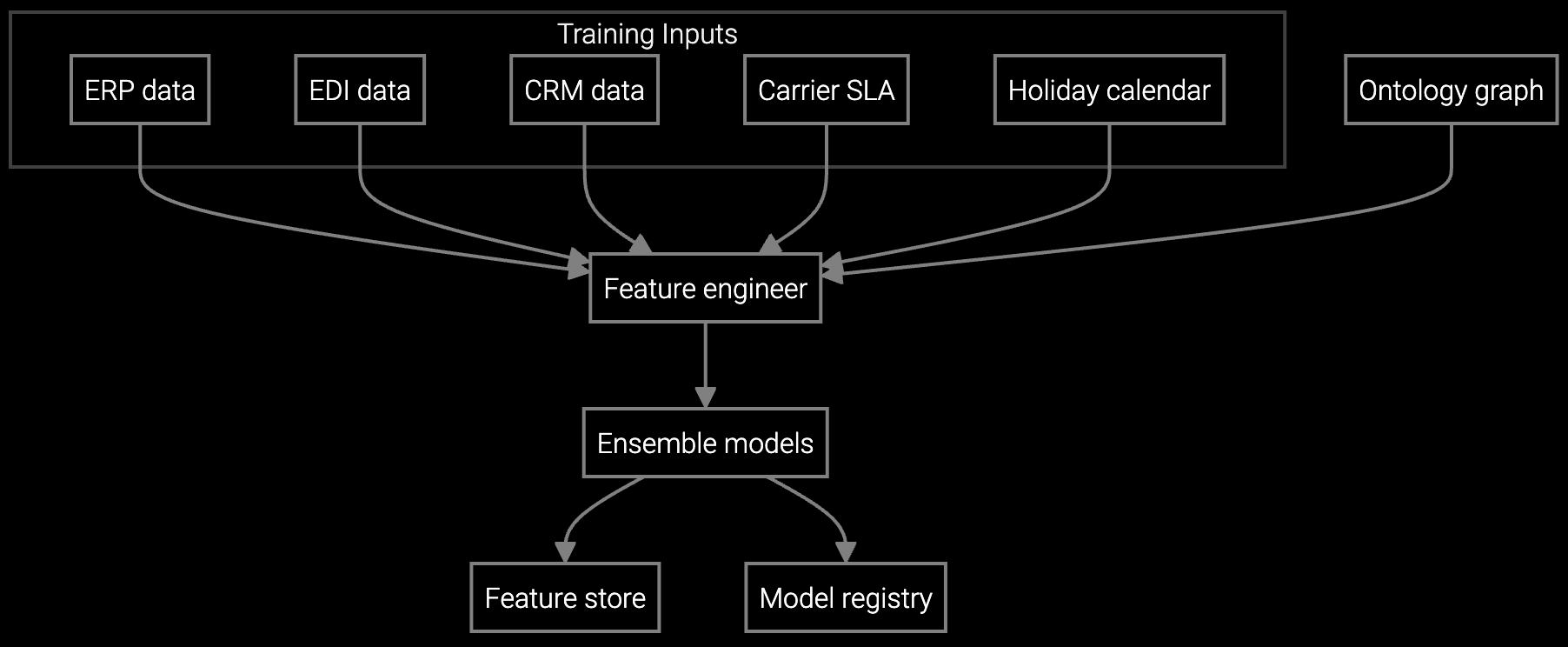
Optimizes stock levels across fab sites and regional warehouses by forecasting demand windows for high-value lithography optics and metrology sensors.
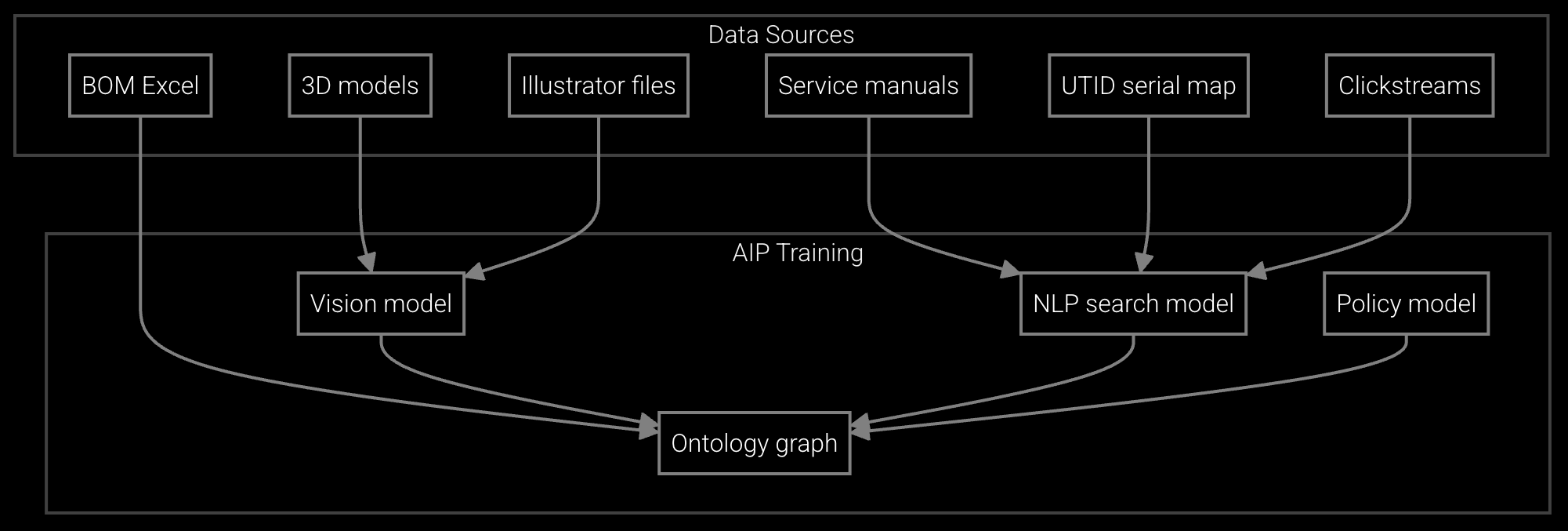
Automatically maintains approved parts lists and substitute hierarchies for etch chambers, deposition tools, and wafer handling equipment from engineering BOMs and service records.
Semiconductor fabs operate on wafer throughput models where every hour of unplanned downtime costs $1M+ in lost production capacity. Unlike other industries where stockouts cause service delays measured in days, a missing FOUP opener component or chamber showerhead stops wafer starts immediately. The financial stakes demand inventory strategies that balance carrying cost against availability risk with sub-1% precision.
Process tool complexity multiplies inventory challenges. A single etch chamber contains 80+ consumable components with independent life curves that vary by recipe, gas chemistry, and RF power settings. Lithography steppers use optics worth $400K each that must be in stock but rarely fail. Your forecasting logic must distinguish between high-frequency consumables, scheduled PM kits, and low-probability catastrophic failures—each requiring different stocking strategies and supplier lead time buffers.
The baseline model ingests tool sensor telemetry, historical parts consumption records, and maintenance schedules. For best results, integrate MES lot scheduling data and recipe parameter logs. The Python SDK allows you to add custom features like planned process changes or supplier lead time variability.
The model optimizes safety stock levels by part criticality and lead time. High-value, low-failure-rate items like lithography optics move to consignment or JIT delivery. High-frequency consumables use tighter forecast windows. The net effect is 25-40% inventory reduction while maintaining or improving fill rates because you stock what actually depletes, not static safety levels.
Yes. The SDK exposes the substitute recommendation engine as a customizable module. You can train models on your historical substitution success data, encode process qualification rules, and integrate with your AVL database. The platform handles the ranking logic; you define the compatibility constraints.
The platform provides pre-built connectors for SAP MM and Oracle SCM that map forecasted demand to purchase requisitions. Typical integration takes 2-3 weeks for a data engineer to configure field mappings, set up scheduled sync jobs, and validate procurement workflow triggers. REST APIs allow custom integrations if you run proprietary systems.
The forecasting engine treats each fab as a separate demand signal but shares learned degradation curves across sites where tool types and recipes overlap. You configure location-specific parameters like supplier lead times and minimum order quantities. Multi-location optimization suggests stock transfers between sites to reduce total system inventory while meeting local availability targets.

SPM systems optimize supply response but miss demand signals outside their inputs. An AI operating layer makes the full picture visible and actionable.
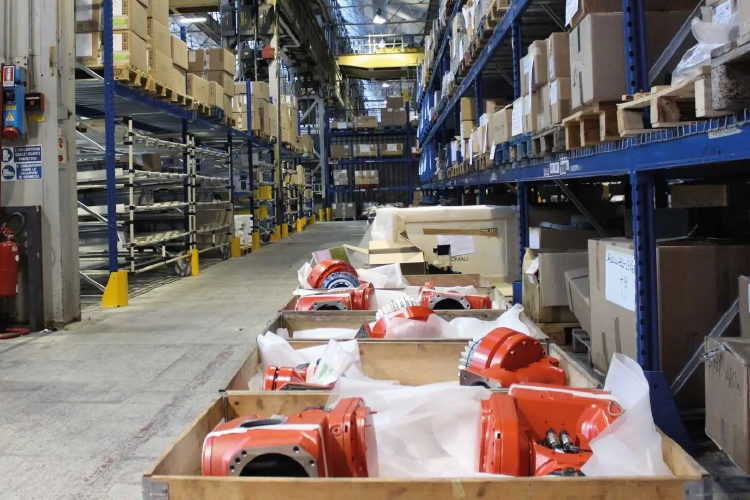
Advanced techniques for accurate parts forecasting.

AI-driven spare parts optimization for field service.
See the ROI model applied to your carrying costs, expedite frequency, and forecast accuracy baseline.
Schedule Technical Review