
Fab downtime costs $1M+ per hour—every minute your technician spends diagnosing or waiting for parts directly erodes margin.
Bruviti deployment data shows AI parts prediction cutting repeat truck rolls 30% while adding 10-15 first-time-fix percentage points. Builders quantify field-service ROI by tying each avoided second visit to fab tool uptime, then routing the dispatch and parts savings back into the diagnostics layer.
Technicians arrive without the right chamber kits or consumables for EUV or etch tools, requiring second visits that double travel costs and extend fab downtime.
Process engineers spend hours correlating tool telemetry with failure modes, delaying repairs while wafer throughput drops and OEE targets slip.
Senior process engineers retire with years of recipe tuning and failure pattern recognition experience that never gets documented or transferred to junior technicians.
The platform ingests tool telemetry (pressure, temperature, gas flow, RF power) via API from fab data lakes or SECS/GEM interfaces. Python SDKs let you train custom models on your historical work order data, correlating sensor drift patterns with specific chamber component failures. Models run inference on streaming telemetry to predict part needs before dispatch and surface relevant failure modes to technicians on mobile devices.
The architecture avoids vendor lock-in: your models train on your data in your environment, using standard Python libraries. Integration with SAP PM or Oracle Field Service happens through REST APIs, not proprietary connectors. When technicians document fixes, that feedback trains your models further—no manual knowledge capture workflows required.
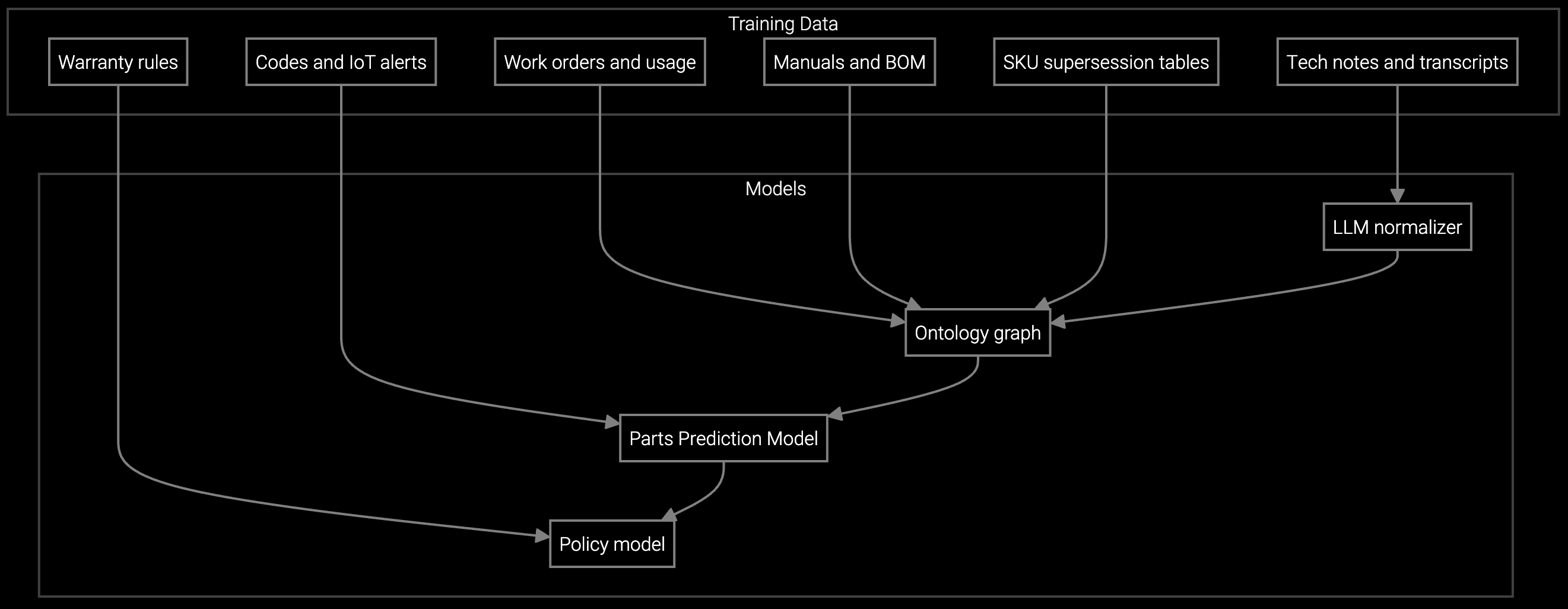
Predicts which chamber kits and consumables technicians need for EUV or deposition tool repairs before dispatch, improving first-time fix rates and reducing fab downtime.
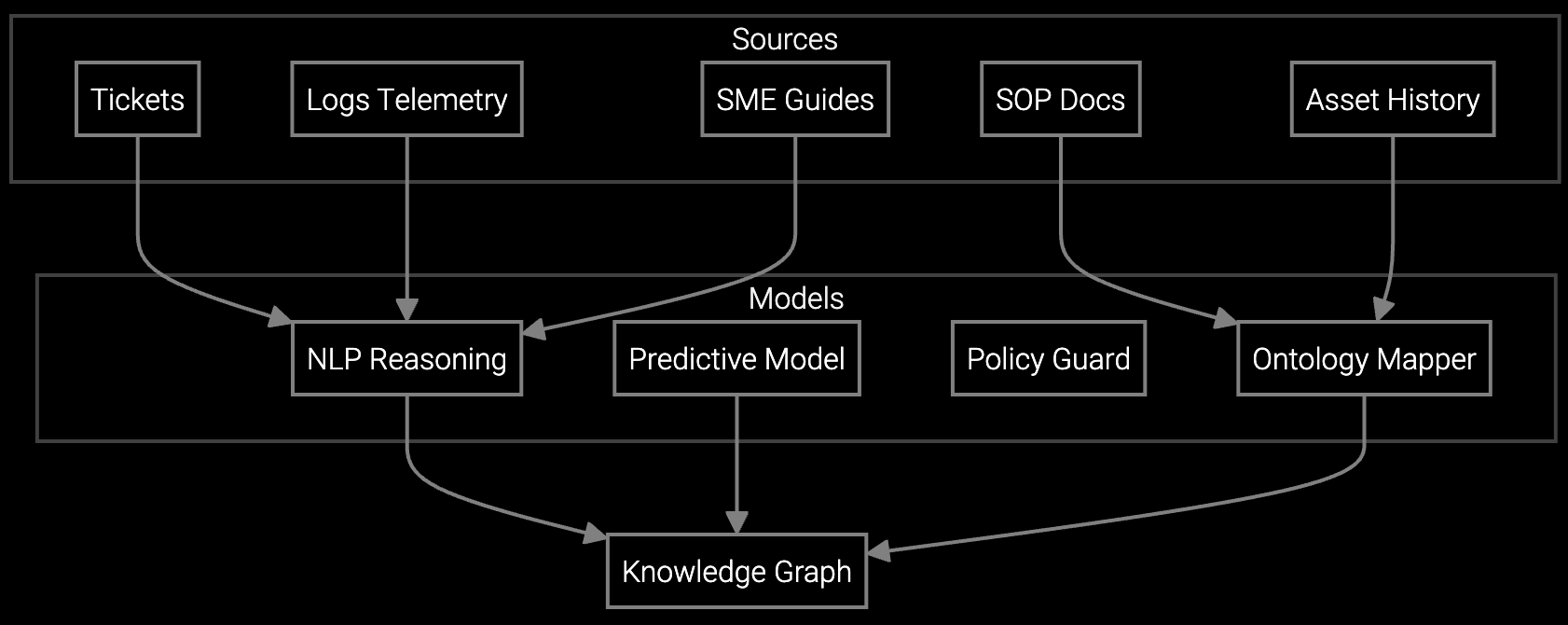
Correlates process drift symptoms with historical failure patterns and senior engineer expertise to identify root cause faster on lithography and metrology tools.
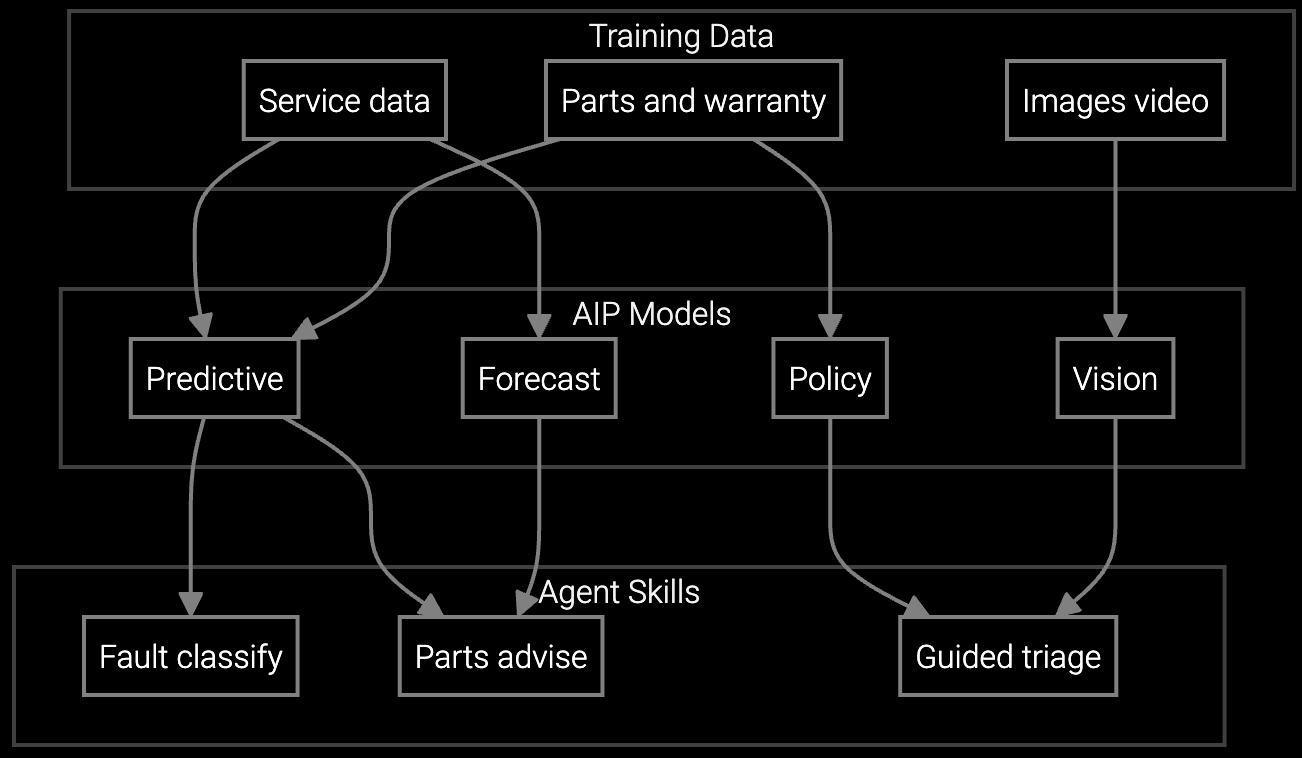
Mobile copilot provides real-time repair procedures, recipe parameter recommendations, and diagnostic guidance for on-site work at fab cleanrooms.
Semiconductor OEMs face extreme cost-of-downtime pressure: a single EUV lithography tool idle for four hours erases the margin from an entire quarter's service contract. Traditional field service optimization (better routing, mobile apps) doesn't address the core issue—technicians lack the diagnostic context and parts confidence to fix tools in one visit.
The platform targets the highest-leverage failure modes first: chamber component wear on etch and deposition tools, where predictable degradation patterns exist in telemetry but require correlating pressure curves with specific consumable part lifetimes. By training models on your historical PM data and tool logs, the system learns which sensor drift signatures predict imminent failures, allowing parts pre-staging before emergency dispatch.
Most semiconductor equipment OEMs see payback in 6-9 months when targeting high-value tools with frequent PM cycles. The ROI comes from avoided truck rolls (22-30% reduction) and faster repairs that protect customer fab uptime, which directly impacts contract renewal rates and premium service tier adoption.
Calculate replacement cost for a senior process engineer ($280K-$420K total comp) multiplied by probability of retirement (industry average 18% over next 3 years) and the percentage of their expertise that isn't documented (typically 60-80% for niche tool knowledge). This represents your risk exposure, which AI-assisted knowledge capture mitigates by embedding expertise into models automatically.
Yes. The platform's Python SDKs run in your data environment—on-premises or in your cloud tenant. Models train on your telemetry and work order data locally, with no requirement to export sensitive process parameters or recipe data. Only metadata flows through APIs for orchestration.
Typical integration takes 4-6 weeks for a senior developer familiar with your FSM system. The platform provides REST APIs and Python SDKs, avoiding proprietary connectors. Budget $40K-$60K for initial integration work, plus ongoing maintenance as your FSM system updates.
Track work orders that close without follow-up dispatch within 30 days for the same tool and symptom combination. Baseline this metric for 90 days pre-deployment, then compare to 90-day post-deployment windows. Control for tool type and failure mode severity to isolate the AI impact from seasonal or product mix effects.

How AI bridges the knowledge gap as experienced technicians retire.

Generative AI solutions for preserving institutional knowledge.

AI-powered parts prediction for higher FTFR.
See how predictive parts staging and AI-assisted diagnostics reduce truck rolls for your tool portfolio.
Talk to an Expert