
Manual configuration tracking costs fabs millions in downtime when asset records don't match reality.
Bruviti deployment data shows AI auto-schedules 65% of equipment maintenance and produces an optimized plan per area in under 3 minutes. Builders wire installed base data straight into maintenance workflows, so asset records trigger service actions automatically instead of waiting on manual planner review.
Manual reconciliation of equipment configurations happens quarterly or after incidents. Chamber recipe changes, software version updates, and consumable replacements happen daily but aren't reflected in asset records until someone runs a manual audit.
ERP systems, CRM databases, and equipment telemetry all hold serial numbers, but they don't match. Engineers spend hours each week cross-referencing systems to identify which tool is actually installed where, especially for FOUPs and metrology instruments.
Without automated tracking of equipment usage hours and process cycles, predicting component EOL is guesswork. Maintenance schedules run on calendar intervals rather than actual wear, leading to premature replacements or unexpected failures mid-production.
Bruviti provides REST and GraphQL APIs that let you build automated asset tracking workflows in your existing stack. When a tool sends telemetry, an event-driven pipeline updates the asset record with current configuration state, usage hours, and software versions. No manual entry required.
Configuration drift detection runs continuously. The platform compares live equipment state against your configuration baseline, flagging deviations in real time. Python SDKs let you define custom drift rules and route alerts to your preferred notification system. Lifecycle planning APIs consume usage data and predict component EOL based on actual operating conditions, not fixed intervals.

Analyzes lithography tool telemetry streams to identify sensor anomalies before they impact wafer throughput or yield.
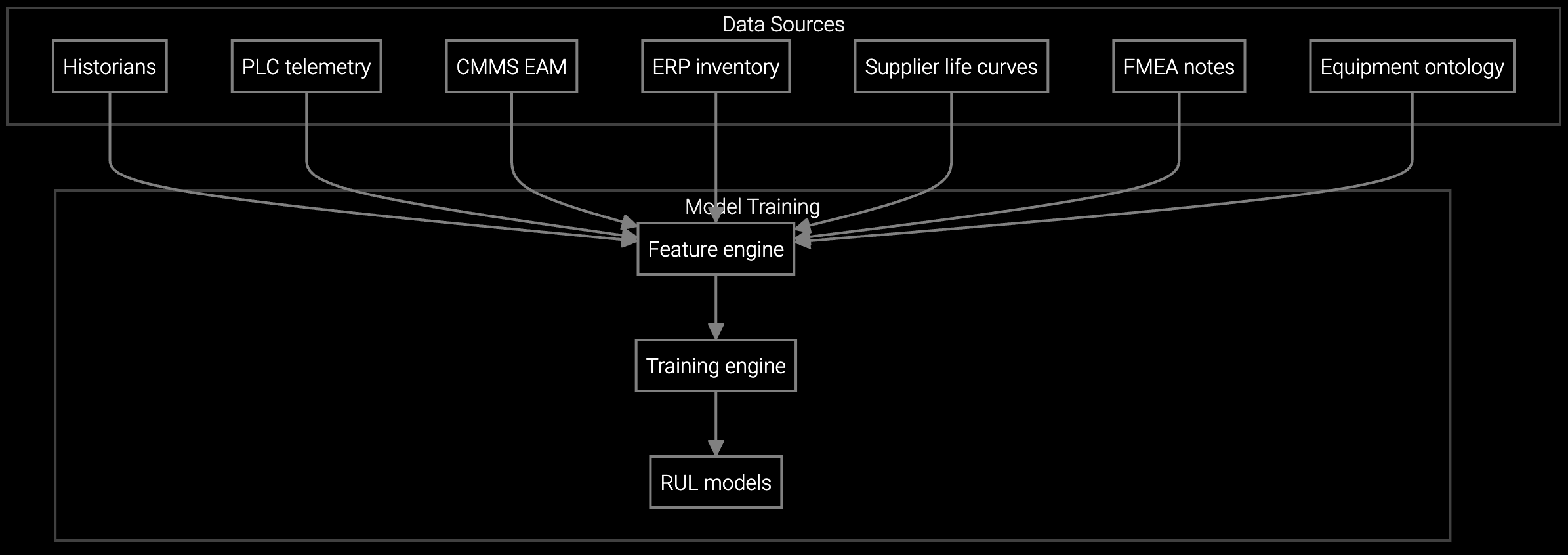
Predicts chamber component lifespan based on process cycles and recipe parameters, enabling planned maintenance windows.

Schedules etch tool PMs based on actual runtime hours and consumable usage rather than fixed calendar intervals.
Semiconductor fabs operate hundreds of lithography, etch, deposition, and metrology tools across multiple production lines. Each tool runs specific recipes with consumables that degrade at different rates. Tracking which chamber has which recipe version, which consumables were last replaced, and which software patches are installed is critical for yield management and compliance.
Automated workflows sync equipment telemetry to asset records in real time. When a process engineer updates an etch recipe, the configuration change appears in the asset registry immediately. When a consumable reaches its usage threshold, lifecycle planning APIs automatically schedule replacement during the next planned maintenance window, avoiding unplanned downtime.
Bruviti's platform accepts standard SECS/GEM data formats via REST endpoints. You map equipment variables to asset record fields using JSON configuration files, not custom code. For proprietary telemetry formats, the Python SDK provides parsing templates that you customize and deploy in your environment, maintaining data sovereignty.
Yes. The GraphQL API lets you create tool-specific baselines and drift thresholds. For example, lithography tools might flag any recipe parameter change, while etch tools only flag changes exceeding 5% variance. Rules are stored as code in your repository, versioned alongside your application logic.
Asset records, configuration histories, and lifecycle data are exportable via bulk API endpoints in JSON or CSV format. There are no proprietary schemas. You retain full ownership of all telemetry and metadata ingested by the platform, with no lock-in on historical data access.
The platform accepts usage metrics like process cycles, runtime hours, and consumable throughput. You define component-specific degradation models using Python functions that calculate remaining useful life based on these inputs. The API exposes predicted EOL dates and confidence intervals that feed your maintenance scheduling system.
Yes. Webhook endpoints fire when drift thresholds are exceeded. You can route these events to Slack, PagerDuty, or custom orchestration tools. The webhook payload includes the asset ID, configuration deltas, and severity level, giving you full control over downstream response workflows.

Software stocks lost nearly $1 trillion in value despite strong quarters. AI represents a paradigm shift, not an incremental software improvement.
Function-scoped AI improves local efficiency but workflow-native AI changes cost-to-serve. The P&L impact lives in the workflow itself.

Five key shifts from deploying nearly 100 enterprise AI workflow solutions and the GTM changes required to win in 2026.
Talk to our integration team about API access and SDK documentation.
Schedule Technical Review