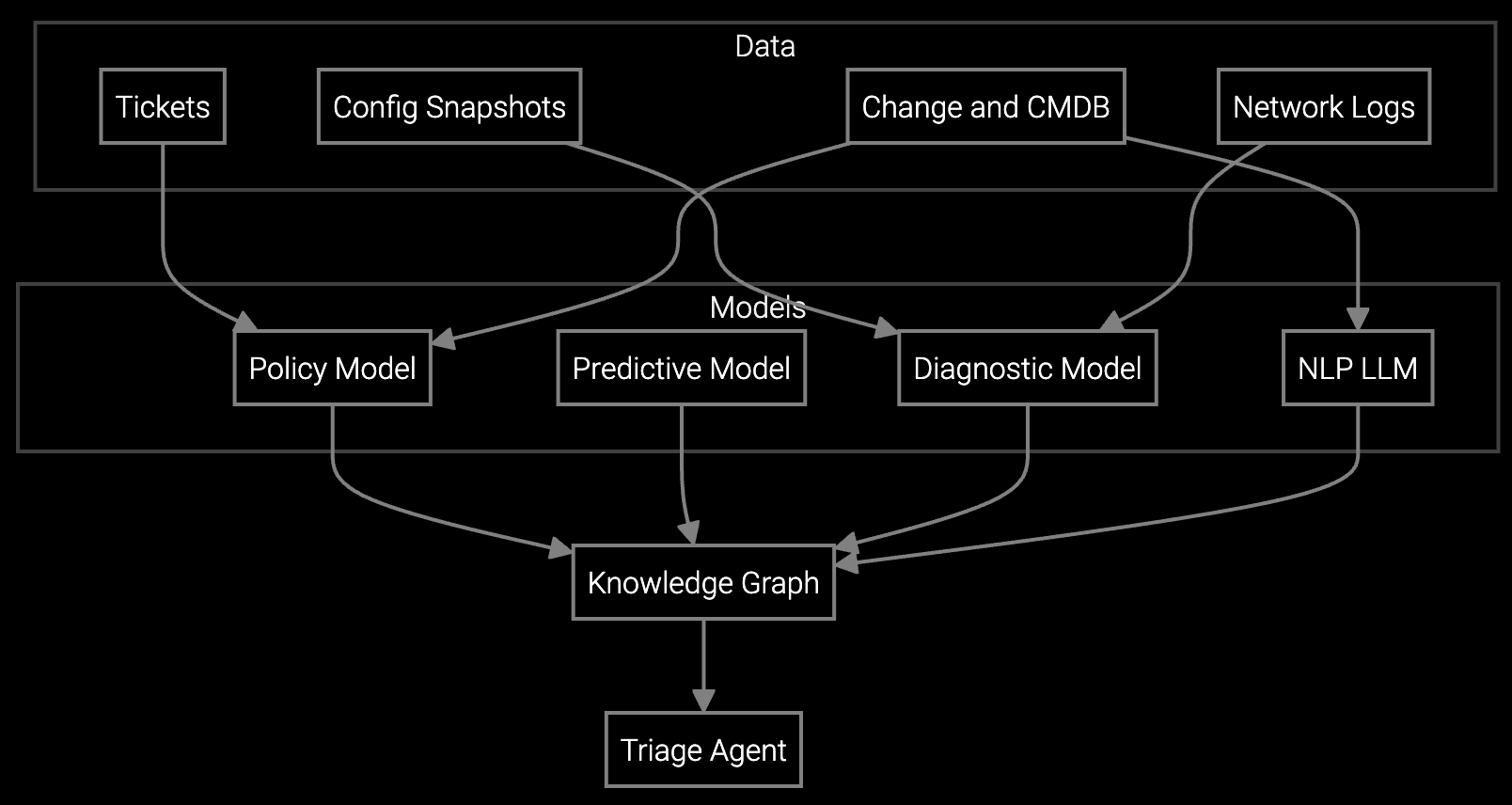
Manual log analysis burns hours when lithography tools drift—automated workflows diagnose and resolve in minutes.
Bruviti deployment data shows an end-to-end remote diagnostics workflow drives 50% fewer duplicate investigations and 3x reuse of proven fixes. For fab tool teams, the workflow connects telemetry, root-cause analysis, and a living knowledge base so each resolved fault makes the next one faster instead of starting from scratch.
Support engineers spend hours writing custom parsers for each tool vendor's telemetry format. Every lithography system, etch chamber, and metrology tool exports logs differently—no standard schema exists.
Root cause analysis relies on undocumented correlations between recipe parameters and chamber state. Process engineers know that pressure drift plus temperature variance signals contamination—but that logic lives in heads, not code.
When remote diagnostics fail, support engineers manually compile session notes, log excerpts, and initial findings before escalation. Field service receives incomplete context and re-runs the same analysis on-site.
Bruviti provides Python and TypeScript SDKs that connect your telemetry ingestion layer to pre-trained models for equipment-specific diagnostics. You define the workflow triggers (recipe deviation threshold, OEE drop, alarm pattern) and the platform executes the analysis pipeline—log correlation, knowledge retrieval, root cause hypothesis generation—without custom code for each tool type.
The workflow engine orchestrates multi-step diagnostics: ingest SECS/GEM streams, cross-reference historical chamber performance, apply domain-specific reasoning (lithography vs. etch vs. metrology), and package findings into a structured resolution object. Your team validates the AI's conclusion and approves the fix, or escalates with full diagnostic context already attached. Integration points let you trigger downstream actions: auto-open service tickets, order chamber kits, schedule PM windows.
Semiconductor OEMs manage diagnostics for hundreds of tools across multiple fabs, each with unique recipe libraries and chamber configurations. Automated workflows must handle EUV lithography precision requirements differently than etch chamber consumable monitoring—the diagnostic logic varies by process node and tool generation.
The platform ingests SECS/GEM data streams from tool controllers, FDC (Fault Detection and Classification) alerts from fab automation systems, and recipe parameters from MES. Workflow triggers fire on OEE drops, SPC violations, or alarm patterns. The AI correlates tool state with historical performance data specific to that chamber's serial number and process recipe, then generates hypothesis-driven troubleshooting steps tailored to the equipment type.
The platform provides telemetry normalization APIs that translate vendor-specific formats (Applied Materials, Lam Research, ASML) into a unified schema. You configure mappings once per tool family; the workflow engine then applies the same diagnostic logic across all equipment of that type, regardless of log structure differences.
Yes. The workflow SDK exposes hooks where you inject custom correlation rules (e.g., "pressure drop below X while RF power exceeds Y indicates chamber leak"). The AI uses your domain logic alongside its pre-trained diagnostics models, so proprietary process knowledge stays in your control.
Workflows are designed for human-in-the-loop validation. The AI generates a diagnostic hypothesis with confidence scoring and supporting evidence (log excerpts, historical comparisons). Support engineers review the analysis before approving recommended actions. You define confidence thresholds that trigger automatic escalation for ambiguous cases.
The platform operates alongside your current remote access infrastructure. Workflow triggers pull telemetry from your existing data sources (SECS/GEM, FDC, MES). When the AI completes diagnostics, it can push resolution packages into your ticketing system or trigger actions in your service management platform via REST APIs.
All telemetry processing and model inference runs in your chosen environment—on-premises, private cloud, or dedicated VPC. Recipe parameters, process data, and diagnostic logic never leave your infrastructure. The platform supports air-gapped deployments for fabs with strict data sovereignty requirements.
Software stocks lost nearly $1 trillion in value despite strong quarters. AI represents a paradigm shift, not an incremental software improvement.
Function-scoped AI improves local efficiency but workflow-native AI changes cost-to-serve. The P&L impact lives in the workflow itself.
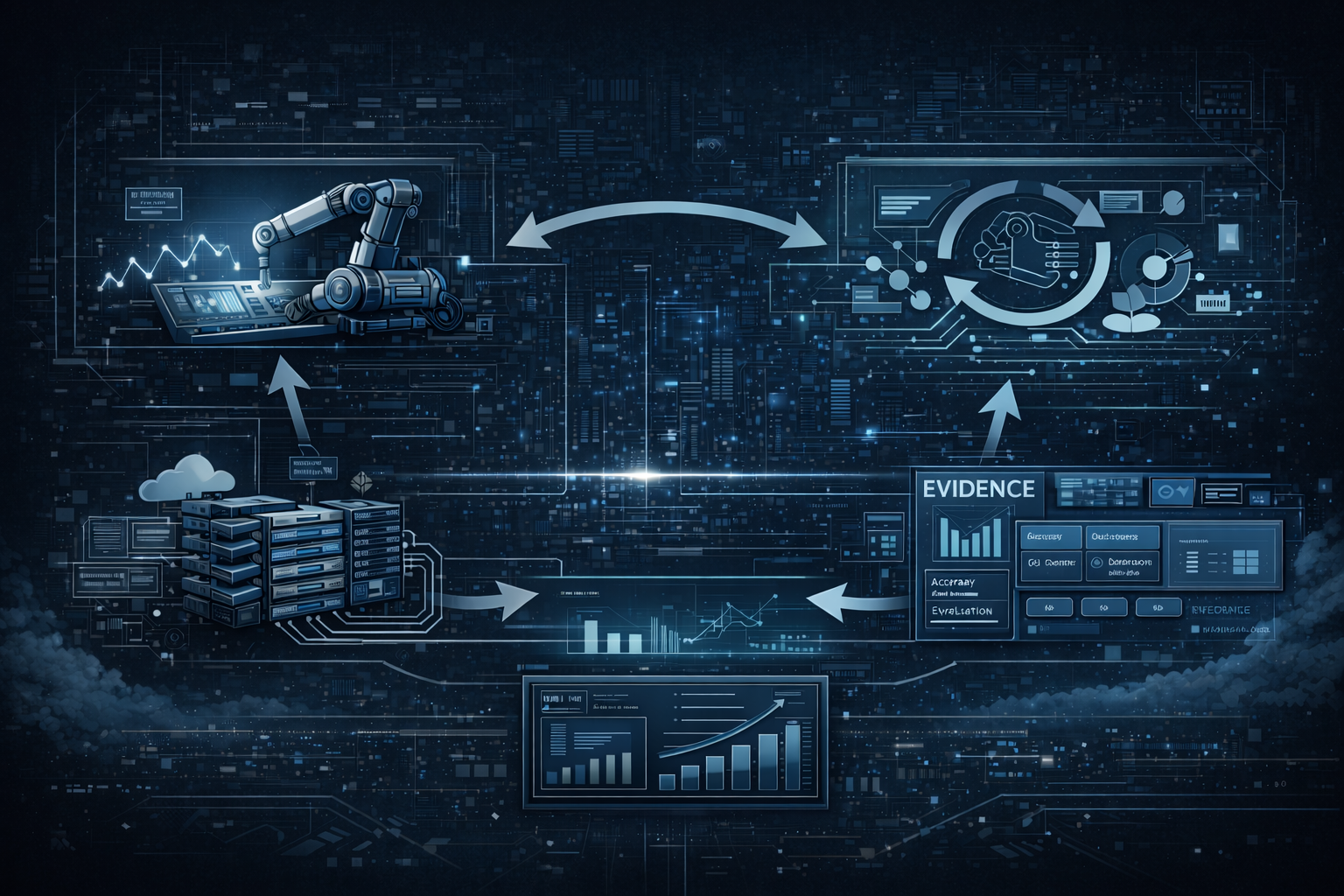
Five key shifts from deploying nearly 100 enterprise AI workflow solutions and the GTM changes required to win in 2026.
Talk to our integration team about SDK access and telemetry adapter configuration for your fab tools.
Schedule Technical Demo