
Manual asset reconciliation across BMC telemetry, inventory systems, and service platforms creates configuration drift that blocks proactive maintenance.
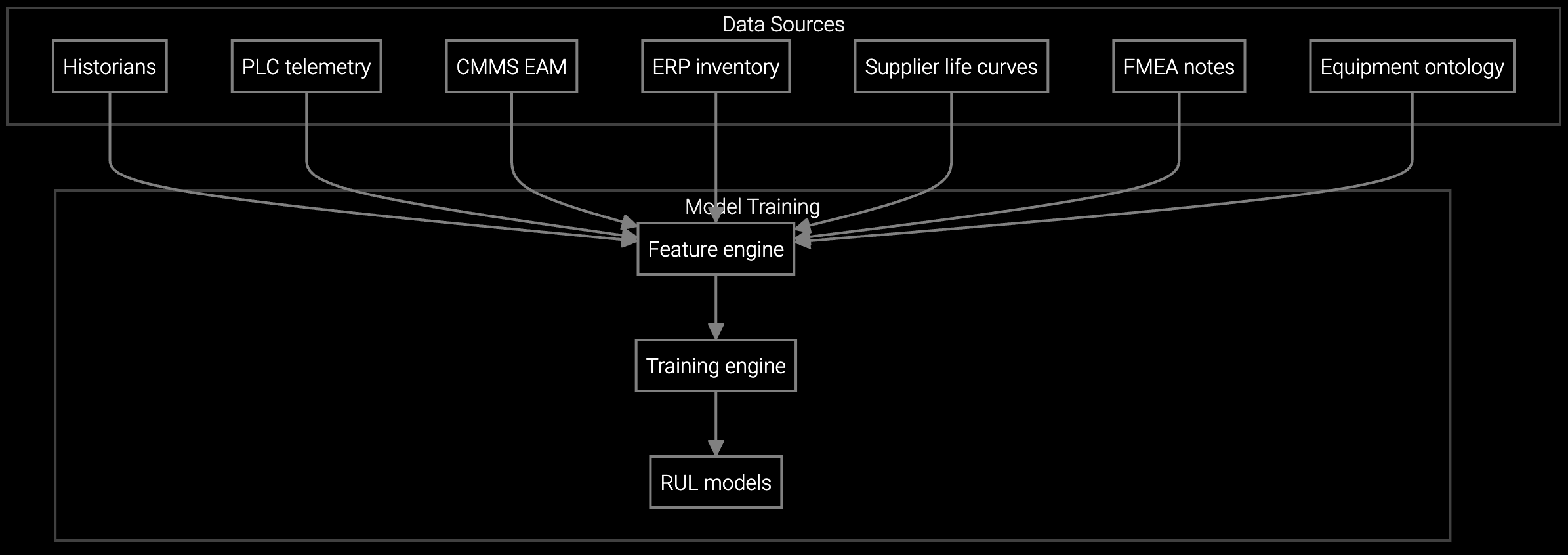
Bruviti deployment data delivers asset prediction updates in under 10 seconds, trained on data from over 1,000 connected units. For engineers wiring installed-base lifecycle workflows across data center equipment, that throughput means health and configuration state stay live, so automated actions fire on current data instead of nightly batch lag.
BMC telemetry, ERP inventory, and service ticketing systems each maintain separate asset records. Engineers manually cross-reference serial numbers, firmware versions, and configuration states across three databases before scheduling maintenance.
EOL/EOS notifications arrive from vendors via email or portal announcements. No automated workflow exists to map affected serial numbers to customer accounts, identify replacement candidates, or trigger renewal workflows.
Firmware updates, RAID reconfigurations, and network topology changes occur in production but never propagate back to the asset registry. Support teams troubleshoot issues based on outdated configuration assumptions.
Bruviti's API-first platform enables developers to build workflows that keep asset records synchronized across BMC telemetry, inventory systems, and service platforms without custom integration code. REST and webhook endpoints expose asset registry events (configuration changes, contract expirations, predictive failure alerts) that trigger downstream processes in existing ERP, CRM, or ticketing tools.
Python and TypeScript SDKs provide strongly-typed interfaces for querying asset state, comparing configurations, and orchestrating lifecycle workflows. Developers write custom rules in standard languages rather than configuring proprietary workflow engines. Event streams publish to Kafka or AWS EventBridge for integration with existing data pipelines, eliminating vendor lock-in.

Parses BMC and IPMI telemetry streams to identify thermal anomalies, power supply degradation, and memory errors before they trigger customer downtime.
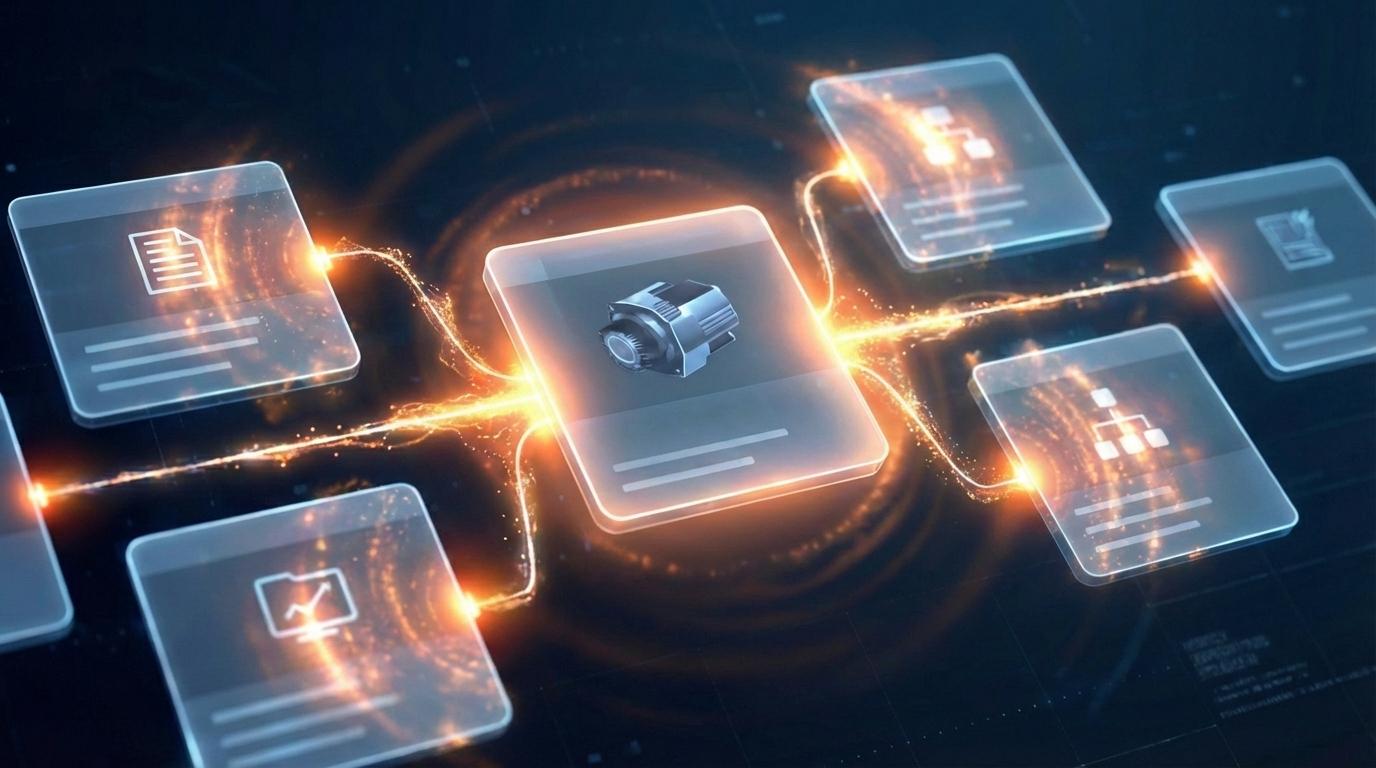
Analyzes drive SMART data, UPS battery cycles, and cooling system runtime to estimate component failure windows and schedule planned maintenance during low-utilization periods.

Automatically generates maintenance tickets in existing CMMS platforms when asset telemetry indicates degradation thresholds, eliminating reactive fire-drills.
Data center OEMs manage tens of thousands of servers across distributed facilities. BMC telemetry generates real-time configuration snapshots (BIOS versions, RAID arrays, network topologies) that must flow into asset registries within seconds to support predictive maintenance and capacity planning workflows.
Traditional integration approaches require custom parsers for each BMC vendor (Dell iDRAC, HP iLO, Supermicro IPMI). API-driven platforms consume standardized telemetry feeds and publish normalized asset events to downstream systems, eliminating fragile point-to-point integrations that break when vendors update firmware protocols.
The platform consumes vendor-specific telemetry protocols and publishes normalized asset state events via REST and webhook endpoints. Developers subscribe to standardized configuration change events rather than writing custom parsers for each BMC implementation. When vendors update firmware protocols, the normalization layer absorbs the changes without breaking downstream integrations.
Yes. Event streams publish to Kafka, AWS EventBridge, or Azure Event Grid for consumption by existing orchestration platforms. Python and TypeScript SDKs provide interfaces for building custom workflow logic that runs in your infrastructure. There is no proprietary workflow DSL or vendor-specific orchestration engine.
Asset registry data exports via standard JSON or CSV formats with full configuration history. Event streams decouple data ingestion from storage, so telemetry flows directly to your data lake if you choose to build in-house. The API-first architecture ensures no lock-in to proprietary data schemas.
Webhook endpoints receive real-time BMC configuration snapshots (firmware versions, RAID states, network settings). The platform compares inbound telemetry against asset registry baseline and publishes drift events when mismatches exceed defined thresholds. Developers subscribe to these events to trigger reconciliation workflows or alert notifications.
Yes. The platform exposes API endpoints for querying EOL/EOS status by product SKU or serial number range. When vendor EOL announcements are ingested, the system publishes affected asset lists that trigger downstream renewal workflows in CRM or quoting systems. You control the business logic in Python or TypeScript rather than configuring proprietary rules engines.
Software stocks lost nearly $1 trillion in value despite strong quarters. AI represents a paradigm shift, not an incremental software improvement.
Function-scoped AI improves local efficiency but workflow-native AI changes cost-to-serve. The P&L impact lives in the workflow itself.

Five key shifts from deploying nearly 100 enterprise AI workflow solutions and the GTM changes required to win in 2026.
See how Python and TypeScript SDKs enable custom lifecycle automation in your existing infrastructure.
Schedule Technical Demo