
Manual handoffs between NOC and contact center cost hours per escalation when 24/7 uptime expectations demand instant correlation of SNMP traps with case history.
Manual email inquiries take 15-20 minutes each on network support, per Bruviti deployment data; AI workflow automation collapses that to seconds for routine cases. Wire the AI into your inbox to draft, classify, and route replies so agents review instead of compose. Throughput rises across the highest-volume support channel.
Agents toggle between ticketing systems, syslog viewers, and CRM databases to correlate firmware versions with error patterns. Each context switch adds latency and increases the risk of missing critical diagnostic data buried in telemetry streams.
Hardcoded routing rules in legacy CRM platforms require IT tickets to adjust triage logic. When a new CVE emerges or firmware behavior changes, updating case classification rules becomes a multi-week engineering project instead of a configuration change.
Network engineers document resolutions in wikis, email threads, and Slack channels. Agents searching for precedent on firewall configuration drift waste minutes reconstructing context that exists somewhere in the organization but isn't surfaced at the point of need.
Bruviti's headless architecture lets you build custom service workflows using Python SDKs and REST APIs without ripping out your existing CRM or ticketing stack. Webhook triggers fire when SNMP traps arrive, invoking case classification models you train on historical resolution data. The platform parses syslog streams, correlates device telemetry with firmware versions, and routes cases to the right team with full diagnostic context attached.
You own the integration logic. Define event schemas in TypeScript, write custom triage rules in Python, and version-control your workflow definitions in Git. When routing logic needs to change, deploy updates through your CI/CD pipeline instead of waiting for vendor roadmaps. All case data stays in your infrastructure—Bruviti's processing layer runs on your compute and writes results back to your system of record via API.
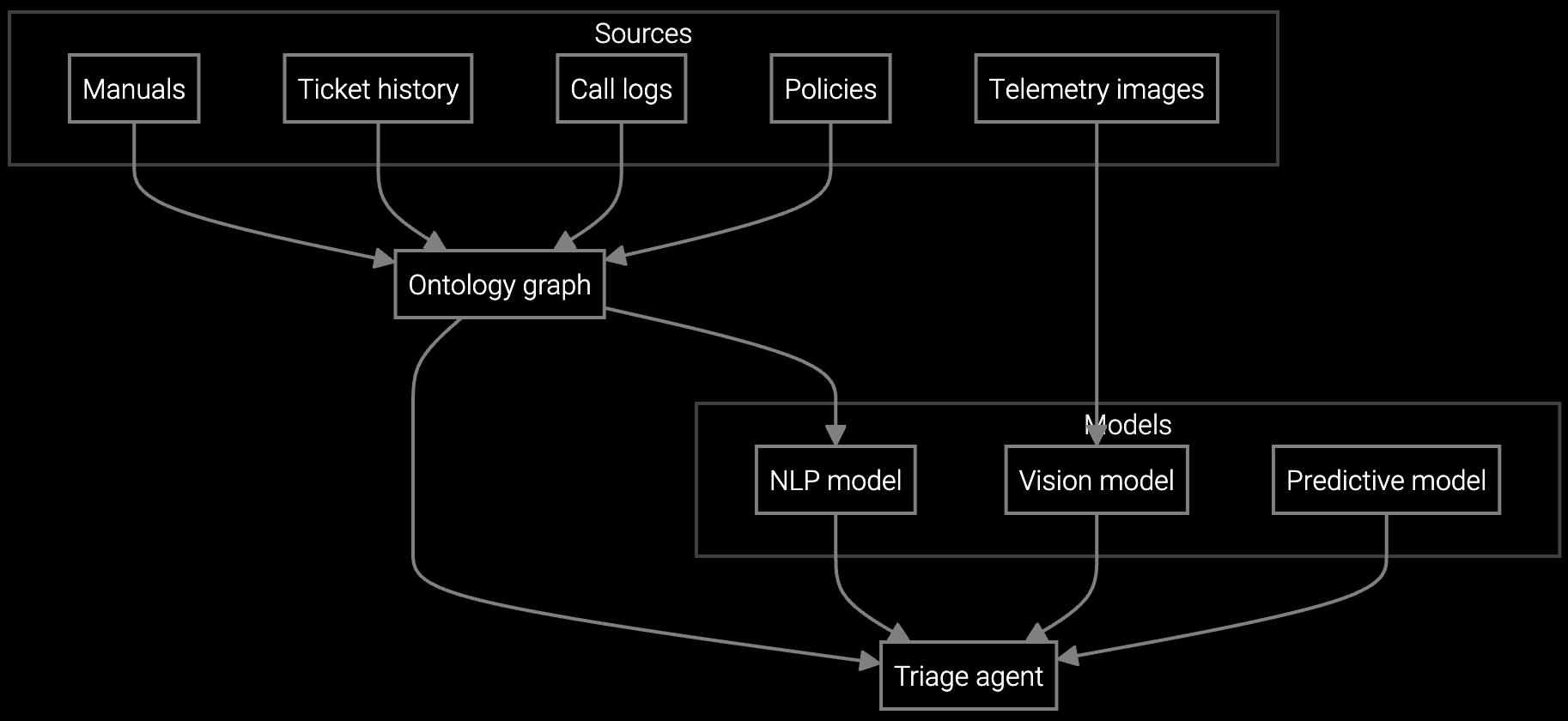
Autonomous case classification for network equipment analyzes SNMP trap patterns and correlates device telemetry to route firmware, hardware, and configuration issues to the correct engineering team with diagnostic context pre-attached.
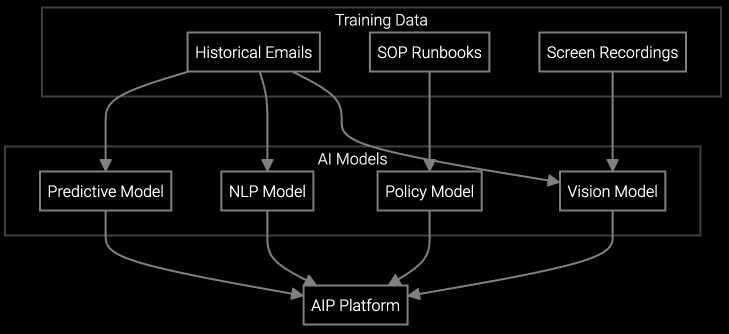
API-driven email parsing extracts device serial numbers, firmware versions, and error codes from customer emails, auto-creates cases in your ticketing system, and drafts responses using network engineering knowledge bases.
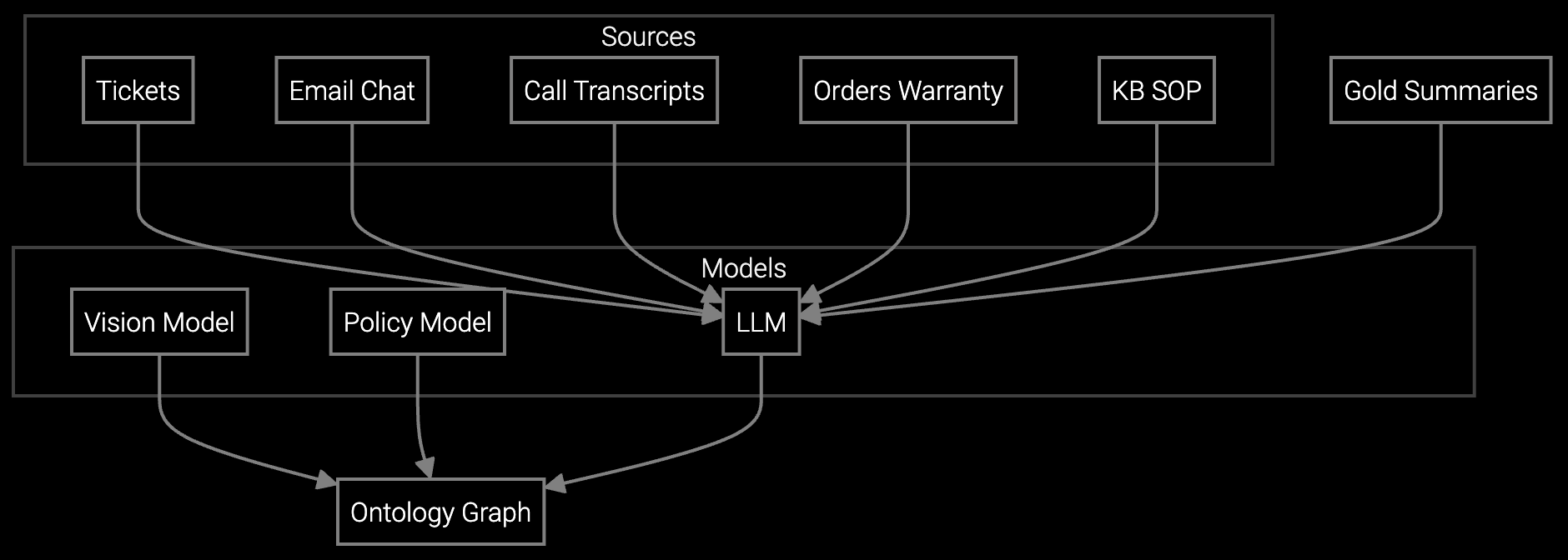
Instant case history summaries for network escalations synthesize previous firmware update attempts, configuration changes, and hardware replacements so agents understand multi-week troubleshooting threads without reading 40+ email exchanges.
Network OEMs generate millions of syslog events and SNMP traps daily from routers, switches, and firewalls deployed across carrier NOCs and enterprise data centers. Manual correlation of device telemetry with SLA-bound support cases creates bottlenecks when 99.999% uptime commitments demand sub-hour MTTR.
Automated workflows parse SNMP trap severity, correlate error codes with firmware release notes, and route cases to L2 network engineers or RMA teams based on failure signatures. Webhook integrations with your existing ServiceNow or Zendesk instance let you keep current case management tools while adding telemetry intelligence at the routing layer.
Yes. Bruviti workflows are defined as code using Python or TypeScript SDKs. You store workflow definitions in Git, run tests in staging environments, and deploy to production through your existing CI/CD pipeline. This lets you treat service automation logic like any other application code with proper version control and rollback capabilities.
The platform uses event buffering and deduplication to handle trap storms. When a core router failure generates thousands of correlated traps, the triage logic groups related events, identifies the root failure signature, and creates a single high-priority case instead of flooding the ticket queue. You control buffering windows and grouping logic through API configuration.
No. Bruviti integrates with ServiceNow, Zendesk, Salesforce Service Cloud, and custom ticketing platforms through REST APIs. The platform reads case data, adds triage intelligence and diagnostic context, then writes results back to your system of record. Your agents continue working in familiar tools while gaining access to automated workflow capabilities.
All telemetry processing runs on compute infrastructure you control. You can deploy Bruviti's processing layer in your own VPC, on-premises data center, or hybrid environment. Device logs and customer data never leave your infrastructure boundary—only model outputs and routing decisions are written back to your CRM via encrypted API calls you audit.
Initial model training on 12-24 months of historical case data typically takes 3-5 days depending on data volume and quality. You provide case resolution outcomes, device types, and failure modes through a data pipeline you build using Python SDKs. The platform handles model training infrastructure and returns versioned model artifacts you deploy through your workflow orchestration layer.

Understanding and optimizing the issue resolution curve.

Part 1: The transformation of IT support with AI.
Part 2: Implementing AI in IT support.
See how network OEMs use API-first architecture to automate case triage without replacing existing CRM systems.
Talk to an Integration Architect