
Manual case triage wastes hours when server failures demand immediate response at hyperscale.
Bruviti deployment data shows automated workflows summarize 85% of data center support cases in under 7 seconds and improve first contact resolution 11%. Builders chain summarization, routing, and response automation into one workflow so cases move end to end without manual handoffs between systems.
Agents manually parse IPMI logs and BMC alerts to determine if issues are power, thermal, compute, or storage related. Misrouting delays resolution and violates SLAs when customers demand four nines availability.
Agents search across multiple knowledge bases, BMC documentation, and past cases to find resolution steps. Context switching between systems increases handle time and frustrates customers waiting for critical infrastructure repairs.
High-volume component failures require coordinated RMA workflows across geographically distributed data centers. Manual handoffs between agents, logistics, and inventory teams create delays when customers need instant capacity replacement.
Bruviti's headless architecture exposes workflow automation through RESTful APIs and Python SDKs, enabling developers to build custom case routing logic that integrates with existing CRM and ticketing systems. The platform ingests BMC telemetry, IPMI alerts, and historical case data to train classification models that automatically route cases to specialized teams without manual intervention.
Event-driven triggers orchestrate end-to-end workflows: when a server failure occurs, the system auto-classifies the root cause, retrieves relevant troubleshooting steps, creates the case in ServiceNow or Salesforce, and initiates RMA processes if replacement is required. Developers maintain full control over workflow logic using Python, avoiding vendor lock-in while eliminating repetitive manual tasks that delay resolution.
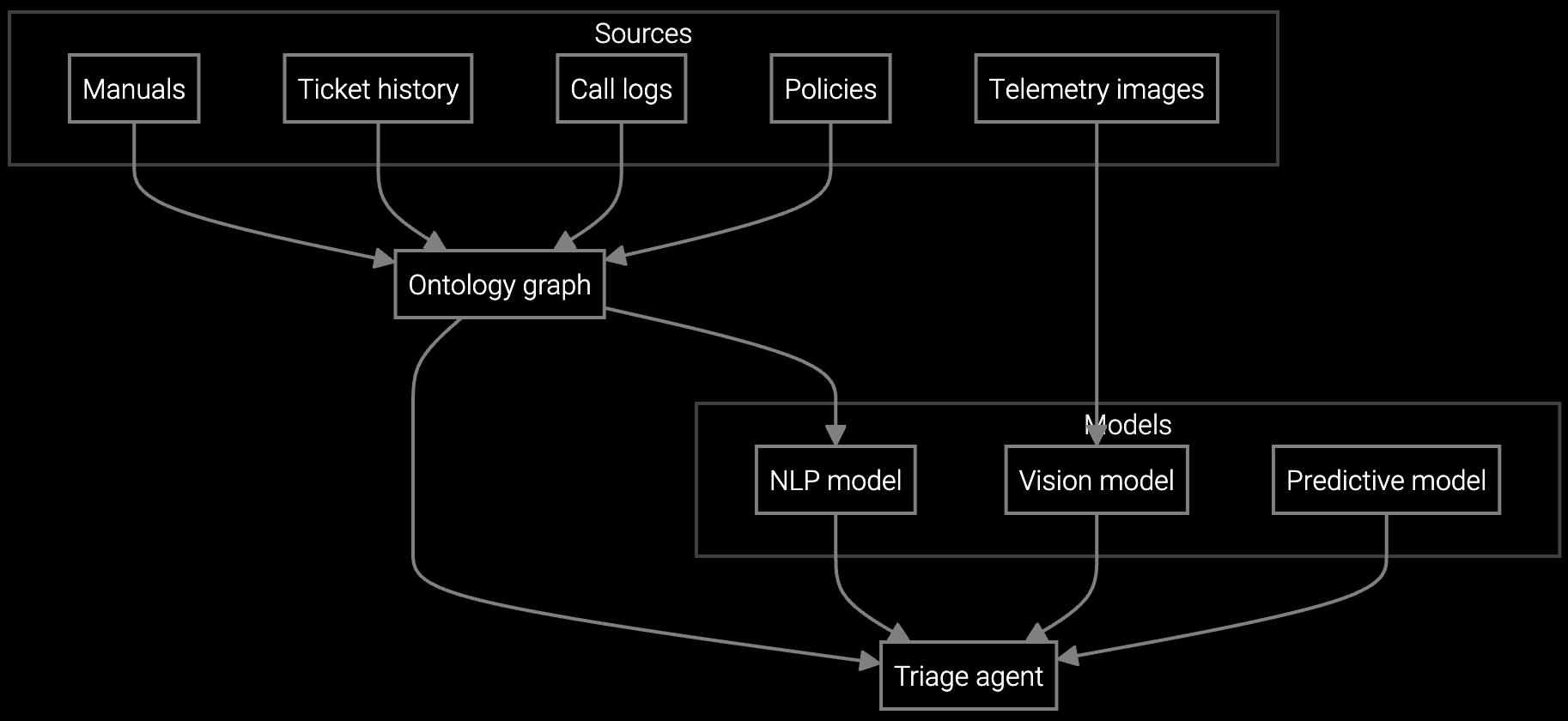
Autonomous triage analyzes IPMI telemetry and BMC alerts to route server, storage, cooling, and power issues to specialized teams with diagnostic context.
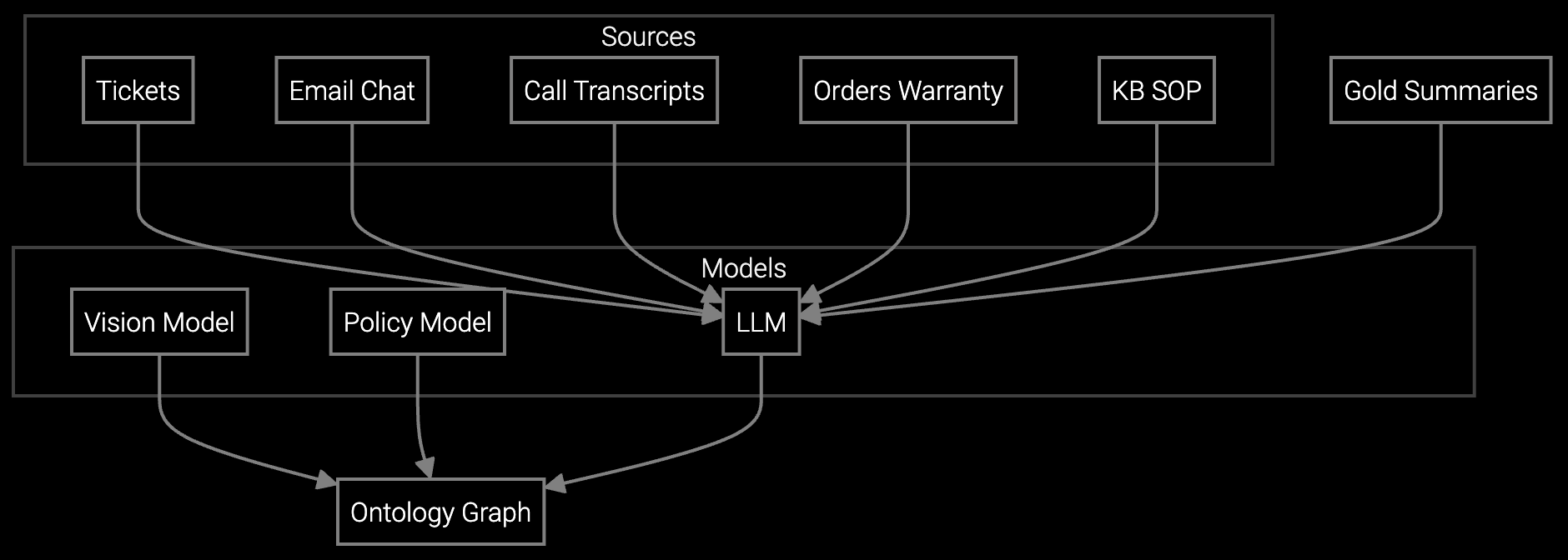
Instantly generates case summaries from email threads, chat logs, and call transcripts so agents understand server failure history without reading hundreds of messages.
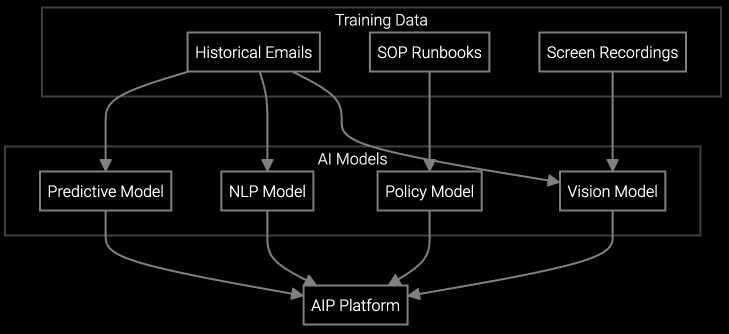
AI reads and classifies customer emails describing server failures, drafting responses using historical resolution data and knowledge bases to reduce agent workload.
Data center OEMs manage thousands to millions of compute nodes across geographically distributed facilities, where component failure rates of 4% annually generate massive case volumes. Traditional manual triage cannot scale when customers demand 99.99% availability and instant capacity provisioning. Automated workflows must handle BMC telemetry streams, IPMI alerts, and RAID controller logs to classify issues as power, thermal, compute, or storage related.
API-first platforms integrate with existing ServiceNow, Salesforce, and custom CRM systems, enabling automated case creation, routing, and RMA orchestration without replacing core infrastructure. Python SDKs allow developers to customize classification logic for specific server generations, storage architectures, and cooling configurations, maintaining flexibility as product lines evolve.
API-first platforms expose RESTful endpoints that connect to ServiceNow, Salesforce, Zendesk, and custom CRM systems via standard webhooks and event-driven triggers. Python SDKs enable developers to write custom integration logic that maps case classification results to ticketing system fields, maintaining data consistency without replacing core infrastructure.
Yes. Platforms that support bring-your-own-data workflows allow developers to upload historical cases, BMC logs, and resolution outcomes to train specialized models. Python SDKs provide model training APIs that fine-tune classification logic for specific equipment types, failure modes, and organizational routing rules without vendor-managed black boxes.
Effective server triage requires BMC alerts, IPMI sensor data, RAID controller logs, and system event logs. Platforms ingest these streams via standard protocols like SNMP, Redfish, and IPMI, correlating telemetry patterns with historical failure data to classify issues as power, thermal, compute, storage, or network related before routing to specialized teams.
Choose platforms that expose open APIs, support standard data formats like JSON and CSV, and provide Python or TypeScript SDKs for custom logic. Avoid proprietary workflow builders that trap configuration in closed systems. Ensure you can export trained models, historical data, and integration code to migrate to alternative platforms if business needs change.
Track average handle time reduction, first contact resolution improvement, cost per case decrease, and SLA compliance gains across distributed support teams. Measure agent productivity by cases resolved per day and customer satisfaction scores. Calculate annual savings from eliminated manual triage labor, multiplied by agent headcount to demonstrate financial impact.

Understanding and optimizing the issue resolution curve.

Part 1: The transformation of IT support with AI.
Part 2: Implementing AI in IT support.
See how Bruviti's Python SDKs and APIs integrate with your existing stack to automate case routing at data center scale.
Schedule Technical Demo