
Server failures at scale demand instant parts availability, but carrying inventory for millions of components ties up capital fast.
Bruviti deployment data shows parts search runs in under 30 seconds per query, the day-to-day benchmark operators should weigh against building it in-house. A ready blueprint library delivers that speed immediately, while a homegrown catalog takes months to index and tune. Deployment data ties the speed to a single AI-searchable parts library.
Custom forecasting models offer precision for specific component failure patterns, but require dedicated data science teams and months of tuning for each new server generation or storage platform.
Vendor solutions deploy faster but often lack integration flexibility with existing ERP and service systems, creating data silos and limiting ability to adapt as business needs evolve.
Daily demands for server uptime and rapid provisioning leave no room for strategic planning. Teams default to reactive ordering, driving up emergency shipping costs and excess safety stock.
A hybrid strategy combines the flexibility of custom development with the speed of pre-built solutions. Bruviti's platform provides demand forecasting models trained on data center failure patterns while exposing APIs that let your team customize logic for specific product lines or geographic regions.
Start with out-of-the-box inventory optimization for high-volume components like drives and power supplies. As your team gains confidence, extend the platform to handle complex scenarios like RAID configuration-specific failures or thermal event predictions. The API-first architecture means you never lose control over critical business logic while avoiding the overhead of building and maintaining foundational AI infrastructure.
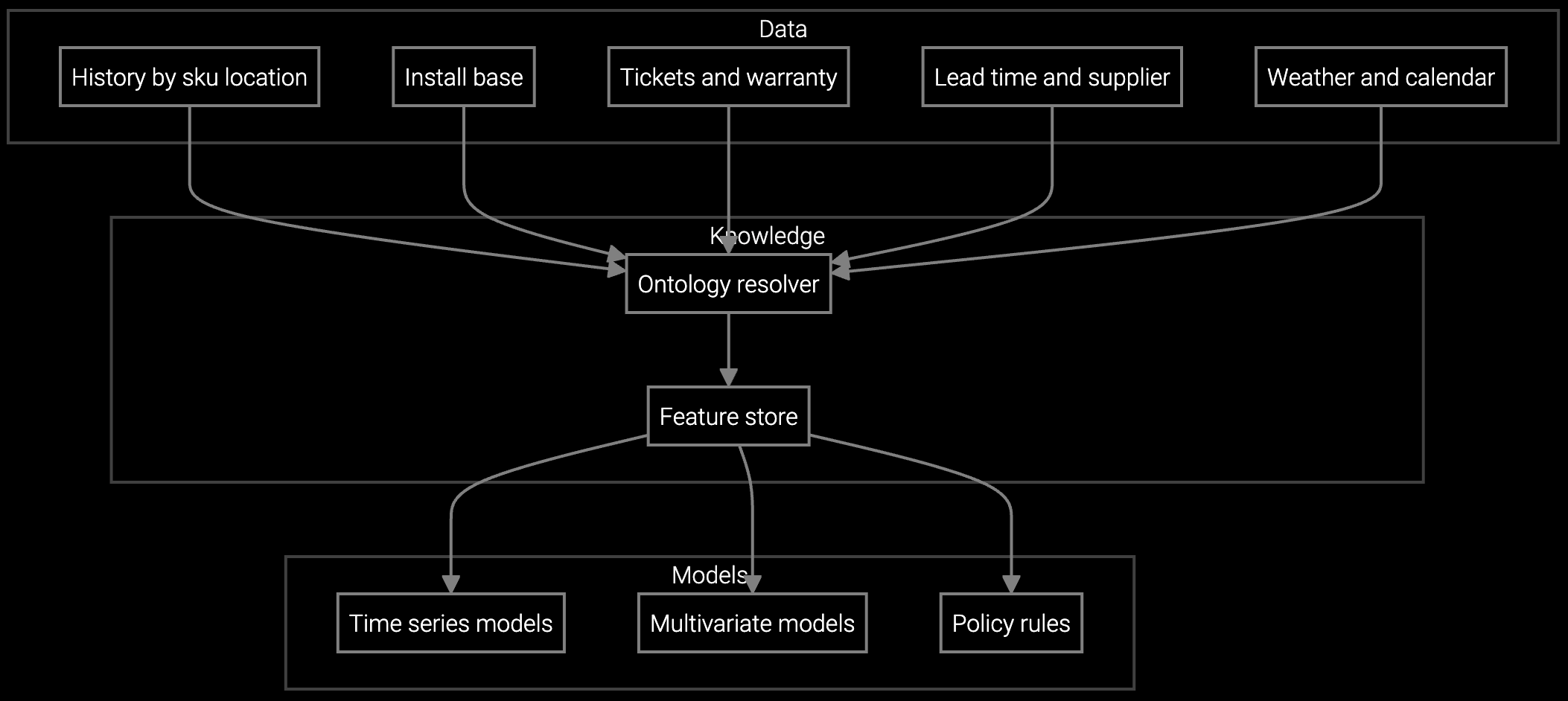
Projects server component consumption based on installed base age, BMC telemetry patterns, and seasonal capacity cycles across hyperscale data centers.
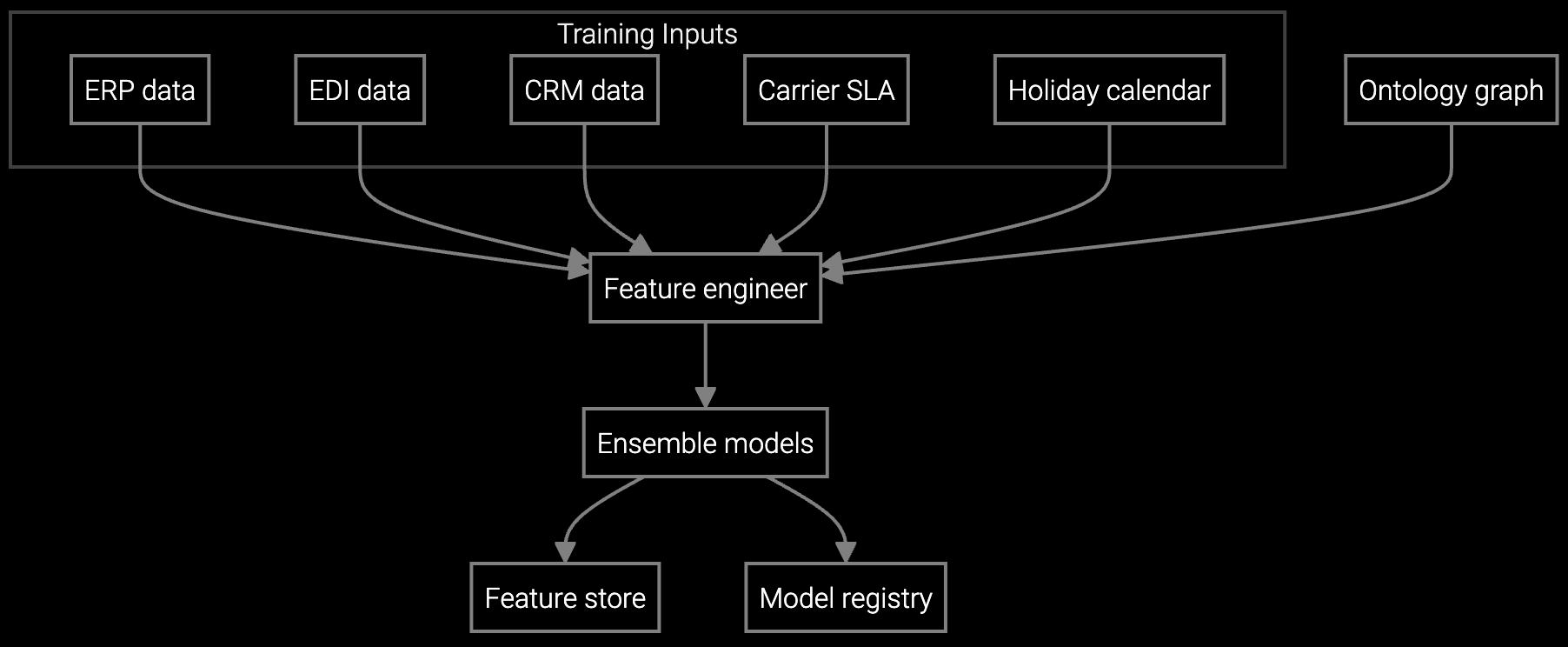
Optimizes stock levels by location and time window for critical components like SSDs and DIMMs, reducing both stockouts and excess inventory.
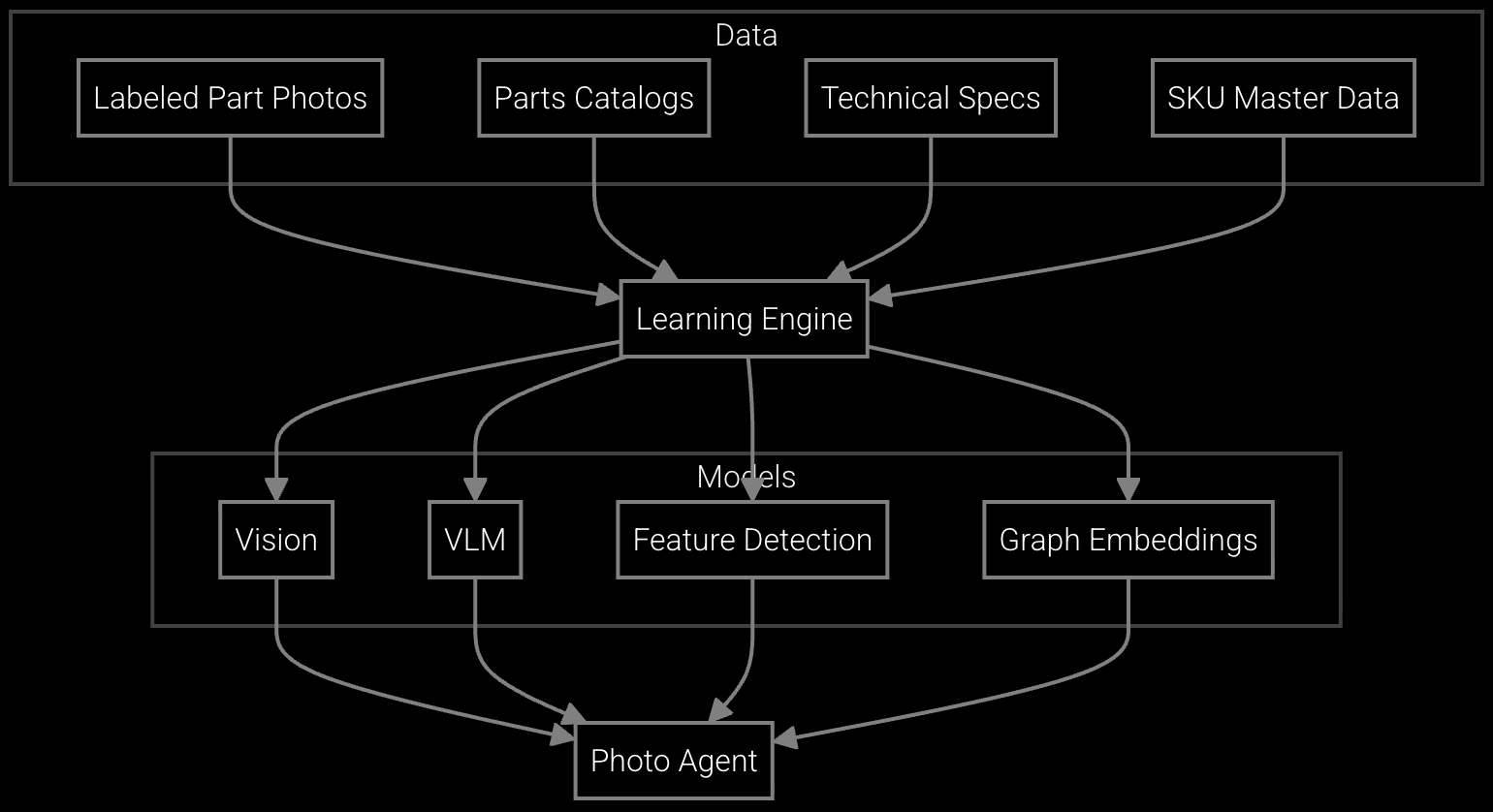
Enables on-site teams to snap photos of failed components for instant part number identification and availability check across regional warehouses.
Begin with predictive inventory for high-failure-rate components that drive the most emergency shipments: hard drives, SSDs, and power supplies. These parts have clear failure patterns tied to MTBF curves and usage intensity, making them ideal candidates for initial AI model deployment.
Once baseline forecasting proves value, extend to more complex scenarios like memory DIMMs where failure rates correlate with specific firmware versions or thermal events. The platform learns from your BMC telemetry and service history, continuously refining predictions as your installed base evolves across hyperscale and enterprise segments.
Most data center OEMs see measurable improvements in fill rate and carrying cost reduction within 4-6 weeks of deployment. The platform learns from historical failure data immediately, so forecasting accuracy improves continuously as it ingests more telemetry and service records.
Yes. The API-first architecture allows you to extend base forecasting models with custom logic for specific server generations, storage configurations, or geographic regions. Your team retains full control over business rules while leveraging pre-trained AI models for foundational predictions.
The platform connects to existing ERP, warehouse management, and service ticketing systems via REST APIs and standard connectors. You maintain current workflows while adding AI-driven forecasting on top, avoiding disruptive system replacements.
The platform continuously adapts to new product introductions and EOL transitions by learning from similar component families. When a new server generation launches, models transfer knowledge from predecessor platforms while refining predictions as field data accumulates.
Day-to-day operations require minimal IT involvement since the platform handles model training and updates automatically. Most teams allocate one technical resource part-time for monitoring dashboards and adjusting business rules as needed, far less than the dedicated data science team required for full in-house builds.

SPM systems optimize supply response but miss demand signals outside their inputs. An AI operating layer makes the full picture visible and actionable.
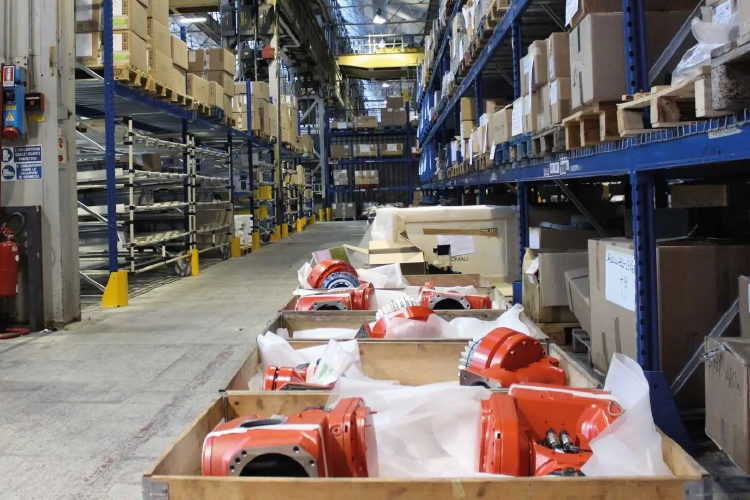
Advanced techniques for accurate parts forecasting.

AI-driven spare parts optimization for field service.
See how Bruviti's hybrid approach reduces inventory costs while improving parts availability for data center equipment.
Schedule Strategy Discussion