
With 24/7 uptime demands and thousands of SKUs, choosing the wrong parts platform locks you into rigid workflows or endless custom code.
Buying beats building when AI generates parts picklists at ≥85% precision, per Bruviti deployment data, accuracy that takes years to reach in-house. For network equipment operators the strategic move is adopting a proven parts-prediction engine and focusing your team on service execution, not on training and tuning a demand model from scratch.
Custom-built parts systems give full control over workflows and data models but require dedicated engineering teams to maintain forecasting algorithms, substitute logic, and integrations as business needs evolve.
Off-the-shelf inventory systems deploy faster but force network OEMs into standardized workflows that don't match router/switch service models, with limited APIs for custom demand forecasting or telemetry integration.
Committing to a single vendor or architecture creates multi-year dependency, making it costly to pivot when network technology shifts from on-premise to cloud-managed infrastructure or when parts strategies must adapt.
The strategic answer isn't pure build or pure buy. It's adopting platforms that combine pre-built AI models with open APIs, eliminating the false choice between control and speed. Bruviti's platform integrates with existing ERP systems while providing production-ready demand forecasting, substitute matching, and availability checking that adapts to network OEM needs.
This approach delivers faster time-to-value than custom development while preserving flexibility through API-first architecture. Network OEMs deploy core inventory capabilities immediately, then extend with custom logic for firmware-dependent parts compatibility, EOL transition planning, or region-specific stocking strategies without rearchitecting the foundation.
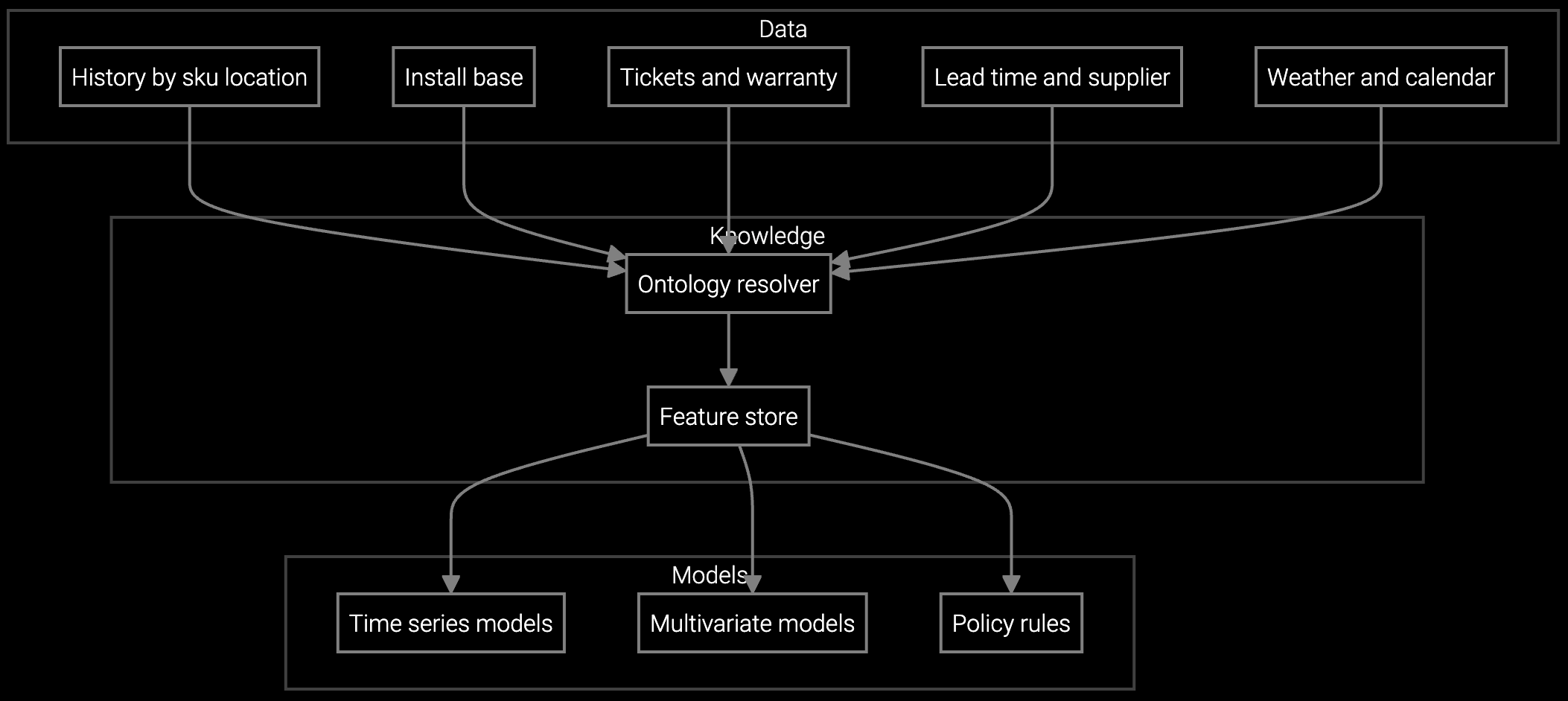
Predict router and switch parts consumption based on installed base age, firmware versions, and seasonal traffic patterns to optimize regional stocking.
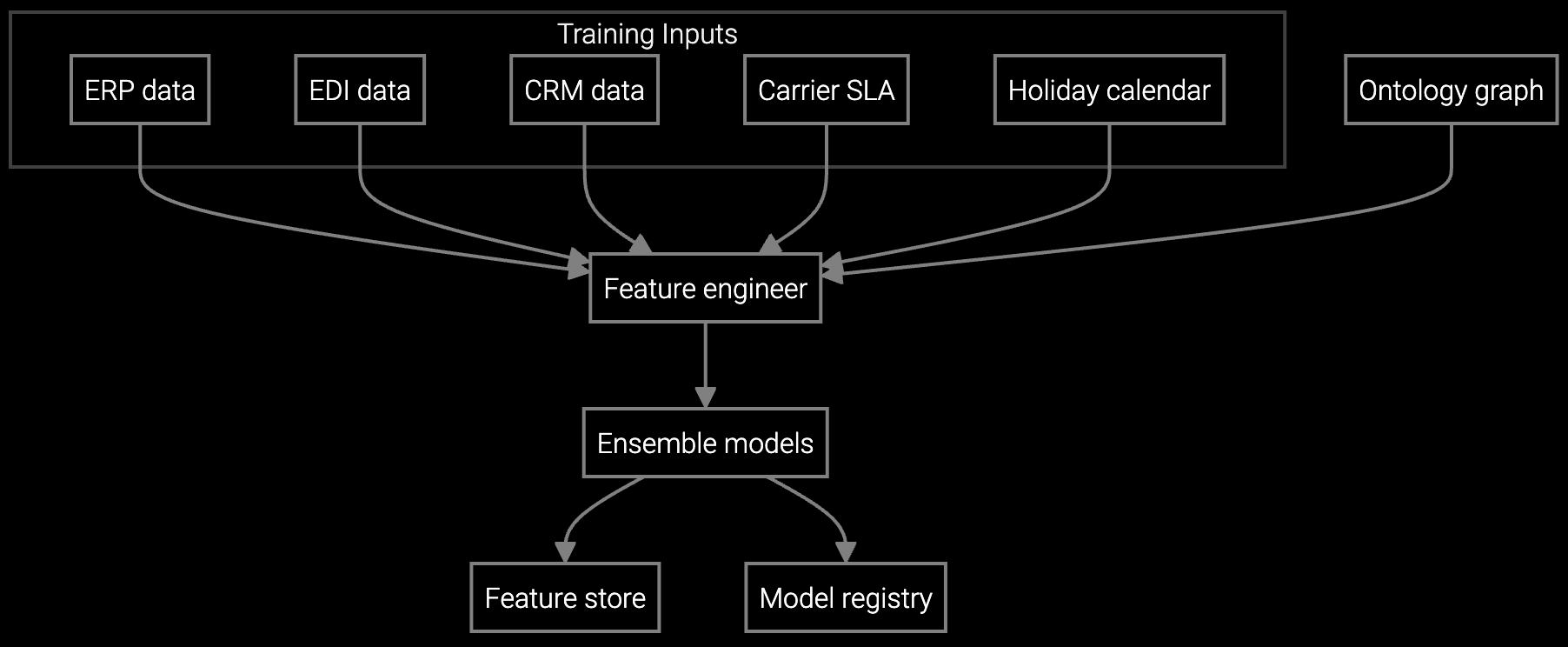
Forecast demand by NOC location and time window, balancing carrying costs against 4-hour SLA requirements for critical network infrastructure.
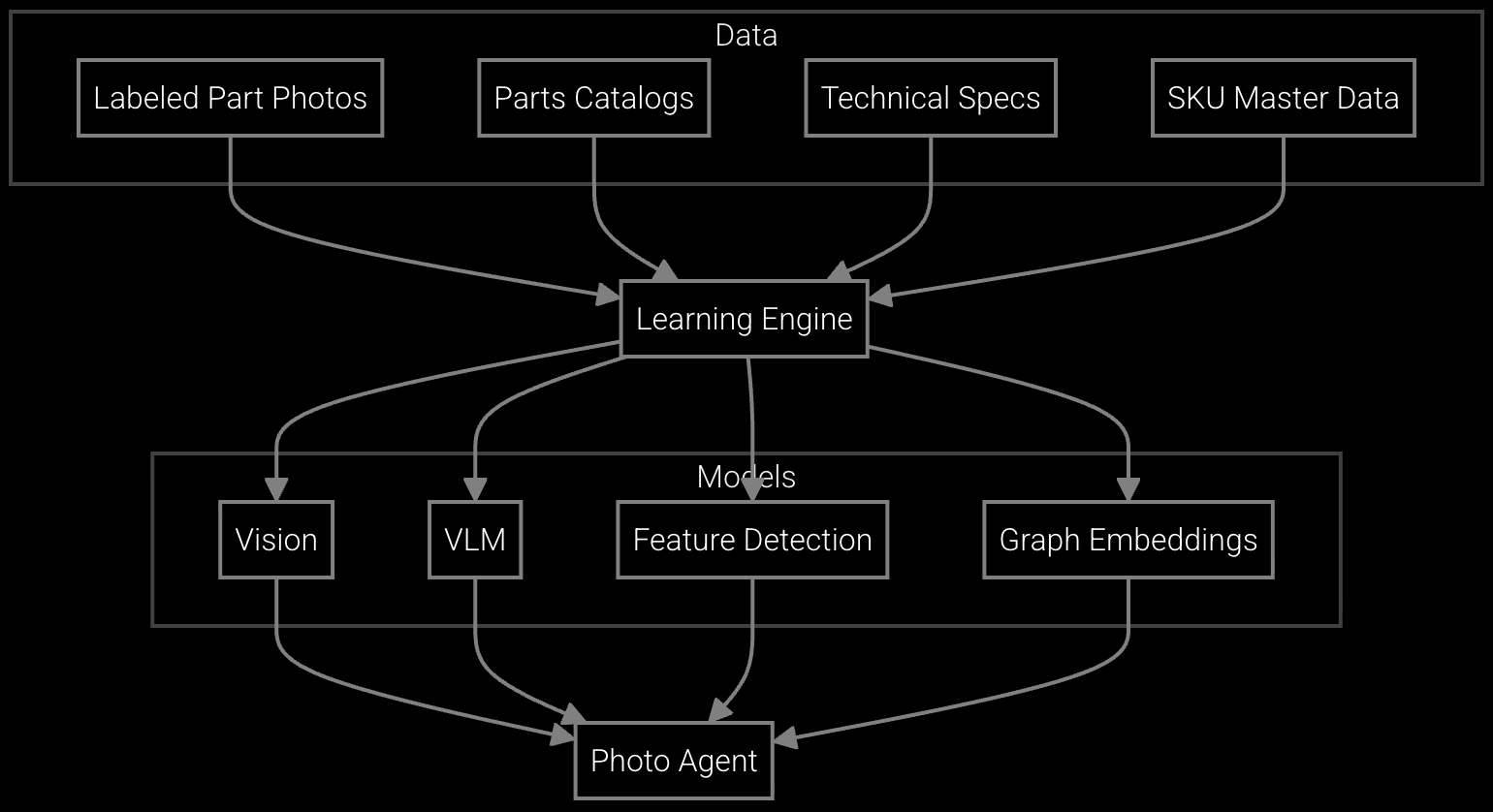
Enable field teams to photograph failed power supplies or transceivers and instantly get part numbers with availability, eliminating manual catalog searches.
Network infrastructure manufacturers face unique parts challenges: wide SKU variety across router, switch, and optical product lines; 24/7 uptime requirements driving aggressive SLAs; and rapid technology cycles creating EOL part obsolescence. Traditional build-or-buy decisions ignore the speed of network technology evolution and the cost of guessing wrong.
Hybrid platforms address this by combining pre-built forecasting that learns from SNMP telemetry with APIs that connect to existing SAP logistics and RMA systems. This eliminates the 18-month custom build timeline while avoiding the inflexibility of rigid vendor solutions that can't adapt to firmware-specific part dependencies or multi-vendor support models.
Hybrid platforms like Bruviti deploy core inventory capabilities in 8-12 weeks versus 18-24 months for custom builds. You start with production-ready demand forecasting and substitute matching, then extend with custom logic through APIs as needs evolve, avoiding the long development cycle and maintenance burden.
Yes. API-first platforms connect to any ERP system through standard REST interfaces. You maintain SAP as the system of record for transactions while the platform handles AI-driven forecasting, substitute matching, and availability optimization, syncing data bidirectionally without replacing existing infrastructure.
Open architectures let you adapt without rearchitecting. When shifting from hardware-centric to software-defined networking, you modify forecasting rules via API rather than rebuilding the platform. This eliminates the strategic lock-in risk of proprietary systems that force multi-year commitments to a single approach.
AI forecasting learns from your telemetry and service history to predict failure patterns by product line and region. It optimizes stocking levels to meet SLAs while minimizing excess inventory, typically reducing carrying costs 20-25% without increasing stockouts. The system continuously adapts as installed base composition and failure rates change.
Most network OEMs see measurable results within 90 days: improved fill rates, reduced emergency shipments, and lower carrying costs. Full ROI typically occurs within 12 months through reduced inventory waste, faster parts availability, and eliminated custom development costs. The platform pays for itself through operational gains, not just avoided build expenses.

SPM systems optimize supply response but miss demand signals outside their inputs. An AI operating layer makes the full picture visible and actionable.
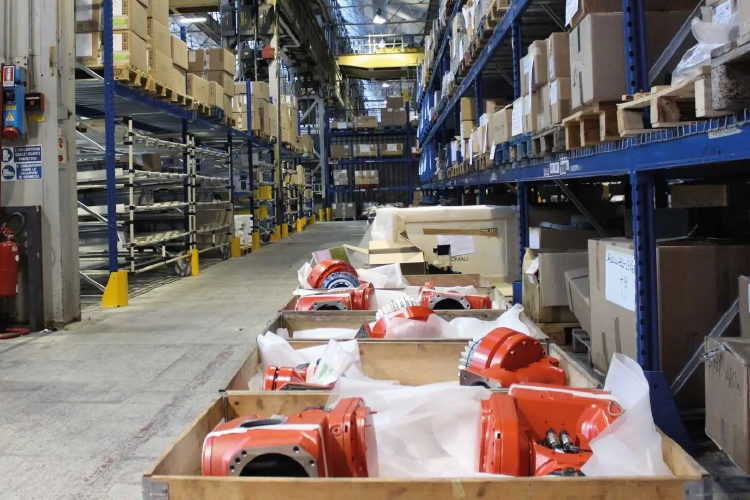
Advanced techniques for accurate parts forecasting.

AI-driven spare parts optimization for field service.
See how Bruviti's hybrid platform delivers speed without lock-in for network equipment manufacturers.
Talk to Strategy Team