
Case volumes keep climbing, but you can't add headcount. The answer: start small, prove value fast, then scale.
AI email automation auto-resolves 40% or more of routine support emails for network equipment teams, per Bruviti deployment data. The fastest path starts there: automate the highest-volume, lowest-complexity inquiries first, then expand to case routing. This sequences quick wins before harder workflows and proves value to the team early.
Your team debates whether to build custom models or buy a platform. Meanwhile, agents still manually search firmware release notes and RMA databases for every router troubleshooting call.
You run a small pilot on one case type. It shows promise, but scaling to all product lines and case categories stalls because the approach doesn't fit your real workflows.
Leaders expect AI to fully automate case resolution from day one. When that doesn't happen, the initiative loses momentum and agents go back to swivel-chair workflows across ten systems.
The fastest path isn't choosing between build or buy. It's starting with pre-built models that immediately reduce agent search time, then layering on customization as you see what actually drives resolution speed. Deploy email auto-classification in week one so simple firmware questions never reach the queue. Add copilot knowledge retrieval in week three so agents get instant answers from SNMP logs and NOC runbooks without leaving the ticket screen.
This approach lets you prove value in the first month with automated L1 triage, then expand to complex diagnostics once agents trust the system. You avoid pilot purgatory because you're solving real bottlenecks from day one, not building infrastructure for hypothetical future use cases. The platform adapts as your needs clarify, without requiring upfront architecture decisions or multi-quarter engineering sprints.
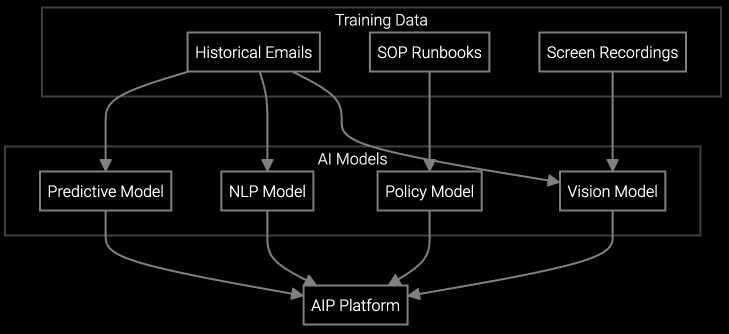
Automatically classify and route network equipment support emails, drafting responses using firmware release notes and historical RMA data to resolve routine configuration and update questions.
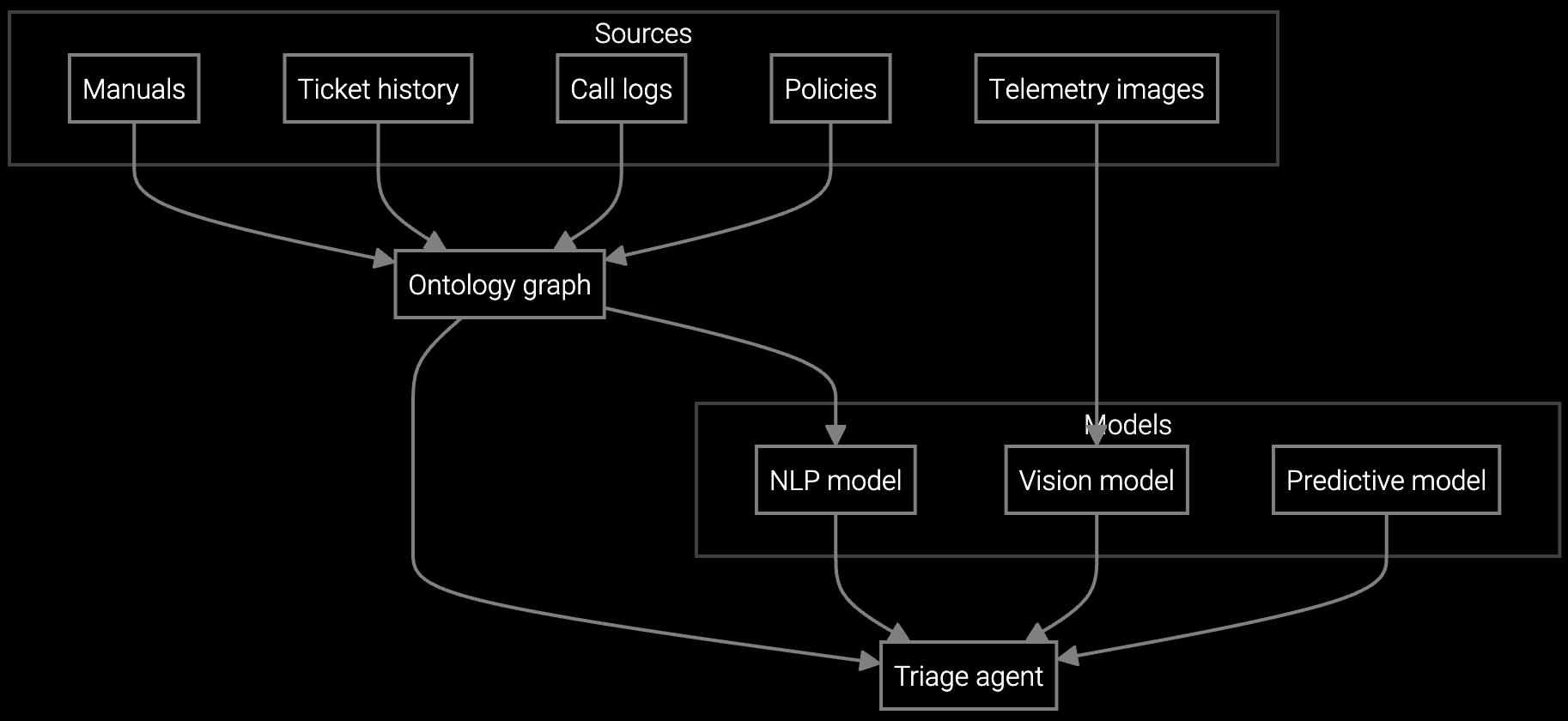
Analyze SNMP traps and syslog data to classify router and switch failures, routing cases to firmware team, hardware RMA, or configuration support with diagnostic context so agents start with answers.
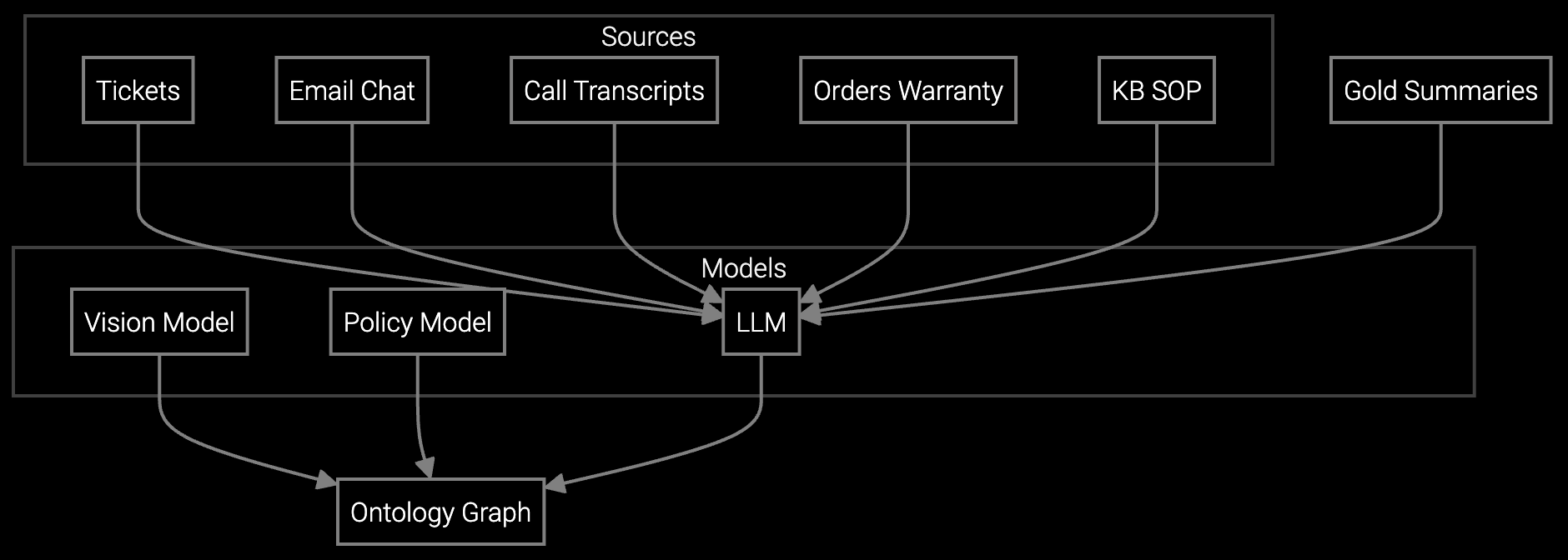
Generate instant summaries from multi-thread email chains and NOC ticket notes so agents understand network outage history and prior troubleshooting steps without reading 47 messages.
Network equipment support teams face unique pressure: 24/7 uptime SLAs mean every minute of downtime costs customers revenue, yet case volumes surge during firmware release cycles and CVE patching windows. Traditional AI pilots that take six months to deploy miss the crisis entirely.
The phased strategy works because network cases cluster into predictable categories: firmware update questions, configuration errors, SNMP trap interpretation, and RMA eligibility. Pre-built models handle these common patterns immediately, while your team customizes for proprietary diagnostic tools and internal NOC procedures over time. You get value during the next firmware release cycle, not after it's over.
Pre-built models for email triage and knowledge retrieval typically deploy in 2-3 weeks. Custom integrations with proprietary NOC tools and firmware databases add another 3-4 weeks. Most teams see measurable AHT reduction within 60 days of starting, compared to 12-18 months for custom-built solutions.
Start with universal patterns like email classification, case summarization, and SNMP log parsing that work across all network equipment. Then customize for your specific firmware versioning, RMA policies, and internal escalation paths using your historical case data. This avoids the trap of building everything from scratch before seeing any value.
Yes. Most teams start with their highest-volume product family or the one with the most structured documentation. Success there builds confidence and funding for broader rollout. The platform's pre-built models mean you're not starting from zero for each new product line.
Track AHT and FCR weekly for AI-assisted cases versus baseline. Monitor how many times agents click the knowledge retrieval suggestions versus searching manually. Measure time from case creation to first meaningful response. These leading indicators show impact within weeks, not quarters.
Generic chatbots handle simple FAQs but break down when customers describe complex network failures involving SNMP traps, configuration drift, or firmware compatibility. This approach combines pre-built models trained on technical support patterns with your specific RMA data, NOC runbooks, and product telemetry so agents get accurate answers for real troubleshooting scenarios, not just scripted responses.

Understanding and optimizing the issue resolution curve.

Part 1: The transformation of IT support with AI.
Part 2: Implementing AI in IT support.
Talk to our team about starting with automated triage and knowledge retrieval for your network support operations.
Schedule a Strategy Session