
Network downtime costs escalate every minute—your technician dispatch and first-time fix strategy can't wait 18 months for custom development.
A bought field service AI cuts repeat truck rolls 30% and adds 10 to 15 first-time-fix percentage points, per Bruviti deployment data, using parts models trained on existing service history. For field teams, buying means technicians get accurate parts picks now, instead of waiting on an in-house build to mature.
Custom AI development for technician dispatch and diagnostics requires ML expertise you don't have in-house. By the time your team trains models on router logs and builds mobile apps, competitors already improved their first-time fix rates.
Your FSM system, SNMP monitoring, and parts inventory all run on different platforms. Building AI that connects all three means writing custom integrations before you even start on the diagnostic models technicians need.
Your most experienced network technicians are retiring while you evaluate build vs. buy. Every month of delay means more tribal knowledge about rare switch failures and firmware quirks walks out the door uncaptured.
Most network equipment OEMs choose platforms that deliver immediate technician productivity gains while preserving long-term flexibility. The platform handles the heavy AI work—parsing SNMP traps, predicting part failures, and routing work orders—while your team customizes dispatch logic, integrates with legacy FSM systems, and builds technician-facing mobile features.
This hybrid approach eliminates the 18-month AI development cycle without creating vendor lock-in. Your technicians get diagnostic guidance and parts predictions within weeks, not years. Your operations team retains control over scheduling algorithms and escalation workflows. And when you need custom features for specific router models or NOC handoff procedures, you build only what's unique to your business—not the entire AI infrastructure.
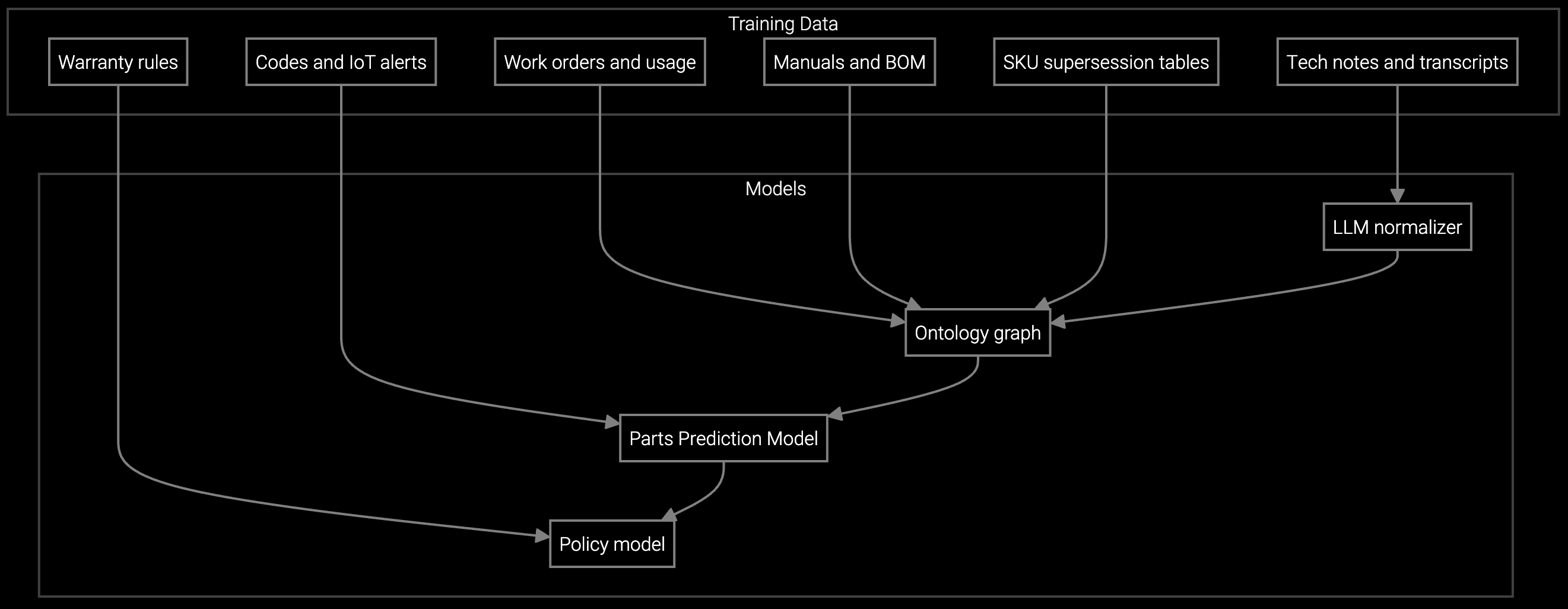
Predicts which router line cards and power supplies technicians need before dispatch based on error log patterns, reducing return trips for missing parts.
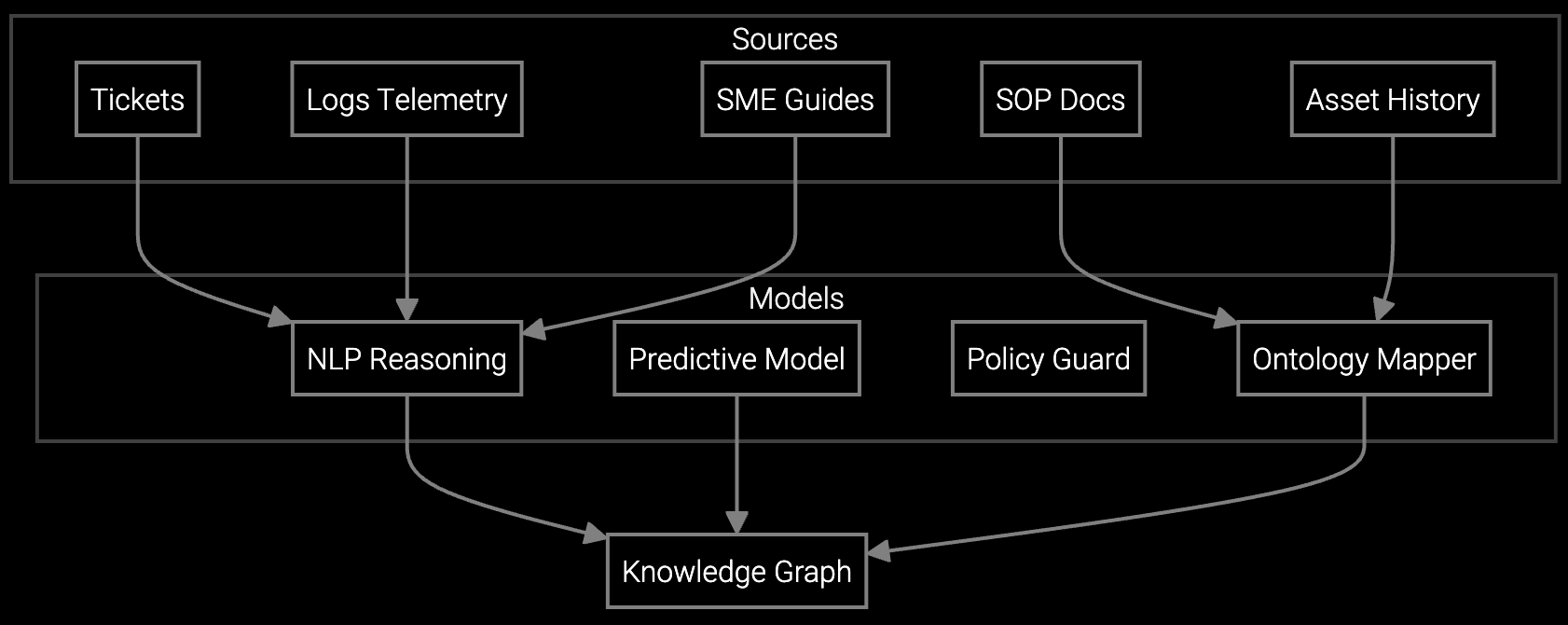
Correlates BGP flap symptoms with historical switch failures and senior technician tribal knowledge to identify root cause faster.
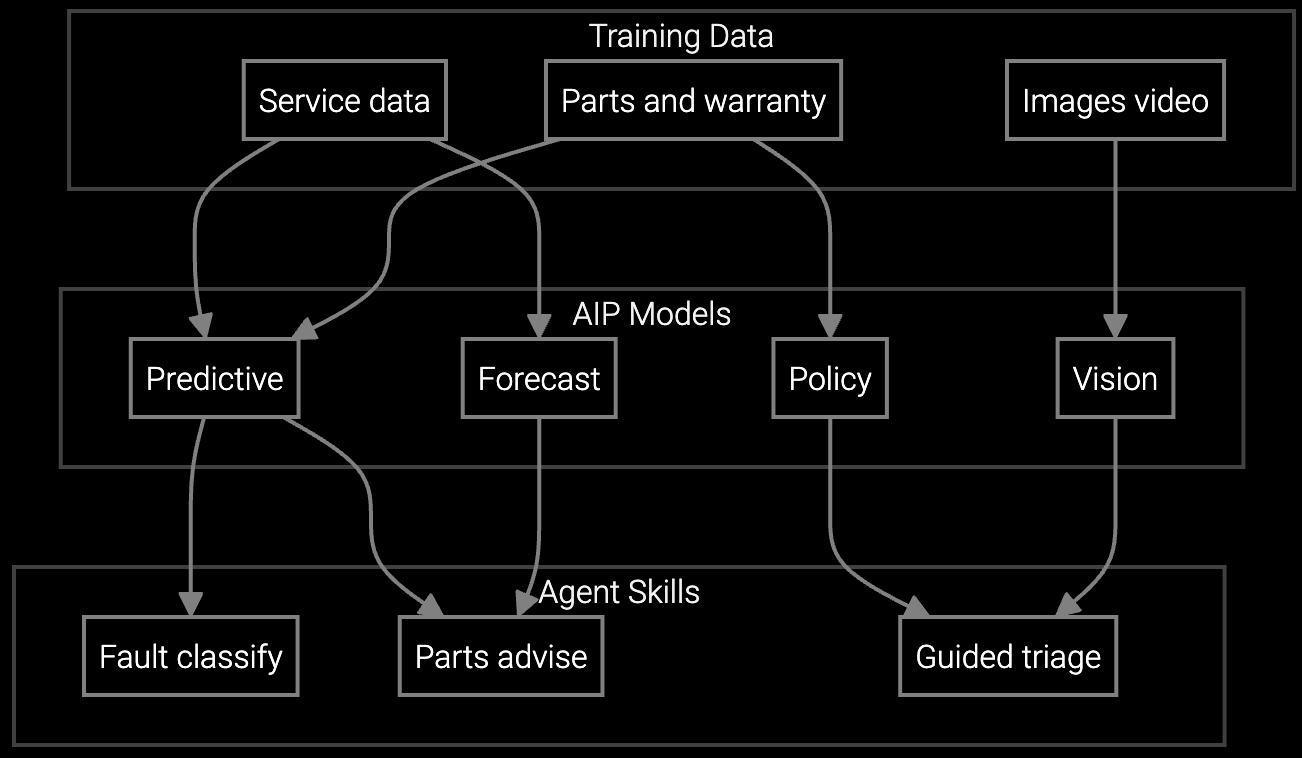
Mobile copilot provides real-time guidance on firmware rollback procedures and optical transport diagnostics while technician is on-site at customer NOC.
Start with high-volume router and switch service calls where parts prediction and diagnostic assistance deliver measurable first-time fix improvements within 90 days. Network equipment generates rich SNMP and syslog data that AI models can learn from immediately—no need to wait for custom data pipelines.
Expand to complex optical transport and 5G infrastructure once your technicians trust the system for routine issues. The platform learns your specific firmware quirk patterns and failure modes as it processes more service history, becoming increasingly accurate for edge cases that only senior technicians handle today.
Platform deployment typically takes 6-12 weeks from kickoff to first technician using AI-assisted diagnostics. Custom builds require 18-24 months to achieve similar functionality because you're building data pipelines, training models, and developing mobile apps from scratch. The platform approach gets technicians productive before your next wave of senior staff retirements.
Yes. The platform provides APIs for custom dispatch rules, escalation workflows, and technician routing algorithms. You write code only for logic unique to your business—not the underlying AI that parses logs and predicts failures. This preserves flexibility without requiring a full custom build.
Most platforms offer pre-built connectors for major FSM systems like ServiceMax, Oracle Field Service, and SAP. For proprietary or heavily customized systems, the API-first architecture lets you build a single integration layer rather than an entire AI platform. This hybrid approach balances speed with compatibility.
Platforms designed for field service include knowledge capture workflows where senior technicians review and annotate AI-suggested fixes. As they correct the system during real service calls, their expertise gets encoded into models that junior technicians can access. Building this from scratch takes years—buying accelerates capture before expertise walks out the door.
Choose platforms with open APIs, export capabilities, and standards-based integrations. Your service history, technician notes, and failure patterns should remain in formats you control. Avoid platforms that trap data in proprietary schemas or charge extraction fees. The right platform accelerates deployment without creating dependency.
How AI bridges the knowledge gap as experienced technicians retire.
Generative AI solutions for preserving institutional knowledge.

AI-powered parts prediction for higher FTFR.
Get a customized timeline comparing build vs. buy for your specific network equipment service operation.
Talk to an Expert