
Warranty reserves erode margins while NFF returns waste engineering time—deployment strategy determines ROI.
Appliance manufacturers deploying AI for warranty claims see a 90% reduction in processing time, with 75-85% of claims auto-coded at 95% consistency, per Bruviti deployment data. Start with claim coding where volume is high and rules are clear, then expand to adjudication, freeing analysts for the exception cases that actually need judgment.
Unpredictable claim patterns and poor fraud detection drive reserve accruals higher than necessary. Finance teams over-provision to cover uncertainty, directly impacting margins and investor confidence.
Appliances arrive at refurbishment centers with no detectable defect. Engineering time is wasted on inspection, reverse logistics costs pile up, and valid failures go undiagnosed in the field.
Manual lookup of warranty status across decades of product lines slows claim approvals. Customers experience friction, while operations teams burn hours reconciling coverage across disconnected systems.
Bruviti's warranty automation platform ingests IoT telemetry from connected appliances, service histories, and customer-reported symptoms to validate claims at submission. The system deploys in three phases: telemetry integration connects to existing IoT platforms to stream diagnostic data; claims workflow integration embeds validation logic into RMA processing systems; and analytics deployment surfaces warranty cost drivers to finance and engineering teams.
For appliance manufacturers, the platform processes refrigerator compressor data, HVAC fault codes, and washer error logs to distinguish user error from mechanical failure before authorizing returns. Integration with ERP and CRM systems ensures entitlement verification happens instantly at the point of claim submission, eliminating manual lookup delays and reducing fraudulent approvals.
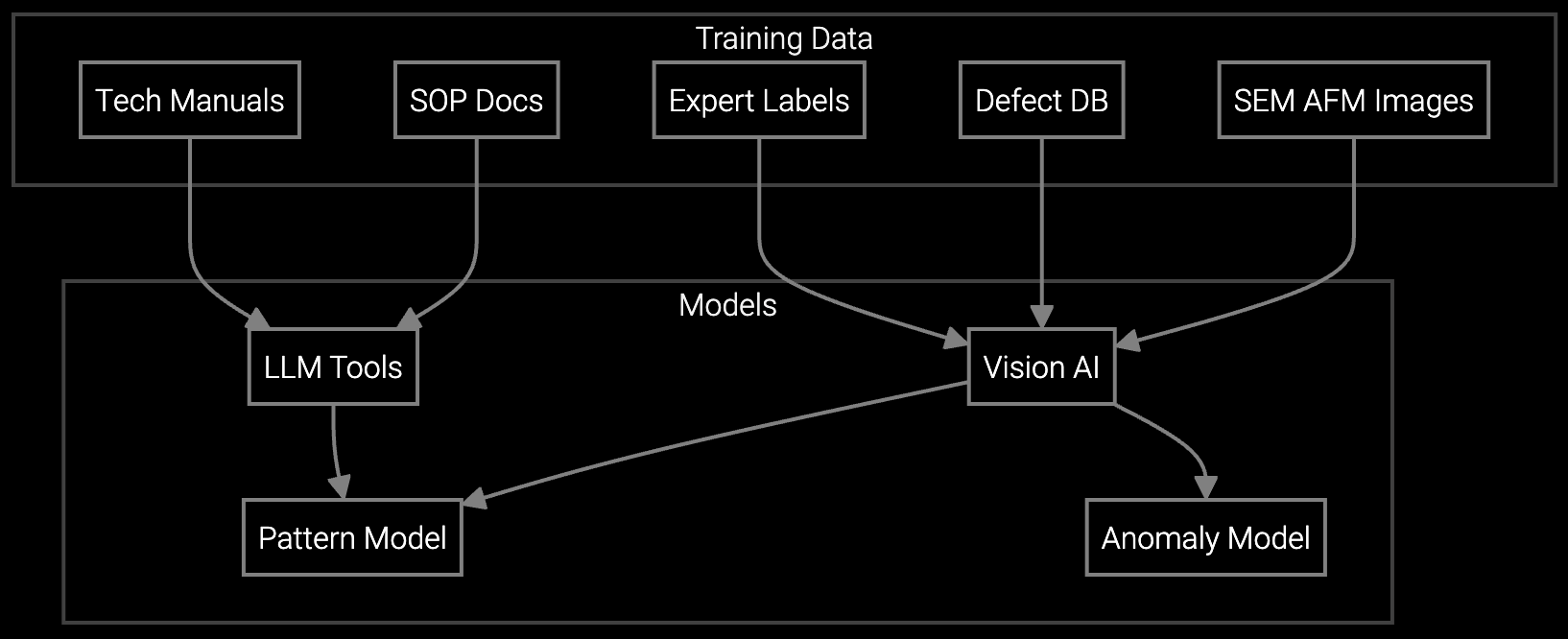
Automate microscopic defect analysis for HVAC heat exchangers and refrigeration components to validate warranty claims and classify failure modes at scale.
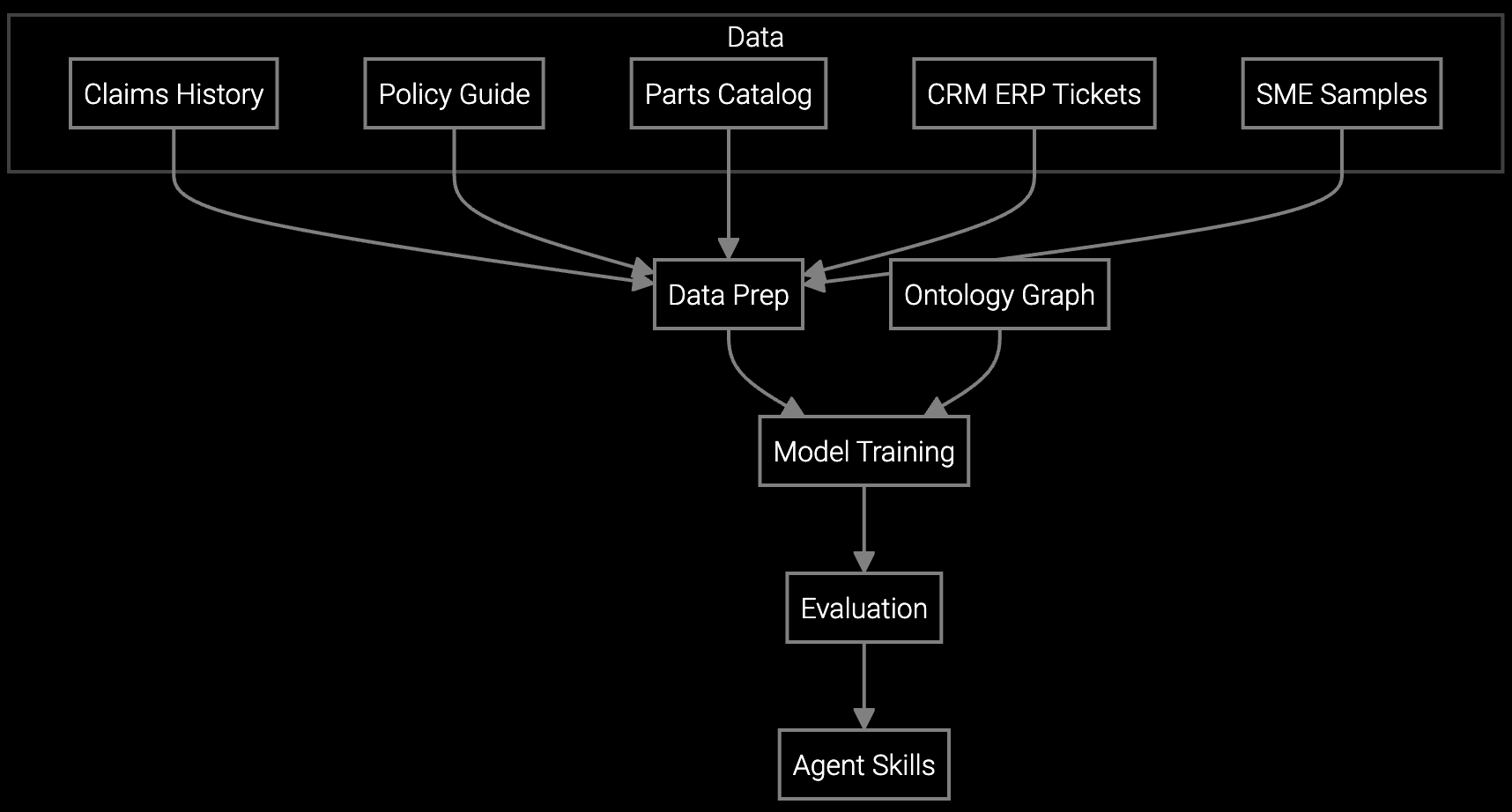
Classify and code warranty claims across appliance product lines, reducing manual processing time while improving accuracy for finance reporting.
Appliance OEMs face unique challenges: high-volume, low-margin economics demand cost control; connected appliances generate telemetry streams that existing warranty systems cannot process; and seasonal demand spikes for HVAC and refrigeration strain manual claims operations. Implementation begins with telemetry ingestion from IoT platforms, capturing error codes, sensor data, and usage patterns that distinguish mechanical failure from user error.
Integration with warranty management systems enables real-time entitlement verification and fraud detection at the point of claim submission. For decades-old product lines without connectivity, the platform processes customer symptom descriptions and service histories to predict valid failures versus misdiagnosed issues, reducing unnecessary returns before they enter reverse logistics.
The platform requires IoT telemetry from connected appliances (error codes, sensor readings, usage logs), warranty registration data, service histories, and customer-reported symptoms. For non-connected appliances, symptom descriptions and historical claim patterns provide sufficient signal for NFF prediction.
Telemetry integration with existing IoT platforms takes 4-6 weeks. Warranty system integration (ERP, CRM, RMA processing) requires 8-12 weeks depending on data complexity. Pilot deployment with a single product line can demonstrate ROI within 90 days before full-scale rollout.
Yes. Bruviti's platform connects via APIs or batch file transfer to ERP systems including SAP, Oracle, and custom warranty databases. For systems without API access, the platform provides a validation layer that processes claims before they enter the legacy system, enabling automation without full replacement.
The platform analyzes telemetry patterns, symptom descriptions, and historical failure modes to predict whether a reported issue represents a mechanical defect or user error before authorizing a return. For refrigerators, it distinguishes compressor failure from improper installation; for washers, it separates drain pump defects from overloading.
Appliance manufacturers typically see 30-40% improvement in warranty reserve accuracy within six months through better claim forecasting. NFF reduction of 50-60% directly lowers refurbishment costs, while faster entitlement verification cuts processing labor by 40-50%. Combined, these improvements reduce warranty cost as a percentage of revenue by 100-150 basis points.
Software stocks lost nearly $1 trillion in value despite strong quarters. AI represents a paradigm shift, not an incremental software improvement.
Function-scoped AI improves local efficiency but workflow-native AI changes cost-to-serve. The P&L impact lives in the workflow itself.
Five key shifts from deploying nearly 100 enterprise AI workflow solutions and the GTM changes required to win in 2026.
See how Bruviti reduces warranty costs and protects margins for appliance manufacturers.
Schedule Implementation Review