
Rising truck roll costs and thin margins demand field service transformation, but wholesale technology changes risk service disruption.
Appliance OEMs deploying AI to field service have eliminated roughly 30,000 truck rolls at an average cost of $250 each, a direct saving of about $7.5 million, per Bruviti deployment data. The rollout runs alongside current dispatch with no operational disruption, because the AI guides parts and decisions before technicians leave.
Full-scale AI deployments risk service continuity when technicians resist new tools or FSM integrations fail. Service leaders need proof before committing the organization to wholesale change.
AI investments require board approval, but field service benefits remain theoretical until measured in production. Service leaders need 90-day proof points to justify budget expansion.
Legacy FSM systems lack modern APIs, making AI integration expensive and brittle. Custom connectors delay deployment and create technical debt that IT must maintain.
Bruviti's platform deploys through controlled pilots that prove FTF improvement before organizational commitment. Start with parts prediction on high-cost appliance categories where truck roll expense is highest—commercial refrigeration, HVAC systems, or water heaters. The platform integrates with existing FSM systems through standard REST APIs, avoiding custom integration work that delays deployment.
Measure first-time fix rate improvement within 90 days by comparing pilot technicians against baseline performance. Once FTF gains and truck roll cost reduction are validated, expand to additional appliance lines using the same integration pattern. This incremental approach gives service leaders board-ready ROI metrics before requesting budget for full-scale deployment, while minimizing disruption to field operations.
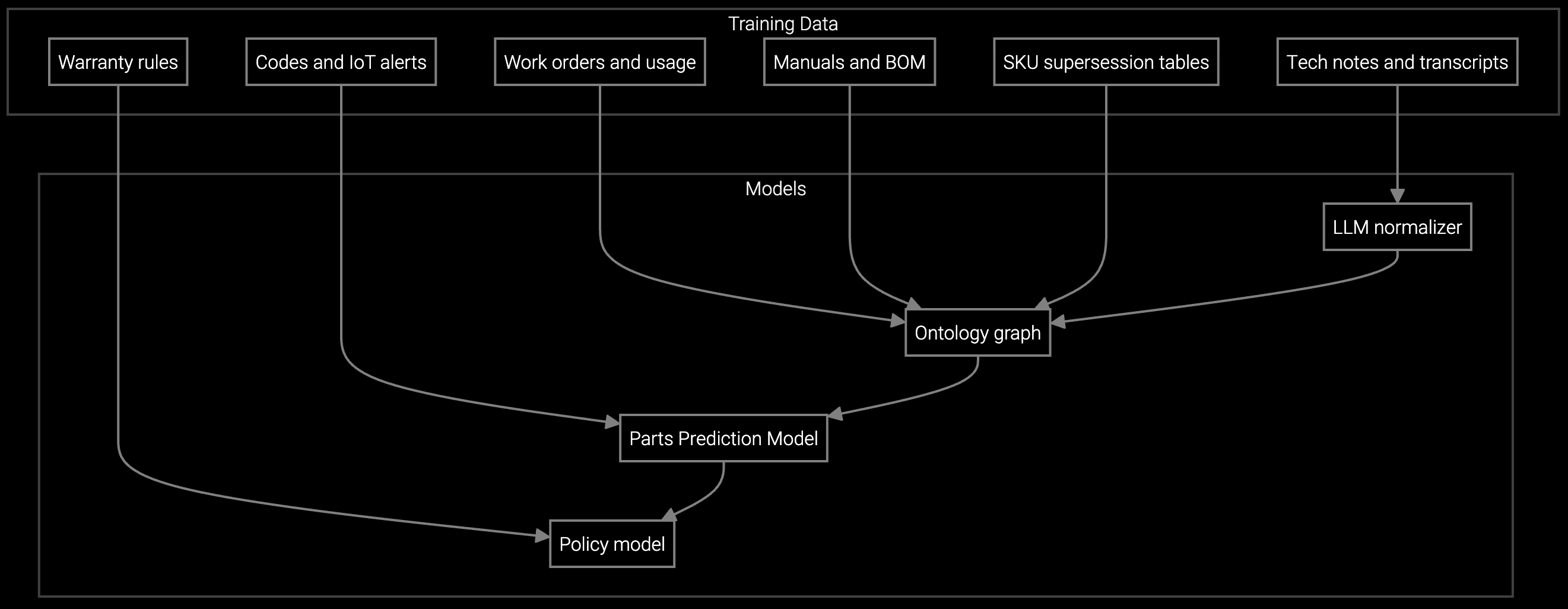
Predicts which refrigerator compressors or HVAC components technicians need before dispatch, eliminating return visits for missing parts and improving FTF rates on high-cost appliance repairs.
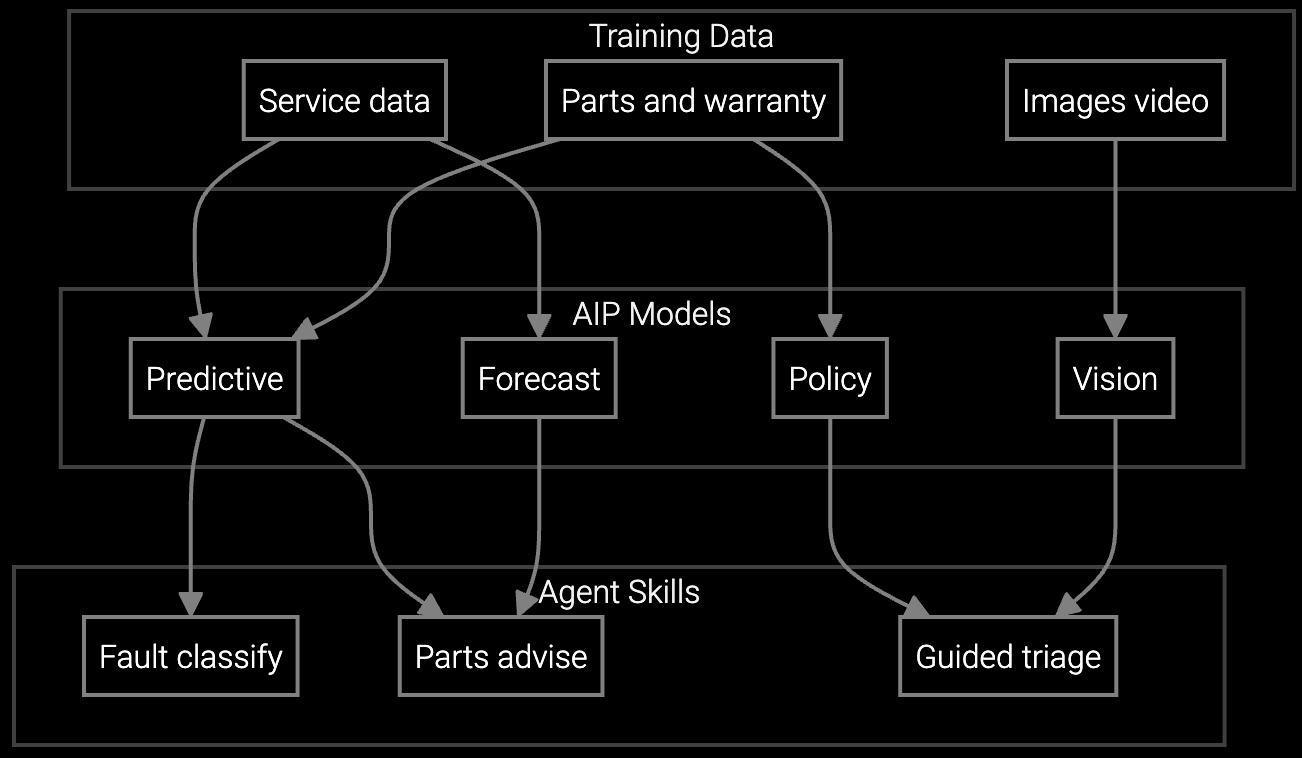
Mobile copilot guides technicians through complex appliance diagnostics on-site, reducing reliance on senior expertise and accelerating resolution of unfamiliar failure modes in commercial kitchen equipment.
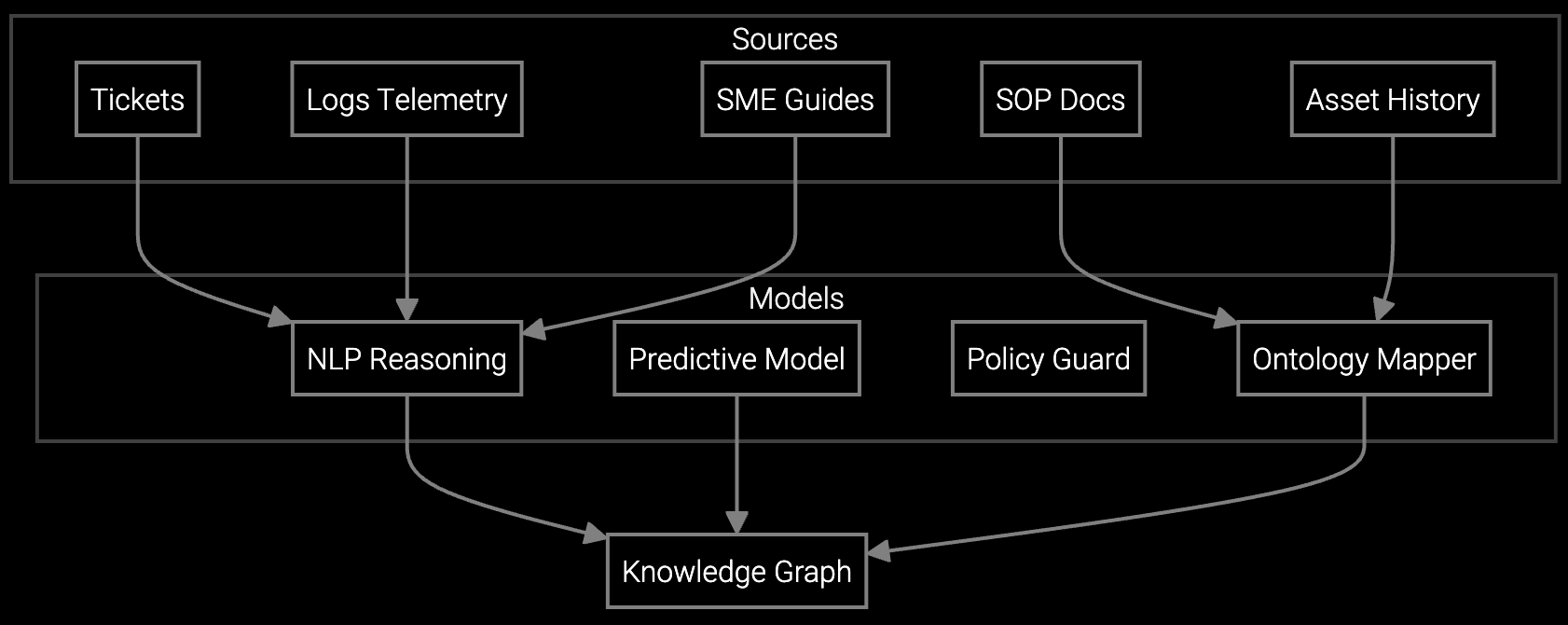
Correlates appliance symptoms with historical failure patterns to identify root cause faster, reducing diagnostic time and preventing misdiagnosis that drives repeat truck rolls.
Appliance OEMs face thin margins where even small service cost reductions compound across high call volumes. Deploy AI first on appliance categories with the highest truck roll costs—typically commercial refrigeration units, HVAC systems over 5 tons, or connected water heaters with complex diagnostics. These categories generate the clearest FTF improvement metrics within 90 days.
Target technician populations serving dense geographic clusters during seasonal peaks—HVAC technicians during summer cooling season or refrigeration specialists during holiday retail surges. This approach captures maximum deployment learning while warranty exposure is highest and service cost visibility is sharpest for CFO review.
Bruviti integrates with ServiceMax, SAP Field Service Management, Salesforce Field Service, and Oracle Field Service through standard REST APIs. For legacy systems without modern APIs, the platform offers pre-built connectors for Astea Alliance, ClickSoftware, and ServicePower. Integration typically completes within 6 weeks using existing FSM credentials, avoiding custom development timelines that delay deployment.
Service leaders typically measure first-time fix rate improvement within 90 days by comparing pilot technicians against baseline performance. Truck roll cost reduction becomes visible within the first billing cycle as repeat visits decline. Warranty reserve impact appears in quarterly financial reviews as FTF gains reduce claim volumes. Most CFOs require 90-day proof points before approving budget for full-scale deployment across all appliance lines.
Commercial refrigeration, HVAC systems over 5 tons, and connected water heaters deliver the fastest ROI because truck roll costs and warranty exposure are highest. These categories generate clearest FTF metrics within pilot timelines and justify budget expansion to leadership. Start pilots during seasonal peaks when service costs are most visible and warranty claims spike.
Bruviti's platform deploys as decision support rather than workflow replacement, positioning AI as copilot rather than supervisor. Technicians access predictions through existing FSM mobile interfaces, avoiding new app adoption that creates resistance. Pilot programs include technician feedback loops where field teams suggest prediction improvements, building ownership instead of mandating compliance. Change management focuses on FTF improvement that reduces repeat visits technicians want to avoid.
The platform processes service history and parts data without accessing personally identifiable customer information. FSM integrations use role-based API credentials that limit data access to work order details, appliance serial numbers, and parts inventory—not customer contact information or payment data. Data flows remain within existing security boundaries approved by IT, and the platform supports on-premises deployment for OEMs with strict data residency requirements.

How AI bridges the knowledge gap as experienced technicians retire.

Generative AI solutions for preserving institutional knowledge.

AI-powered parts prediction for higher FTFR.
Get board-ready FTF improvement metrics from an appliance pilot before committing to full-scale deployment.
Schedule Pilot Discussion