
Hyperscale customers demand 99.99% uptime—every truck roll that doesn't fix the issue on the first visit puts SLAs and margins at risk.
Bruviti deployment data shows guided AI auto-triages 60% of faults and delivers 20 to 30% faster resolution for data center equipment service. Executives implement it as a connected layer across diagnostics, parts, and dispatch, so technicians arrive prepared and downtime on critical hardware shrinks.
BMC telemetry, IPMI logs, and FSM work orders live in separate systems. Integration delays deployment by months while customers face SLA penalties from preventable failures.
Field teams resist tools that add administrative burden without immediate value. Failed adoption means the implementation investment delivers no margin improvement.
Without baseline FTF rates and truck roll costs by equipment type, proving margin impact is impossible. Leadership hesitates to expand beyond pilot.
Bruviti's implementation starts with one equipment line and one failure mode—typically the highest-margin hardware with the most expensive truck rolls. The platform ingests BMC telemetry via IPMI protocols already running in data centers, requiring no customer-side infrastructure changes. Historical service data trains the parts prediction model during a 90-day pilot phase.
Technicians receive mobile predictions directly in their existing FSM app via API integration. The system shows which parts to pre-stage based on symptom patterns, reducing repeat visits. After proving margin impact on the pilot equipment line, deployment expands across the full server, storage, and cooling portfolio with pre-trained models.
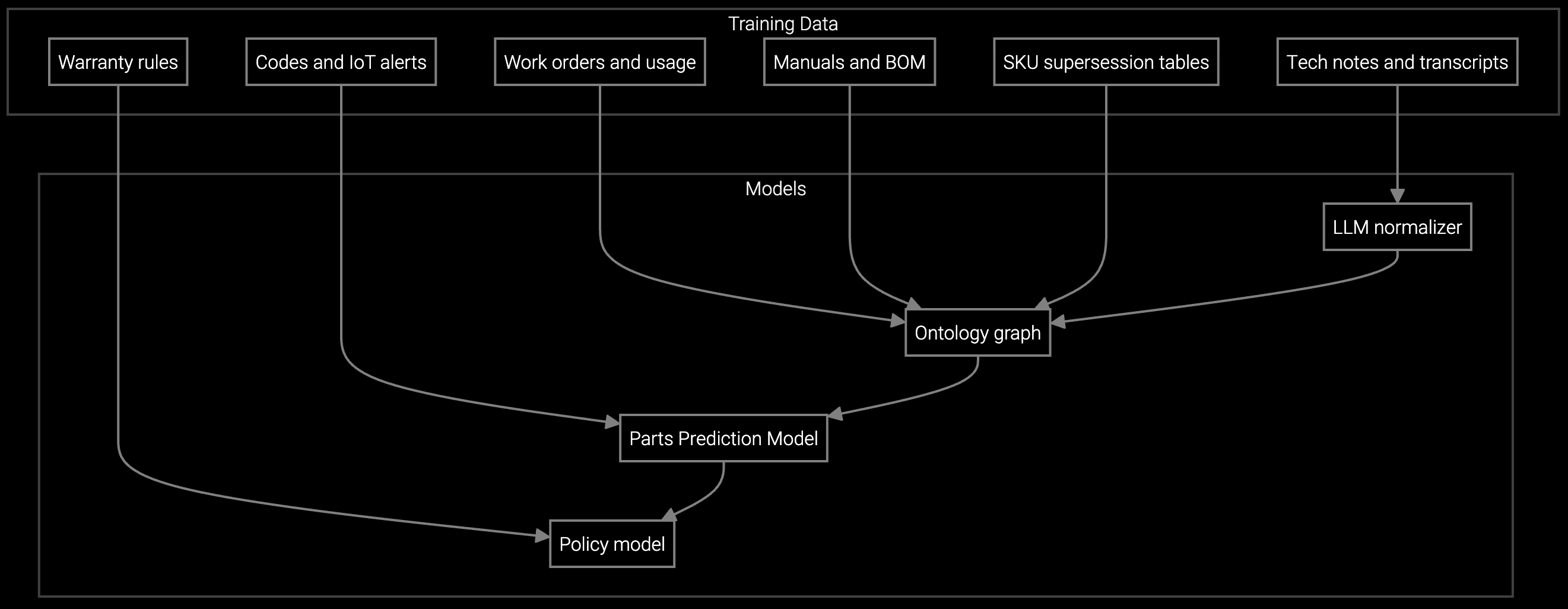
Predicts which server components, storage drives, or cooling parts technicians will need before dispatch to hyperscale data centers, improving first-time fix rates for four-nines availability targets.
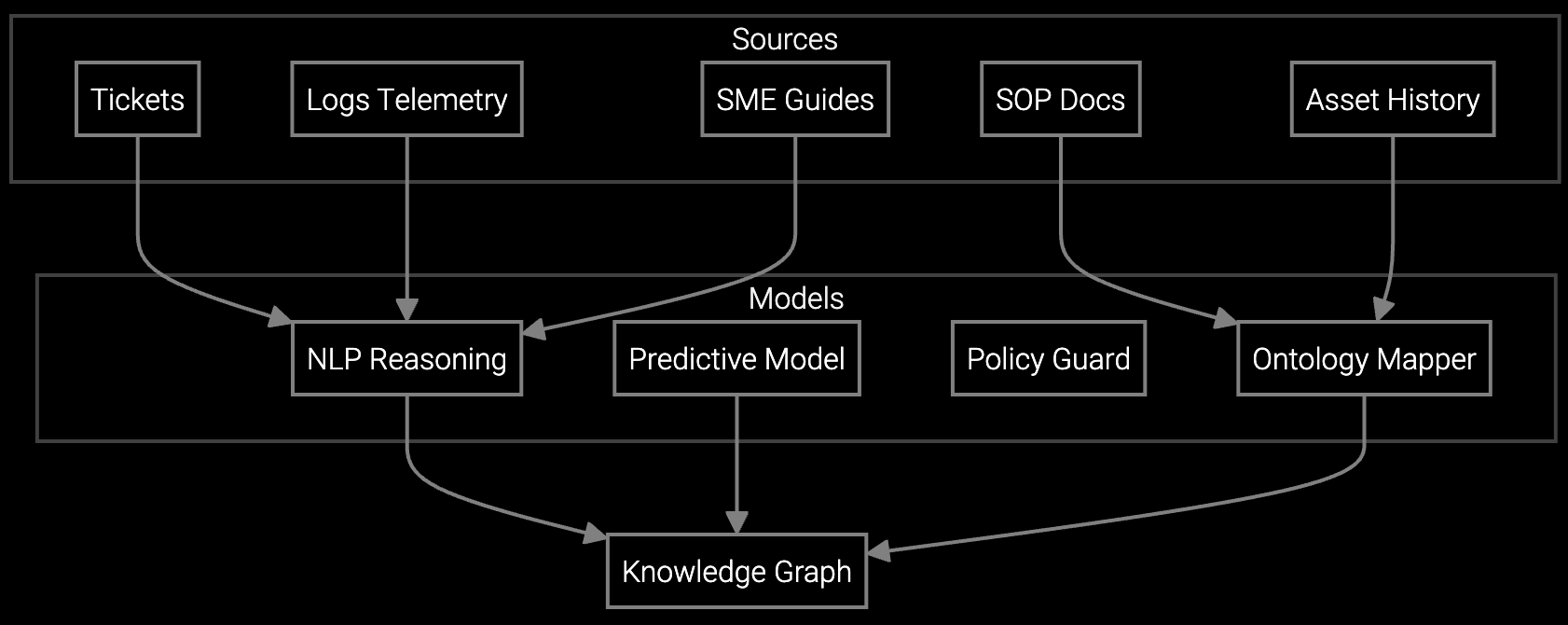
Correlates thermal anomalies, power fluctuations, and hardware telemetry with historical failure patterns in rack infrastructure to identify root cause faster at scale.
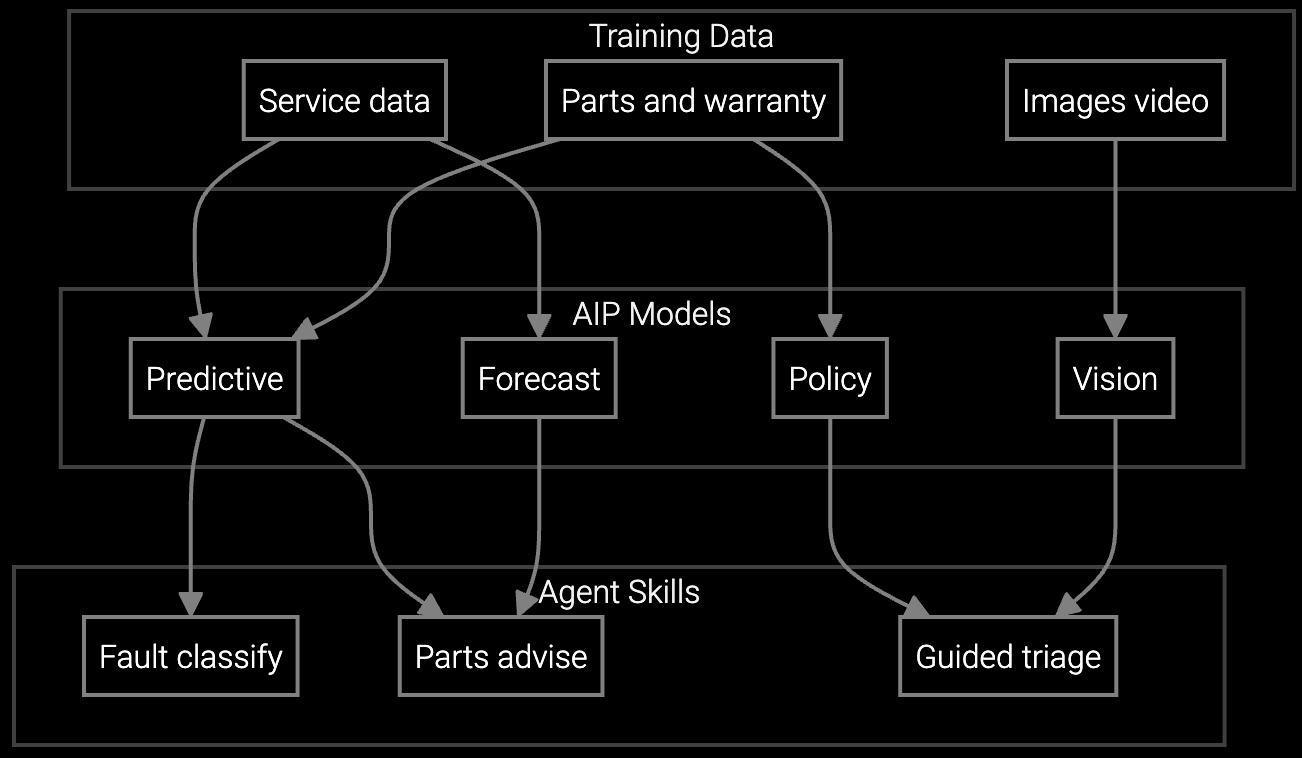
Mobile copilot provides real-time guidance on BMC diagnostics, firmware updates, and hot-aisle thermal management procedures specific to the customer's RAID and storage configurations.
Hyperscale customers operate thousands to millions of servers across geographically distributed facilities. A single missed diagnosis that requires a repeat truck roll multiplies across the entire installed base, eroding service margins. Power and cooling failures cascade into hot spots that trigger SLA penalties far exceeding the hardware replacement cost.
The platform ingests BMC and IPMI telemetry at the scale these customers demand—parsing thermal sensor data, drive SMART metrics, and power supply diagnostics across heterogeneous hardware generations. Implementation prioritizes equipment lines with the highest truck roll costs and SLA exposure, proving margin impact before expanding to the full portfolio.
The platform requires historical work orders with closed-loop outcomes (parts used, FTF results), BMC/IPMI telemetry logs, and parts consumption records. A minimum of 6-12 months of data enables accurate failure pattern recognition. The system ingests data via APIs, eliminating the need to migrate or restructure existing databases.
A 90-day pilot on one equipment line (e.g., storage systems) proves ROI with minimal integration effort. Expansion to the full server, cooling, and power portfolio typically occurs over 6-9 months as models train on additional failure modes. Deployment speed depends on data availability and FSM system API access.
Track first-time fix rate improvement, truck roll cost reduction, and SLA penalty avoidance for the pilot equipment line. Baseline these metrics before deployment to isolate AI impact. Calculate margin improvement per service event—typically $500-$2,000 per avoided repeat visit for hyperscale data center customers.
Bruviti provides REST APIs that push parts predictions and diagnostic guidance directly into FSM tools like ServiceMax, Salesforce Field Service, or custom systems. Technicians see predictions within their existing mobile workflow, requiring no separate app or retraining. The platform operates as an intelligence layer, not a workflow replacement.
The platform presents predictions as decision support, not mandates—technicians retain full control over parts selection. Adoption accelerates when field teams see FTF improvement on their own jobs. Bruviti's implementation includes field feedback loops that improve model accuracy based on real-world outcomes, building trust through proven results.

How AI bridges the knowledge gap as experienced technicians retire.

Generative AI solutions for preserving institutional knowledge.

AI-powered parts prediction for higher FTFR.
See how Bruviti's implementation approach proves ROI in 90 days without disrupting existing field workflows.
Schedule Implementation Review