Your competitors are cutting remote resolution costs by 40% while you debate internal builds—the strategic window is closing fast.
A specialized bought model hits over 90% accuracy trained on ten years of service decisions, per Bruviti deployment data. For appliance manufacturers, buying skips the decade of labeled data an in-house build needs, so the strategic question is time-to-value, not whether your team can eventually train a comparable model.
Custom AI development for log analysis and guided troubleshooting requires specialized machine learning talent, domain expertise transfer, and iterative model training. By the time internal builds reach production, market leaders have captured margin advantage.
Traditional support platforms trap your telemetry data and troubleshooting logic in proprietary formats. When your appliance portfolio evolves or you need custom integration with connected device platforms, migration costs eliminate any initial savings.
Every quarter you delay AI-assisted remote diagnostics, competitors improve their remote resolution rates and reduce service costs. The margin gap widens while strategic debates continue.
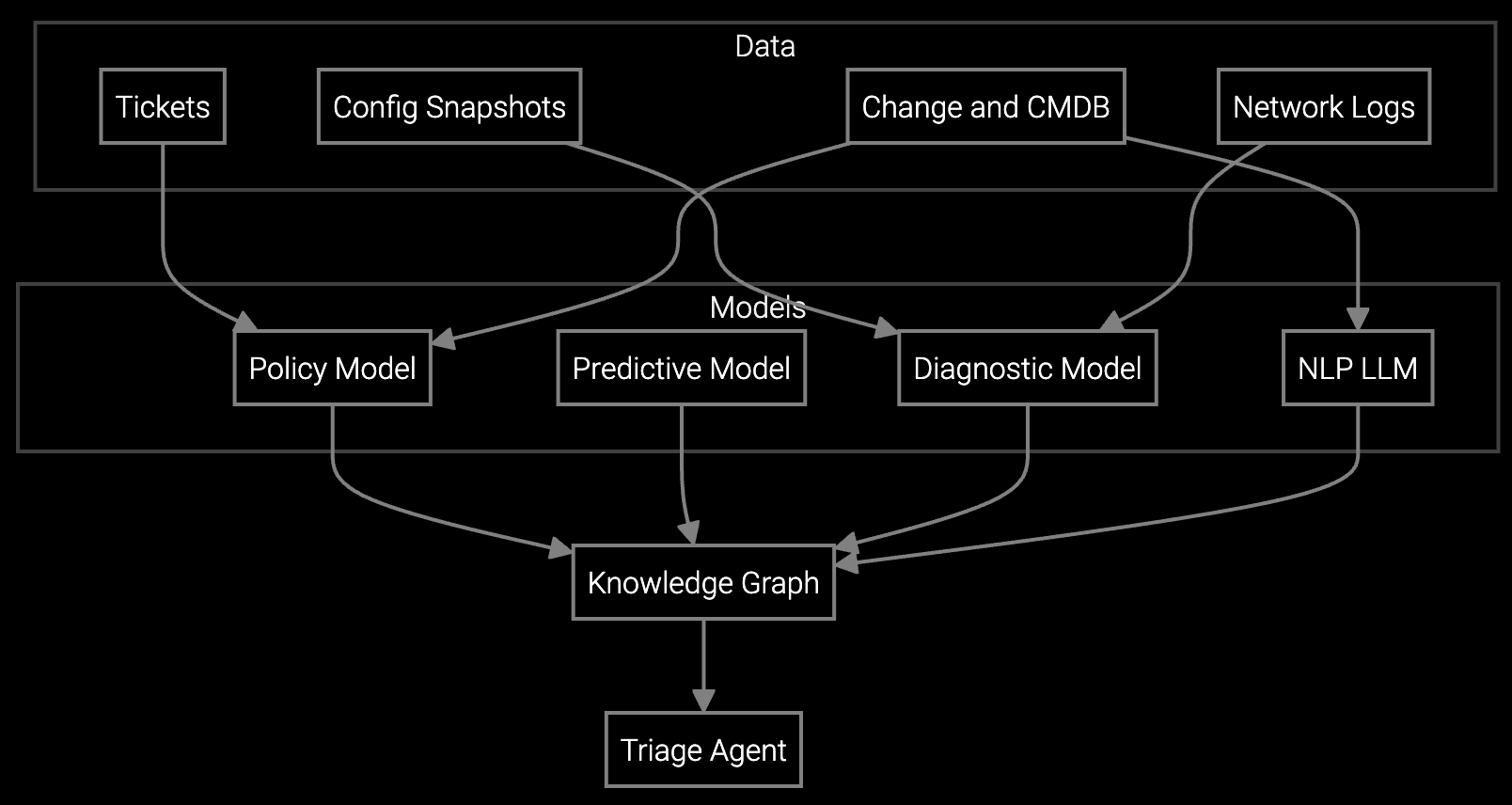
Bruviti's API-first architecture eliminates the false choice between build and buy. Deploy pre-trained models for log analysis and symptom-based troubleshooting in weeks, not years, while maintaining full control over integration with your existing remote access tools and IoT platforms. The platform ingests telemetry from connected appliances, parses error codes specific to your product lines, and guides support engineers through diagnosis—all via APIs your team controls.
This approach protects strategic flexibility. When you launch new connected appliance categories or acquire product lines, extend the AI with custom models without vendor renegotiation. When your service strategy shifts from reactive support to predictive maintenance, the same API layer adapts. You gain enterprise AI capability at startup speed, with none of the switching costs that make traditional platforms strategic liabilities.
Consumer appliance margins leave no room for extended AI experimentation. With warranty costs averaging 3% of revenue and rising, OEMs who deploy remote diagnostics AI in 2026 will operate at structural cost advantage over those still building in 2027. Connected appliance adoption is accelerating—smart refrigerators, HVAC systems with remote monitoring, and IoT-enabled water heaters generate diagnostic telemetry that AI can leverage immediately.
The appliance competitive landscape rewards fast followers who learn from pioneer mistakes. Early adopters proved the ROI case for AI-assisted remote troubleshooting. Now the question is execution speed, not proof of concept. Strategic advantage goes to OEMs who deploy quickly with flexibility to iterate, not those who commit to multi-year platform builds or rigid vendor contracts that can't adapt to connected appliance evolution.
Appliance OEMs typically see measurable remote resolution rate improvements within 90 days of deployment. Full ROI—factoring in reduced escalation costs and improved support engineer productivity—materializes within 6-9 months as AI models learn from your specific product error patterns and seasonal demand cycles.
API-first architecture adapts to portfolio changes without migration costs. When you add new appliance categories or integrate acquired brands, extend the AI by training custom models on new telemetry patterns while existing capabilities continue unchanged. Your engineering team controls integration pace and depth.
Calculate true cost of build including ML talent acquisition, training data curation, model iteration cycles, and opportunity cost of delayed deployment. Compare against vendor lock-in risk from traditional platforms—migration costs, contract inflexibility, and data portability limitations. Hybrid API-first approaches eliminate the trade-off by providing pre-built capability with full integration control.
Modern AI excels at pattern matching across heterogeneous product lines. By ingesting historical service records, error code libraries, and telemetry from connected devices, AI identifies diagnostic patterns even for legacy models with limited digital instrumentation. The platform learns from your accumulated service knowledge rather than requiring complete technical specifications upfront.
Support engineers retain decision authority—AI provides diagnostic guidance and confidence scores, not autonomous actions. The platform flags low-confidence recommendations for human review and captures correction feedback to improve model accuracy. This human-in-the-loop design protects customer experience while accelerating AI learning from your team's expertise.
Software stocks lost nearly $1 trillion in value despite strong quarters. AI represents a paradigm shift, not an incremental software improvement.
Function-scoped AI improves local efficiency but workflow-native AI changes cost-to-serve. The P&L impact lives in the workflow itself.
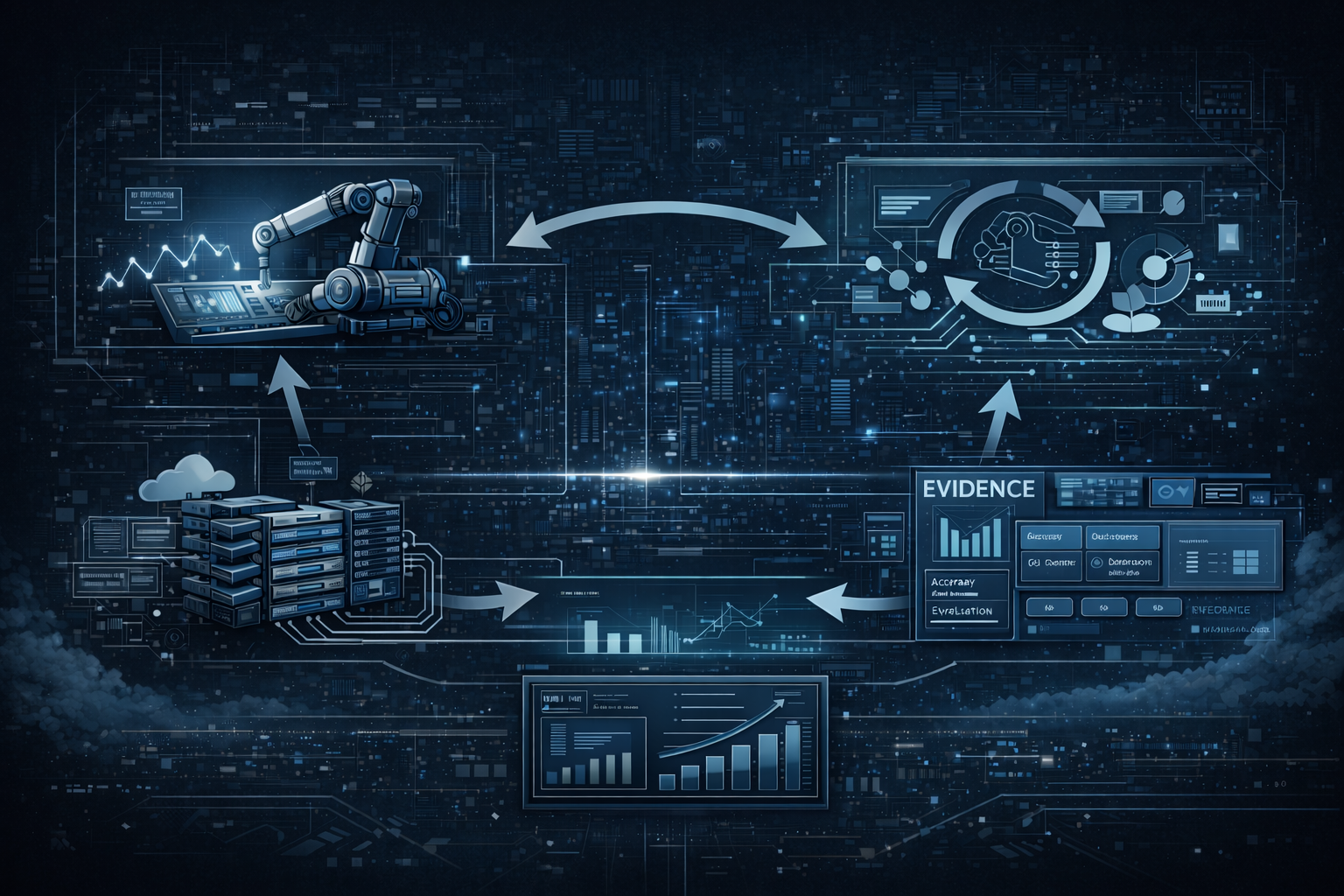
Five key shifts from deploying nearly 100 enterprise AI workflow solutions and the GTM changes required to win in 2026.
See how Bruviti delivers enterprise AI capability without build timelines or vendor lock-in.
Schedule Strategic Review