
High call volumes and seasonal spikes make AI essential, but choosing the wrong approach wastes time and budget.
Bought appliance-service AI from Bruviti deflects 35% of call volume and lifts first-call resolution 16%, per Bruviti deployment data, results that depend on pre-trained fault and triage models. Operators choosing build vs buy should weigh time-to-value: buying delivers these deflection numbers fast, while building delays them behind data collection and model training.
Building in-house AI requires hiring ML engineers, data scientists, and platform developers. Most appliance manufacturers lack this expertise and spend months recruiting before any development begins.
Homegrown AI systems require continuous model retraining, data pipeline maintenance, and infrastructure updates. This ongoing work diverts resources from customer service improvements.
While building takes over a year, contact centers continue handling high call volumes manually. Every month without AI means higher handle times and missed deflection opportunities during peak seasons.
The right strategy depends on your contact center's current capabilities and timeline pressure. Most appliance manufacturers benefit from buying a platform that offers both speed and flexibility. Modern AI platforms like Bruviti come pre-trained on appliance service data—understanding symptoms, error codes, and common failure modes across refrigerators, HVAC systems, and kitchen equipment. This means agents get accurate answers immediately rather than waiting for custom model development.
The key advantage is integration flexibility. API-first platforms connect to your existing CRM, ticketing system, and knowledge base without forcing a system replacement. Agents continue using familiar tools while AI runs in the background—auto-classifying cases, retrieving relevant solutions, and drafting responses. For operators managing daily queues, this eliminates the "swivel chair" problem without requiring new login workflows or training on unfamiliar interfaces.
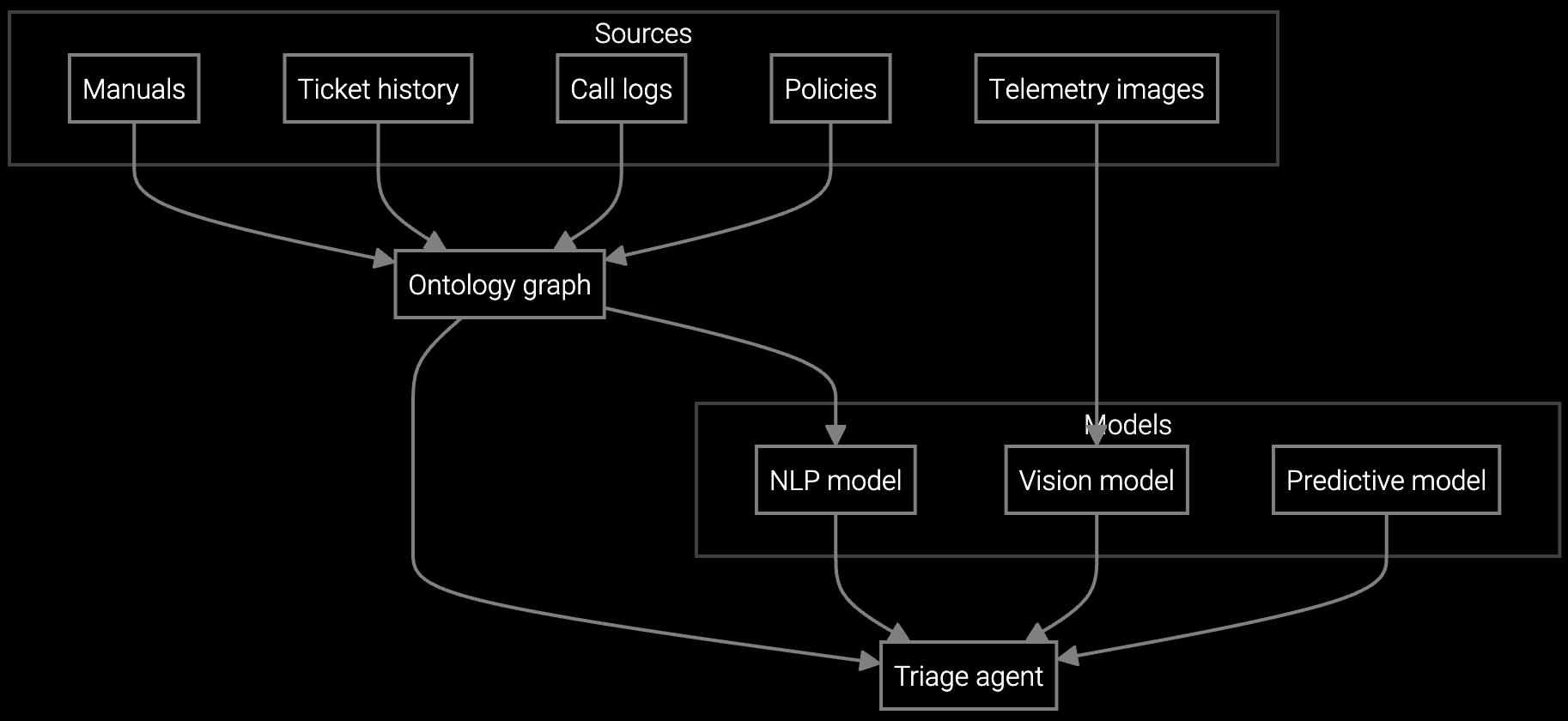
Automatically classify appliance issues from customer descriptions, route to the right team, and attach diagnostic context for faster resolution.
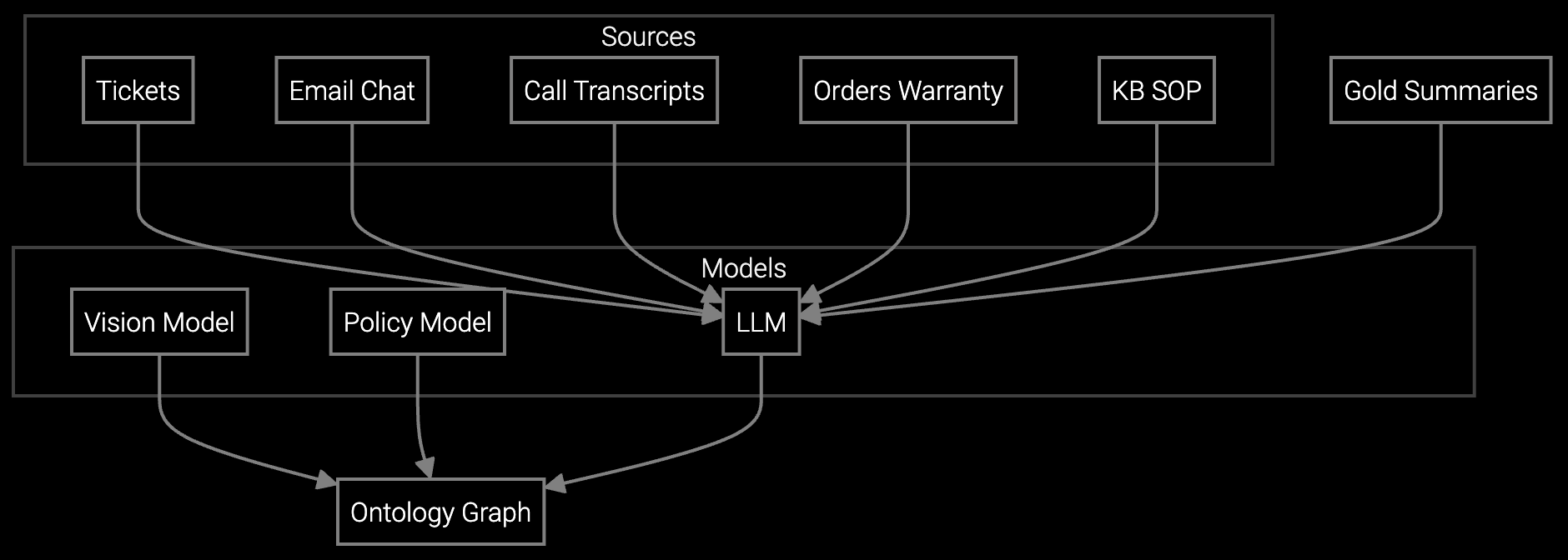
Generate instant summaries from email threads and chat logs so agents understand appliance history without reading through dozens of messages.
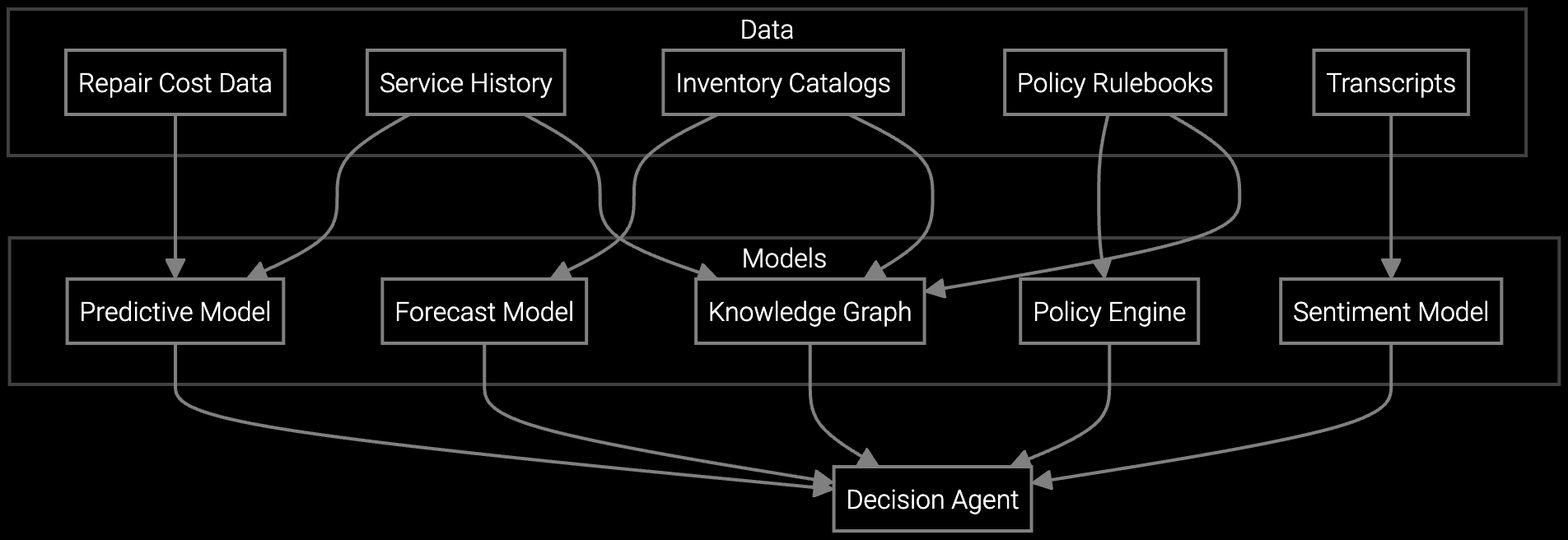
Analyze appliance age, failure mode, and part costs to recommend the most economical resolution path during customer conversations.
Appliance contact centers face unique pressure that makes the build vs buy decision critical. Seasonal demand spikes—HVAC failures during summer heat waves, refrigerator issues before holidays—create unpredictable call volume that overwhelms manual processes. An AI platform needs to understand symptom-based troubleshooting for consumers who don't know technical terms, handle warranty entitlement checks across decades of product models, and reduce no-fault-found returns that erode margins.
Pre-built platforms trained on appliance service data understand this context immediately. They recognize that "not cooling" means different things for a refrigerator versus an air conditioner, know which error codes warrant immediate dispatch versus self-service fixes, and can identify the correct part from model and serial numbers without agent guesswork. Building this domain knowledge from scratch takes years; buying it delivers results in weeks.
Modern AI platforms deploy in 4-6 weeks including system integration and agent training. Building in-house typically requires 12-18 months from hiring through production launch. For appliance contact centers facing seasonal demand spikes, the buy approach delivers value during the current peak season rather than waiting until next year.
Yes, API-first platforms like Bruviti integrate with existing systems without requiring replacement. The platform connects to your CRM for customer history, your ticketing system for case data, and your knowledge base for solution content. Agents continue using familiar tools while AI works in the background—no new login required.
No, the platform vendor handles model updates, infrastructure maintenance, and system monitoring. Your team focuses on contact center operations, not ML engineering. This contrasts sharply with building, where you need permanent staff for model retraining, data pipeline management, and technical debt reduction.
Quality platforms come pre-trained on appliance service patterns but allow customization with your product data. Bruviti learns from your case history, service manuals, and knowledge base to understand your specific models and failure modes. This happens during deployment, not after months of custom development.
Yes, when using API-first platforms with standard integrations. Your case data, knowledge base, and workflows remain in your existing systems—not locked in the AI platform. This flexibility is a key advantage over building, where migration off a homegrown system means rebuilding everything from scratch.
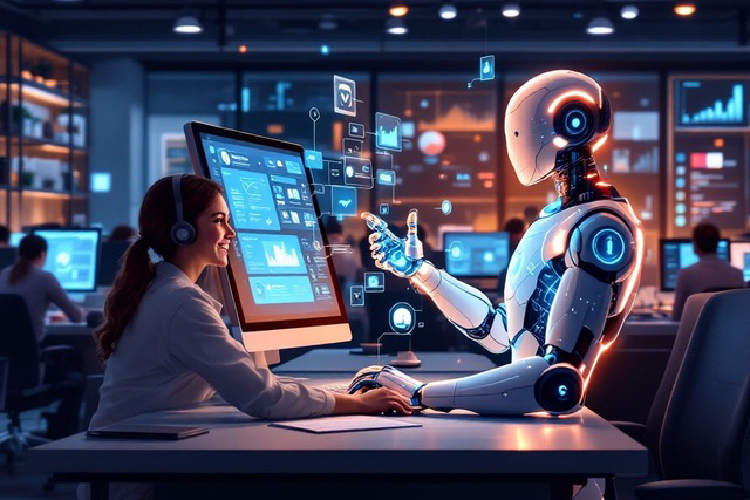
Transforming appliance support with AI-powered resolution.

Understanding and optimizing the issue resolution curve.
Software stocks lost nearly $1 trillion in value despite strong quarters. AI represents a paradigm shift, not an incremental software improvement.
Get a demo using your actual appliance service data and see results in weeks, not months.
Schedule Demo