
Warranty costs for decades-old equipment demand AI infrastructure capable of learning from sparse failure data—your choice now shapes margin protection for years.
AI warranty management reduces warranty costs by approximately 15% and the cost of nonquality by roughly 30%, per McKinsey and industry benchmarks. For industrial equipment OEMs choosing build vs buy, a platform that auto-codes 75-85% of claims, per Bruviti deployment data, captures that saving in months instead of a multi-year internal build.
Custom warranty AI requires scarce ML talent and years of failure data accumulation. Most industrial OEMs underestimate the infrastructure investment and time to production-grade fraud detection.
Traditional warranty platforms lock claim logic and fraud detection rules inside proprietary systems. When business needs change, OEMs face costly migrations or accept limitations.
Rivals deploying AI-driven warranty validation gain margin advantage quarterly. Delayed decisions allow warranty reserve erosion to compound while competitors optimize.
Bruviti's platform delivers pre-trained warranty models for immediate NFF reduction while preserving full technical control through open APIs. The architecture separates domain knowledge from infrastructure—OEMs gain production-ready fraud detection and entitlement verification without building ML pipelines, yet retain ability to customize claim validation rules and integrate proprietary failure data.
This hybrid model compresses time to value from years to quarters. Pre-built models trained on millions of industrial equipment claims start reducing warranty costs immediately. As your team gains confidence, API access enables gradual customization—add equipment-specific validation logic, integrate SCADA telemetry for condition-based warranty decisions, or train custom fraud detection on your historical data. Strategic independence without sacrificing speed.
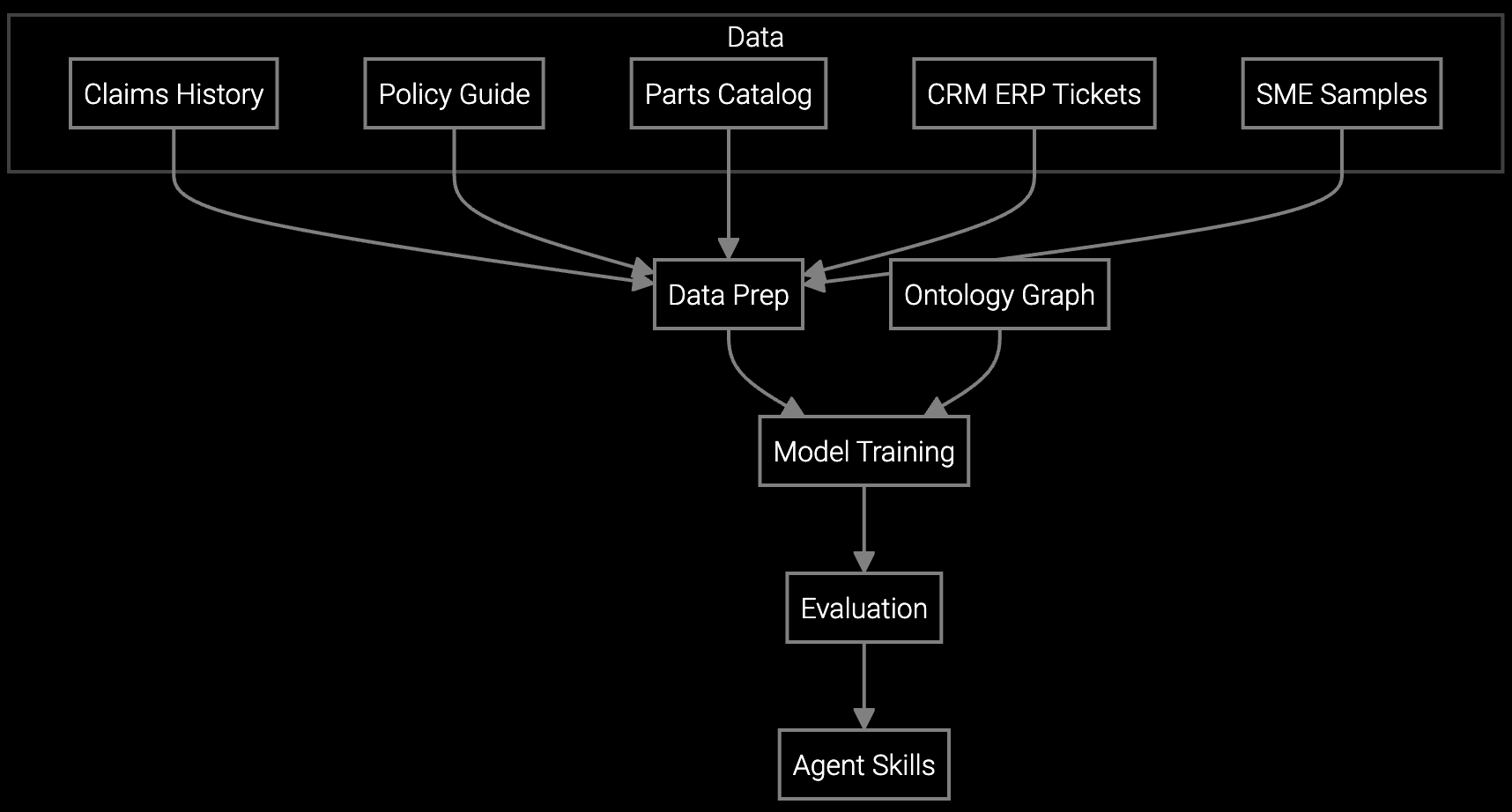
Automatically classify and code warranty claims for industrial machinery, reducing manual processing time by 70% while improving accuracy for decades-old equipment models.
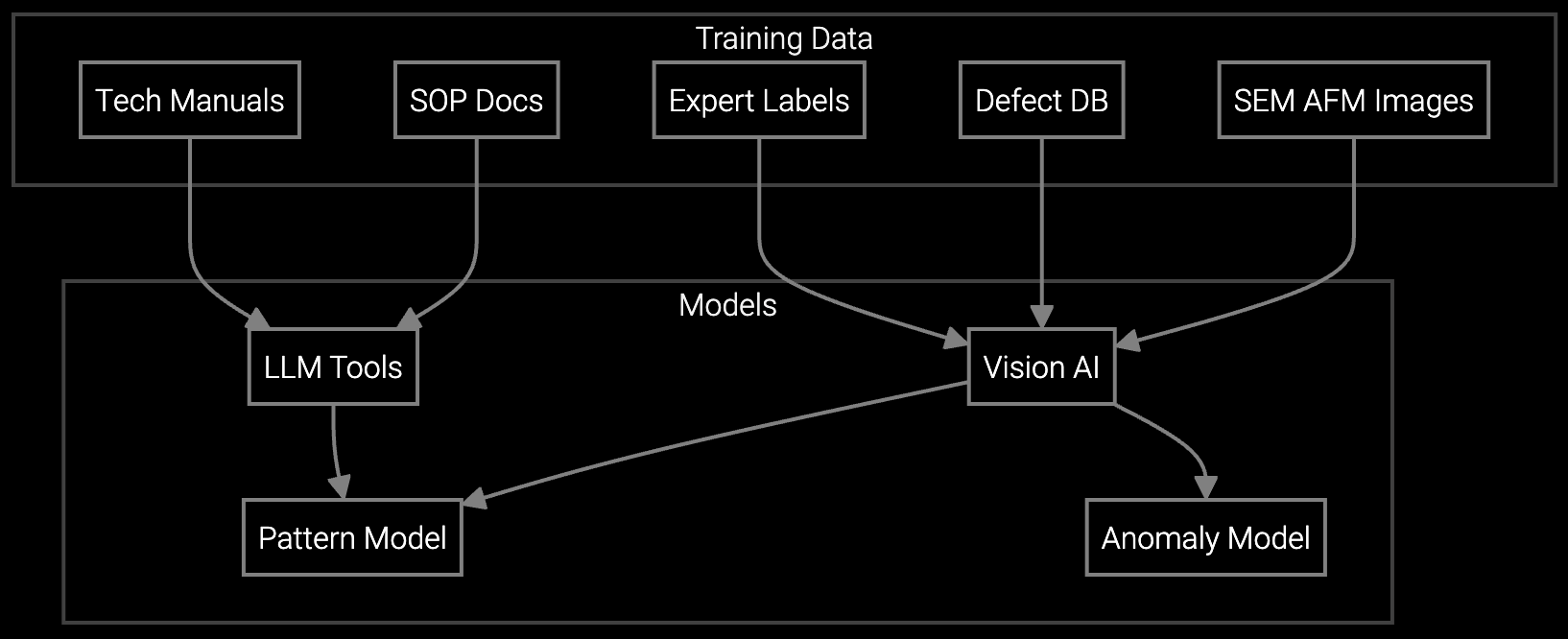
AI analyzes microscopic images of failed components to identify defect patterns, classify failure modes, and validate warranty claims for precision industrial equipment.
Industrial equipment manufacturers face unique warranty challenges stemming from 10-30 year product lifecycles. Legacy machinery lacks the telemetry infrastructure modern AI expects, yet warranty obligations persist. No Fault Found returns plague high-value CNC machines and compressors where failure diagnosis requires decades of tribal knowledge. Warranty reserve accruals remain unpredictable because traditional actuarial models fail to capture emerging failure modes in aging equipment populations.
The hybrid AI approach addresses this by combining pre-trained warranty intelligence with equipment-specific learning. Start with immediate NFF reduction on high-volume equipment categories where AI models have broad failure pattern exposure. Simultaneously, integrate your historical failure data to train custom models for specialized machinery. This phased strategy delivers margin protection today while building strategic AI capabilities for tomorrow.
Beyond ML engineering salaries, internal builds require data infrastructure for failure pattern storage, model training compute, continuous model retraining as equipment populations age, and ongoing maintenance as warranty policies evolve. Most industrial OEMs underestimate the 3-5 year commitment needed to match pre-trained platform capabilities. Opportunity cost of delayed margin protection often exceeds direct build costs.
Prioritize platforms offering API-first architecture with documented data extraction paths. Bruviti provides full API access to claim validation logic, fraud detection rules, and trained models—enabling gradual migration to internal systems if strategy changes. Avoid platforms that trap historical learning in proprietary formats or limit access to underlying claim intelligence.
Focus on warranty reserve accuracy improvement, NFF rate reduction percentage, and cost per claim processing. Track quarterly warranty cost as percentage of revenue to demonstrate margin protection. For board presentations, compare actual warranty accruals against AI-predicted reserves to show forecasting improvement. Document fraud detection savings separately to highlight risk mitigation value beyond cost reduction.
Pre-trained warranty models typically reduce NFF rates within 60-90 days of integration with existing claim systems. First meaningful margin impact appears in quarterly warranty reserve adjustments. Custom model training for specialized equipment requires 6-12 months of failure data accumulation, but runs parallel to immediate gains from pre-built capabilities. Phased approach ensures continuous ROI during capability building.
Industrial equipment demands AI that handles sparse failure data across decades-old product lines with limited telemetry. Unlike consumer goods with high-volume failure patterns, industrial claims require understanding of complex mechanical systems, maintenance history context, and application-specific stress factors. Effective platforms combine broad industrial failure knowledge with ability to learn from your equipment-specific data, adapting to unique failure modes in CNC machines, compressors, or turbines.
Software stocks lost nearly $1 trillion in value despite strong quarters. AI represents a paradigm shift, not an incremental software improvement.
Function-scoped AI improves local efficiency but workflow-native AI changes cost-to-serve. The P&L impact lives in the workflow itself.
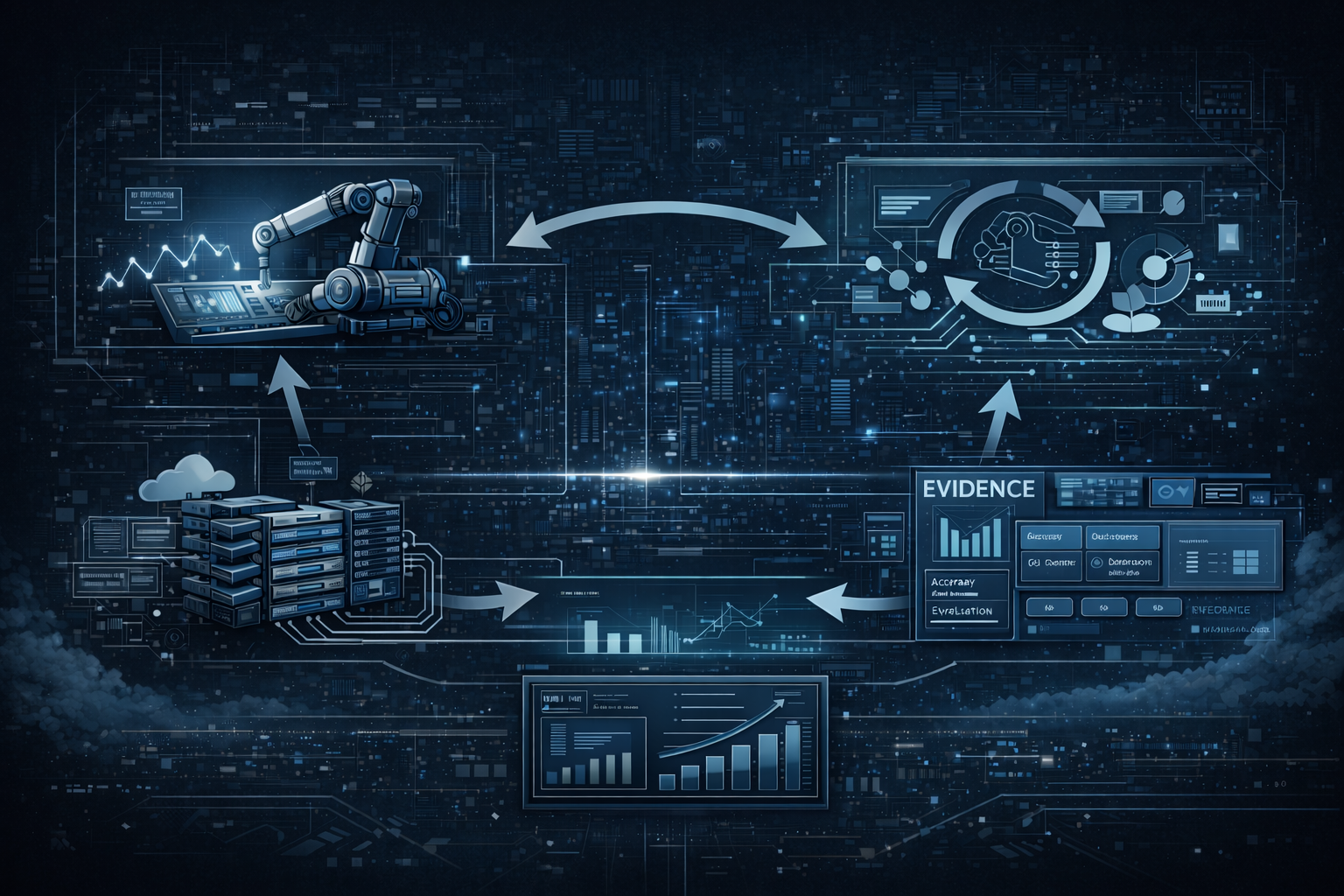
Five key shifts from deploying nearly 100 enterprise AI workflow solutions and the GTM changes required to win in 2026.
See how Bruviti's hybrid approach delivers immediate margin protection while preserving strategic flexibility.
Schedule Strategy Session