
Legacy warranty systems force manual claim validation across decades-old equipment—automation eliminates the bottleneck.
AI warranty-claims automation processes industrial warranty claims in under 1 minute each at 95% consistency, auto-coding 75-85% of intake, per Bruviti deployment data. Builders wire the workflow so claim intake, coding, and 60-80% auto-adjudication chain together, leaving only exceptions for analysts and saving 200-300 hours per month.
Every claim requires manual verification against equipment serial numbers, purchase dates, and service contracts. For industrial machinery with 10-30 year lifecycles, warranty data spans multiple legacy systems and paper records.
Returned equipment undergoes refurbishment only to reveal no defect. Without automated analysis of failure reports and sensor data, invalid returns consume reverse logistics capacity and inflate warranty reserves.
Claims move through ERP, CRM, RMA, and refurbishment systems with manual data re-entry at each step. Each handoff introduces delay and transcription errors that extend cycle times.
Bruviti's headless architecture connects warranty processing endpoints to existing SAP, Oracle, and custom data lakes through RESTful APIs. Webhook-driven automation triggers entitlement validation when claims arrive, queries installed base records for equipment history, and executes fraud detection models against submitted failure codes—all without rebuilding your ERP schema.
Python SDKs let you define custom validation rules that execute server-side. Train NFF detection models on your historical refurbishment data, then deploy them as containerized microservices that score incoming claims in real-time. Every decision point in the workflow exposes an API endpoint you can override, extend, or integrate with third-party logistics and reverse supply chain systems.
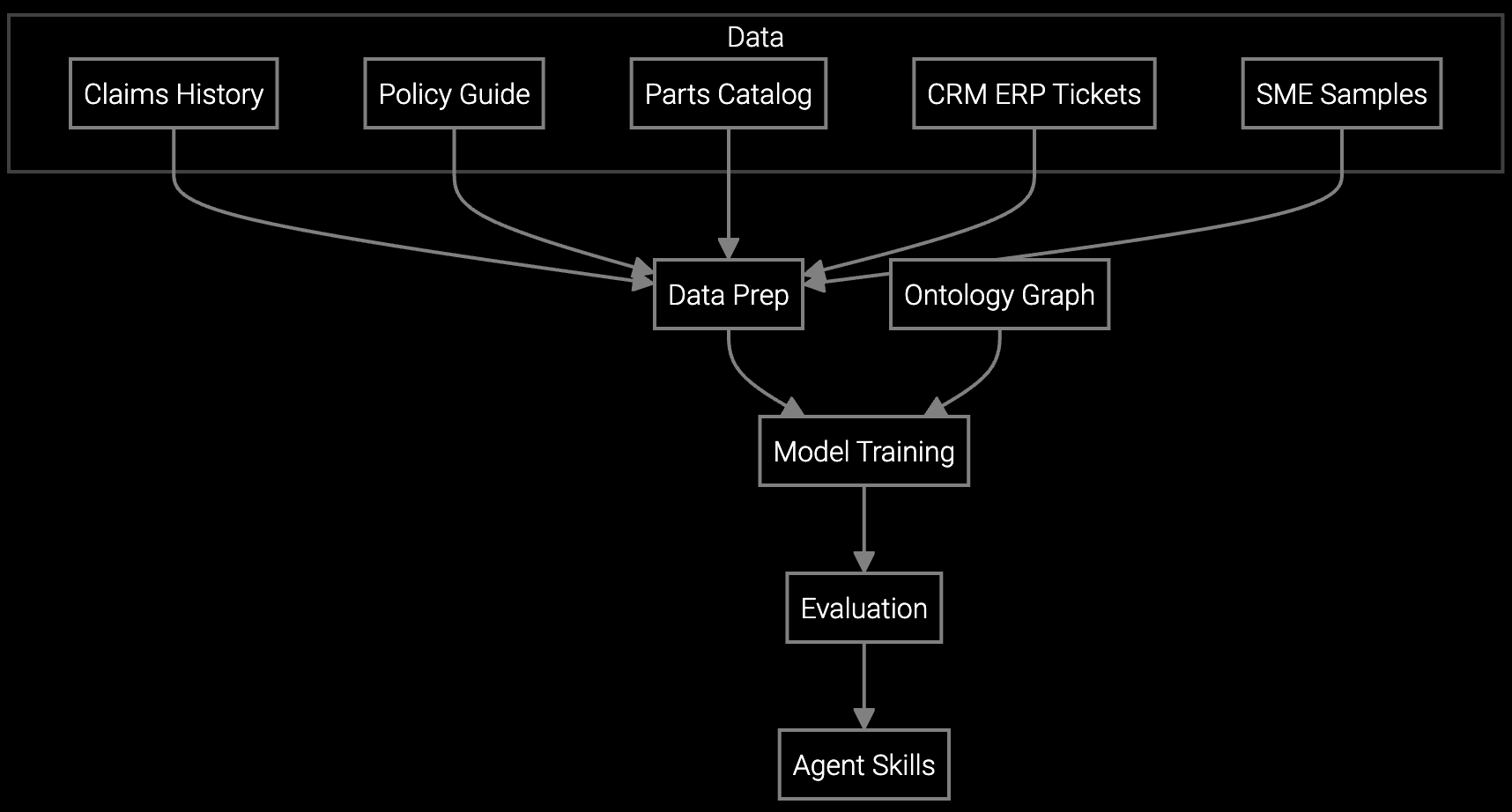
Auto-classify claims for pumps, compressors, and CNC machines using failure codes from your ERP, reducing manual coding from 6 minutes to 30 seconds per claim.
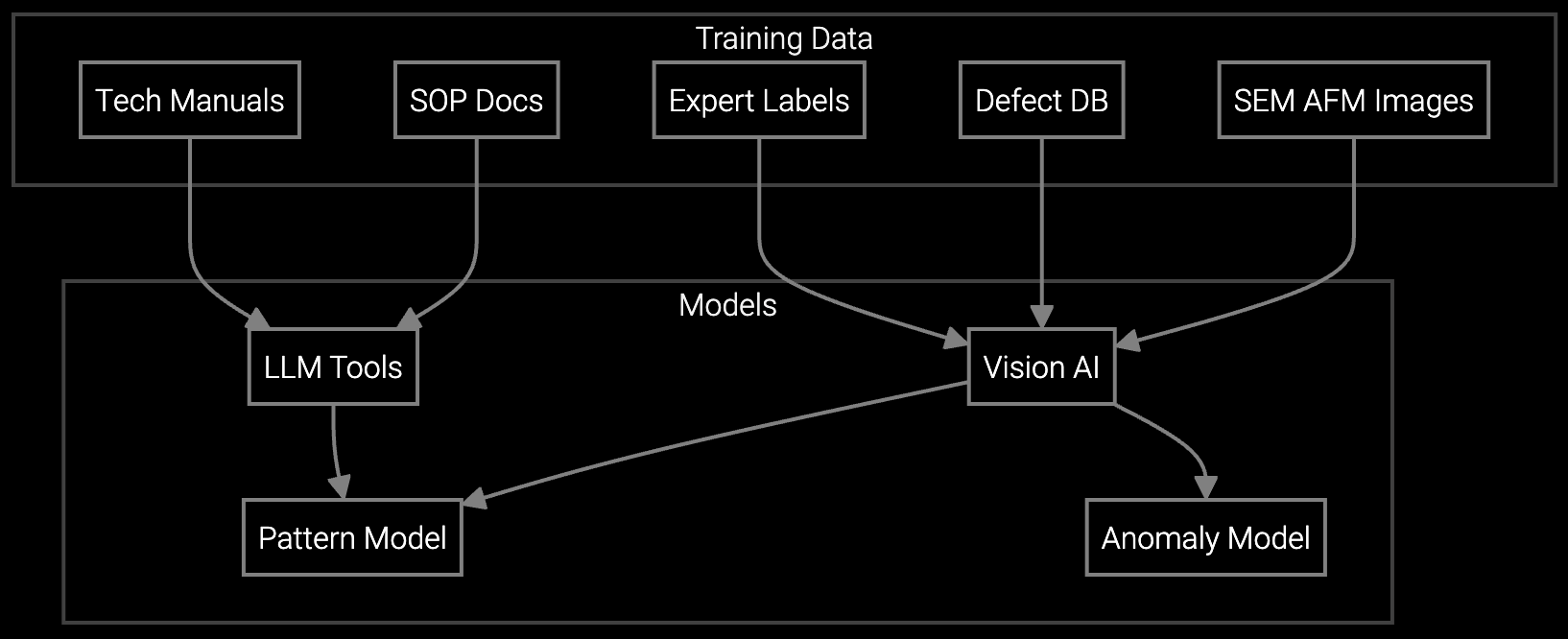
Analyze microscopic wear patterns and material defects in returned components to validate warranty claims and identify manufacturing process issues.
Industrial equipment manufacturers manage warranty obligations across decades-long lifecycles. A single CNC machine or industrial robot deployed in 1995 may still be generating warranty claims in 2025, requiring lookups against paper service records and legacy AS/400 systems. Automation must bridge these data gaps without forcing ERP migrations.
Condition monitoring data from SCADA and PLC systems provides the ground truth for NFF detection. When a compressor is returned claiming "bearing failure" but vibration logs show normal operation, automated workflows flag the discrepancy before RMA approval, saving reverse logistics costs and refurbishment labor.
RESTful APIs connect to ERP systems like SAP and Oracle, PLM platforms, SCADA historians, and custom data lakes. Webhook triggers enable real-time orchestration across CRM, RMA, and refurbishment systems without point-to-point integrations.
Yes. Python SDKs let you train models on historical refurbishment data and deploy them as containerized microservices. Each product category can have distinct validation logic that executes server-side during claim processing.
The platform queries multiple data sources—modern ERP, legacy AS/400 systems, and scanned paper records via OCR—then consolidates results into a single entitlement decision. API-driven lookups eliminate manual searches across disconnected databases.
Flagged claims route to human reviewers with full context: failure report, condition monitoring data, and model confidence scores. Reviewers approve, reject, or request additional data through a single interface that updates all connected systems.
Yes. You retain full ownership of all custom models, training data, and workflow logic. Deploy them on-premise or in your cloud environment—no vendor lock-in or proprietary runtime dependencies.
Software stocks lost nearly $1 trillion in value despite strong quarters. AI represents a paradigm shift, not an incremental software improvement.
Function-scoped AI improves local efficiency but workflow-native AI changes cost-to-serve. The P&L impact lives in the workflow itself.
Five key shifts from deploying nearly 100 enterprise AI workflow solutions and the GTM changes required to win in 2026.
See Bruviti's Python SDKs and API documentation in a technical walkthrough.
Schedule Technical Demo